Drip Irrigation with Tuber Band in Sweet Basil Cultivation: Prerequisites and Key Technical Points
Introduction to the Importance of Drip Tape Irrigation for Tulsi
Tulsi (Ocimum tenuiflorum) is a key medicinal and aromatic plant that requires precise irrigation planning due to its high root sensitivity to both drought and waterlogging. In recent years, precision irrigation methods, including drip tape irrigation have become the top choice for tulsi cultivation among farmers due to water savings, reduced evaporation, and enhanced uniform plant growth. This method injects water continuously and evenly through small holes on a plastic tape into the root zone, not only maintaining optimal soil moisture but also preventing root fungal rot caused by excessive surface wetness.
Tulsi is a plant that requires not only appropriate moisture but also warmth. Therefore, balancing ambient temperature and soil moisture levels is a major challenge in cultivating this plant across different regions of Iran. Using pressurized irrigation systems, particularly drip tape, allows farmers to manage multiple flowering and harvest cycles without inducing water stress or crop loss. In this section of the guide on selecting suitable tape for tulsi tunnels, we will examine these prerequisites in detail so farmers can confidently proceed with system installation and setup. Additionally, understanding tulsi yield under various climatic conditions greatly helps in comprehending the plant’s actual water needs and adjusting the tape flow rate.
Technical Prerequisites for Drip Tape Installation
Selecting the Appropriate Drip Tape Type for Tulsi
One of the most important technical prerequisites is correctly selecting the drip tape specifications. Tulsi is a plant with moderate plant spacing and root depths typically extending 20 to 30 cm. Therefore, using Drip tapes with appropriate diameter and standard hole spacing It must align with the plant’s rooting depth. To understand the differences in materials and applications of various tapes, it is recommended to study the guide on types of drip irrigation tapes. Multi-layer tapes resistant to UV and insect damage are preferred for extending system lifespan in long-term basil cultivation. Additionally, attention to the tape’s expansion coefficient in response to day and night temperature changes is a critical factor in greenhouse and polyhouse cultivation.
Preparing the main piping system
Before laying the drip tape, the main piping network must be at the desired pressure. Using high-durability polyethylene pipes and standard fittings is essential to prevent leaks and pressure drops. Complete guide Installation methods for 90 mm pipes It can help in understanding how to connect main pipes to tape inlets and the required pressure settings. Water pressure at the drip tape outlet must remain stable between 1 and 3 bars to ensure uniform flow rate along the tape. Also, using collapsible and inflatable pipes in certain sections can be effective in managing water flow over long distances.
Field and soil prerequisites
Preparation of the growing medium
Basil prefers loamy soil with high drainage. Before laying drip tapes, the soil must be disinfected and pH-balanced. If the soil in your region is deficient in nutrients, drip irrigation offers excellent opportunities for fertigation. Accordingly, understanding agricultural flexible hoses for transporting nutrient solutions and high-precision irrigation is a prerequisite for managing integrated irrigation and fertilization. The land surface must be completely leveled to prevent water from accumulating on one side of the drip line. Proper grading also helps reduce pump energy consumption and increase system efficiency.
Water pressure and flow rate management
Drip tapes are highly sensitive to pressure fluctuations. Pressure drops cause reduced flow at the end of the line and increased flow at the beginning, leading to asymmetric basil growth on one side of the container. The primary prerequisite to prevent this issue is the use of a pressure regulator (fold). Additionally, clarifying water sources and implementing appropriate filtration to prevent clogging of the small emitters in the drip tape are mandatory before starting cultivation. In arid regions, using harvested rainwater sources or low-yield wells can also help, by utilizing Rainwater transfer pipes to reduce costs. Proper filtration should be performed simultaneously with the installation of the drip lines to prevent suspended particles from entering the system.
Practical tips for the installation and maintenance of basil drip tapes
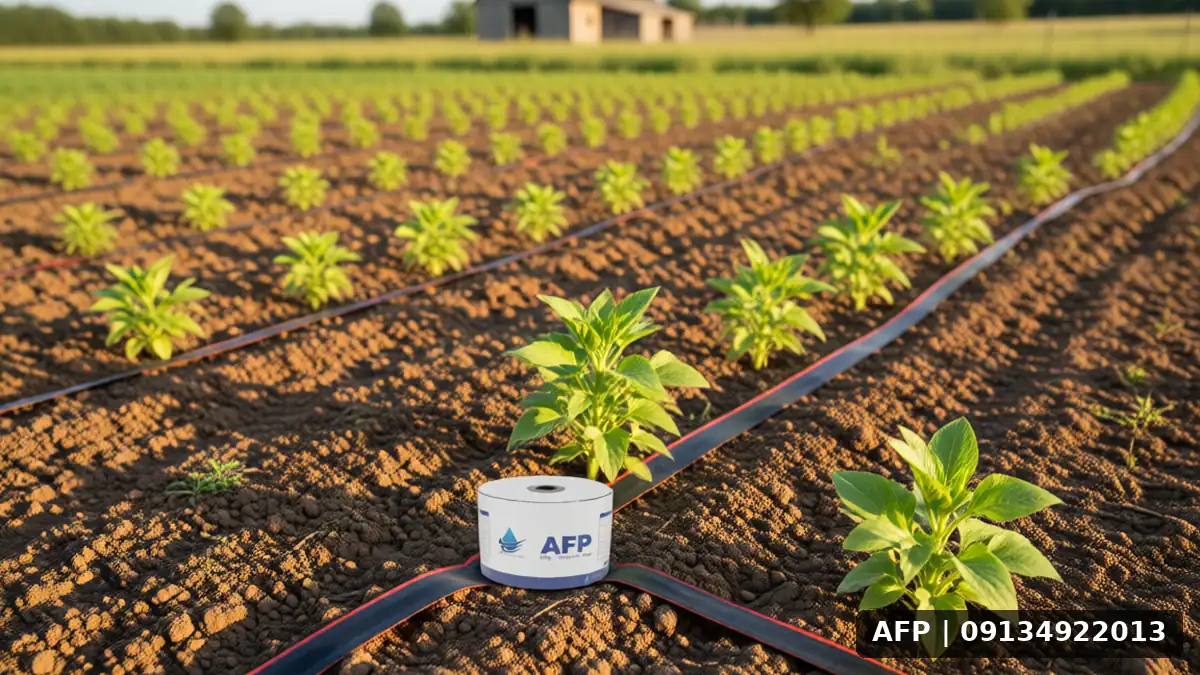
- Subsoil installation depth: Do not place drip tape at the surface level; a depth of 10 to 15 centimeters below the soil surface is ideal to prevent rapid moisture evaporation. This depth also protects the tape from damage caused by replanting tools.
- Spacing: Adjust the spacing between tapes based on the spacing between basil suspension points (typically 20 to 30 centimeters). Correct spacing ensures better distribution of water resources among the plants.
- Connections: Use standard agricultural drip tape connections to prevent leaks and avoid tape breakage during the season. Fastener and coupling connections are the best options.
- Monitoring: In the first weeks after planting, check the outlet of the tapes to ensure that all emitters operate at a uniform rate. Early leaks or clogs must be resolved immediately.
In addition to the initial installation, planning the replacement cycle of the drip tapes is also crucial. Plastic tapes are exposed to direct solar radiation and mechanical factors. In case of degradation, the selection method for a suitable drip tape for replacement must match the original specifications to maintain irrigation uniformity. The selection of the appropriate drip tape for replacement should be based on soil type, tape length, and emitter spacing. Furthermore, under specific weather conditions or when changing crop types, modifying the function of the drip tape by changing the flow rate or tape length may be necessary.
Frequently Asked Questions (FAQ)
Is drip tape the same for green basil and sweet basil?
Yes, the general principles are the same, but for sweet basil, which has faster growth, you may need a slightly higher flow rate. Always start with a small trial. The main difference lies in the balance of water and nutrients throughout the growth cycle.
How can I prevent the holes in the drip tape from clogging?
Using the appropriate filter (sieve or disc) at the system inlet and avoiding irrigation with muddy water are the most critical points. Periodic washing of filters and drip lines with suitable acids also helps extend the lifespan of the lines.
What is the maintenance cost of drip tape?
Maintenance costs vary depending on the type of drip tape (single-layer or multi-layer) and field conditions. More durable lines are more expensive initially but have a longer useful life and lower long-term replacement costs. Calculating the return on investment should be based on reduced water consumption and improved crop quality.
Conclusion
System Installation Drip Irrigation with Drip Tape In basil cultivation, although it requires precision and initial planning, it leads to optimal results for increasing yield and maintaining crop quality. From selecting main pipes to using secure connectors and proper soil preparation, all these items are prerequisites for the success of this method. Smart and low-consumption agriculture is only possible by using correct technical knowledge and high-quality equipment. By following these points, you can benefit from the full potential of basil with minimal water consumption. Additionally, paying attention to local and climatic factors of the region is key to achieving desirable results.
Related Articles: Basil yield per hectare, bell pepper yield per hectare Kidney bean seed rate per hectare