Deficit Irrigation in Alfalfa Cultivation: A Strategy to Boost Productivity and Cut Water Consumption
Introduction: The Importance of Water Management in Alfalfa Cultivation
As one of the most important forages in livestock farming systems, alfalfa requires sustained moisture for optimal growth. With rising water costs and water resource scarcity, efficient irrigation methods such as deficit irrigation have become a focal point for farmers. This method is based on the principles of “controlled deficiency,” wherein a portion of the plant’s water requirement is deliberately reduced at specific times to induce mild stress. This encourages the plant to develop a stronger root structure and better performance for survival.
Alfalfa (Alfalfa) is a perennial plant that relies heavily on a deep and active root system during a significant portion of its growth. Under full and unlimited irrigation conditions, the plant tends to produce rapid vegetative growth, which may be accompanied by lower protein quality and a high need for frequent harvesting. However, by applying deficit irrigation, the farmer induces mild water stress, encouraging the plant to direct its energy toward strengthening its living, resilient components rather than building a massive vegetative biomass. This approach not only reduces water consumption but also enhances the plant’s resilience to climatic stresses. The following section examines the benefits of this method in alfalfa cultivation, key execution points, and answers to frequently asked questions.
Principles of Deficit Irrigation in Alfalfa
Regulated Deficit Irrigation (RDI) is a precision approach in which water application is restricted during specific growth stages based on physiological indicators such as leaf water potential or soil moisture. For alfalfa, this restriction is typically applied during the early vegetative growth stage or just before intense flowering to promote cell division over cell enlargement. This process enhances the plant’s tolerance to environmental stresses. The key is to ensure water stress does not reach a level that causes severe wilting or growth cessation; rather, the goal is to induce ‘controlled stress’ to modulate the plant’s physiological signals.
Timing this restriction is critical. Typically, during the hot months of the year, when transpiration water losses peak, water application can be reduced relative to full requirement. This reduction should be gradual to allow the plant a chance to biophysically acclimate. Additionally, while alfalfa is not a post-rain (non-irrigated) crop, water demand changes during colder seasons or after frequent harvests. RDI can be applied in specific time periods to encourage deeper rooting, utilizing water from lower soil layers.
Combination with Line and Drip Systems
For successful implementation of Regulated Deficit Irrigation, using pressurized irrigation systems like tape-line or drip systems is essential. These systems provide more precise control over irrigation volume and timing. Fixed Tape-Line Due to the uniform distribution of water across the planting bed, it is a suitable option for the implementation of this method. Additionally, Tape-Line for Lugia The system is suitable for small-fruited crops, but for alfalfa, the distance between lines must be adjusted based on planting spacing. Drip systems are also highly suitable for row alfalfa because they allow precise flow rate control, which is essential for calculating the reduced water volume during deficit irrigation. The choice between line and drip irrigation depends on soil type and planting density; however, in both cases, the system’s automation capability is key to the successful implementation of deficits.
Key benefits of deficit irrigation in alfalfa cultivation
Implementing a deficit irrigation strategy in alfalfa yields multiple positive results, detailed below:
- Increased yield-to-water-use ratio: With reduced total water consumption, Irrigation Water Recovery (IWR) increases significantly. The plant focuses on the quality and dry forage volume rather than excessive vegetative growth under high water availability. To see similar examples of yield increases, you can refer to tips for increasing per-hectare yield which applies similar principles to leafy plants. This general principle is that managing resource constraints can improve final product quality, even with a slight reduction in total production.
- Improved Root Structure: Mild water stress causes roots to grow deeper and more extensively to find water. This enhances the plant’s resilience against sudden droughts in subsequent seasons. Deeper roots also mean better access to minerals in lower soil layers that may not be properly absorbed under surface-level, shallow irrigation conditions. Therefore, a positive effect on long-term plant health is created.
- Reduced Nutrient Leaching: By reducing water volume, the risk of leaching nitrates and other nutrients from active soil layers decreases, leading to savings in fertilization costs and protection of groundwater resources. This point is crucial economically and environmentally, as fertilizer waste is not only costly but can also lead to groundwater pollution.
- Better Management of Fungal Diseases: One of the biggest problems with alfalfa under surface irrigation is the creation of high moisture on the soil surface and lower leaves, which leads to stem rot. Deficit irrigation combined with pressurized systems reduces relative humidity in the interleaf space and disrupts the growth environment for fungi. This reduces pest and disease management costs and improves forage quality in terms of physical health.
Practical Tips for Implementing Deficit Irrigation
To maximize the benefits of this method, it is recommended to adhere to the following points:
- Soil moisture monitoring: It is essential to use soil moisture sensors or manual methods (such as root profile analysis) to determine the precise timing for reducing irrigation. Imprecise reduction can lead to severe stress and yield loss. Monitoring must be continuous to prevent exceeding the plant’s tolerance threshold. Inexpensive digital tools are also available that can record real-time data.
- Optimizing planting distance: The distance between alfalfa rows should allow plant roots to spread in deeper soil layers. References related to the seed quantity per hectare can help adjust plant density to reduce competition for resources. High plant density under water stress conditions creates more stress; therefore, a balance between the number of plants and the reduced irrigation amount must be considered. Study Lentil seed quantity per hectare As another example, it shows that planting density principles also apply to cover crops and forage plants, although the plant types differ.
- Targeted foliar feeding: Under drought conditions, the uptake of certain nutrients may be impaired. Using drip irrigation systems to inject low-dose, targeted liquid fertilizers maintains nutrient balance. This technique, known as Fertigation, delivers required elements with high precision at the exact time to the root zones.
- Similar products: Deficit irrigation principles in alfalfa can be extended to other crops. Studying resources such as the Guide to Increasing Radical Pepper Yields can provide a broader perspective on water stress management in industrial plants. Understanding the behavior of various plants under water stress helps farmers develop viable management models for multi-purpose farms.
Comparison with conventional methods
Unlike deficit irrigation, conventional methods such as flood or drip irrigation without restriction often lead to excessive vegetative growth, which eventually results in lodging or reduced dry forage quality. Deficit irrigation improves economic efficiency by establishing physiological balance. If you are looking for information on Alfalfa yield per hectare you will observe that water management variables are the primary determinants of final yield. Also, comparison with Strawberry performance in Iraq This demonstrates that in water-limited regions, deficit irrigation approaches can also be optimized for moisture-sensitive plants, although the specific parameters differ. These comparisons help farmers gain a clearer visual understanding of the potential of this method across different crops.
Frequently Asked Questions (FAQ)
Does deficit irrigation reduce total alfalfa yield?
No, if managed properly, this method does not necessarily result in a reduction of green matter. There may be a slight decrease in fresh matter volume, but dry matter weight and forage protein quality are maintained or even increased. The primary goal is to increase efficiency per unit of water rather than simply maximizing plant volume. In many cases, farmers have observed a significant increase in the final marketing value of the forage by accepting a minor reduction in fresh matter yield.
What tools are required for monitoring deficit irrigation?
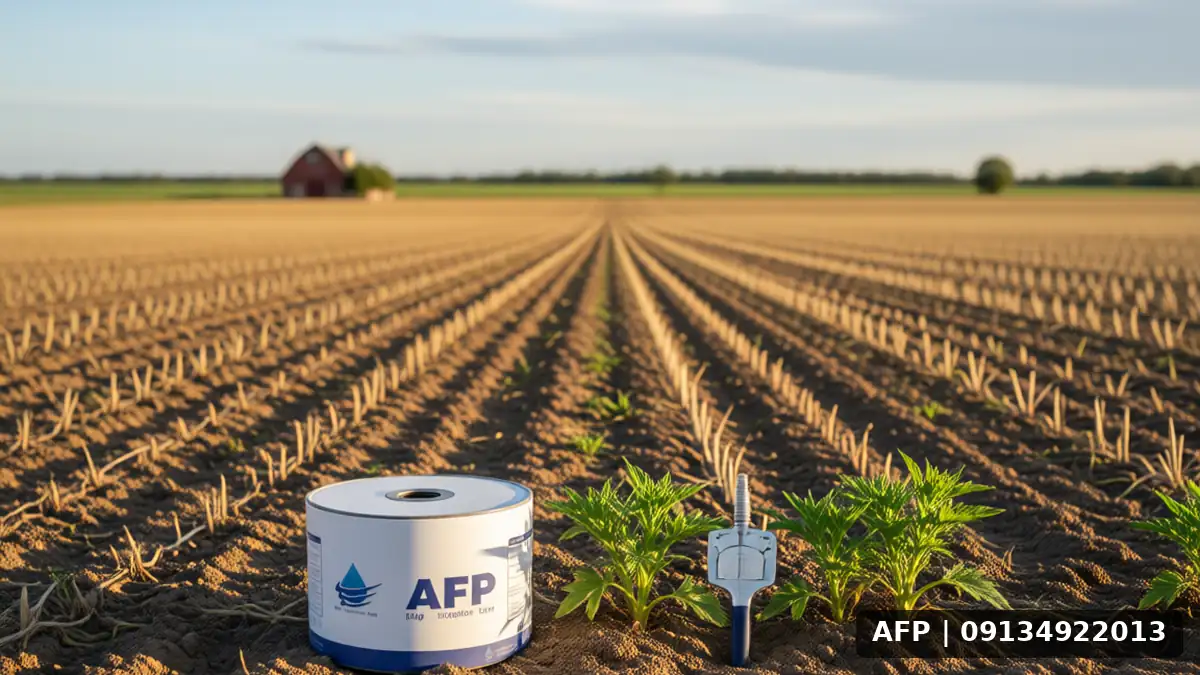
Simple tools such as a porometer for measuring leaf water potential, or digital soil moisture sensors are used as guides. Defining the onset threshold for stress (for example, a 20 percent reduction in saturated moisture) is key to success. Additionally, recording meteorological data including temperature, relative humidity, and wind speed helps calculate real-time water needs and adjust the level of water reduction accordingly.
Summary
Deficit irrigation in alfalfa cultivation is a smart strategy for sustainable agriculture that creates a delicate balance between risk and reward. By reducing water consumption, improving root structure, and managing diseases, this method can directly help increase farmer profitability. Successful implementation of this technique requires precision in timing, the use of precision irrigation systems, and continuous monitoring of soil and plant conditions. Combining the principles of deficit irrigation with modern strip and drip technologies will have a bright future for water management in alfalfa fields. Farmers familiar with these principles and practical training can increase water productivity and improve forage quality.