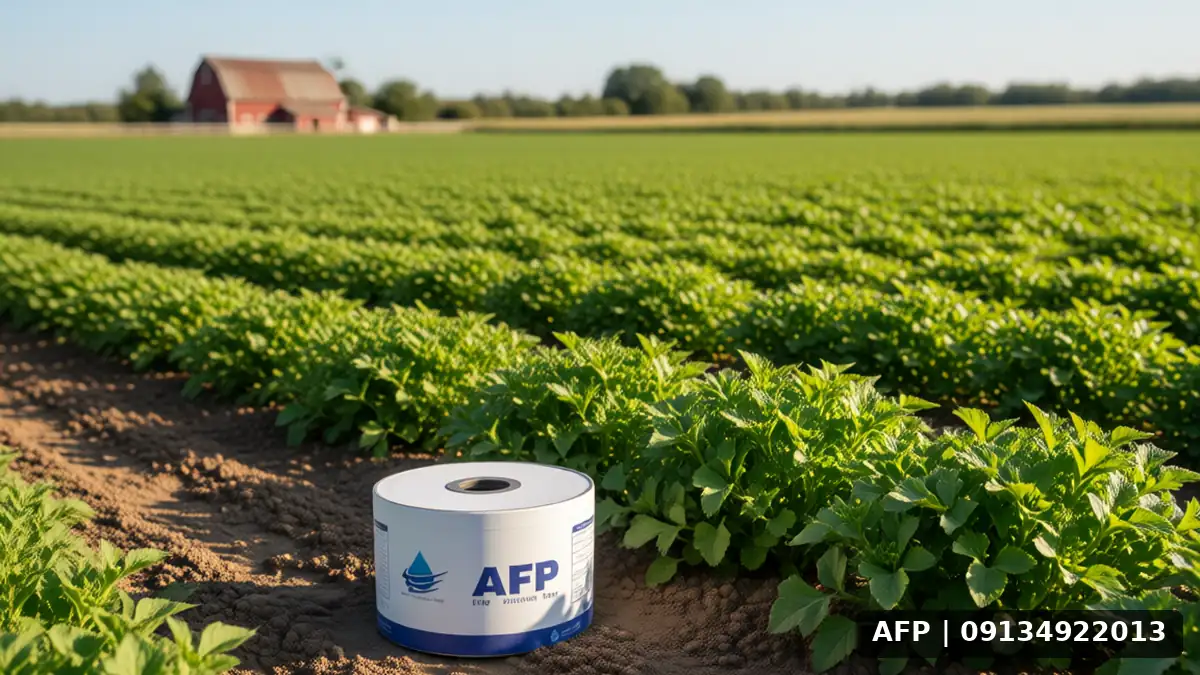
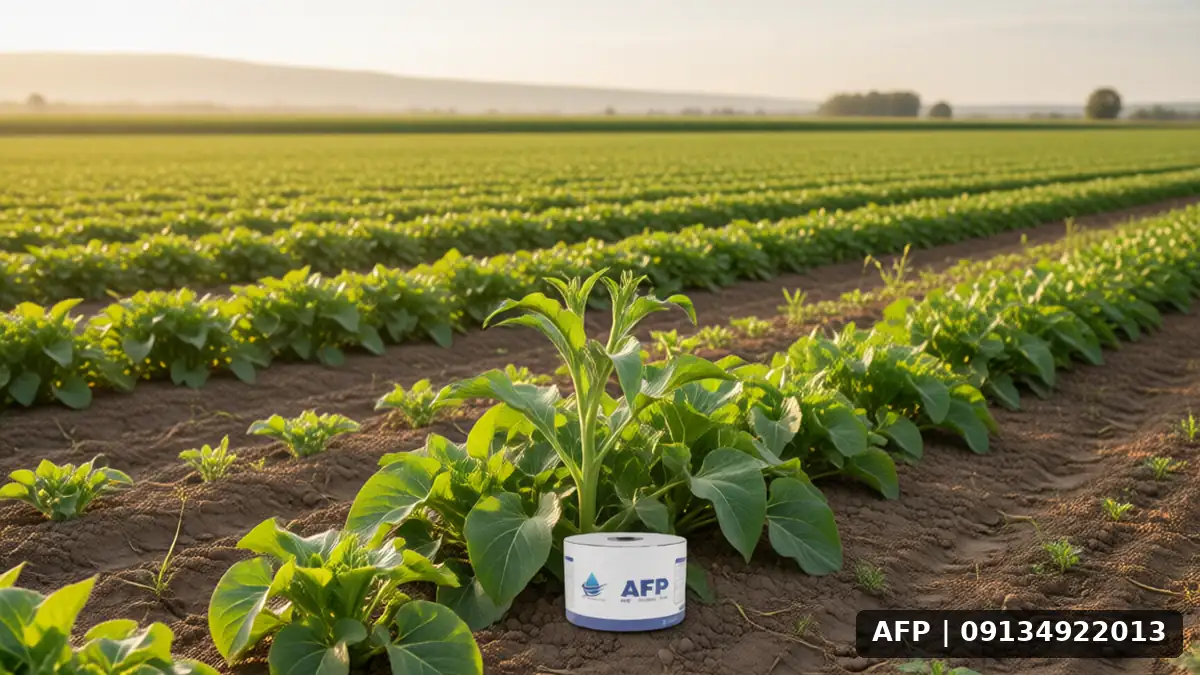
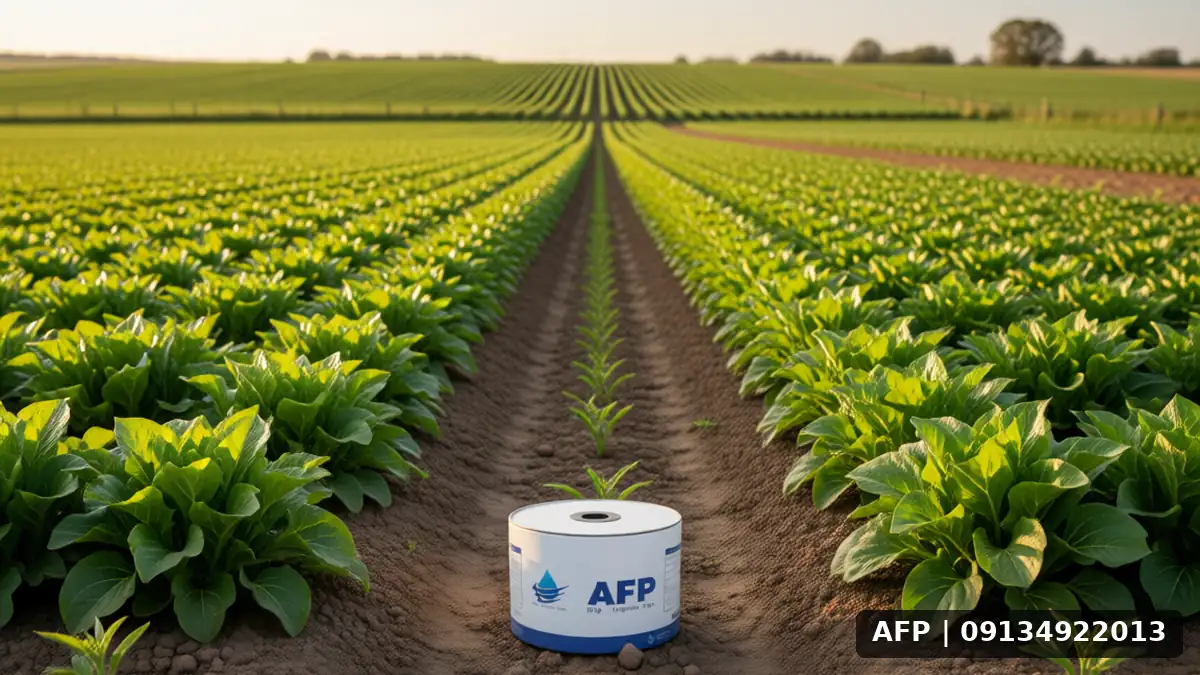
Drip Irrigation Tape, 20 cm Spacing, 1000 m Roll
قیمت اصلی هزار تومان2.150.000 بود.هزار تومان2.050.000قیمت فعلی هزار تومان2.050.000 است.Details
Drip tape manufactured under full quality control, with factory pricing and nationwide shipping. Before purchase, we help you choose the right thickness and emitter spacing for your field.
Prices and availability are updated according to the daily production schedule.


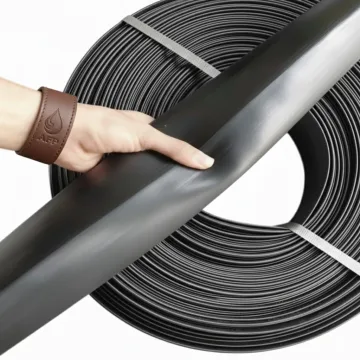
No middlemen, with transparent daily pricing and a formal quotation.
Flow uniformity, strength and roll integrity are checked before dispatch.
Freight is coordinated through to delivery at your destination.
Deficit irrigation, as a key water management strategy in agriculture, is particularly important for alfalfa cultivation. This article examines the benefits of this method,…
Read moreComprehensive overview of surge irrigation techniques in melon cultivation, covering operational principles, advantages and disadvantages, practical implementation tips, and answers to common farmer questions.
Read moreUnderstanding the importance of drip irrigation in marigold and red geranium cultivation, an introduction to the types of two-line tape and plate drip systems,…
Read moreDrip tape, also known as drip irrigation tape, is the core component of a pressurized irrigation system in row crops. Abgostar Fara Parsian (AFP) manufactures side-seam and emitter drip irrigation tape with a wall thickness of 175 to 200 microns, 1000 m rolls and emitter spacing of 10, 20 and 30 cm. If you are looking to buy drip tape made from first-grade petrochemical material, with a one-season warranty and direct-from-factory pricing, get free technical advice:
📞 0913-931-0932
Drip tape, also called drip irrigation tape in agriculture, is a thin-walled, flexible polymer pipe that has transformed row-crop irrigation systems. Unlike rigid polyethylene pipes, these tapes have a soft structure: they swell when water flows in and return to a flat shape once the flow stops. The main job of the system is to deliver water, fertilizer and nutrients drop by drop directly to the plant’s root zone.
Using drip irrigation tape saves 40 to 60 percent of irrigation water, raises crop yield, reduces weeds and creates uniform growing conditions on large farms. Drip tape is mainly used in row crops and vegetables: tomatoes, cucumbers, onions, potatoes, watermelons, melons, forage corn, wheat, barley, cotton, sugar beet and strawberries, as well as greenhouse irrigation and subsurface cultivation.
Irrigation tapes are laid along the crop rows, and emitters or drippers built in at regular intervals (10, 20 or 30 cm) break the water pressure. After passing through a zigzag path, the water leaves at low pressure, drop by drop. The result is permanently moist soil around the roots, less surface evaporation, fewer weeds and, ultimately, better and faster crop growth. By injecting fertilizer along the same line (fertigation), fertilizer-use efficiency can also be increased considerably.

Drip irrigation equipment is divided by design into two main groups: side-seam drip tape (seamed) and emitter drip tape (with drippers). Seamed models control water pressure through a zigzag path sewn into the edge of the tape, while emitter models have separate injected drippers with higher distribution accuracy. The choice between them depends on land slope, row length, water quality and crop type.
For a more detailed technical look, read the full article Types of irrigation tape and what each is used for and The difference between side-seam and emitter drip tape.
More details are on the drip tape features and characteristics page. You can also see the product quality test results in our quality control lab.
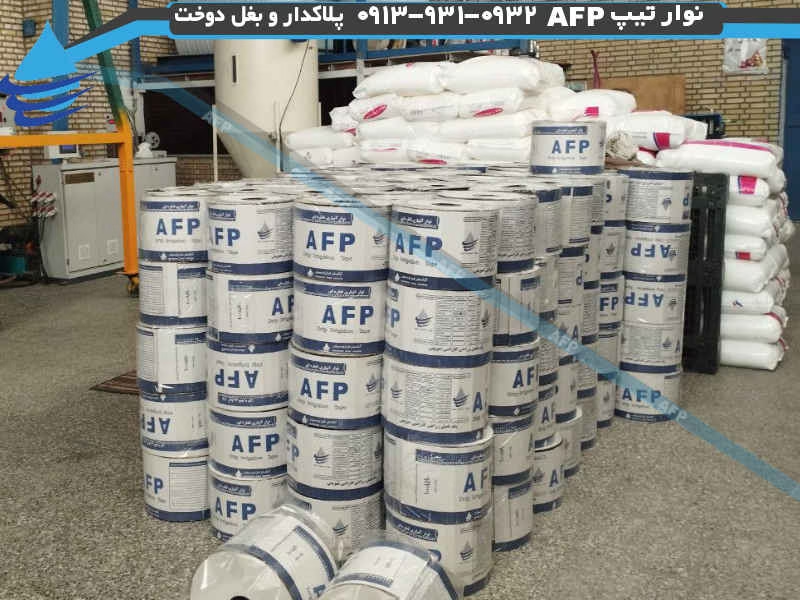
Drip irrigation tape rolls are made in lengths of 1000, 1500 and 3000 m so that farmers can choose the most economical option for their field size. For example, a 1000 m roll with a 175 micron wall weighs about 8.5 to 12 kg. The flat, compact design of the tape makes storage, laying out at the start of the season and collecting at the end of the growing season quick.
The final quality of drip irrigation tape is directly related to its petrochemical raw material. Products made to international standards are highly resistant to environmental stress, chemical fertilizers and temperature changes, and the engineered design of the emitters prevents suspended particles from blocking the water path. For more information, see the article Technical specifications of irrigation drip tape.
Wall thickness is a critical factor: a wall that is too thin leads to early tearing on stony ground, while a wall thicker than needed adds unnecessary cost. In general, 175 microns is recommended for light soils and single-season crops, and 200 microns or more for stony land, hot regions and long-term crops. A selection guide is available in the article The ideal wall thickness of irrigation tape.
In addition to thickness, the flow rate of the outlets must match the soil texture and the water needs of the plant, to prevent surface runoff in heavy soils and deep percolation in sandy soils.

The price of drip tape is not fixed and changes with the cost of petrochemical raw materials, so call to ask for today’s price and stock: 0913-931-0932. The main factors affecting the price of each roll of irrigation tape are:
The calculation formula is simple:
Drip tape length (m) = 10,000 ÷ distance between two tapes (m)
Also include three other cost items in the budget for one hectare: fittings and accessories (layflat or polyethylene pipe, branch valves, disc or screen filters, connectors), which make up a significant share of the initial investment; installation and labor costs for laying the tapes properly; and seasonal maintenance costs, including flushing the lines and clearing clogs. For an accurate estimate for your own land, you can use our agricultural land inspection service or the order request form.
A step-by-step visual tutorial is available in How to install irrigation drip tape.
Additional information is available in the article Maintenance and management of irrigation drip tape.

For years, Abgostar Fara Parsian (AFP) (registration no. 4214, national ID 14006782047) has been manufacturing and supplying drip tape and polyethylene water pipes to farmers. Before you buy irrigation tape, check the following:
Products are shipped across Iran, including Isfahan, Khuzestan, Fars, Kerman, Razavi Khorasan, East and West Azerbaijan, Kermanshah, Ilam, Mazandaran and Golestan. To see the models and place an order, use our order request form or visit the Contact Us page.
To get the current drip tape price and free technical advice before you buy, call our specialists:
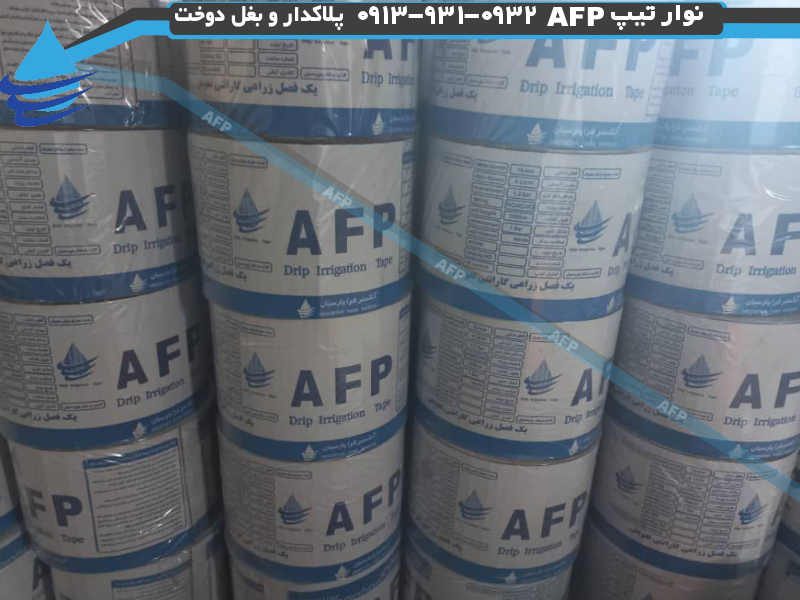
Standard drip tape is designed for one full growing season. The quality of the raw material, the intensity of sunlight, and the salinity and hardness of the water directly affect its lifespan. With proper filtration and correct collection at the end of the season, 200 micron tapes can also be reused for a second season under suitable conditions.
The ideal pressure for most standard drip tapes is between 0.8 and 1 bar (atmosphere). Lower pressure causes uneven water distribution, while higher pressure causes the tape to burst or tear. Installing a pressure-regulating valve and a pressure gauge at the head of each manifold is recommended.
The required length equals 10,000 divided by the distance between two tapes (in meters). For wheat with a 60 cm spacing, about 16,000 m (16 rolls) of irrigation tape is needed, and for tomatoes with a 1.5 m spacing, about 6,600 m (7 rolls).
In side-seam tape, the zigzag pressure-breaking path is sewn into the tape edge, which is economical for row crops on flat land. In emitter tape, separate drippers are built into the tape, giving higher irrigation accuracy and making it better suited to sloped land or long rows.
The weight and thickness of the roll, the grade of raw material (new or recycled), emitter spacing, side-seam or emitter model, roll length and order volume. Because the price of petrochemical materials fluctuates, ask for the current price by phone.
For 20 cm tapes on flat land, a line length of 70 to 100 m is usually recommended. On longer rows or uneven slopes, the water at the end of the line becomes insufficient; in such cases, a manifold in the middle of the field or emitter tape should be used.
In light, sandy soils and dense plantings, a 10 cm spacing is more suitable; in medium soils and most row crops, a 20 cm spacing; and in heavy clay soils or crops with wide plant spacing, a 30 cm spacing.
Yes. Drip tape is used in greenhouses for row crops such as cucumbers and tomatoes, and also in subsurface irrigation; in subsurface cultivation, a thicker tape and finer filtration are essential.