Optimizing Onion Yield per Hectare with Tippet Furrow Irrigation
Introduction: The Importance of Precision Irrigation in Onion Cultivation
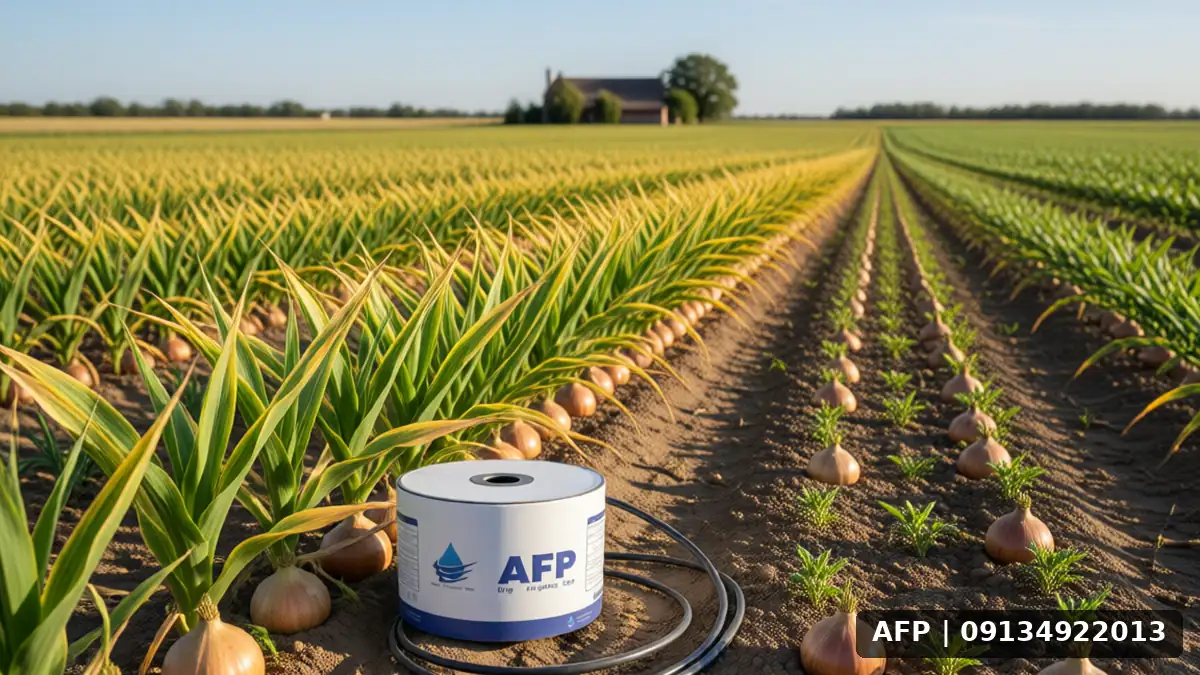
Onion is a primary and high-demand vegetable in agricultural markets that exhibits high sensitivity to water and soil conditions. To achieve onion yield per hectare with drip line higher, precise management of water and nutritional resources plays a decisive role. Traditional irrigation systems, such as flood irrigation, often result in water waste and bulb rot. In contrast, drip lines, by concentrating water and nutrients in the root zone, not only reduce water consumption but also enhance root absorption, leading to larger bulb size and increased weight per bulb.
The application of this technology in the arid and semi-arid climates of Iran provides a systematic solution for stabilizing crop performance. The following section examines all technical and practical aspects of this subject.
Impact of the Drip Line System on Onion Physiology
Moisture Management in the Root Zone
The onion is a plant with shallow, thin roots that requires appropriate soil relative humidity without exposing the roots to complete water saturation. The drip line creates a wet band along the planting row, providing an ideal substrate for root growth. This method ensures that roots remain in contact with water and nutrient sources for the maximum possible duration.
Experience has shown that when selecting a system, farmers should also pay attention to soil conditions and spray types, because soil complexities and the types of emitters directly affect the uniformity of water distribution along the onion row.
Increasing nutrient uptake and reducing diseases
One of the main reasons for reduced onion yield is root and stem rot, which is often associated with over-irrigation. The strip type enables root fertilization (subsurface fertilizer injection). With root feeding, the uptake of calcium, sulfur, and micro-nutrients is improved. Additionally, reducing moisture in the space between rows limits the activity of soil-borne fungi. This process is similar to the principles mentioned in fen-form per hectare for optimizing the growth of other crops, where the balance between vegetative and respiratory growth affects final product quality.
Key factors affecting onion harvest quantity
Planting spacing and strip type
Onion planting spacing is directly related to the placement of the strip drip system. Narrow rows may cause overlapping of irrigation strips, leading to waterlogged or dry spots.
- Row spacing: Typically, 40 to 50 cm is suitable for onions, which should be aligned with the tape width.
- Tape slope angle: The water discharge angle of the drip tape must align with the soil infiltration rate so that water reaches the root zone depth.
In this regard, the study Beetroot row spacing standards can also serve as a model for similar principles in root crop cultivation, where precise row spacing is critical for irrigation system integrity. Like beets, onions require uniform drip tape coverage.
Irrigation duration and frequency
Drip tape irrigation timing must be managed according to onion crop zones. During early growth, water requirements are low, but they peak during bulb swelling (40 to 60 days before harvest). Reducing irrigation in the final stages helps with bulb curing.
For better understanding of performance comparison across different systems, refer to the text explaining the black cumin yield per hectare, which illustrates how drip type affects similar micro-crops. The physical principles of drip irrigation are identical for both crops; however, onion has greater economic appeal due to its high added value.
Practical Tips for Onion Farms
Selecting Drip Line Type
There are two main types of drip lines: micro-lateral (1/6 to 1/4 inch diameter) and larger-diameter laterals. Onion requires fine, uniform lines to ensure water is dispersed evenly through the soil profile. Using thicker lines may cause deep furrow formation and drying of surface roots.
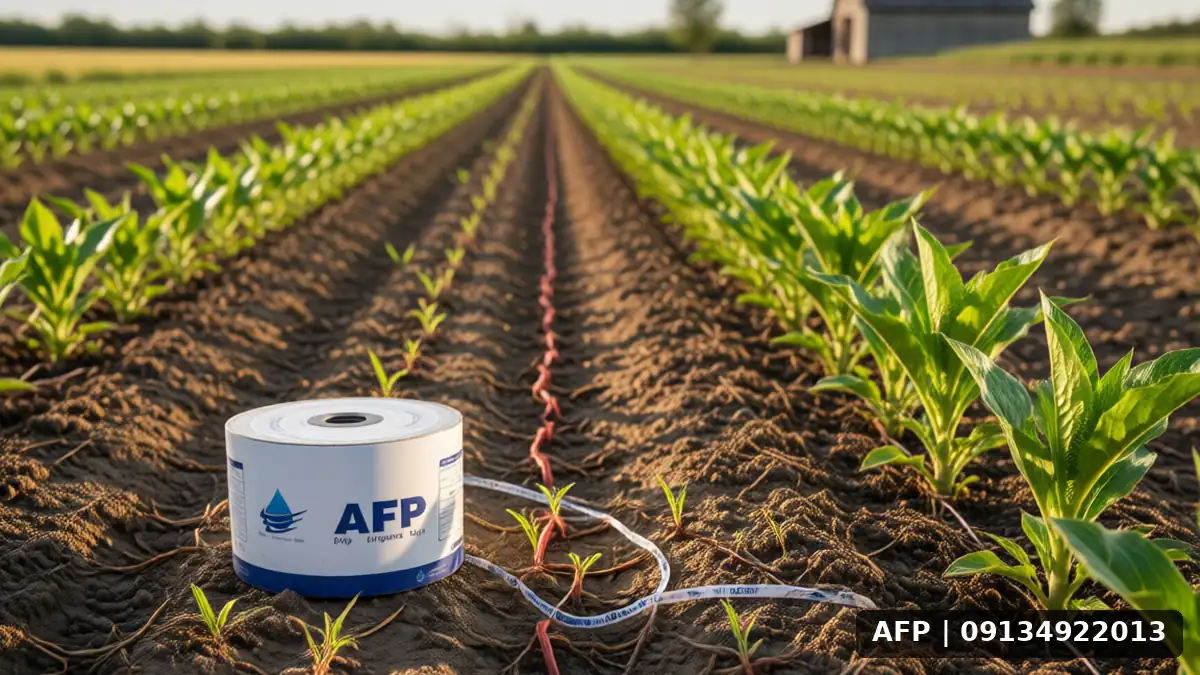
When selecting equipment, it is recommended to consult a drip line unit cost and efficiency guide to ensure the long-term performance of the system.
Integration with Sprinklers and Complementary Systems
In some cases, combining drip lines with complementary systems, such as micro-sprinklers for various applications, can be useful for wetting the dead zones at the start of rows. Additionally, using agricultural drip line selection criteria based on soil type (clay or sandy) helps optimize the system. In sandy soils, infiltration is faster, necessitating drip lines with higher discharge pressure.
Onion Yield Comparison Across Different Irrigation Systems
As shown, the drip tape system reduces irrigation costs while significantly increasing yield volume. This pattern is similar to analyses provided for Barley yield per hectare cereal crops; however, onion, due to its higher water demand during the bulbing phase, benefits from higher efficiency with drip tape.
Frequently Asked Questions (FAQ)
Is tape drip better than point drip for onion bulbing?
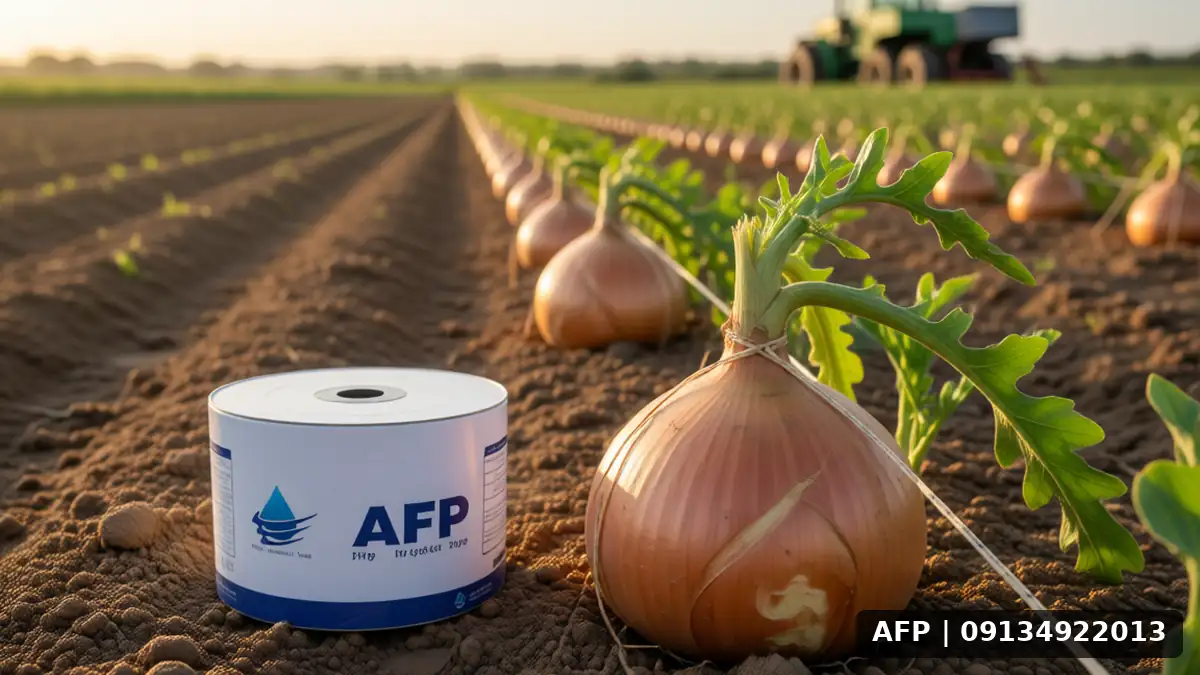
Tape drip is generally better for onion bulbing (stem and bulb enlargement) because it provides more uniform root zone coverage across the bed width. Point drip systems are more suitable for crops that require highly concentrated nutrition at the central root zone. Onions have shallow, spreading root systems, and tape drip better meets this requirement.
How can I prevent onion rot with tape drip?
By reducing irrigation duration in the late growth stage (final week before harvest) and ensuring the inter-row space is dry. Also, use appropriate mulching to prevent direct contact between onions and wet soil.
What is the effect of plow layer depth on onion tape drip?
Deep plowing requires adjustment of tape drip outlet pressure to ensure water reaches the rooting depth. In onions, roots typically spread to a depth of 30 cm. Calibrating the system based on this depth prevents unnecessary water waste. Study Factors affecting licorice yield per hectare Also emphasizes aligning the irrigation system with the plant’s rooting depth.
Conclusion
Increase Increase in onion yield per hectare using drip tape It is a comprehensive approach that requires attention to planting distance, selection of appropriate equipment, and smart timing of irrigation. This system, by increasing water and root nutrition efficiency, not only boosts yield but also improves onion quality and shelf life. Given the high economic value of onions and water resource scarcity, investing in drip tape is one of the most rewarding decisions in modern agriculture. Farmers are advised to consult with specialized irrigation experts, considering local soil type and climatic conditions, before expanding this system.
Related articles: Related article Related article Related article D981D98A Related article