Surface Irrigation in Fava Bean Cultivation: A Comprehensive Technical Guide
Introduction to the Importance of Water Management in Fava Bean Cultivation
Fava bean is a significant grain crop that holds a prominent position in national and global crop programs due to its high nutritional value, protein richness, and wide application in the food industry. Proper water resource management plays a decisive role in determining the yield, quality, and root health of fava beans. While modern irrigation systems such as drip and tape systems are rapidly expanding in popularity, surface irrigation continues to attract farmer attention due to its lower initial costs, compatibility with specific soil conditions, and the accessibility of rural irrigation channels. The objective of this comprehensive and technical guide is to examine the technical principles, benefits, and hidden challenges of surface irrigation for fava beans, providing practical tips for optimizing this method to ensure farmers can make confident decisions.
Technical Principles of Surface Irrigation for Fava Beans
Determining the Optimal Irrigation Timing
Fava bean plants have varying moisture needs and sensitivity at different growth stages. The germination and vegetative growth stages require sufficient and stable moisture at the root depth to strengthen plant bases, whereas even short-term water stress during flowering and pod filling can severely reduce yield and cause flower drop. Surface irrigation requires precise monitoring of soil moisture. Farmers should determine the appropriate time for water to enter irrigation channels using simple field methods, such as the leaf test, observing soil color changes, or other visual indicators. This helps prevent root waterlogging and fungal disease while ensuring the plant’s physiological water needs are met uniformly. Incorrect timing can lead to water wastage and uneven plant growth.
Slope and Flow Rate Management
In surface irrigation, controlling the bed slope and inlet water flow rate are two critical and interdependent factors. Excessive slope leads to severe soil erosion, gully formation, and uneven water distribution, leaving the tail of the plot dry while the head becomes waterlogged. Conversely, a very low slope prevents water from reaching the tail or results in excessively long infiltration times. The water flow rate must be adjusted and managed so that the rate of water infiltration into the soil remains synchronized with the rate of water movement across the surface. These sensitive settings vary depending on soil type (sandy, loamy, or clayey) and require precise field testing and recording of hydraulic data. The integrity of the irrigation bed is considered a key factor for success with this method.
Comparing Surface Irrigation with Drip Tape
Many modern farmers are transitioning from traditional methods to new pressurized systems. Although drip tape offers higher irrigation efficiency and significant water savings, surface irrigation remains viable and can even be more economically advantageous in situations where access to pressurized energy sources is limited or on large farms with specific topographies. An important factor in choosing between these two methods is the analysis of soil type, fixed maintenance costs, and water availability. Drip tape requires regular maintenance, flushing, and precise water filtration, which is a topic that is Drip Tape Maintenance Costs explained in detail elsewhere. In contrast, surface irrigation requires maintaining earthen canals, clearing drains, and stabilizing the bed, which can be accomplished without advanced electronic equipment and using local labor. Additionally, for those seeking more information on important considerations when using drip tape, this comparison can provide a more comprehensive perspective for selecting an appropriate system.
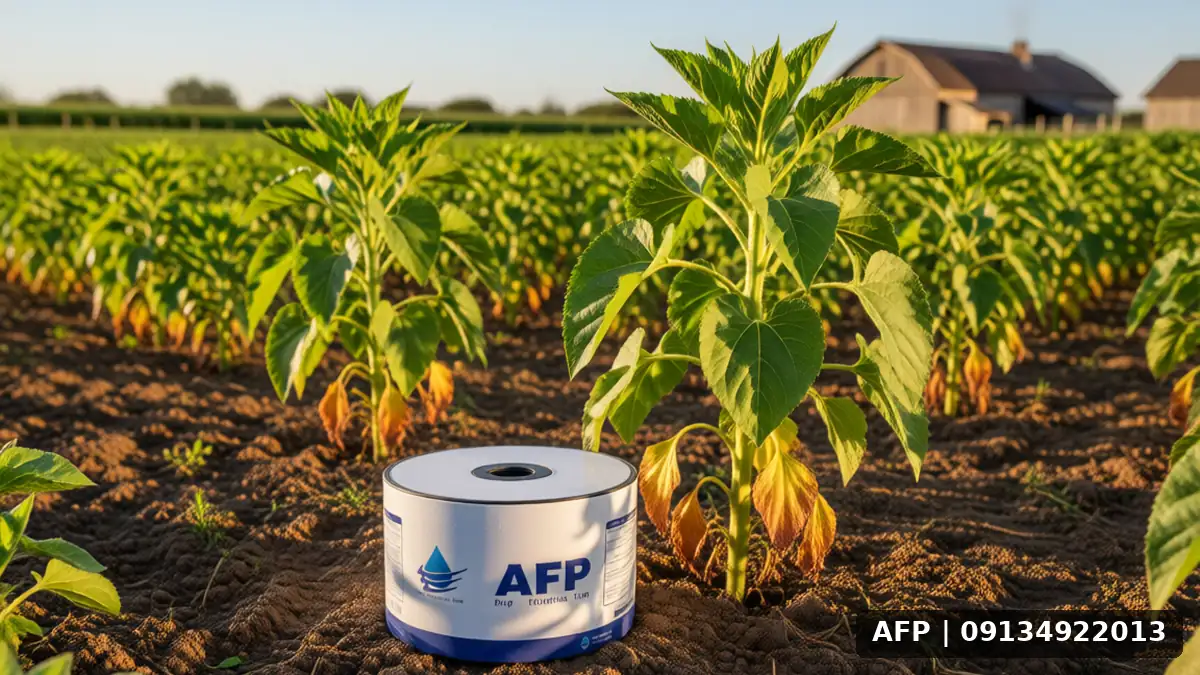
Practical tips for optimizing furrow irrigation for fava beans
- Seedbed preparation: Leveling the ground surface is a mandatory prerequisite for uniform water distribution. Any asymmetric slope or minor depressions will cause water accumulation in one area and dryness in another. High-precision grading is essential before planting.
- Root pest management: Excessive irrigation and frequent waterlogging predispose plants to root fungal diseases and decay. Prevent soil from remaining wet for extended periods without adequate aeration to ensure oxygen supply to the roots.
- Irrigation scheduling: Irrigating during cooler hours of the day and after night dew increases water infiltration efficiency and reduces evaporation. Aligning irrigation timing with regional climatic conditions is a key principle.
- Data recording: Precise recording of irrigation timing, duration, flow rate, and water volume aids in better understanding water movement in soil and adjusting future schedules. These data are the foundation of farm knowledge management.
Increasing yield through proper management
Proper and intelligent water management directly impacts grain production per hectare Faba bean is a crop sensitive to water stress during the critical seed-filling stage. Ensuring adequate and uniform moisture without waterlogging at this stage can increase seed-set percentage, improve thousand-grain weight, and enhance final product quality. Any moisture deficit at this phase has an irreversible impact on the economic yield of the farm.
Frequently Asked Questions (FAQ)
Is surface irrigation suitable for grain faba beans?
Yes, provided that bed leveling, precise flow control, and careful soil moisture monitoring are conducted. To further enhance efficiency, combining surface irrigation with fertigation via sprinkler at appropriate times is recommended to ensure better nutrient uptake.
How long should each daily irrigation session last?
This duration varies significantly and depends on water salinity, soil type, air temperature, and surface permeability. Typically, an irrigation duration of 3 to 5 hours per session is recommended, but this must be verified and adjusted through field calculations and infiltration tests to prevent water wastage.
Can surface irrigation be combined with intercropping?
Yes, but with specific slope and flow rate settings. The key considerations are preventing interference between the two irrigation systems, maintaining uniform moisture in the seedbed, and managing inter-row spacing so that main channels do not become blocked.
Conclusion and Final Recommendations
Selecting the appropriate irrigation method is a multidimensional and critical decision that must be made based on soil type, available water resources, allocated budget, and the final crop objective. Although modern systems such as drip and sprinkler irrigation offer significant advantages in efficiency and water conservation, surface irrigation, when managed with precise engineering and agricultural principles, remains a reliable and efficient method for fava beans. Our final recommendation is to conduct simple tests to determine soil salinity and permeability before starting cultivation and to record irrigation data systematically. Additionally, to ensure product quality and estimate economic yield, you may consult specialized guides on the yield of grain crops . By combining scientific knowledge, practical experience, and continuous monitoring, optimal fava bean performance and reduced production costs can be achieved.
Related articles: Number of plants per hectare and Revenue amount for Mexican fava bean