Subsurface Irrigation in Hemp Cultivation: In-Depth Analysis of Technical and Operational Prerequisites
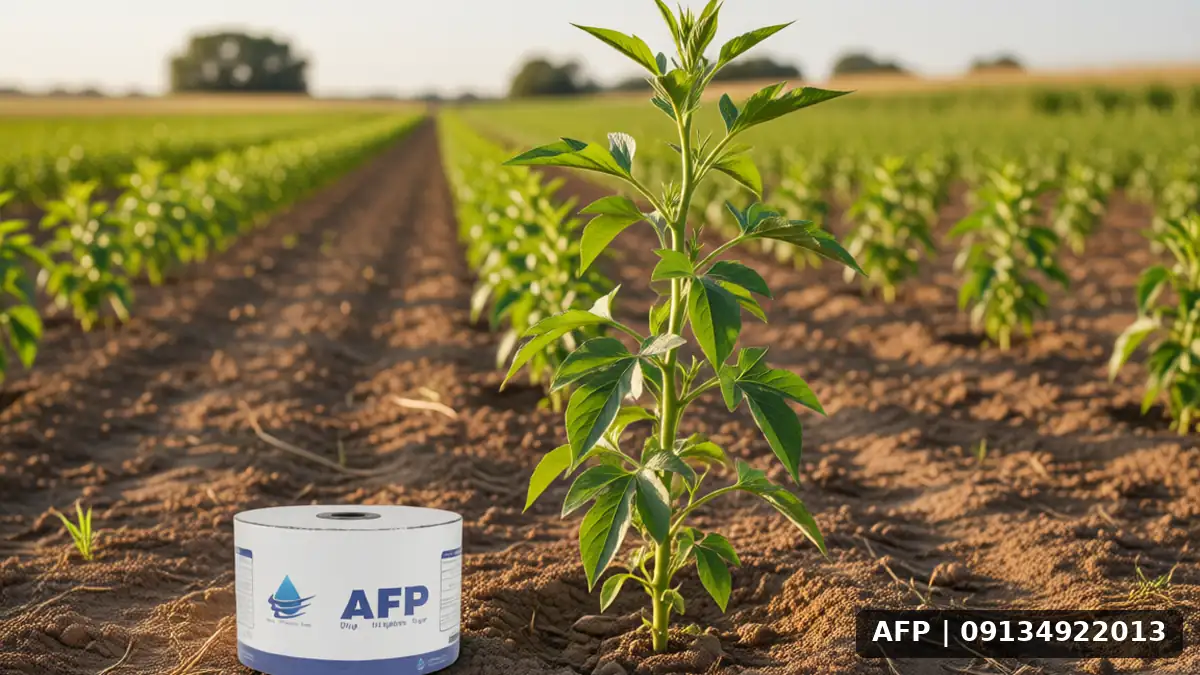
Sesame is one of the most important oilseed crops in the world and is highly sensitive to weather-related stress. In recent years, modern irrigation approaches have shifted toward improving water use efficiency and reducing surface evaporation. Consequently, Subsurface irrigation of sesame is proposed as a revolutionary solution that delivers water directly to the root zone via underground systems instead of the soil surface. This method not only reduces water consumption by up to 30 percent but also maintains more stable moisture levels in the root zone. However, before installing any subsurface system, farmers must understand a set of technical, soil, and hydraulic prerequisites; errors at any of these stages will yield negative results and high costs.
Soil and Geological Prerequisites for Subsurface Irrigation
Before any implementation, a precise understanding of the farm site is essential. Sesame field soil must have adequate permeability to prevent water from surfacing. In heavy clay soils, low infiltration rates create a risk of localized surface-level waterlogging, which can cause root rot. Therefore, the primary prerequisite is the presence of sufficiently permeable zones. On the other hand, land slope plays a central role in subsurface system design. Gentle slopes up to 5 percent are generally tolerable, but steeper slopes require the design of sloped channels or the use of higher-pressure drip lines to maintain uniform water distribution. Farmers can apply fundamental concepts of uniform distribution to sesame fields by studying recommended standards for drip line spacing in sugar beet cultivation.
Filtration and Water Quality Prerequisites
The critical factor in subsurface irrigation is water quality. Unlike surface irrigation, subsurface systems offer no alternative pathway for suspended solids to be removed; because the small emitters of drip lines or subsurface pipes are highly susceptible to clogging. A complete water analysis must be performed prior to installation. Turbidity exceeding 50 ppm, the presence of algae, or sandy particles all create strict prerequisites that will render the system inoperable without multi-stage filtration. Typically, a hydrocyclone (supa) filter is essential first, and if algae are present, a disk or sand filter must also be added to the system. Remember that filter maintenance in subsurface systems is more expensive than in above-ground systems because access to internal components is more difficult.
Designing drip line spacing and depth in hemp fields
The main prerequisite in design is determining the depth and spacing between drip lines. In hemp fields, an installation depth of 15 to 20 cm is generally recommended to place water directly in the deep root zone. Spacing between lines depends on planting density and soil type. In clay soils, closer spacing (e.g., 50 cm) is required for better water distribution, whereas in sandy soils, wider spacing (100 cm) may be more efficient. Farmers can review the comprehensive guide to yield per hectare to gain a deeper understanding of the relationship between moisture management and yield improvement in oilseed crops. Additionally, to better understand drip line principles, studying the comprehensive drip line guide for Libya can provide good insight into similar challenges in arid regions.
Chemical management and grip prevention in subsurface systems
One of the most complex operational prerequisites is chemical management. In subsurface irrigation, tree spraying or fertigation through the system must be performed with doubled precision. The deposition of insoluble materials in the drip line increases the risk of grip (clogging). Therefore, a fundamental prerequisite is the use of smart dosing systems that keep water pH and EC constant. Also, processed organic materials used for feeding hemp must be completely dissolved before entering the system. Since hemp roots require oxygen, excessive waterlogging caused by water leakage and inadequate drainage can lead to oxygen deficiency in the soil. For this reason, natural land drainage is considered a prerequisite.
Practical tips and implementation solutions
- Pressure test: Before burying the drip tape, the system must be pressure tested at 15-20 pounds to identify potential leaks at connections. After burial, access to connections becomes difficult.
- Pressure gauge: Installing a manometer at the end of each main hose is a vital prerequisite for early detection of grip. A pressure drop in one section indicates a clog in that hose.
- Protecting lines: Avoid passing agricultural machinery over subsurface lines unless the safe depth is maintained. Mechanical pressure causes the small emitters in drip lines to rupture.
- Preventing clogging: Before starting each new season, flush the drip lines with a strong flow of clean water to remove sediment particles from inside the tubing.
To better understand nutritional challenges and yield improvement, read articles such as Canola Yield Guide for Iraqi Farmers which can provide comparative insight into oilseed management under similar conditions.
Frequently Asked Questions (FAQ)
Is subsurface irrigation suitable for heavy soils?
Yes, but with caution. In clay soils, the lateral spacing must be reduced and flow precisely regulated to ensure water dispersion and prevent localized waterlogging. A prerequisite is that the soil permeability must be tested.
How can I prevent clogging of the drip tape?
Use appropriate filters, pre-treat water before it enters the system, and perform regular flushing. Additionally, it is recommended to select drip tape with larger orifices (per meter) for subsurface applications; however, this must be compensated for by reducing the number of orifices to maintain uniform flow.
What is the effect of subsurface irrigation on fungal diseases in hemp?
It is generally beneficial. Surface moisture is minimized, and fluctuations in air humidity near the root zone are reduced. However, if subsurface leakage causes water stagnation, it can instead exacerbate root diseases. Therefore, drainage is a critical prerequisite.
Summary and Conclusion
Transitioning from surface to subsurface irrigation in hemp cultivation is a significant step toward more precise and sustainable agriculture. However, the success of this system is not as straightforward as advertised in the market and depends on more than just purchasing equipment. Technical prerequisites, from filtration to slope management, along with continuous monitoring of water and system quality, are fundamental structural pillars. By carefully considering these factors, water efficiency can be improved and hemp yields guaranteed under conditions of water scarcity. Smart agriculture means using knowledge to reduce risk; without this knowledge, subsurface irrigation of hemp will merely be an additional cost.
Related topics: buls akhdar mawsout haqtara