Subsurface Drip Irrigation (SDI) for Melon Cultivation: Key Considerations
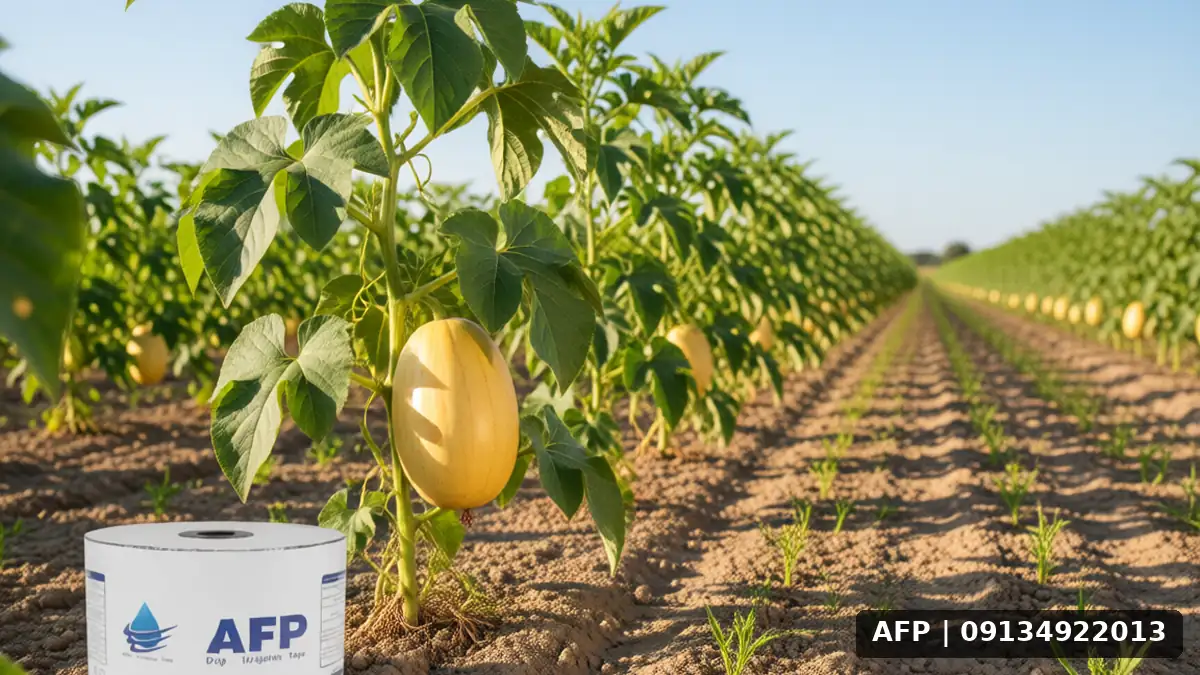
Melon (Cucumis melo) is a crop that is highly sensitive to water stress, and precise soil moisture management is a fundamental requirement for achieving fruit that is uniform, sweet, and has high shelf life. In this section of Melon seed density per hectare and planting density must also be considered to ensure that irrigation intervals are synchronized with plant density. Moisture irrigation, primarily delivered through drip and tape systems, provides greater control over the amount and timing of water delivery to the root zone. This approach not only prevents soil salinization but also prevents fruit cracking and yield quality degradation by maintaining uniform moisture.
Introduction: The Importance of Moisture Management in Melon Production
Melon producers often face challenges such as flavor fluctuation, irregular fruit size, and high water consumption. The use of traditional furrow irrigation methods, which can be seen in furrow irrigation often leads to water waste and increased pressure from diseases. Modern moisture irrigation systems, which target the active root layer, ensure crop stability. In this guide, we review key points for the successful implementation of these systems in melon farms.
Physical Principles of Drip and Tape Irrigation
In drip systems, water is delivered continuously to the root zone at low flow rates and constant pressure. In tape systems, water passes through perforated tubing and is released in discrete, spaced intervals (bands). Both methods limit the wetted area. In melon, adventitious roots form after grafting or during rapid growth stages, making moisture supply in the topsoil layers critical.
Key points in designing a melon drip irrigation system
Before installing any equipment, understanding soil physical properties and plant physiological requirements is essential. The following points are of high importance:
- Dripper spacing: Typically, in dual-manifold systems for melon, dripper spacing ranges from 30 to 50 cm. This spacing must be adjusted to match the diameter of the mature root crown.
- Selecting the appropriate flow rate: The use of 2 L/hour drippers is recommended for arid regions and 4 to 8 L/hour for humid regions. High flow rates cause water loss through deep percolation.
- Operating pressure: The drip system typically operates at a pressure of 1 to 3 bar. The pressure drop along the drip line must be less than 20 percent.
- Planting and density: Based on the number of melon seeds and planting density per hectare, the total system discharge must be calculated. Higher density requires more drip emitters per square meter.
A precise planning of rotational irrigation can also assist in resource management, although for melons, frequent and low-volume irrigation is more appropriate. To better understand the differences, you can study the advantages and disadvantages of rotational irrigation for agricultural land.
Application of the ridge strip system for melons
Neta-tip is a more economical option that places metallic strips in the soil or on the soil surface instead of scattered drippers. This method is suitable for farms with clayey and low-roughness soils, as it prevents water accumulation at depth and keeps the moisture zone at the depth of surface melon roots. In this system, the distance between strips is typically 50 to 60 cm.
Irrigation timing and quantity based on growth stage
The water requirement of melons varies throughout the growth period. A standard irrigation schedule should be divided into four main stages:
- Sowing to Uniformity stage (Emergence-Uniformity): Very low-volume irrigations (e.g., 1 liter per meter of row per session) at intervals of 1 to 2 days. The goal is to create humidity for germination and prevent seed caking.
- Vegetative Growth stage: Water demand increases to 3 to 5 liters per meter of row per day. At this stage, roots are expanding, and uniform moisture reduces stress and increases green canopy volume.
- Flowering and Fruit Set stage (Flowering & Fruit Setting): This is the peak of water consumption. Irrigation should be reduced or avoided during the hottest hours of the day to prevent flower abortion and fruit drop. The irrigation volume increases to 6 to 8 liters per meter of planting line.
- Maturity and Harvest Stage & Harvest): Gradual reduction in humidity increases sweetness (TSS). Based on the yield of carrots per hectare and other crops, similar principles of reducing irrigation at the end of the growth period apply to prevent fruit rot in cold conditions. The irrigation volume is reduced to 2 to 4 liters per meter to achieve a more concentrated flavor.
Management of irrigation water salinity must also be included in this program. Salinity increases the plant’s water requirement for leaching.
Practical tips for maintaining and managing irrigation systems
The success of a drip or ribbon line system is not possible without proper filtration and regular flushing. Implement the following tips in practice:
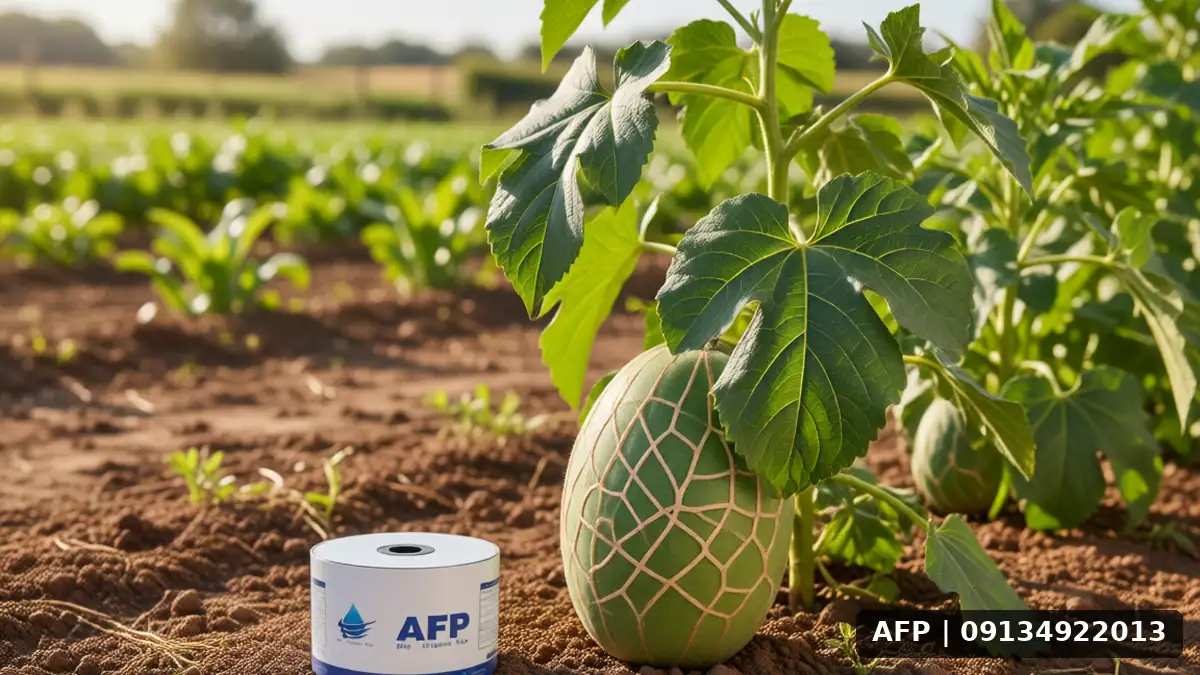
Filtration and water clarity
- For well water with high suspended solids, always use two filters (sand and silt). If the water source is a qanat, a single-layer filter (prefilter) is sufficient.
- Include periodic filter cleaning in your daily schedule. Clogged emitters lead to uneven irrigation and crop loss.
Salinity Control and Soil Leaching
Cantaloupe is relatively sensitive to salinity. If using saline water (e.g., EC above 1500 ppm), inject a larger volume of water (leaching) at the end of each irrigation cycle to move suspended salts from the root zone to inactive depths.
Pressure Backup and Monitoring
Drip line pipes and fittings must be made of UV-resistant materials. Regularly check water pressure at the start of the main line and the end of the sub-line with a manometer to help detect abnormal pressure drops caused by pipe blockages or leaks early.
Frequently Asked Questions (FAQ) about Cantaloupe Irrigation
How many liters of water are required per irrigation session for cantaloupe?
The exact amount depends on soil type, ambient temperature, and growth stage. Generally, during the tillering stage, 3 to 5 liters per meter of row is considered, and during the fruiting stage, 6 to 8 liters is applied.
Is a micro-tape system better than drip irrigation?
Micro-tape is a better option for clay soils with low permeability, as it prevents deep water infiltration. Drip systems work better for fine and sandy soils, as they allow for more precise control of wet zones.
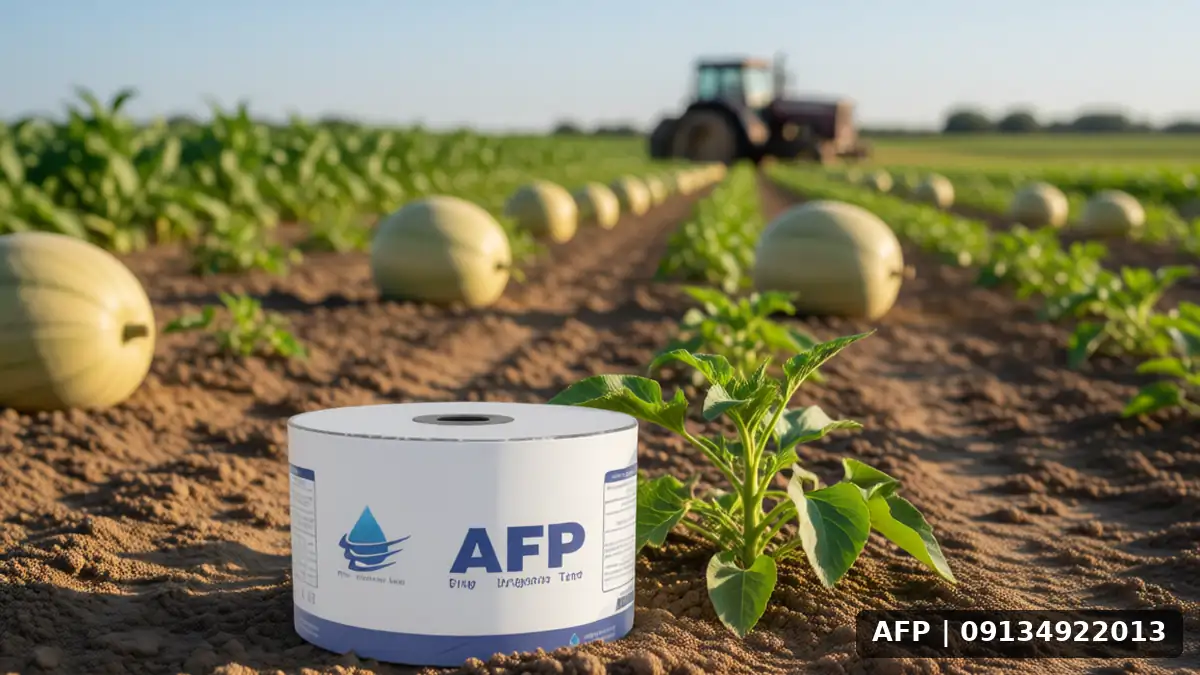
How can I reduce salinity in melon soil?
By increasing the irrigation volume during the final sessions (salinity leaching), using gypsum-based fertilizers, and improving soil structure, one can reduce salinity pressure.
Can I apply fertilizer with water (fertigation)?
Yes, fertigation in drip systems is highly efficient. However, you must ensure that fertilizer concentration is low and prevent accumulation in micro-tape lines that have less leaching.
Summary and Final Recommendations
Implementing moisture-based irrigation for melon crops is an investment that rapidly pays off by reducing water consumption by 30 to 50%, improving fruit quality, and controlling fungal diseases. The key to success is matching flow rates and scheduling with growth stages, using high-quality equipment, and continuously monitoring water pressure. Farmers who pay close attention to the installation method and costs of the drip line will benefit from higher system integrity. Additionally, by studying the potato drip line and comparing it with melons, one can better understand the differences. Ultimately, smart and moisture-based irrigation is the future of water management in orchards and vegetable farms like melon fields.