Sprinkler Irrigation in Garlic Cultivation: Key Prerequisites for Success
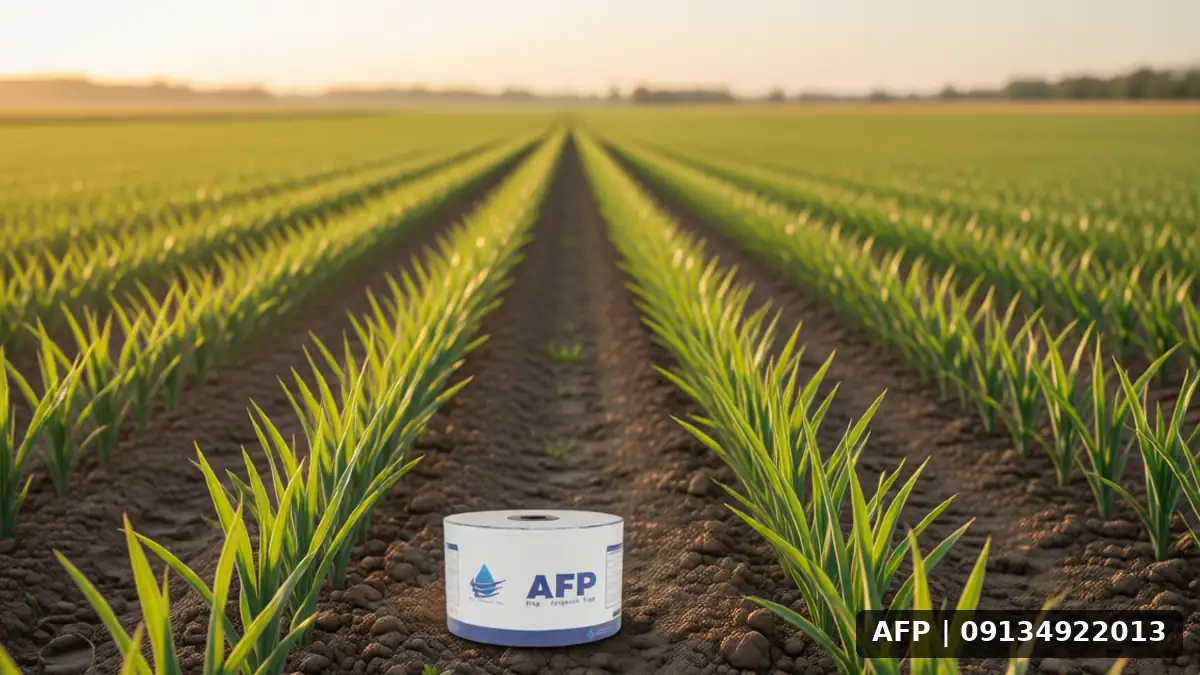
Introduction to Sprinkler Irrigation in Garlic Fields
Due to its high sensitivity to moisture conditions and precise water management needs, garlic is one of the most practical crops for utilizing modern irrigation technologies. Sprinkler irrigation, which is sometimes combined with drip or micro-spray systems, is more commonly seen in fields with wider final spacing; however, it can be applied under specific conditions in garlic cultivation, particularly in vertical planting systems or drainage management. Nevertheless, implementing any advanced irrigation system in garlic farming requires a thorough review of technical and agronomic prerequisites. This article examines these prerequisites, including soil conditions, appropriate equipment selection, and operational points, to help farmers make informed decisions for water resource management and increased garlic yields. Understanding these foundational concepts is the first step in transitioning from traditional agriculture to precise, high-efficiency farming. Additionally, attention to small details in early stages can directly impact root health and ultimately the quality of garlic bulbs. Therefore, farmers intending to upgrade their irrigation systems must pay special attention to the physical layout of the land and soil characteristics. Any neglect of these preliminaries may lead to wasted capital and reduced performance in the long term. The following section details each of these prerequisites to provide a clear picture of operational requirements.
Soil and Geological Prerequisites
Before installing any irrigation system, a precise soil profile analysis is essential. Garlic requires good drainage; heavy soils with poor drainage can cause bulb rot. Therefore, in runoff or drip irrigation, prevent water accumulation in the upper layers. Soil analysis to determine pH, EC, and clay and sand percentages is the first and most important step. Additionally, slope is a critical factor in designing runoff irrigation systems, as it directly affects water infiltration speed and rate, and consequently, the uniform distribution of moisture to the roots. Without accurate site assessment, designing an efficient system is not possible. Beyond slope, soil particle size distribution significantly influences the irrigation rate. In well-structured soil, water infiltrates faster, requiring fewer irrigation events. However, in soils with high clay content, irrigation speed must be significantly reduced to prevent localized waterlogging of the roots. These analyses must be fully completed and documented before purchasing equipment. Also, reviewing the history of previous crops on the land can provide valuable information regarding water stress and root diseases.
The effect of soil type on irrigation method selection
- Sandy soils: High permeability and low water holding capacity. Requires frequent, short-duration irrigation. These soil types are more suitable for low-flow lateral tip systems.
- Clay soils: Low permeability and risk of root waterlogging. Requires precise control of pressure and outlet flow rate. The use of advanced filters to prevent clogging of small pores is essential.
- Optimal soils for garlic: Typically, lightweight soils with good drainage and well-structured aggregates that allow for root aeration. These soils yield the highest efficiency from precision drip systems.
For a better understanding of how soil type impacts the overall management of small-grain crops, you can refer to the article Soybean yield per hectare consult, which shares similar resource management principles for increasing productivity. This study demonstrates how adjusting moisture in different soils directly affects the volume and quality of the final product. Additionally, comparing saturated soil conditions with other plots helps farmers leverage lessons from others’ experiences. A deep understanding of the soil-water relationship is the key to designing a sustainable and cost-effective system. Therefore, it is recommended not to avoid consulting soil specialists to interpret test results. The more accurate the knowledge of the growing medium is, the lower the risks associated with climate change and water fluctuations will be. This proactive approach is a smart investment for future seasons.
Technical prerequisites of the irrigation system
Choosing between drip irrigation, tape, or true sprinkler systems (such as spray nozzles) depends on crop layout and farmer objectives. In garlic cultivation, narrow lines (tape) are often installed under the crop surface to direct moisture directly to the root zone. The main prerequisite in this section is proper water inlet pressure to the fittings. Excessive pressure drop can lead to garlic rot. Additionally, the material and diameter of main and sub lines must be calculated based on line length and output flow rate. In technical calculations, a safety factor must also be considered to maintain desired pressure during peak consumption. Inconsistency across various system components can make even the smallest leaks appear as major problems. Therefore, using standard, high-quality fittings is an absolute requirement. Also, proper placement of control valves at suitable network sections enables rapid troubleshooting and easy repairs. This technical structure must be designed so that access to each part of the system is easy for the maintenance team without challenge. Excessive complexity in design increases operational costs and makes rapid response to problems difficult.
Comparing Drip and Tape Systems in Garlic Cultivation
Understanding the principles of selecting an appropriate system can be complemented by studying the thickness of the 2-type drip irrigation tape which details the technical specifications of the tubing lines. These technical details are crucial for making the final decision regarding system lifespan and resistance to environmental stress. Additionally, knowing the precise specifications of the tubes helps avoid purchasing incompatible components. Coordination among the various system parts ensures uniform performance across the entire field.
Water and energy resource management
Prior to implementation, sustainable water sources must be identified. Wells should be designed with an appropriate pumping frequency to prevent groundwater level decline. Additionally, calculating the energy required for pumps and water filtration (to prevent clogging of emitters) is a key prerequisite. Cation or sand filters are necessary depending on source water quality. Untreated water can lead to definitive system failure during the growing season and severe yield reduction. Therefore, installing appropriate filters and scheduling regular cleaning is an operational necessity. Sediment and algae deposits in pipelines are the primary enemy of fine-pore emitters. A multi-stage filtration system guarantees that water entering the network is always clean and ready for root absorption. Furthermore, pumping energy consumption must be optimized to keep electricity costs within acceptable limits. Using high-efficiency pumps and adjusting speed based on actual crop requirements is a way to reduce fixed costs. This smart management not only helps conserve resources but also ensures the farm’s economic sustainability.
Practical points in implementing surface/drip irrigation
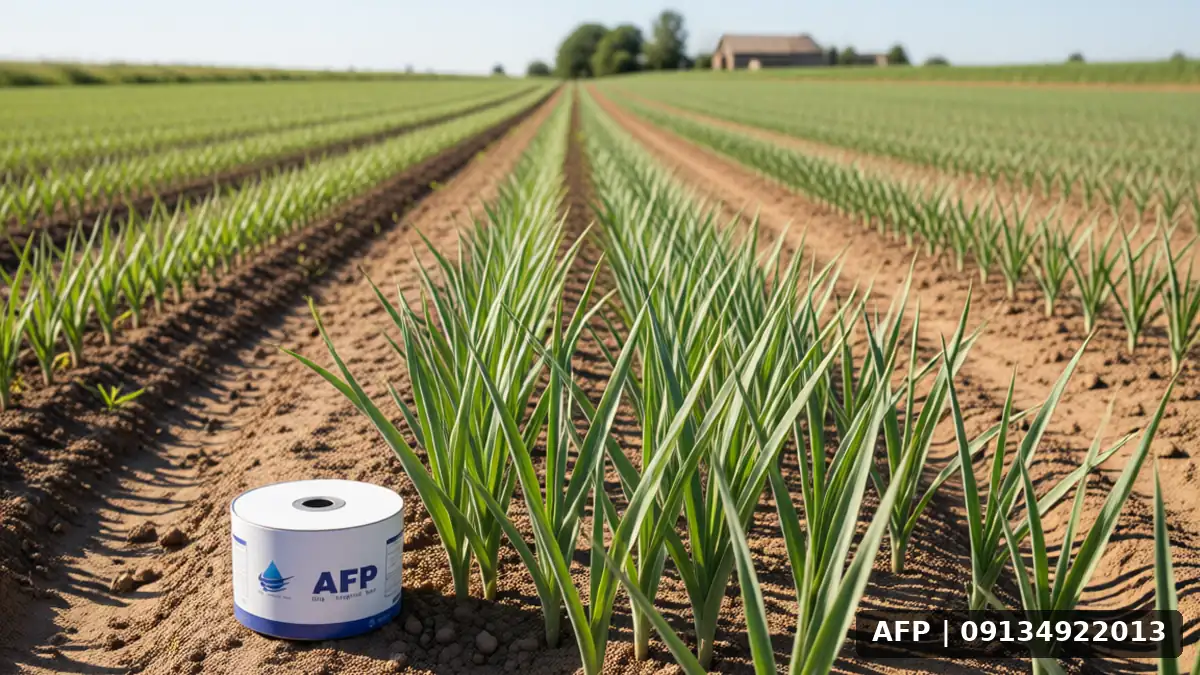
- Planting and spacing: Garlic is typically planted at a spacing of 10 to 15 cm within the row and 30 to 40 cm between rows. The irrigation system must be positioned directly under the planting row to ensure optimal moisture coverage.
- Subsurface placement: Drip tapes must be buried at a depth of 15 to 20 cm below the soil surface to effectively prevent evaporation and deliver moisture directly to the roots.
- Scheduling: During the first 3 weeks after planting, thin roots require continuous moisture. From the fourth week until bulb formation, irrigation must be controlled and adjusted according to air temperature.
- Pumping duration: For drip systems, short and frequent sessions (for example, 1 to 2 hours per day) are more efficient than long irrigation sessions and help prevent soil saturation.
To optimize planting spacing and its impact on water consumption, a study on Wheat cultivar row spacing and modern irrigation principles can elucidate similar concepts for other small seeds. These principles, regardless of crop type, focus on layout and water flow management. Understanding this relationship helps farmers make more comprehensive decisions about field spacing. Additionally, aligning the irrigation system with the planting pattern prevents agronomic stress. Coordination between planting time and the start of irrigation is the key to success in establishing strong roots. This coordination must be formulated in a written and executable plan.
Economic and management prerequisites
The initial capital cost per hectare for the drip or band-line irrigation system, system efficiency, and operational costs (electricity, filtration, maintenance) must be calculated. The farmer must be confident of a return on investment within 2 to 3 cropping seasons. Additionally, specialized skills for detecting clogged emitters and repairing pipes must be trained within the farming team. This training can be conducted through specialized workshop courses or consultation with equipment suppliers. A team proficient in technical issues can extend the useful life of equipment and reduce inefficient repair costs. In addition, documenting all repairs and part replacements helps with better planning for future seasons. Precise financial management is as important as technical management. Proper budgeting for spare parts and current expenses prevents sudden system stoppages. This managerial perspective defines the difference between a successful project and an unsuccessful investment. After installation, continuous monitoring of system performance is a daily task that should not be delegated to unfamiliar individuals. Any changes in field layout must also be coordinated with the irrigation system design.
Frequently Asked Questions (FAQ)
Is furrow irrigation suitable for all types of garlic?
Early-season garlic varieties typically require faster growth, for which more precise systems like band-line irrigation are more suitable. Late-season garlic varieties with longer growing periods can be managed with simpler furrow systems, but they carry a higher risk. The choice of garlic variety must be coordinated with the type of irrigation system to achieve optimal results.
What is the best time to install an irrigation system before planting garlic seed?
The system must be completed and tested at least one month before planting. This period is critical for fixing leaks, adjusting pressure, and testing filters. Conducting initial tests under suitable soil conditions ensures the system functions correctly. Delays at this stage can lead to planting delays and loss of the optimal window.
Do I need a separate drainage system alongside garlic drip irrigation?
In clay soils or rainy regions, yes. A drainage system is essential to prevent root waterlogging during rainfall, as drip irrigation alone does not control rainwater. Combining drainage with precision irrigation prevents the accumulation of excess water. This combination is vital, particularly in areas with irregular rainfall.
Conclusion
Successful implementation of furrow irrigation or drip/strip systems for garlic requires strict adherence to technical, soil, and management prerequisites. Since garlic is a moisture-sensitive crop with high economic value, investing in precise irrigation systems can significantly improve bulb quality and reduce losses. Farmers are advised to consult irrigation experts and accurately assess local conditions (soil type, water sources, and climate) before selecting a system. By following resource optimization principles, sustainable and productive farming can be achieved. To learn about other crops and the impact of prerequisites on yield, read about Dynamic performance per hectare It can provide a good overview of general farm management principles. This comprehensive perspective helps better understand the position of garlic cultivation within the overall production system. Additionally, adapting these principles to the local economic and climatic realities ensures long-term sustainability. Finally, it should be noted that precision irrigation is not merely a technology, but a philosophy of resource management that can be applied in every crop.