Furrow Spacing for Saffron Crop: Recommended Standards
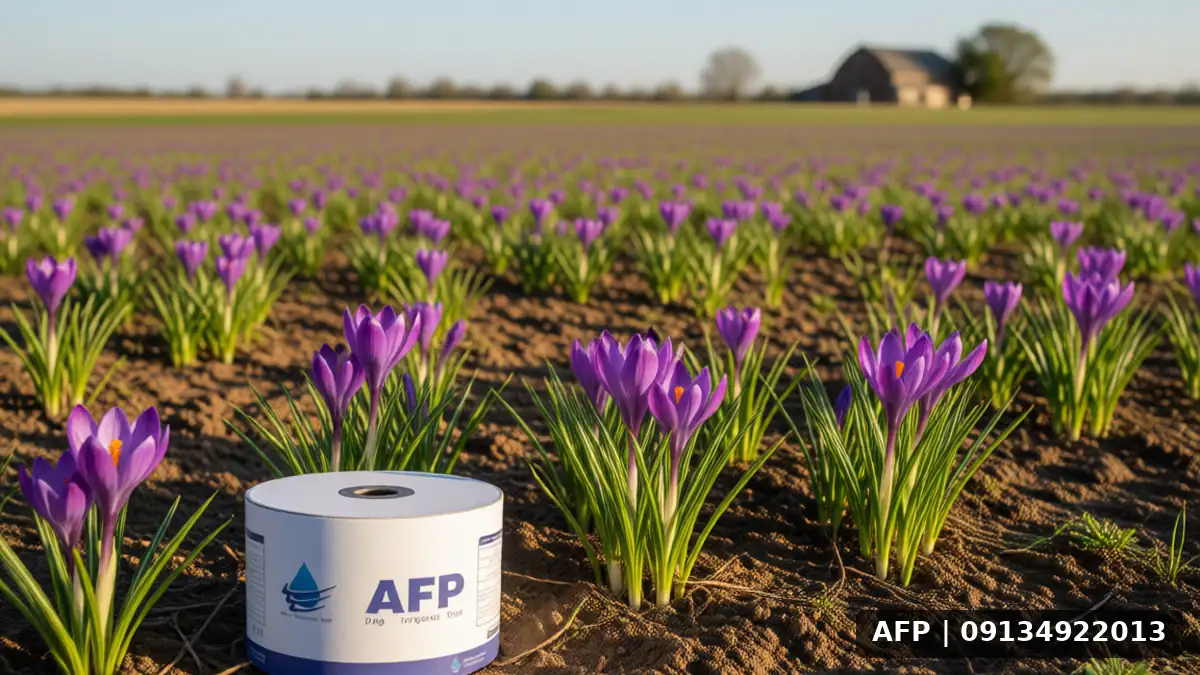
Introduction to the Importance of Drip Line Optimization in Saffron
Saffron, as one of the most valuable agricultural crops, faces specific challenges in water resource management. Although saffron is a drought-tolerant plant, the precise and timely supply of moisture during the leaf growth season and flowering yield directly affects the quality and quantity of the fruit (saffron pistil) and, ultimately, the final product. In this context, Saffron Drip Line Spacing plays a key role in the uniform distribution of water and root nutrition. Inappropriate line spacing settings can lead to water waste or insufficient moisture within the root radius. Therefore, mutual understanding of drip lines, row layout, and farm climate characteristics is considered a fundamental pillar of efficiency in saffron cultivation. This is an aspect that many novice farmers overlook at the start of their journey, whereas precise planning from the very beginning can significantly reduce production costs.
Key Principles in Designing Row Layouts for Saffron Farms
Impact of Row Spacing on Roots and Light
Saffron is a native plant of semi-arid regions, and its roots have a limited depth, typically active up to 40 to 60 centimeters. Consequently, row planting distance must be such that it allows for soil aeration, prevents fungal diseases, and ensures appropriate access for drip lines. In traditional systems, row spacing varies, but in mechanized systems using drip irrigation, the standard spacing is generally considered to be between 25 and 50 centimeters to optimize root coverage. Using knowledge of key tips when utilizing water drip lines can serve as an indirect indicator of soil health and uniform plant distribution. Familiarity with cultivation standards for other crops, such as Minimum Efficiency in Lion’s Mane Mushroom (Hericium erinaceus)This reminds us that even the smallest changes in layout have a significant impact on final yield.
Selecting drip tape spacing based on soil type
Soil texture plays a decisive role in selecting the drip tape width and its distance from the row center. In sandy soils with rapid drainage, a greater distance is required to prevent water from moving outside the root zone. Conversely, in clay soils, a shorter distance is recommended to prevent water loss. The table below provides a summary of general recommendations based on soil texture:
Attention to these factors allows you to avoid unnecessary costs of purchasing additional equipment and focus only on what is required for your specific farm soil type.
Why combine drip tape with drip systems?
Drip tape itself is considered a method of direct subsurface irrigation, but combining it with surface drip emitters on or near the tape can double its effectiveness. This combined system allows for more precise control over basal feeding. Although saffron drip tape is efficient in its own right, understanding the principles Increasing rainfed yield and stress management can help the farmer understand how plants behave under water stress and introduce drip tape as a primary solution for maintaining moisture. For proper installation of this equipment, attention to the guide for installing drip irrigation systems with drip tape is critical to prevent technical flow path blockages. This integrated method minimizes the risk of water pressure fluctuations.
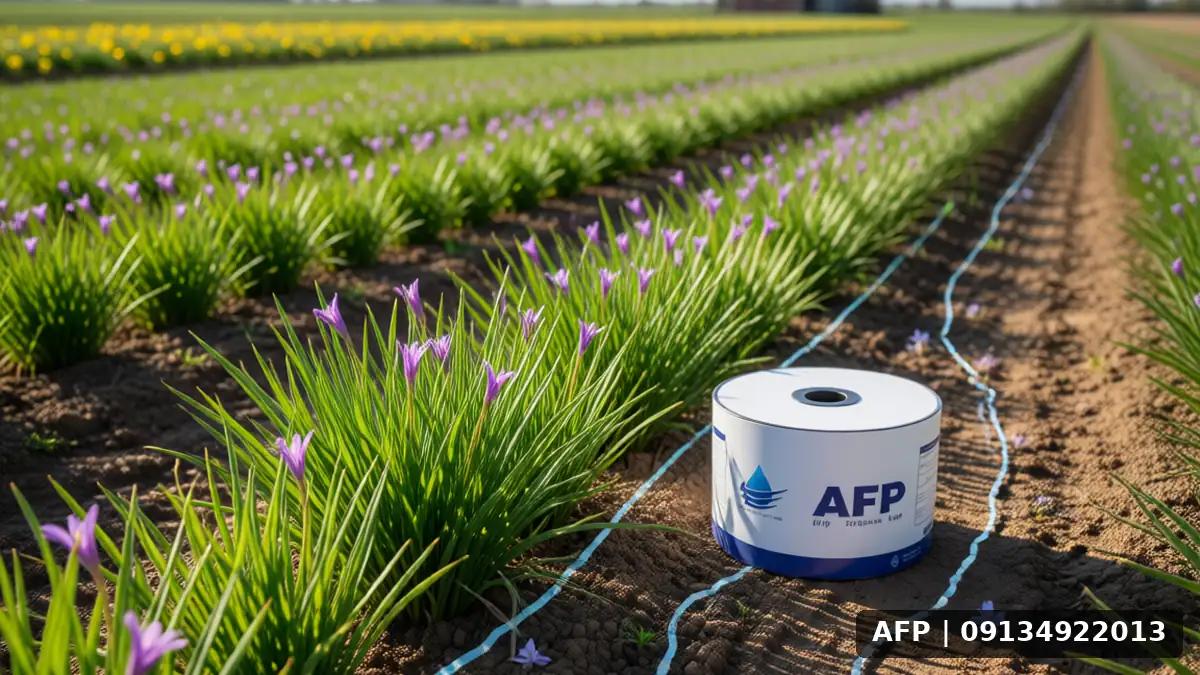
Tomato drip tape and transferable practices to saffron
Although saffron is a bush crop with specific characteristics, the principles of installing and maintaining drip tape overlap with other crops such as tomatoes. Studying key points when using water drip tape can minimize common errors such as tape twisting or improper filter pressure. As noted in other crops, the physical health of the tape directly affects the final performance of the plant. Farmers who have had this experience in tomato farms are usually familiar with shared technical challenges and can offer better solutions for saffron farms.
Practical Operational Points for Saffron Cultivation
- Installation Depth: Position the drip line exactly in the most root-dense zone of the soil profile, i.e., at a depth of 10 to 15 cm. This depth must be adjusted according to your field’s soil type.
- Water Flow: The flow direction of the drip line should run from the top of the slope to the bottom to ensure uniform pressure. This is particularly critical in fields with zero gradient.
- Filtration: Using a 120 to 200 mesh filter for 200 and 8000mm drip lines is essential to prevent emitter clogging. Regular filter cleaning is a necessity, not an option.
- Satellite Line Maintenance: If you use shuttles, keep the end of the tape open to prevent air pressure damage. This point is often overlooked in formal training.
Adhering to these subtle details makes the difference between a weak crop and a high-quality export crop. Additionally, precise logging of irrigation history and observing root behavior will allow you to make smarter decisions next year.
Impact of drip tape spacing on other quantities in crop cultivation
Precise determination of tape spacing directly affects the calculation of water requirements for each irrigation cycle and the distribution of liquid fertilizer to the roots. When tape spacing is sufficiently wide, moisture coverage will not be uniform across the entire width of the farm furrow. For more accurate calculations, it is recommended to refer to Complete Guide to Saffron Seed Spacing per Hectare to consider crop uniformity and irrigation integrity. Also, understanding the amount of corm seed per hectare As another example of row-cropped products, it can expand your perspective on density and spacing suitability.
Frequently Asked Questions (FAQ)
Is drip tape spacing the same in all fields?
No. This spacing varies based on field slope, soil type, and regional climate (for example, growing in Yazd versus Golestan) and requires calibration. Arid-field irrigation systems operate very differently from semi-arid systems.
Is drip tape essential for all growth seasons of saffron?
Drip tape is typically used during the plant’s rapid growth phase (autumn and spring). It is turned off during the winter dormancy phase to prevent excess moisture from causing root rot. This rest period is critical for the health of the corm.
What is the main difference between drip tape and drip emitters?
Drip tape delivers water through small, continuous emitters, making it ideal for plants with shallow, dense root systems like saffron. Drip emitters are better suited for wider spacing. The choice between these two options directly affects your initial capital expenditure.
Summary and Final Recommendation
Managing tape line spacing in saffron cultivation is not merely a technical task but a management strategy for the long-term preservation of saffron investment. By adhering to row layout principles, selecting appropriate tape width based on soil texture, and accurately tracking seed density, exceptional efficiency in water use and pistachio quality can be achieved. Combining local knowledge with technical standards is key to success in this sensitive industry. Our final recommendation is to conduct a comprehensive review of the layout and equipment before starting each new season.