Rain-like Irrigation with Runoff in Lettuce Cultivation: Applications and Practical Notes
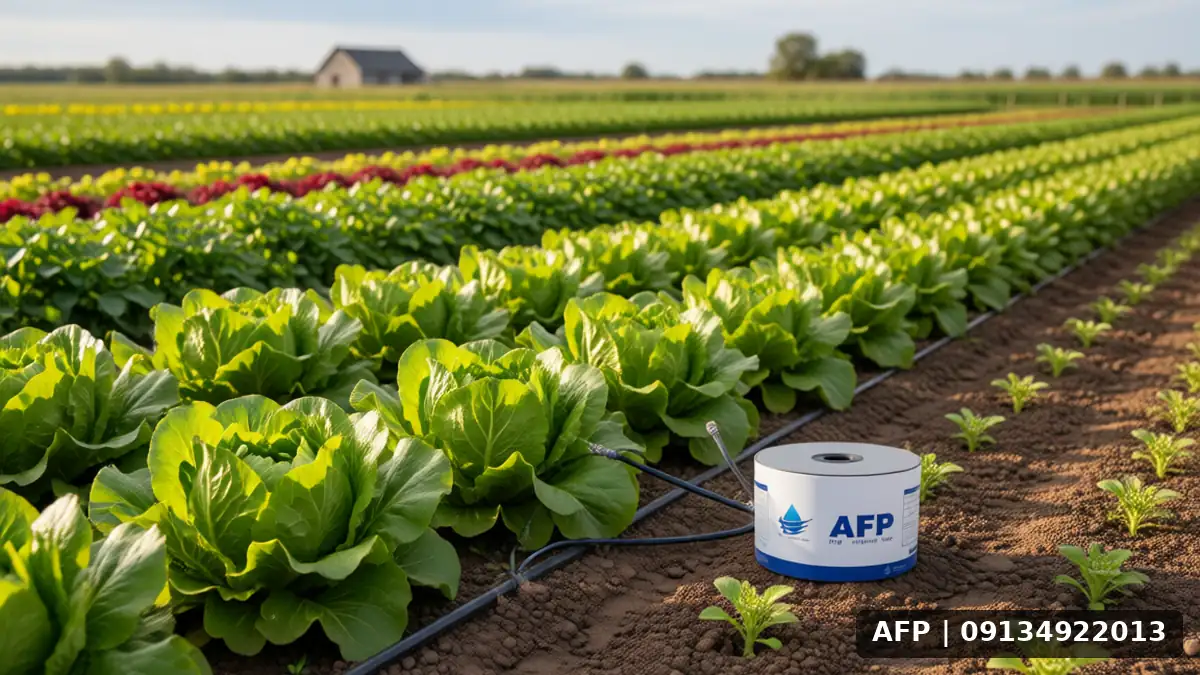
In modern agriculture, the optimal management of water resources is a major challenge. Although drip irrigation and tape systems are recognized as superior methods due to their high precision and water conservation, sprinkler irrigation systems (sprinkler risers) still have specific applications in certain climates and cropping conditions, particularly for plants with shallow root systems and full surface cover. Sprinkler irrigation with run-off In lettuce cultivation, this can be a hybrid concept in which the uniform distribution of water as rain-like droplets, combined with the management of surface flows (run-off) to direct water to the roots, is considered. Although this method requires precise adjustments, when implemented correctly, it can promote uniform lettuce growth. This article examines the applications, advantages, disadvantages, and practical considerations of this system for lettuce cultivation.
Working principles of sprinkler irrigation with run-off in lettuce
Lettuce is a plant with a shallow root system that requires uniform soil moisture. Using low-pressure risers with a fine spray diameter simulates gentle rainfall. The concept of ‘run-off’ here refers to the process of water moving across the soil surface or through small channels, which can be used to better direct water toward the roots without causing severe soil erosion or damage to lettuce plants. Unlike drip irrigation, which operates at specific points, sprinkler risers operate over a wider area. For lettuce, which is grown in dense rows, uniform moisture coverage across both the inter-row spaces and on the rows is important. Controlled run-off can help balance moisture in the vertical soil profile, particularly in clay soils with low permeability.
Specialized applications and run-off management
- Run-off flow modeling: In low-slope climates, controlling the flow velocity of surface runoff prevents water from concentrating at a single point and encourages it to move toward deeper roots. This prevents soil surface drying and crust formation.
- Reducing evaporative stress: Unlike high-pressure spray, which can cause excessive wetting of the plant canopy and evaporation, a diluted spray system with fine droplets reduces direct evaporation from leaf surfaces and directs moisture directly into the soil.
- Coordination with drip line systems: In some combined systems, spray booms can be used for initial-stage irrigation and filling surface deficits, followed by reducing pressure or switching to drip to prevent excessive runoff. Understanding the factors affecting flow rate in drip lines, such as flow rate in drip lines, helps better balance the spray and drip systems.
One of the main challenges in lettuce cultivation is its susceptibility to lower leaf drop caused by the direct impact of heavy water droplets. Controlled runoff and fine spray minimize this risk. Additionally, in heavy soils, managing runoff can improve drainage and prevent root waterlogging.
Impact on lettuce crop quality
The use of sprinkler and rotational irrigation, when accompanied by precise planning, can positively impact the uniformity of lettuce head size and weight. Differences in moisture between the center and edge of the head in standard sprinkler systems can cause crop unevenness. Managing erosion by adjusting axis angles and pressure helps achieve greater moisture uniformity. However, it should be noted that excessive erosion can lead to the leaching of surface nutrients (such as nitrate), which must be carefully monitored in lettuce, a crop sensitive to nitrogen. Therefore, the saffron yield per hectare can be considered as a similar analog for examining the sensitivity of irrigation-sensitive plants, although lettuce is a product with different sensitivity.
Practical installation and operation points
- Selection of axis type: Axes with a spray diameter of 4 to 8 millimeters and a height of 1 to 1.5 meters are the most suitable options. Axes with a larger diameter cause more severe erosion and may damage lettuce leaves.
- Working pressure: Keep the pressure at the minimum necessary level (usually 1 to 2 bar). Increasing pressure means increased soil erosion and undesirable erosion.
- System Calibration: Ensure that pressure at the end of the mainline is consistent. Pressure drop can cause uneven distribution and uncontrolled runoff.
- Slope Management: On sloped fields, the direction of water runoff can change from downhill to uphill or vice versa. Install heads so that water is directed toward the roots rather than escaping along the rows. Familiarity with drip tape spacing under spring and summer conditions helps you align head placement with irrigation tapes.
The use of soil moisture sensors to monitor runoff and infiltration is recommended. Additionally, growers can use low-growing vegetative covers between lettuce rows to slow runoff and protect the soil.
Comparison with Other Irrigation Methods
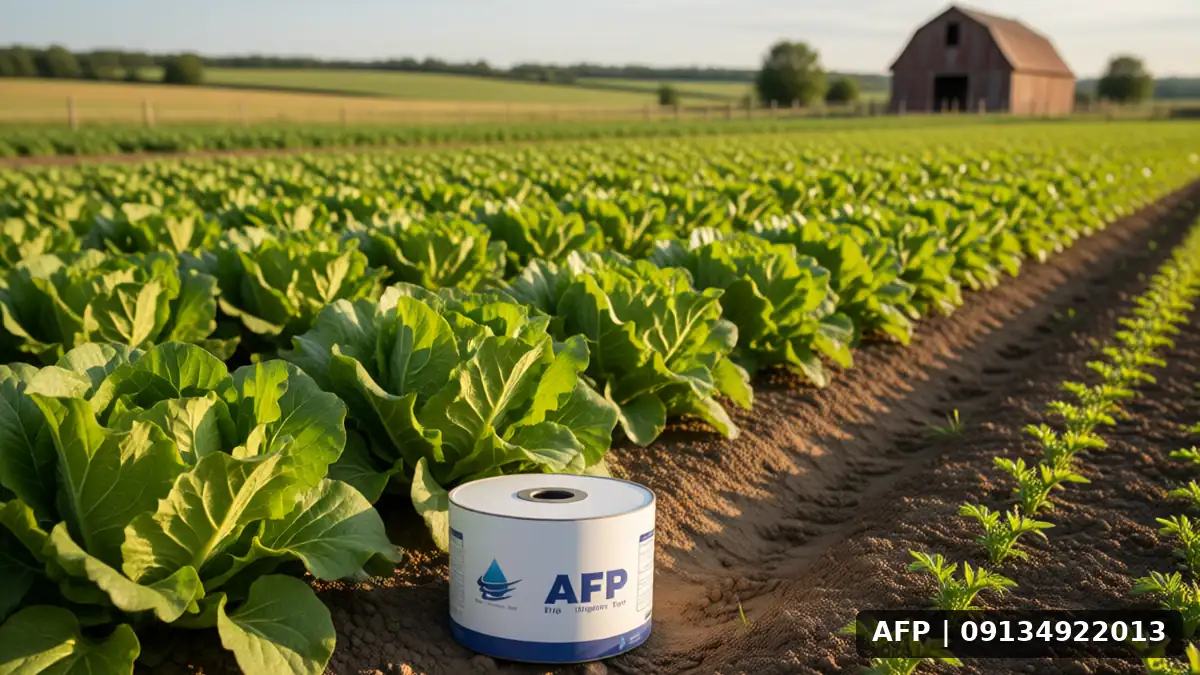
Sprinkler irrigation with runoff cannot fully replace drip irrigation, but it shows advantages in conditions of low water pressure or the need for fall air cooling. Conversely, drip and tape systems offer higher precision in water and fertilizer distribution. If you use tape, knowing Pea seed rate per hectare or other cereals is not feasible, but for lettuce, the typical planting distance is 40 to 60 cm, which directly affects water movement between rows. For lettuce, water movement must be managed so that water does not reach the center of the plant head, preventing rot.
Frequently Asked Questions (FAQ)
Is sprinkler irrigation with runoff suitable for lettuce in hot summers?
As previously mentioned, if irrigation is not the only objective and high transpiration rates cause stress, shade systems or morning and evening irrigation with nozzles having very fine spray diameters may be recommended. Runoff can provide temporary cooling, but precise monitoring of humidity is essential.
How can I prevent soil erosion and fertilizer loss?
To reduce runoff erosion, it is best to install nozzles at a low angle to ensure a gentle impact on the soil surface. Additionally, apply fertilizers through band application with drip lines rather than surface broadcast spraying, so that fertilizer enters the soil directly in the root zone with controlled local moisture.
Conclusion and Final Recommendations
Sprinkler irrigation with runoff for lettuce cultivation is a specialized method that requires precise adjustments. Its main benefits are uniform moisture distribution and mild cooling, but it carries risks associated with leaf scald and soil erosion. Farmers should first conduct trials on a small scale (e.g., a section of the field). Combining this system with drip tape for the main planting areas is a practical solution. For further optimization, studying increasing the yield of cilantro per hectare can also provide similar insights into moisture management and nutrition for sensitive leafy vegetables. Ultimately, continuous monitoring, pressure adjustment, and slope management are the three key pillars of success in this method. By observing these points, farmers can leverage the system’s potential to improve the quality and quantity of lettuce.
Related articles: Drip tape spacing D8AFD8B1 best for sugar beets