Rain-Irrigated Corn Cultivation: A Comprehensive Comparison with Drip Tape
Introduction: Irrigation Challenges in Maize Cultivation
Maize is one of the most widely used mono-dictionary grains in the world and in Iran, requiring precise water management to reach maximum production potential. In the past, conventional surface irrigation methods and Rainfed sprinkler irrigation (Rainfed Sprinkler) were favored by many farmers due to ease of implementation and lower initial costs. However, with the intensification of water scarcity and rising energy costs, serious concerns about the efficiency of these methods now exist. In this article, we compare rainfed sprinkler irrigation in detail with more modern methods such as ridge-tube drip irrigation to provide a clear picture of the advantages and disadvantages of each. Our goal is to help maize farmers make rational decisions for their farms by understanding the technical data. Examining The Difference Between Ridge-Tube Bolal, Two-Line, and Plate Systems can be helpful in choosing alternative options.
History and Position of Rainfed Irrigation
Sprinkler systems wet the soil surface and leaves by spraying water in fine droplets similar to rain. This method has deep roots in our agricultural foundation due to its uniform coverage and lack of need for complex underground piping. Nevertheless, this system faces specific challenges in windy conditions (reduced spray efficiency) and in regions with high evaporation. Farmers looking to optimize their farms must consider additional notes such as Rosemary yield per hectare + influencing factors Also keep in mind that crop diversification complicates water management, although the focus here is on maize.
Technical analysis of sprinkler irrigation on maize furrows
To gain a deeper understanding of sprinkler irrigation performance in maize fields, three key factors must be considered: rainfall intensity, droplet distribution, and crop interference. Maize is a plant with a deep root system and high sensitivity to water stress during the flowering stage. Sprinkler irrigation may cause seed caking in fine-textured soils and capping in coarse soils. On the other hand, direct contact of droplets with maize leaves can trigger latent infections. Therefore, selecting the type of sprinkler head and its height above the ground is critical. Below, we provide a comparison between sprinkler irrigation and drip line irrigation.
Visual indicator: A photo of a furrow with a sprinkler system installed, showing water droplets.
Comparison of water use efficiency
- Sprinkler irrigation: Efficiency is 60 to 75 percent (depending on wind and slope). A significant portion of water is lost to direct evaporation and erosion.
- Drip tape method: Efficiency is 90 to 95 percent. Water is applied directly to the root zone with low pressure. For more information about all aspects of the benefits of flat-tape drip, which is one of the most advanced methods in this category, you can refer to the provided resources.
Impact on seed drilling and quality
Sprinkler irrigation, due to water application over the entire field, increases soil relative humidity, which can lead to soil-borne fungal diseases. Corn is sensitive to certain root diseases. On the other hand, the drip tape system, by maintaining relatively dry soil surfaces between the tapes, provides better conditions for reducing root diseases. This is particularly important in the humid regions of northern and central Iran. Another important point is energy cost. Sprinkler pumps must operate at higher pressures to ensure proper nozzle distribution, whereas drip tape systems typically operate at lower pressures (approximately 1 to 2 bar).
Introduction to Drip Tape: A Modern Alternative
Drip tape (Drip-Strip) is a combination of drip technology and surface laying. In this system, narrow strips of drip tape are laid along the planting rows, almost at the soil surface. This method utilizes the advantages of drip irrigation but reduces piping costs. For a more precise comparison, it is important to note that Budget estimation in Gopter, Shannon and Obary issues This indicates that the initial cost of drip tape is slightly higher than that of conventional sprinklers, but due to water and energy savings, the return on investment is achieved within 2 to 3 growing seasons.
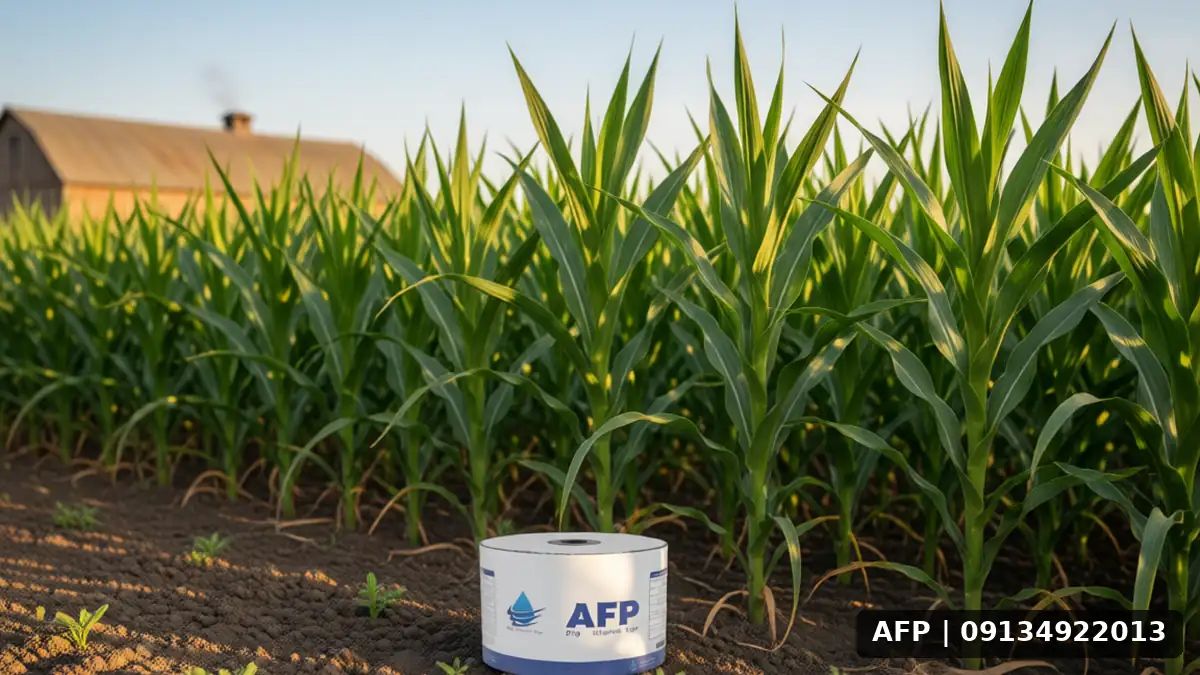
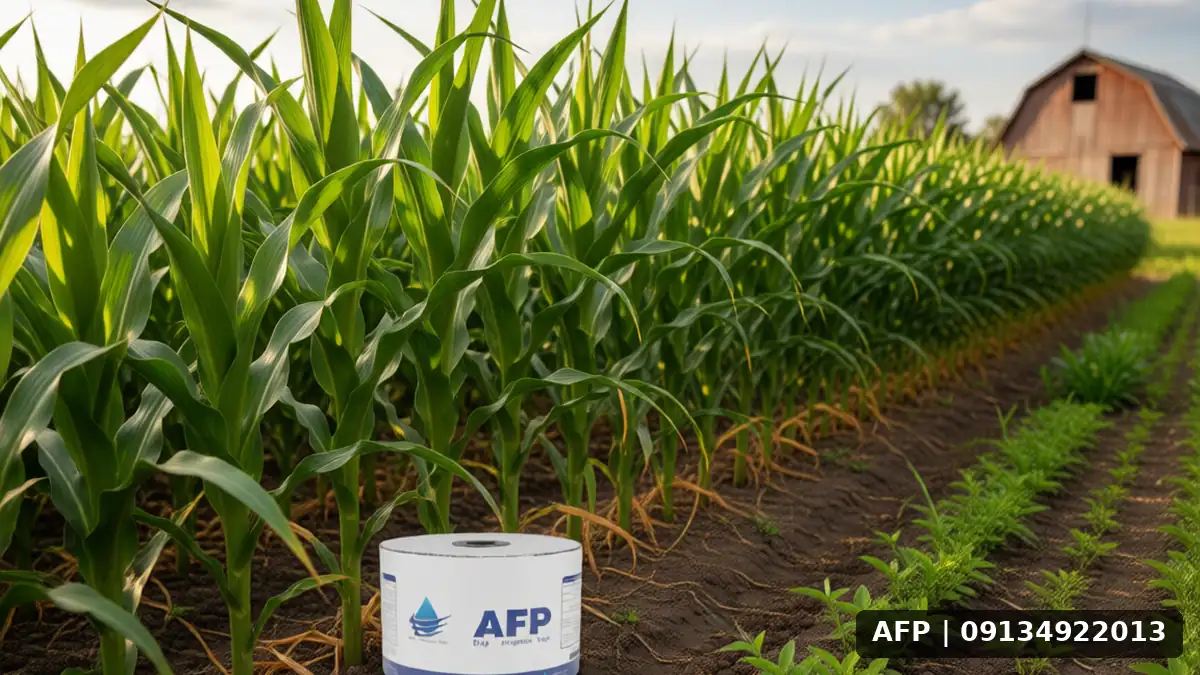
Visual indicator: A close-up view of the drip tape installed in the corn rows, showing water slowly seeping out.
Advantages of drip tape compared to sprinkler irrigation in corn
- Reduced evaporation: In drip tape systems, water is applied only to the root zone, while other parts of the soil remain dry. This encourages the plant to develop deeper roots to access water.
- Increased fertilizer efficiency: Drip feeding (Fertigation) with drip tape is significantly more precise than surface application with sprinklers. Fertilizer is delivered in aqueous solution directly to the root zone.
- Wind resistance: On windy days, when rain guns struggle to operate and fail to provide uniform coverage, drip tape systems are technically less affected.
Economic Comparison and Cost Management
From an economic perspective, sprinkler irrigation may appear cheaper at first glance, but its hidden costs are significant. Pumping costs, periodic repairs of sprinkler heads, and energy costs for maintaining pressure throughout the day must be included in the final calculation. In contrast, drip tape requires less maintenance, and the risk of clogging is minimized when using treated water and appropriate filtration. Additionally, better water and nutrient management can increase corn yields by up to 25%. If you are looking for further optimization, read about Yield of corn per hectare: A comprehensive guide + influencing factors as well, which can broaden your perspective on crop diversification and water resource management, although this article focuses on corn.
Quick Comparison Table
Practical tips for implementation and farm management
Considering the comparisons above, if you decide to use rain-simulation irrigation, it is mandatory to observe the following points:
- Pump pressure adjustment: Pressure must be adjusted to maximize sprinkler coverage efficiency. Excess pressure only increases costs.
- Irrigation timing: Always irrigate during cool, low-wind hours (night and early morning) to minimize evaporation.
- Use of high-quality sprinkler heads: Ordinary plastic emitters often lack uniform coverage in corn. Prefer industrial-grade emitters.
If you prefer a drip tape system, consider the following points:
- Filtration: The filtration system must be sized precisely for the drip tape requirement. Drip tape systems are sensitive to fine sand particles.
- Water quality meter: Use of a water quality meter in the drip tape line is recommended to prevent chemical changes in the water.
For a deeper understanding of how foundational substructures affect irrigation system performance, study The importance of soil health for drip tape and poly pipes We recommend the following. The soil’s foundational and textural subsoil layers directly affect permeability and, consequently, the irrigation schedule.
Frequently Asked Questions (FAQ)
Is sprinkler irrigation suitable for field corn?
If your field is not windy and the cost of water is low, sprinkler irrigation can be an acceptable option for convenience. However, if water quality is poor (e.g., saline) or winds are strong, drip tape systems are significantly better.
How much more expensive is drip tape compared to sprinklers?
It is typically 15 to 30 percent more expensive upfront, but this difference is offset by reduced water and energy consumption in the first year.
Does corn respond better to drip fertilizer application?
Yes, corn has high nitrogen and potassium requirements, and drip fertigation significantly increases the uptake efficiency of these salts.
Which irrigation method provides the highest water efficiency for corn?
Drip tape offers the highest efficiency due to reduced evaporation and direct delivery to the root zone.
Conclusion: A sustainable future with the right choice
Ultimately, choosing between sprinkler and drip tape irrigation for corn is not a matter of preference but a managerial and economic decision. Sprinkler irrigation is a conventional method that can maintain efficiency if execution principles are observed, but drip tape is better suited for modern, sustainable, and scalable agriculture. If you intend to make a long-term investment and seek to reduce water supply risks, transitioning from sprinklers to drip tape is a strategic step. This method not only reduces water and energy costs but also enhances corn yield through precise nutrition and reduced root stress. Our recommendation to corn growers is to experience the differences firsthand through a trial on a small section of the farm. Success in corn cultivation requires the continuous management of water resources, and the irrigation method is the foundation of this management.