Lettuce Seed Rate per Hectare: A Comprehensive Guide to Precise Cultivation and Irrigation
Introduction: The Importance of Accuracy in Lettuce Seed Rate per Hectare
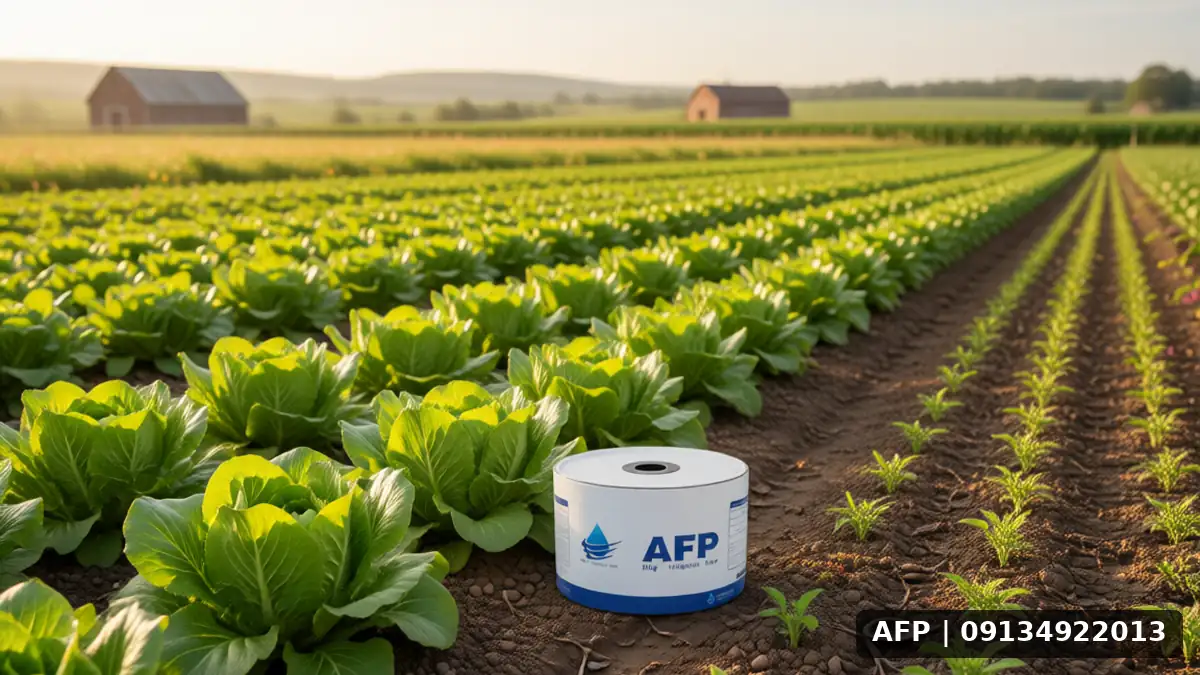
Lettuce is a fast-growing vegetable with a special place in the Iranian market. Determining the lettuce seed rate per hectare is not just a simple number; it directly affects production costs, final plant density, and ultimately the quality and weight of each lettuce head. Farmers and growers using modern irrigation methods such as drip or band irrigation require precise coordination between planting density and the irrigation system. This guide helps you calculate the appropriate seed amount for your land by understanding various variables and preventing resource wastage.
Using an appropriate planting pattern with Vegetable Planting Guide and Seed Quantity per Hectare can provide you with a more comprehensive perspective.
Factors Affecting the Determination of Lettuce Seed Rate
The required seed quantity for one hectare of lettuce land depends on several factors. Understanding these factors is essential for successful planting. The most important factor is the selection of seed type (germination) and lettuce varieties, as each has different growth behavior.
Impact of climatic conditions and seeds
In cold regions, planting density is usually slightly higher than in warm regions to prevent frost damage and competition with weeds. Also, if you use hybrid variety seeds with strong roots, you can consider better spacing. Generally, Lettuce seed quantity per hectare Usually varies between 20 and 40 kilograms per hectare, but this range is very wide and must be adjusted based on local conditions.
Planting method: Direct or seedling
One of the biggest variables is the planting method. In direct seeding, extra seed must be accounted for due to losses from soil surface irregularities and uncertain germination conditions. However, in the seedling method, since you only plant healthy seedlings in the main field, the initial seed amount for the nursery space is fixed and does not require recalculation in the main location. [Suggested link: Chickpea seed rate for rainfed (dryland) farming per hectare For comparison with other crops]
Precise calculation of density and spacing
To determine Lettuce seed rate per hectare, first specify the correct spacing. Generally, for lettuce, row spacing of 45 to 50 cm and plant-to-plant spacing within rows of 25 to 35 cm is recommended. These figures may vary depending on the variety (e.g., Persian/Rast, French, etc.).
Guide table for spacing and plant density per hectare
By knowing the final target number of plants and the seed germination rate, the required seed weight can be calculated. Note that these calculations are for direct seeding; in the transplanting method, the seed required is only for the nursery area (which is much smaller).
The role of tape and drip irrigation in density management
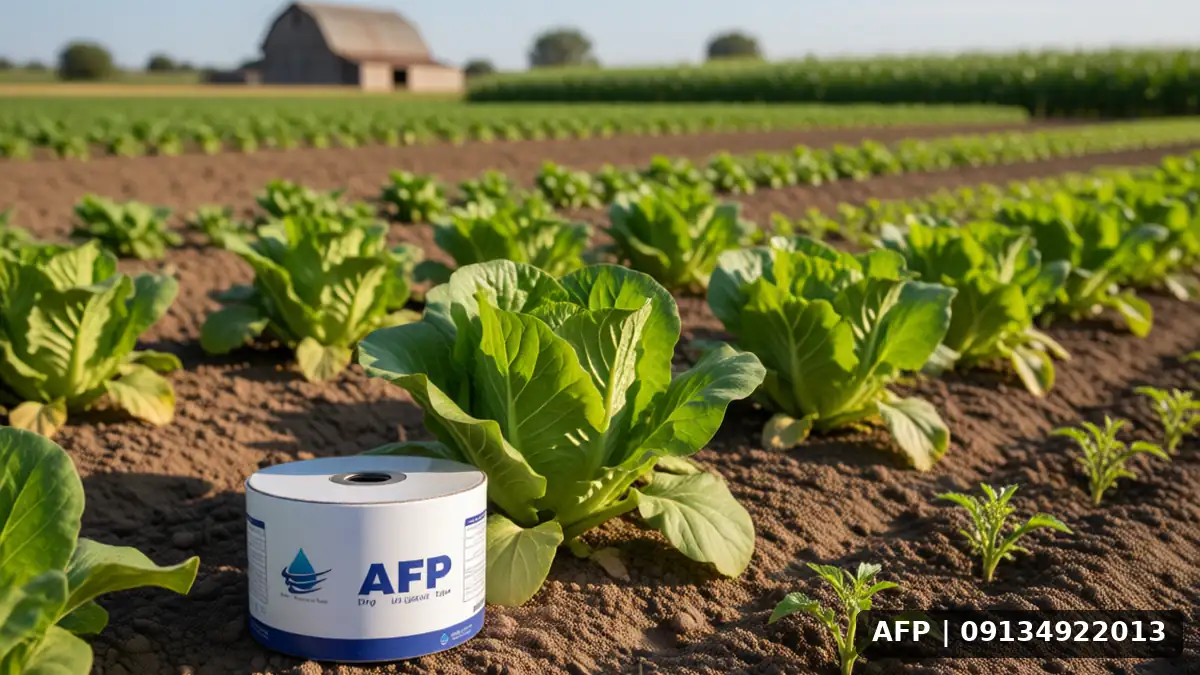
One of the main challenges in high-density lettuce planting is managing soil moisture. Using drip irrigation systems or Components of drip and tape irrigation systems can help maintain uniform moisture in the plant root zone. When Lettuce seed rate per hectare is high; roots compete more for water and nutrients. In this condition, uniform water distribution via drip tape is critical to ensure head size uniformity.
Impact of drip tape pressure and flow rate on planting stability
If you use drip tape, ensure that the emitter spacing is coordinated with the plant spacing. This coordination places water precisely in the lettuce root zone and prevents loss in the void between rows. For more information on proper installation, refer to drip tape installation steps . Also, if you are looking for solutions such as drip tape cost per hectare for other crops like chickpeas, you can make a comparison with lettuce.
Practical tips for optimizing lettuce planting
- Seedbed preparation: Lettuce seedbed soil should be soft, free of gravel, and rich in organic matter. Even 1% additional gravel can kill delicate lettuce seeds.
- Sowing depth: Lettuce has very fine seeds. Sowing depth should be very shallow (around 5 to 10 mm). To support germination, you can use a thin layer of straw or mulch to conserve moisture.
- Weed management: Because lettuce grows relatively slowly and has open spaces between plants, weeds are a major cause of thinning out. Using suitable herbicides at the pre-emergence stage is key to maintaining final plant density.
- Thinning out extra seedlings: If sowing directly Lettuce seed rate per hectare Increase the rate to compensate for seed loss. After germination, remove weak seedlings to give the main seedlings enough space to grow. This increases head size.
Effect of light and shade in dense planting
In dense planting, shading of plants by one another is a physiological factor that must be considered. If density exceeds the recommended level, plants under low light conditions undergo elongation and produce smaller, firmer heads. Therefore, maintain standard spacing using Parsley harvest yield per hectare or other vegetable crops can serve as a good benchmark for comparison.
Frequently asked questions about lettuce planting
Can the lettuce seed rate be adjusted for greenhouse cultivation?
Yes, there is environmental control in the greenhouse. Typically, density in the greenhouse can be slightly lower to allow more space for larger market-size heads. In this case, Lettuce seed rate per hectare is equivalent (assuming conversion from square meters to hectares) to less than open-field cultivation.
How does lettuce seed differ from other vegetables such as peas?
Lettuce seeds are much smaller in size and more sensitive to planting depth. For comparison with larger-seeded plants, you may refer to the grape seed rate per hectare guide (if relevant sources are available) or similar guides.
Is the drip tape system suitable for lettuce?
Yes, especially if the row spacing is less than 50 cm, drip tape is the best option for focused root zone irrigation. This system keeps moisture concentrated in the root zone and prevents fungal diseases caused by wet leaves.
Summary
Accurate determination Lettuce seed rate per hectare is the key to successful production of high-quality lettuce. This amount is not fixed and depends on the cultivar, planting method, soil conditions, and your irrigation system. By using the provided tables and considering the germination rate, you can optimize your seed budget. Do not forget that coordinating planting density with the flow rate of drip or tape irrigation ensures uniform growth and increases your final yield. Investing in a precision irrigation system such as Vista Cadra per hectare (source related to irrigation systems) and following planting principles will lead you to a more productive crop. Always be aware that excessive density results in root competition and reduced head quality; therefore, when planting, always act with caution and reserve a little extra space.