Irrigation in Fruit Orchard Crop-Spraying Systems: Practical Applications
Introduction: Irrigation Challenges in Espresso Cultivation
Espresso cultivation (referring here to olive trees) is a perennial crop that requires the precise and smart management of water resources. In this climate, orchard irrigation can be misleading for growers because of the relative drought tolerance of olive roots. Many assume that these trees require minimal water, but the reality is that intelligent and precise irrigation is essential to maintain high fruit quality, prevent early fruit drop, and increase fruit size and overall yield. This section focuses on the critical role of drip and trickle-line systems in optimizing root establishment, preventing water stress, and reducing pressure on soil structure. Our goal is to provide a practical, operational guide to help growers achieve adequate root-zone moisture and sustainability without unnecessary water waste. This approach not only reduces irrigation costs but also improves the final quality of the harvest.
Principles of Drip Irrigation in Olive Groves
Drip systems remain the backbone of precision irrigation in fruit orchards, particularly for olive trees. Uniform moisture distribution within the tree’s canopy radius is vital, as olive roots prefer to grow vertically and horizontally in moist zones. Using precut drip emitters helps prevent water runoff into irregular channels. A key consideration in olive orchard irrigation is the appropriate distance of the emitters from the trunk and the installation depth of the system. This spacing must be adjusted according to the tree’s age and canopy width to prevent the soil surface around the trunk from drying out, which can lead to root rot.
- Emitter Depth: Optimizing the depth of drip emitters (typically 10 to 15 cm) ensures that moisture is delivered directly to the root zone. This standard depth facilitates maximum water uptake by small fibrous roots.
- Irrigation scheduling: Using smart timers to irrigate during early morning hours or cooler night temperatures significantly reduces evaporation and water waste. Irrigating in extreme heat can cause relative leaf scorch.
For a better understanding of irrigation engineering principles and pressure calculations, you can refer to the 2-inch hose irrigation systems guide to review how to transmit adequate pressure to the drip line. This guide is particularly useful for small-scale olive orchard calculations and helps minimize pressure loss along the line.
Application of tip tape in olive row irrigation
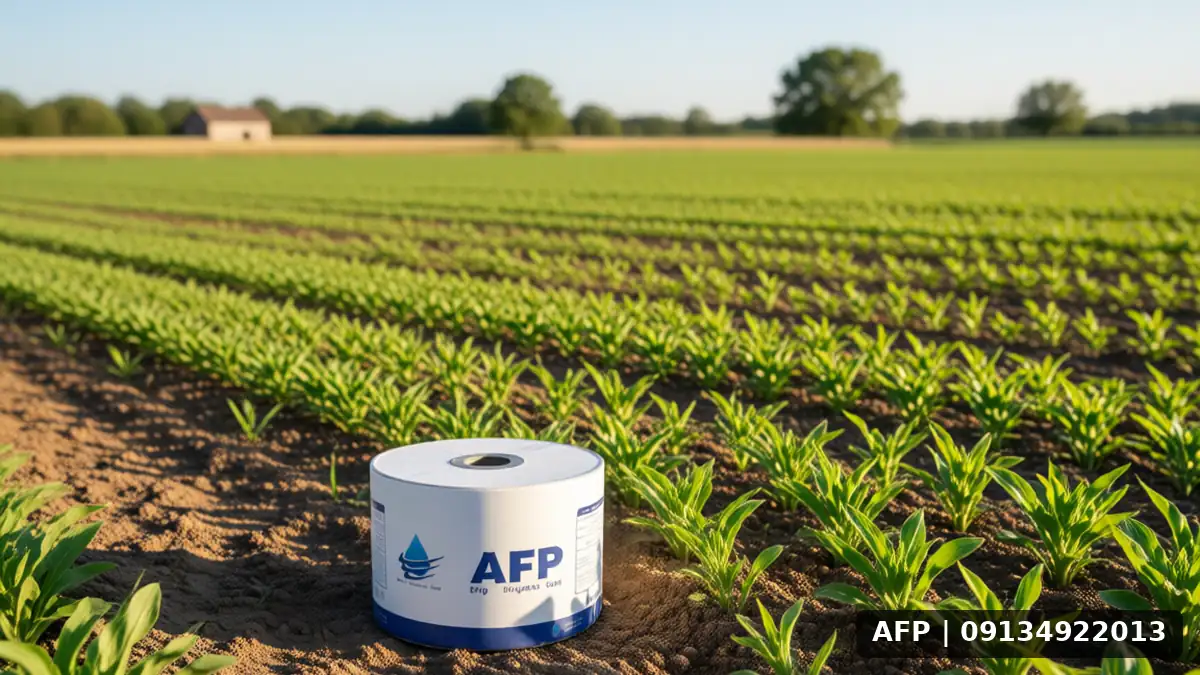
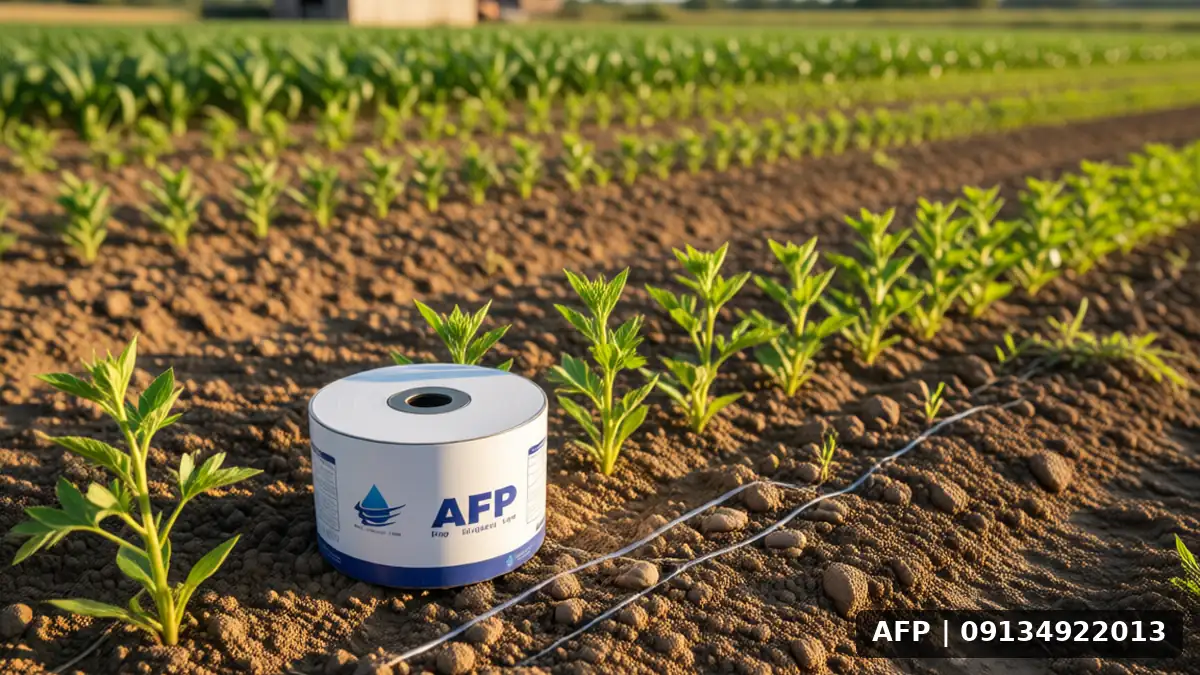
While the drip system is based on point distribution, tip tape provides continuous and uniform coverage. In olive orchards where trees are planted at regular intervals in long rows, using tip tape can be more efficient due to its superior uniformity in water distribution along the row. Tip tape is a plastic tube that delivers water to the soil as a narrow band through small openings (emitters). 20 cm drip line A popular option that balances installation cost with irrigation precision. This line material is suitable for outdoor orchards due to its flexibility and resistance to ultraviolet (UV) radiation.
Benefits of drip lines in olive orchards
- Full coverage of the inter-row area for the growth of crop plants (if present) or to maintain soil moisture in the root zone. This continuous coverage allows the lateral roots of olives to easily access water.
- Reduction of soil surface tension and prevention of surface sealing and hard crust formation. This feature is critical for olives, whose roots are often shallow.
- Enables more integrated fertigation along the row. Uniform distribution of nutrients along the line prevents competition between roots for nutrients.
If you plan to equip your olive orchard with drip lines, study Comprehensive guide to 20-centimeter drip tape pricing in the Iranian market It can help you estimate the budget and select the appropriate brand. Correct selection of drip material (PVC or PE) directly affects the system’s lifespan against UV exposure and local olive-growing climate factors. Attention to drip line wall thickness is also essential for maintaining working pressure.
Root management and water uptake in olive trees
Olive tree roots have two distinct depth types: deep roots for accessing groundwater and shallow roots for absorbing seasonal moisture. A smart irrigation system must target both zones. Combining surface drip irrigation with deeper irrigation is the key to adapting the olive orchard to periodic droughts. Olive root coarseness also depends on soil texture; in heavy soils, root growth is slower and requires more frequent intermittent irrigation.
Research shows that Regulated Deficit Irrigation (RDI) can maintain fruit quality while reducing water consumption in some climates. This technique requires precise monitoring of pre-dawn soil water potential (VP). Using available sensors and management software, you can avoid over-irrigation, which causes olive fruit drop and relative growth water deficit. For accurate irrigation requirement calculations, understanding tree density per hectare is useful for solidly planted olive groves with cover cropping. These calculations help you adjust total water consumption based on the region’s climate zone.
Practical tips for optimizing the irrigation system
To maximize the efficiency of the irrigation system in an olive orchard, it is vital to adhere to the following points:
- Monitoring drippers: Drip systems are prone to sediment deposition. Using appropriate filters and periodically flushing them prevents the clogging of drippers. Keeping water sources clean and removing suspended particles before they enter the tubing is a critical principle.
- Planting cover crops between rows: In a trickle strip system, planting cover crops between olive rows can prevent soil erosion and simultaneously conserve moisture. This method follows similar principles to using cover crops on other crops, such as alfalfa; therefore, A guide to alfalfa yield per hectare can provide ideas for the arrangement of cover crops between olive rows. These plants also help prevent the growth of weeds.
- Using Solar Energy: For remote orchards without access to the power grid, installing solar pumps to provide the required pressure for the tape irrigation system is a sustainable and cost-effective long-term approach. These systems help reduce the carbon footprint of agriculture.
Frequently Asked Questions (FAQ)
Is tape irrigation better than drip irrigation for olive groves?
This depends on the tree layout. If olives are planted with very regular spacing in long rows, tape irrigation is a better option due to high uniformity and lower maintenance costs. However, if the layout is irregular or you need separate fertigation for each tree, drip irrigation performs more precisely. Also, drip irrigation is more suitable for larger trees with wider canopies.
How often should the tape irrigation system be replaced?
With proper care, high-quality tape irrigation hoses (polyethylene with UV coating) last 3 to 5 years. In olive conditions, where deep tree roots may damage the hose, seasonal checks and proper maintenance increase the useful life to more than 5 years. Otherwise, tape rupture leads to water leakage and loss of moisture coverage.
Can the strip tip system be used for fertigation?
Yes, one of the advantages of the strip tip system is the ability to perform fertigation directly. This method ensures the even distribution of nutrients throughout the entire root zone of olive trees. This leads to more uniform growth and increased crop yield. However, precision in fertilizer concentration is essential to prevent root burn.
Summary: The Future of Olive Orchard Irrigation
The choice between drip and strip tip irrigation for olives is a decision based on your climatic conditions, soil type, and budget. However, moving toward precision irrigation, water conservation, and improved olive fruit quality is inevitable. By implementing these systems properly and monitoring them regularly, you can transform your olive orchard into a high-yield and sustainable crop. For additional information on irrigation management in other orchard crops, you can with modern irrigation methods for small-plot cultivation to familiarize yourself with similar principles for smart water management. The future of olive farming is smart and data-driven agriculture, where decisions are made based on sensors and live data.