Drip Tape Irrigation for Quinoa: Key Guidelines
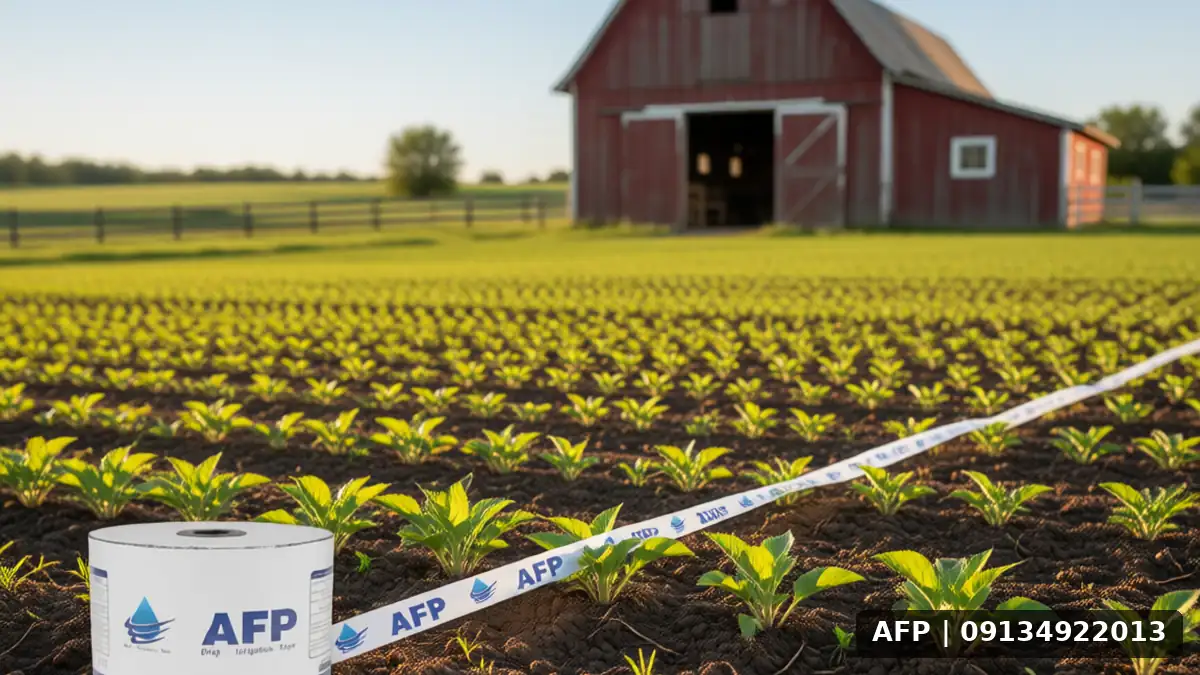
Quinoa is a versatile grain that has gained widespread attention from farmers and industrialists due to its high nutritional value, gluten-free nature, and remarkable ability to grow under severe drought and salinity conditions. However, to achieve a high-quality and valuable harvest, water resource management plays a decisive role. Drip irrigation using the tip-tape method, as one of the most modern and efficient systems, enables precise water delivery to the root zone, allowing for uniform soil moisture and reduced evaporation. In this article, we comprehensively review the technical and practical principles of using tip-tape in quinoa cultivation to help you maximize farm productivity.
Why is tip-tape a better choice for quinoa cultivation?
Quinoa is a crop with a dense and fine root system that is highly sensitive to moisture fluctuations. Conventional irrigation methods such as sprinkling or flooding not only waste water through evaporation and deep percolation but can also lead to weed growth and increased fungal diseases around the plant base. Tip-tape creates a continuous and uniform stream along the row, delivering exactly the amount of water needed to the soil at the initial rooting depth. According to Technical specifications of tip-tape irrigation These systems feature controlled flow rates that are ideal for crops with medium to high water requirements, such as quinoa. This method also significantly reduces surface evaporation, resulting in substantial water savings in arid and semi-arid regions. Uniform water distribution in the root zone allows the plant to direct its energy toward stem growth and panicle development rather than searching for moisture sources.
Principles of correct tip-tape installation and execution
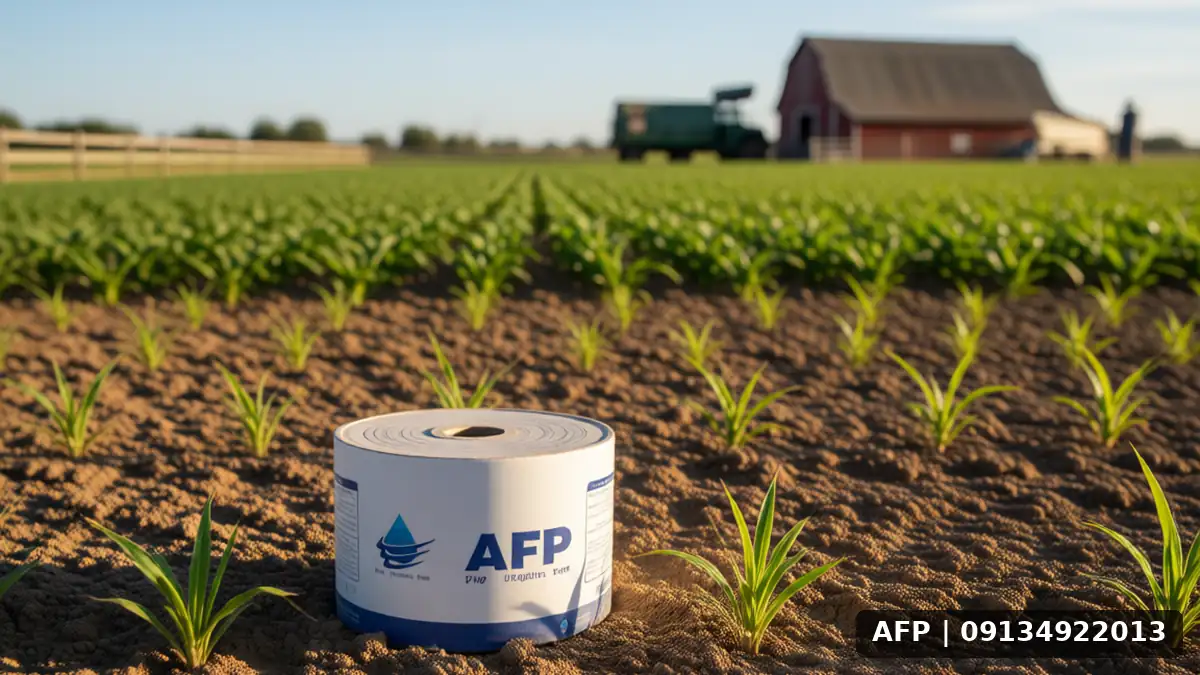
Correct installation of the drip line is the first step to ensuring optimal system performance. In quinoa cultivation, drip lines are typically placed at the planting depth to deliver water directly to the root zone. Maintaining the appropriate distance between the drip line and the plant is critical; if the distance is too wide, water will not reach the roots, and if it is too narrow, it may cause stem rot. Generally, a distance of 15 to 20 centimeters from the plant is recommended. In addition to spacing, land slope must be considered to prevent water pooling at lower points and drought conditions at higher points. For long systems, the use of bidirectional drip lines or pressure regulation at the ends of the laterals ensures uniform distribution. Furthermore, installing appropriate filters (such as screen filters with 120 to 150 mesh precision) is mandatory to prevent the clogging of the drip line emitters by suspended water particles. Inadequate filtration is the primary cause of reduced drip line lifespan over time.
- Determining the drip line planting depth: The drip line must be placed exactly at the level of the quinoa primary roots (approximately 10 to 15 centimeters below the soil surface) to ensure optimal moisture uptake.
- Managing land slope: In fields with natural slope, measures must be taken to adjust pipeline slopes or use pressure regulators at necessary points to maintain uniform flow rate along the entire length of the drip line.
- The importance of filtration: Installing an appropriate and clean filter not only prevents clogging of the drip lines but also inhibits the entry of contaminants to the plant roots.
Management of irrigation system flow rate and pressure
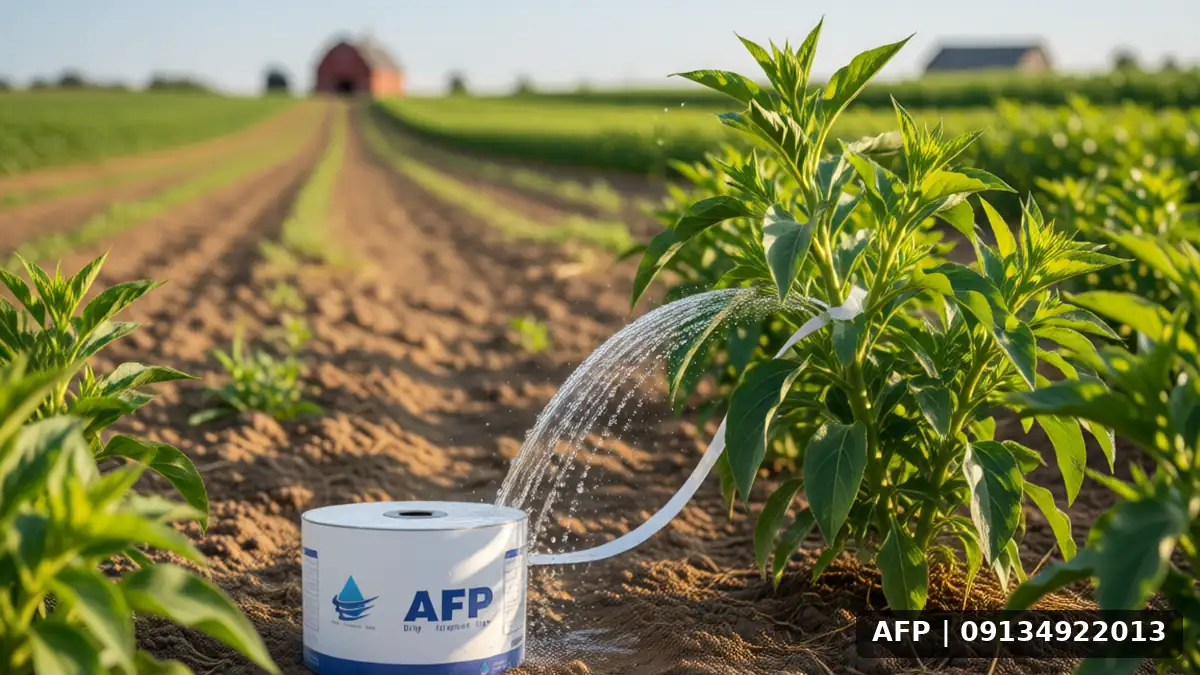
Precision in adjusting flow rate and operating pressure is the core of the drip tape system. Each drip tape is manufactured with a specific nominal flow rate that depends on water pressure. If the system pressure exceeds the allowable limit, it can cause the tape to rupture or spray water in unintended directions; if the pressure is too low, water flow may cease and moisture will not penetrate to sufficient depth. Therefore, calculating flow rates based on quinoa water requirements and cultivated area is essential. For accurate calculations, you can refer to the productivity per hectare and the stage-specific water requirements of the plant. Generally, flow rates of 0.8 to 1.2 liters per hour are suitable for wide tapes (40 to 50 mm) in quinoa, but these amounts must be adjusted according to soil type and local climatic conditions.
Key points in managing quinoa growth with drip tape
Quinoa has sensitive growth stages where moisture management determines final yield. In the vegetative stage, water requirements are lower, but they increase with the onset of flowering and grain filling. The use of drip tape allows you to increase or decrease water flow rates according to growth stages. A major advantage is the capability for fertigation, which enhances root nutrient absorption by injecting liquid fertilizers through the tape. Additionally, controlling soil salinity around the roots through periodic leaching is an important feature of drip tape in saline areas. On the other hand, to prevent fungal diseases caused by prolonged bed moisture, one-way tapes can be used, or the distance between the tape and the stem can be slightly increased to keep moisture away from the plant collar. Field data indicates that crop productivity increases with these precise methods; to compare with other crops, you can refer to the lettuce productivity per hectare Take a look at it; it uses similar principles for precise moisture management.
- Fertigation: Using drip lines to inject nitrogen-based fertilizers during the growth stage and potassium-based fertilizers during the grain-filling stage can increase fertilizer efficiency by up to 30%.
- Salinity Management and Leaching: By temporarily increasing flow rates in the late afternoon, accumulated salts at the soil surface can be moved to non-root depths to control salinity.
- Increasing Final Yield: Precise moisture management with drip lines directly and positively impacts grain filling and increases the panicle weight of quinoa.
Evaluating drip performance under different soil conditions
Soil type, water infiltration rate, and consequently, drip line settings are affected. In sandy soils with high infiltration, higher flow rates are required to ensure water reaches the root zone and prevent drainage loss. Conversely, in clay soils with low infiltration, lower flow rates and longer irrigation durations are recommended to prevent root waterlogging and oxygen deficiency. In tropical regions, combining drip irrigation with crop mulching can conserve moisture and reduce the frequency of irrigation. These moisture management principles apply not only to quinoa but also to many water-sensitive crops such as vegetables. In this regard, familiarizing oneself with vegetable yield guide per hectare can provide a better understanding of the relationship between irrigation management and product quality.
Costs, maintenance, and drip line manufacturing lines
One of the main concerns for farmers is the initial cost of precision irrigation systems. Although purchasing drip lines and associated equipment requires investment, the return on investment in subsequent years is significantly higher than with conventional irrigation. Regarding drip line quality, familiarizing oneself with drip line manufacturing lines and manufacturing standards can help in selecting high-quality and durable brands. For drip line maintenance, periodic flushing with citric acid or chlorine after each growing season is essential to remove water mineral deposits and algae from the lines. Additionally, repositioning the drip lines and inspecting the health of connections is a crucial part of maintenance. If water quality is low, two-stage filtration (screen and disk) is recommended. These care practices increase the useful life of drip lines from 2 to 5 seasons and significantly reduce replacement costs.
Frequently Asked Questions (FAQ)
Is drip tape suitable for all climates?
Yes. By adjusting flow rate and irrigation duration, drip tape can be implemented in arid, humid, and even semi-arid climates. In rainy regions, drip tape serves an auxiliary irrigation and nutrient delivery role.
How much filtration do I need?
Depending on the water source, one to three filtration stages are recommended. If water quality is low, a 120-mesh screen filter is mandatory.
Does drip tape cause soil salinization?
No. In fact, drip irrigation with drip tape prevents the repeated waterlogging that is a primary cause of salinization and improves root aeration.
How do I compare efficiency?
You can apply quinoa grain and root management principles by studying specialized resources such as chlorothalonil yield factors or other products.
Conclusion
Drip irrigation with tape in quinoa cultivation is a scientific solution for transforming conventional agriculture into sustainable and profitable farming. Adhering to installation principles, managing flow rates based on growth stage, and maintaining the system regularly are key to success. Given the rising cost of water and market demand for high-quality quinoa, investing in this system is not only essential but also considered a competitive advantage for farmers. Ultimately, combining technical knowledge with field experience can transform quinoa yields on your farm.
Related articles: Technical specifications of irrigation tape | Vegetable Yield Guide per Hectare | Factors Increasing Clover Yield