Drip Irrigation in Pepper Cultivation: Prerequisites and Operational Principles
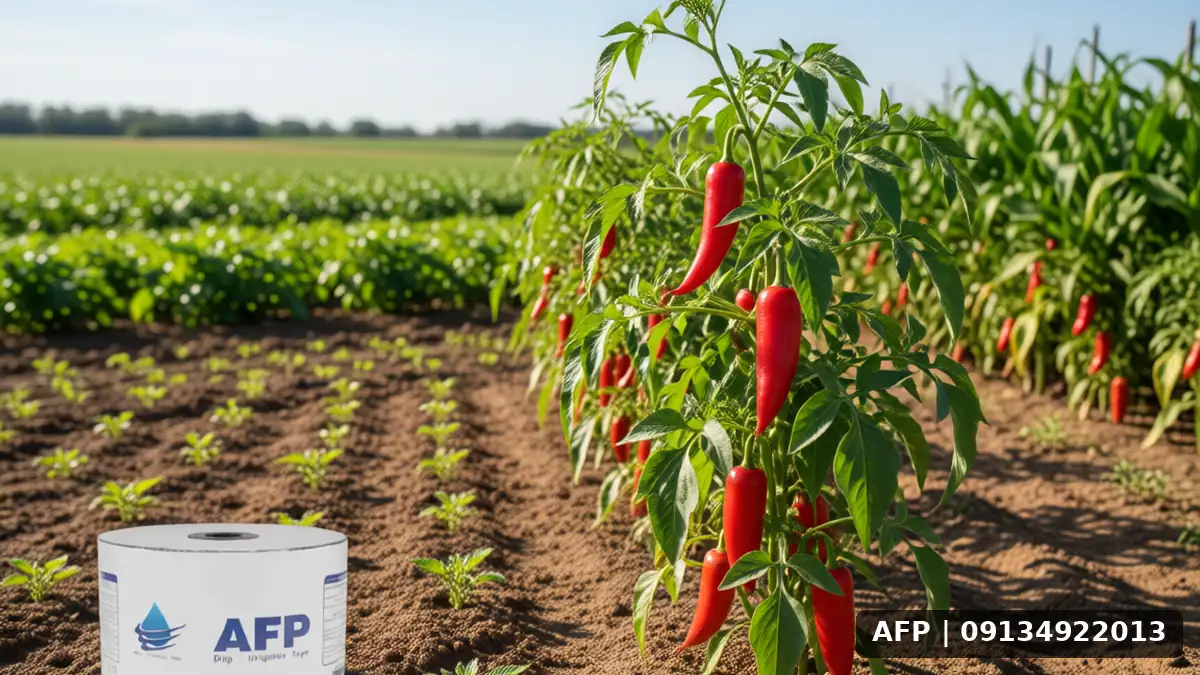
Introduction to the Importance of Node Irrigation in Bell Pepper Greenhouses
Bell pepper cultivation is one of the most profitable and sensitive greenhouse and field crops in Iran, where precise water and nutrient management plays a decisive role in increasing yield and reducing costs. Among modern irrigation methods, node irrigation has become an attractive option for progressive farmers due to its high flexibility, the availability of interchangeable emitters and nozzles, and its adaptability to various soil and climate conditions. However, before entering the complex world of this technology, understanding its fundamental prerequisites is crucial for ensuring project success.
Node irrigation refers to the use of components featuring replaceable tape emitters or drop nozzles, which are installed at specific points on high-pressure lines. This method allows farmers to adjust the irrigation pattern according to seasonal changes or specific plant needs by swapping out emitters. In bell pepper cultivation, where root durability and fruit freshness are top priorities, this flexibility can reduce water stress and improve produce quality. However, this system is more complex than conventional drip irrigation and requires particular attention to design and installation.
Technical Prerequisites for Successful Node Irrigation Implementation
1. Detailed Analysis of Water Resources and Pressure
The first and most critical prerequisite is the precise assessment of available water resources and pressure within the system. Node components are generally designed for specific pressure ranges. If the pressure at the ends of the main line experiences severe fluctuations, drip line performance deteriorates significantly, and uniform water flow across all nodes cannot be guaranteed. Therefore, installing pressure regulators and appropriate filters at the beginning of the system is mandatory. Additionally, checking the spring discharge and water storage levels must be coordinated with the consumption patterns of peppers at different growth stages (establishment, flowering, fruiting). A mismatch between available pressure and the designed pressure of the components leads to early clogging or component failure.
2. Land Grading and Preparation
Peppers require uniform land grading for even water distribution. In a node system, land grading errors directly affect the hydraulic pressure of the nodes. Excessive slope can cause nodes on the upslope to operate faster, while flow on the downslope may decrease or even stop. Therefore, before system installation, precise land grading and erosion correction are essential. For sloped land, using nodes with different capacities or dividing the network into separate pressure zones can be an effective solution.
3. Selection of Correct Nodes and Plant Spacing
Bell peppers are typically planted with a row-to-row spacing of 45 to 50 centimeters and a plant-to-plant spacing of 35 to 45 centimeters. The primary prerequisite when selecting jointing components is ensuring their compatibility with these spacings. The component spacing must ensure that the wetting pattern aligns well with the bell pepper root system. Selecting components with larger diameters and smaller spacing may cause excessive soil moisture and increase the risk of root fungal diseases. Conversely, excessive spacing or smaller diameters lead to dryness and water stress. Additionally, the structure of the drip line is critical; to understand the various structures, review how the difference between welded-side and plate-type drip lines affects longevity and resistance to clogging.
Practical tips for the installation and maintenance of joint systems
Clogging management and filtration
Since joint components typically have small diameters, they are highly sensitive to sediment and silt. A vital prerequisite for preventing rapid component failure is using disc or mesh screen filters with the appropriate mesh size (e.g., 120 to 150 mesh). Furthermore, regular system flushing to prevent sediment accumulation is an integral part of the maintenance routine. Neglecting this can reduce component flow rates and lower irrigation efficiency by up to 30 percent.
Energy and cost optimization
One of the main advantages of pivot irrigation is the ability to use emitters with low flow rates, which can reduce the pressure required from pumps. However, it should not be forgotten that excessive pressure reduction can lead to improper uniformity in water distribution. Finding the balance between energy consumption and water equalization requires precise hydraulic calculations. For a better understanding of this process, it is useful to study this article: How is the irrigation strip yield calculated and what factors influence it.
Coordination with fertigation
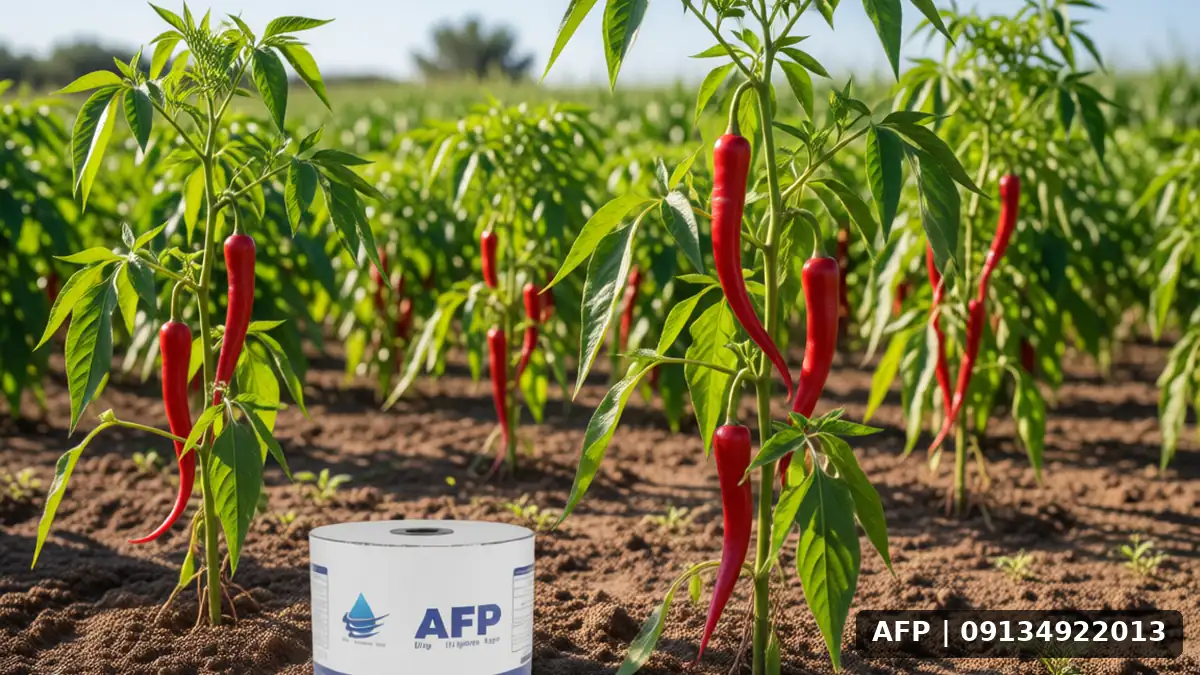
Bell pepper is a crop that prefers low-pressure fertigation (nutrient delivery via water). In pivot systems, emitters may not distribute nutrients uniformly due to complex flow paths if not properly adjusted. Using low-pressure capable emitters for pivot irrigation requires precise dosing pumps and suitable mixers. A common mistake is using low-pressure emitters for the benefits of pivot irrigation without considering their low flow rates, which can cause the accumulation of chemical ions in the root zone and burning.
Although this section focuses on bell peppers, the general principles of pivot irrigation are also applicable to other vegetable crops. Understanding water behavior in soil for fast-growing crops like spinach can help in designing the system for bell peppers. To compare water consumption patterns in different crops, you can take a look at spinach seed rate per hectare and its water requirements to gain a better understanding of the water-to-plant ratio in similar systems. Also, being aware of Sweet corn seed rate per hectare For intercropping, it can be useful in planning bell pepper crop rotation.
Frequently Asked Questions (FAQ)
Is node irrigation suitable for all soil types?
No. In highly permeable soils such as sandy soils, the drainage rate from node emitters may exceed the root zone’s water-holding capacity. In such cases, using emitters with higher flow rates and more frequent irrigation is recommended. In clay or dense soils, care must be taken to prevent waterlogging at the surface.
What is the main difference between node emitters and standard drip emitters?
Node emitters typically feature adjustable spacing or modular structures that allow you to change the irrigation pattern by swapping emitters. In contrast, drip emitters have fixed spacing. This flexibility is the main advantage of node systems in multi-phase crops like bell peppers.
What is the useful life of node emitters?
With proper filtration and regular maintenance, drip tapes can last up to 3 to 5 seasons. However, in the presence of high water acidity or severe sedimentation, this lifespan may be reduced to 1 to 2 seasons. Regular system flushing is the key to extending the life of components.
Can drip tapes be used in plastic greenhouses?
Yes, but component selection is critical. In greenhouses with high humidity and limited ventilation, using low-flow components is recommended to prevent fungal diseases. Additionally, ensure that the components are resistant to direct sunlight (UV).
Conclusion and Final Recommendations
Implementing drip irrigation for bell pepper crops is an advanced approach with high potential for increasing water efficiency and reducing labor costs. However, its success is entirely dependent on adhering to the technical prerequisites of drip irrigation: stable pressure, precise calibration, excellent filtration, and selecting components suitable for the planting spacing. A farmer who adopts this technology without a deep understanding of its hydraulic and agronomic principles will face repair costs and reduced crop performance. It is recommended to prepare an engineering design for the irrigation system before purchasing equipment and to consult with specialists if necessary. Remember that enhancing the efficiency and productivity of drip tapes depends not only on the type of components but also on the optimal management of resources and irrigation scheduling.
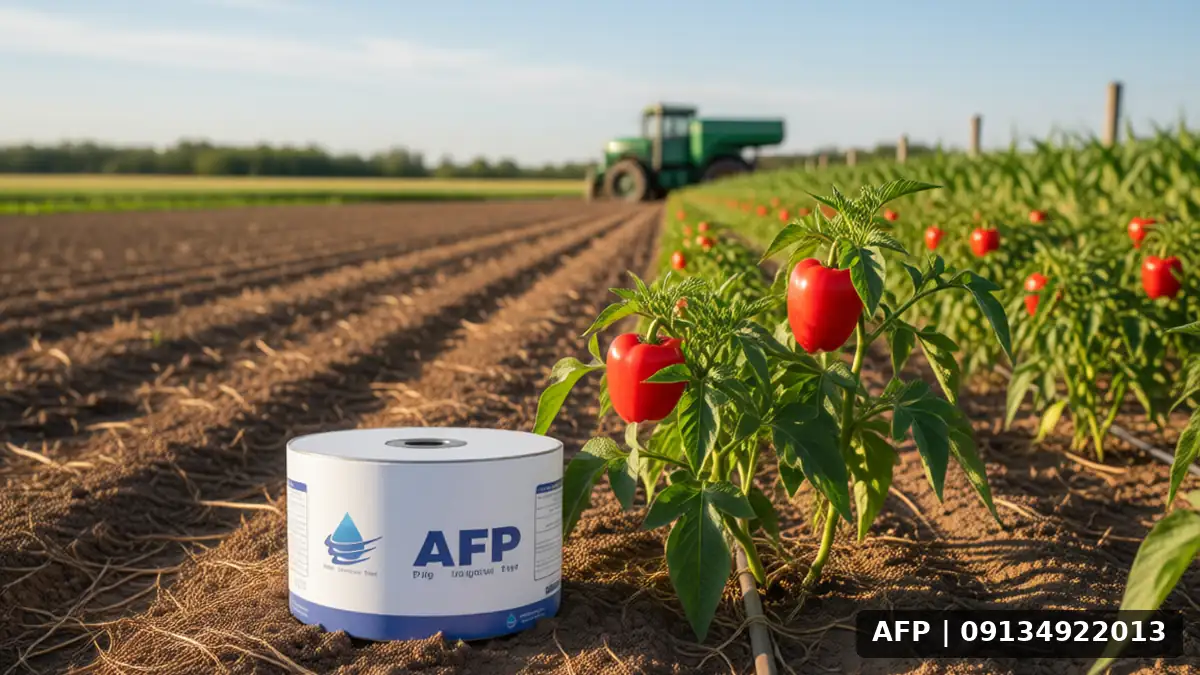
Finally, while bell peppers are a high-risk crop, adhering to correct principles rewards farmers with high-quality produce and increased revenue. Drip irrigation is a powerful tool that, if implemented with knowledge and precision, can be a pillar of economic success in greenhouse farming.
Related articles: How to Improve the Efficiency and Productivity of Drip Tape, Difference Between Side-Seal and Plate-Feeder Drip Tape