Center Pivot Irrigation in Corn Cultivation: A Comparative Analysis of Tape Line and Drip Methods
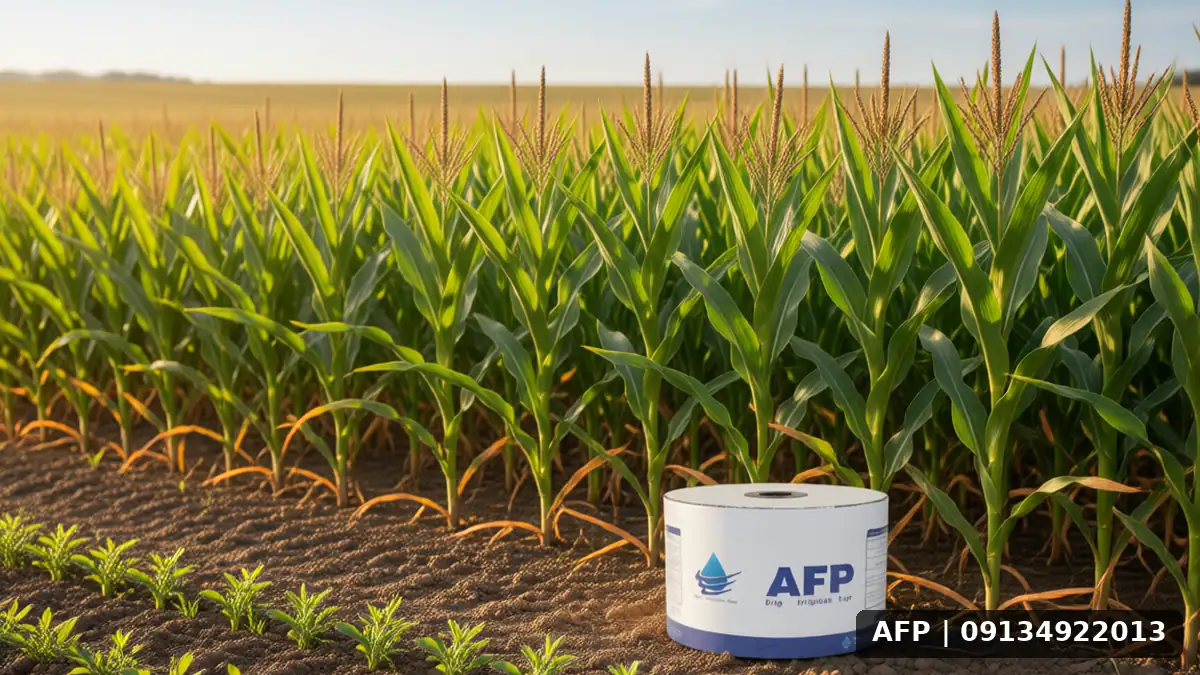
Is pivot irrigation really necessary for corn?
Corn cultivation, especially in the Silk Region, is one of the most critical food and livestock feed crops in many areas. This plant has high sensitivity to water stress, and proper soil moisture management can directly impact tassel development and, ultimately, grain weight. As one of the most advanced water management methods, drip irrigation provides the option for precise and regulated injection of water and nutrients directly into the root zone. In this article, instead of vague theories, we focus on the practical comparison of two main methods in drip irrigation for corn cultivation (drip tape and drip lines) to enable farmers to make informed decisions based on farm conditions.
Technical Comparison: Drip Tape vs. Drip Lines in Corn Cultivation
The choice between drip tape and drip lines depends on various factors, including soil type, air temperature, network pressure, and production targets. Both methods have their unique advantages, which are examined in detail below.
Features of Drip Tape
- Rapid Performance: Drip tape typically has shorter emitter spacings (e.g., 10 to 20 cm) and higher flow rates. This feature enables quicker flushing of coarse soil aggregates on the surface.
- Root Bed: In corn cultivation, which has medium to deep root depth, a drip tape creates a vertical wetted zone that helps corn roots grow rapidly.
- Cost and Durability: Drip tape is typically used for short-term seasons and has a lower initial capital cost (Capex) than permanent drip, but it requires annual replacement.
Features of Permanent Drip
- Distribution Accuracy: Permanent drip injects water into the soil drop by drop without air pressure, using 100 mm emitter spacing and a constant flow rate (e.g., 2 liters per hour). This reduces surface evaporation and prevents surface leaching.
- Lifespan: With proper maintenance (flushing and leak repair), permanent drip can last 5 to 7 years, making it more economically logical for multi-year corn fields or rotational crops.
- Risk of clogging: Corn is a crop that develops extensive root systems. In permanent drip systems, if water pressure is insufficient, the likelihood of dripper clogging due to root intrusion increases. Therefore, proper pressure adjustment and overhead drip installation are essential.
Practical tips for optimizing center pivot irrigation for corn
Proper application of center pivot irrigation for corn crops requires adherence to precise engineering principles. Below, we review the key operational guidelines that farm managers must follow:
- Lateral/hose depth: To prevent evaporation and physical damage, the drip tape or hose must be placed at a maximum depth of 15 cm below the soil surface. Greater depths, due to the slope characteristics of corn, reduce water infiltration to fine roots.
- Pressure management: The system operating pressure should be maintained between 1 and 2 bar. Exceeding this pressure causes spray and chilling of corn roots, while lower pressure results in uneven water distribution along the lateral.
- Planting and Furring: Corn is generally planted in furrows. During planting, care must be taken to ensure the irrigation line is not damaged. It is recommended to use shovels equipped with line laying capabilities.
- Soil Moisture Monitoring: Using soil moisture sensors at the corn root depth (approximately 50 cm) helps determine more precise irrigation timing and prevents over-irrigation.
Nutrient Management and Fertigation
One of the key advantages of center pivot irrigation in corn cultivation is the ability to practice Fertigation. Nutrients such as nitrogen, phosphorus, and potassium are injected directly into the root zone along with the irrigation water as water-soluble solutions.
Important Note: For corn cultivation, nitrogen in the form of urea or nitrogen-containing urea is typically applied in short, multiple pulses during the active growth phase. If using drip tape, the concentration of soluble materials must remain below the threshold for flushing to prevent leaching and root burn. A key principle is to flush the line of soluble materials after every irrigation session with a 10-minute flow of water-free stream to ensure materials exit the drip line.
If your farm features large paddles and heavy soils, the use of a permanent drip system with flushing of soluble material solutions is recommended instead of drip tape. For further reading on flushing calculations and yield optimization, you can refer to the flushing guide for silk farms. Additional information on flushing of soluble materials in this specialized article which explains similar principles for silk farms.
Frequently Asked Questions (FAQ)
Under water scarcity conditions, which method is better for corn cultivation?
Under severe water scarcity, drip tape with a 10 cm emitter spacing and a flow rate of 1.6 liters per hour generally provides higher efficiency in moisture uptake by corn roots. This method ensures water remains precisely within the active root zone, reducing evaporative losses. However, if the soil is sandy, a permanent drip system with a constant flow rate of 2 liters per hour and a 100 mm spacing may offer better control over infiltration depth.
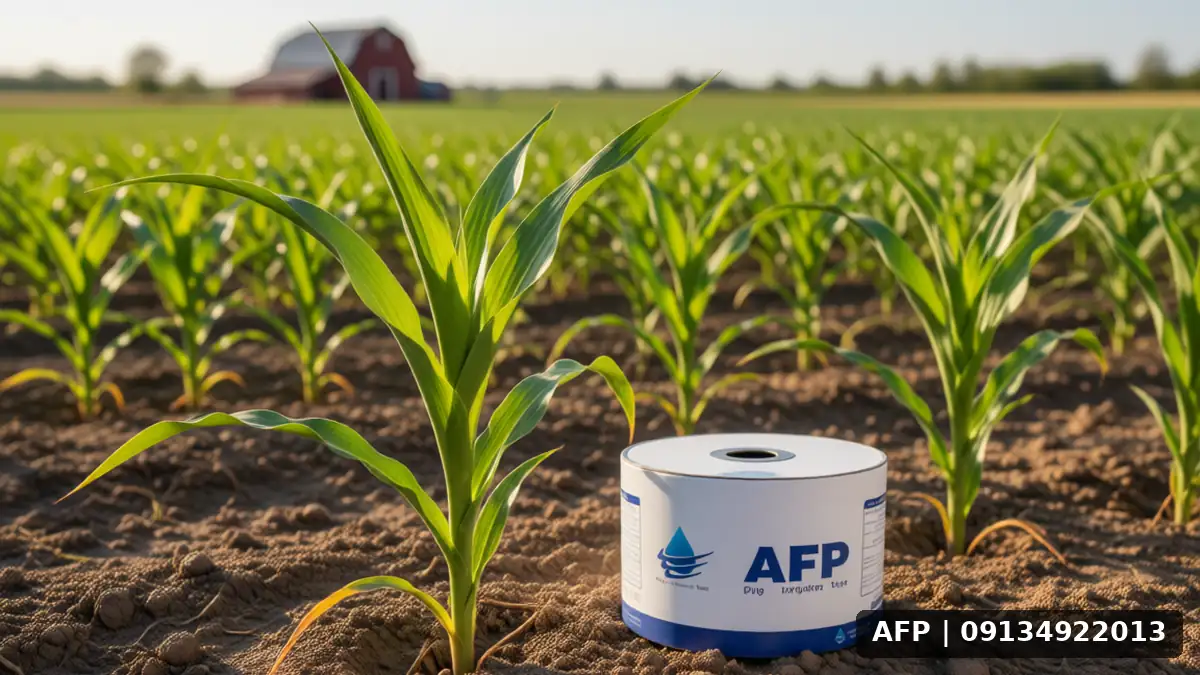
How many drip lines or solid lines are needed per hectare?
Typically, for corn cultivation with planting distances of 70 to 80 centimeters, two lines/tubes are used on each side of the plant row, or one line/tube on one side and one on the other. This means each corn plant has direct access to a 100 millimeter line/tube. The exact number must be calculated based on the planting distance and the selected drip/solid line model.
Does central pivot irrigation reduce the quality of corn grains?
No, on the contrary. Central pivot irrigation of corn, by creating uniform soil moisture conditions, slows plant growth and increases pith density in the grains. Corn grain quality is affected by water stress; central pivot irrigation, by eliminating water stress, allows the plant to maintain optimal moisture levels until the final stages of grain maturity.
Conclusion: Informed Selection for Corn Cultivation
Choosing between solid lines and drip lines for central pivot irrigation of corn is an economic and technical decision. Solid lines are suitable for single-crop farms with limited budgets and annual replacement needs. Permanent drip lines are more cost-effective for larger farms requiring long-term safety and precise grain material flushing.
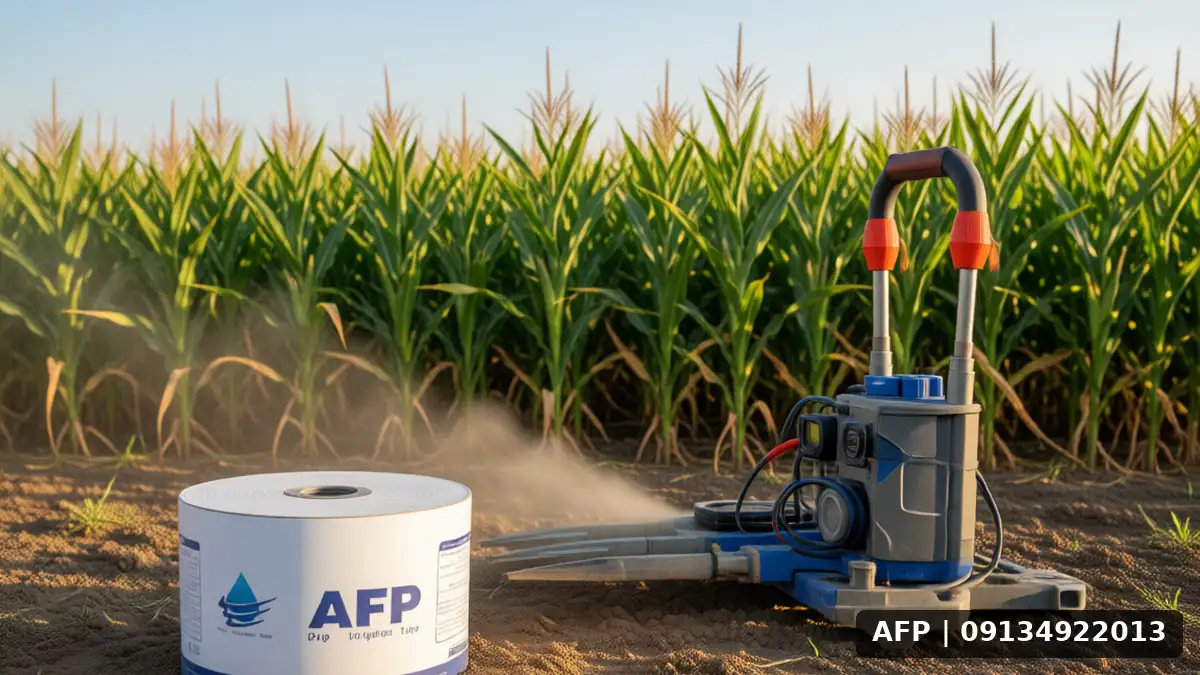
In both cases, the proper execution of engineering principles (appropriate pressure, appropriate depth, and grain material flushing) plays a pivotal role. By optimizing central pivot irrigation for corn cultivation, farmers can save up to 20% on water consumption and 15% on grain material consumption. These savings directly lead to increased profitability for silk farms.
For additional information on optimizing grain washing in mulberry cultivation, you can use Grain Washing Guide to Improve Efficiency and Yield in Mulberry Farms This resource provides detailed information on grain washing in mulberry cultivation, where similar principles can be applied to corn as well.
Related content: musir seed per hectare yield increase, basil harvest yield per hectare guide, Dill seed rate D8AFD8B1 per hectare