75mm Threaded Pipe Compatibility with Drip and Micro-Irrigation: Installation and Efficiency Guide
Introduction: Why Is Choosing the Right Drip Tape Supply Line Critical?
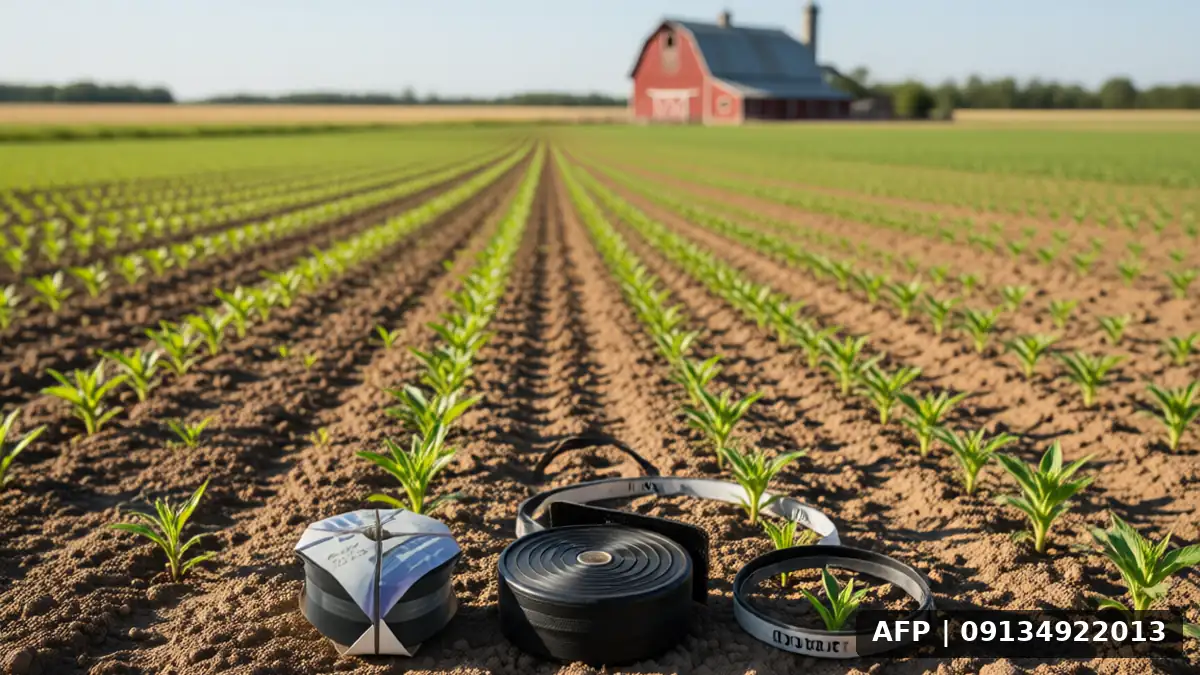
In drip and tape irrigation systems, the main supply line acts as the arterial conduit, transporting water from the source or tank to the sub-lines. A common question among farmers and agricultural engineers is the compatibility of flexible piping, specifically the 75-millimeter 75-millimeter piping, with threaded or press-fit connections in tape irrigation systems. Due to high sensitivity to pressure and flow rate, tape irrigation requires a consistent and high-quality water supply. Using 75-millimeter threaded piping can be a cost-effective solution, provided hydraulic principles and installation guidelines are strictly followed.
This section explores in detail how to use this piping for tape irrigation supply, which types of connections to select, and how to prevent leaks or failures. It also addresses compatibility with inline and lateral emitters, providing a complete roadmap for installation.
Technical Principles of Compatibility Between 75-millimeter Threaded Piping and Tape Irrigation Lines
Is 75-millimeter piping sufficient for tape irrigation?
The 75-millimeter size (equivalent to 3 inches) is a medium size in irrigation networks. This size is suitable for medium-sized farms with acceptable lateral distances. If the main line length exceeds 200 meters or the terrain has a high slope, a larger size such as 110 or 160 millimeters may be required to prevent pressure drop from exceeding limits. Conversely, for smaller farms (under 2 hectares), 75-millimeter piping has excessive capacity, which can reduce water velocity and lead to sedimentation of suspended particles. Therefore, a balance between path length, pipe diameter, and tape irrigation flow rate is essential.
Threaded vs. Quick-Connect: Advantages and Disadvantages
Threaded connections are usually attached to pipe ends and valves using flanges or metal/plastic couplings. The main advantage of this system is high mechanical resistance against pressure surges. However, there is a risk of leakage at the thread joint. For drip tape lines, which typically operate at low pressure (1 to 3 bar), using threaded connections with nylon (PTFE) washers and adjustable clamps provides high safety. In contrast, quick-connect connections allow for faster installation but offer fewer options for minor repairs in case of leakage compared to welded or flanged systems.
- Advantage of threaded connections: Ability to disassemble and reassemble for maintenance.
- Disadvantage of threaded connections: Requires proper surface treatment to prevent rusting in humid conditions.
- Emphasis on safety: Use of elastic couplings at the pipe-to-head connection.
Impact of pipe type on drip irrigation water quality.
Polyethylene pipes suitable for drip irrigation should not contain additives that cause water oxidation or taste alteration. Threaded pipes typically feature a smooth internal lining, which reduces friction and pressure loss. This characteristic is beneficial for drip systems requiring uniform droplet distribution.
Practical guide to system installation and connection.
Correct steps for connecting a 75mm pipe to an expansion valve.
To connect a threaded pipe to the main valve, first use a coupling with two crimp ends or one crimp end and one flange end. If using a flange, always use a PTFE (polytetrafluoroethylene) gasket instead of plain Teflon tape, as Teflon tape may weaken under high temperatures and fluctuating pressures. Insert the pipe into the coupling to the appropriate depth and tighten the clamps with uniform torque. Overtightening can cause the polyethylene pipe to rupture at the clamp location.
- Clean the pipe connection and pipe head of dust and foreign particles.
- Place a gasket or Teflon tape on the flange bolts.
- Connect the two half couplings to the pipe end and the overflow flange.
- Tighten the clamps on both sides at equal intervals.
- Perform a pressure test at 50% of the system’s design pressure before connecting the drip tape.
Manage pressure and flow rate for better drip tape performance
Drip tapes (such as models with fixed nozzles or drippers) have a specific water uptake. If the input pressure to the 75 mm pipe exceeds the standard range of the drip tape, the nozzles will be damaged and the output flow rate will become irregular. To address this, use the pressure regulator (Pressure Regulator) At the end of the main line, before entering the drip tape, it is essential. Additionally, in sloped fields, pressure regulator valves must be used every 100 meters of elevation to maintain flow uniformity along the entire length of the line.
The importance of selecting filters and backwash valves
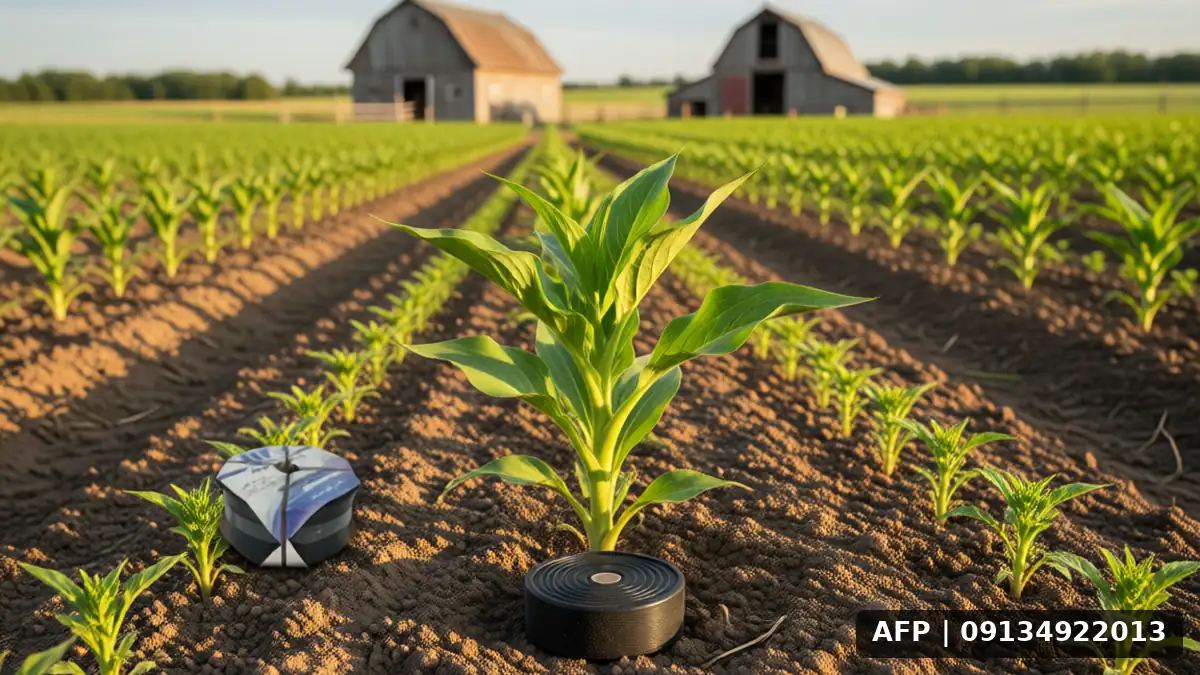
One of the biggest enemies of drip tape is clogging of emitters. A 75 mm pipe has the capacity to carry particles, but these particles do not directly enter the line unless there is no filter. Always use a sand filter with appropriate particle size or a disc filter. Installing a backwash valve in the main line allows for the discharge of sediment particles. This point is critical for systems using well water.
Frequently Asked Questions (FAQ)
Can I connect 75 threaded pipe directly to drip tape without a filter?
No. Never connect an active drip tape system without a filter to the main line. Particles smaller than 2 millimeters can cause emitter clogging and uneven water distribution along the line. The filter is the first line of defense for your system.
What is the best connection distance for drip tape from a 75 millimeter pipe?
Drip tape is typically connected to the main line via smaller-diameter sub-lines (e.g., 16 or 22 mm). If using direct connections, utilize standard T-couplings. The spacing between each sub-line connection must be calculated based on the flow rate of each tape and the uncertainty factor to ensure acceptable pressure loss.
Is 75 mm pipe suitable for high-density crops?
Yes, assuming the total system flow rate requires the capacity of a 75 mm pipe, this size is ideal for many medium-scale high-density crops such as potatoes or tomatoes. For specific crops with high seeding density, review the seed count per hectare or the seeding rate of the crop to help you more accurately estimate the required water volume and ensure the pipe size is neither too large nor too small.
Conclusion and final tips for maximum efficiency
Using 75 mm threaded pipe to feed drip tape and drip systems is a sustainable and cost-effective option, provided technical principles are followed. The key to success in these systems is proper management of ‘pressure’ and ‘water quality’. Never use drip tapes without filters, tighten clamps with appropriate torque, and use a pressure regulator to ensure uniform flow rate.
To view the types of specialized connections recommended in this article, you can refer to the section Agricultural Drip Line Fittings Please also note that if you are looking for a guide to purchasing and selecting pipe size based on the type of crop, the article Selection of Pipes for Crops is a good resource for comparing options. Finally, paying attention to important points before installing drip lines in the field can help prevent costly errors.
Related Articles: Related article Related article Related article D8AFD8B1 Related article