Tipe Tape Spacing in Melon Cultivation: Recommended Standards
Introduction to the Importance of Drip Line Spacing in Melon Cultivation
Drip irrigation using drip lines is one of the most advanced methods for supplying moisture in vegetable and fruit farms, including melons. In this system, water is delivered directly to the root zone in drip form, which reduces evaporation and nutrient leaching. However, for this system to operate optimally, determining the spacing of drip lines in melon cultivation and the correct arrangement of rows is of high importance. Incorrect spacing can lead to the creation of additional dry or wet zones and disrupt uniform plant growth.
Melons are plants that require regular fertilization and uniform moisture during the fruit ripening stage. Therefore, the irrigation system design must ensure maximum root coverage across the entire soil surface. The following section provides a specialized review of the criteria for determining spacing, recommended standards, and implementation tips.
Principles of Row Layout and Its Impact on Water Distribution
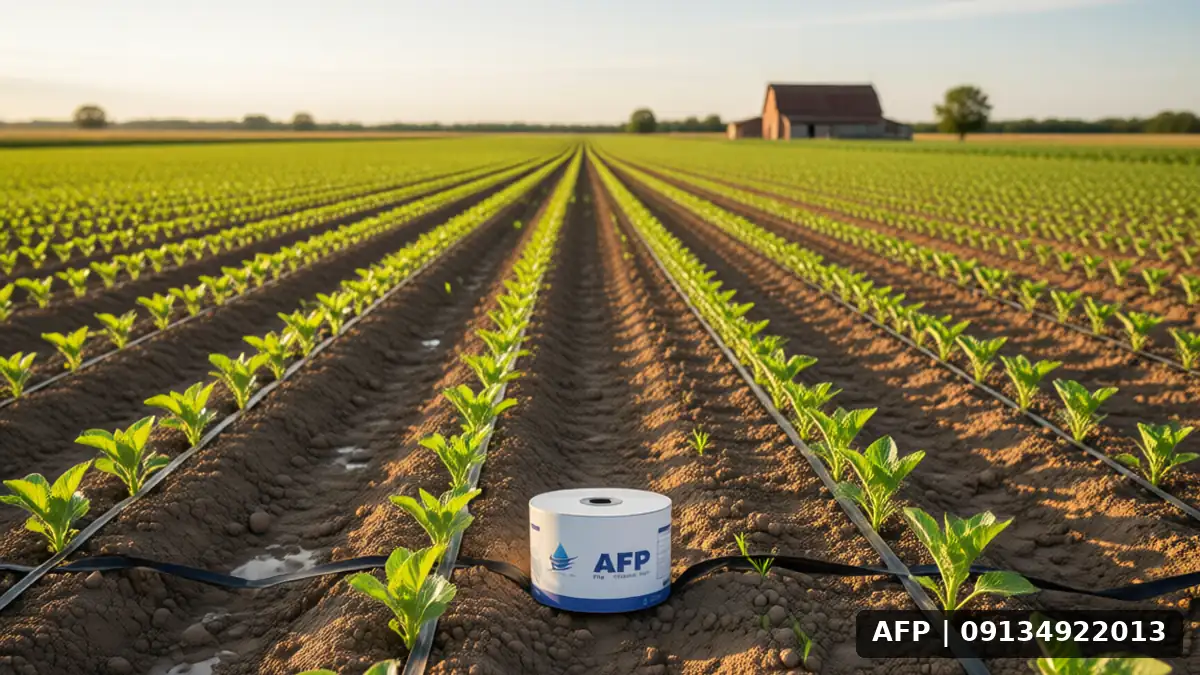
The row layout of melons directly affects how drip lines distribute water. Generally, in melon cultivation, the spacing between rows is recommended to be between 60 and 90 centimeters, which may vary slightly depending on the specific variety and climatic conditions. The drip line should be placed along the row to ensure maximum circular moisture coverage within the active root zone.
If the distance of the drip line from the center of the row is excessively large, the line will not be positioned within the root zone, causing the plant to develop shallower and weaker roots to access water. Conversely, a distance that is too small may lead to excessive wetness of the stems and create a bed for soil-borne fungi. Therefore, maintaining a balance in Drip tape spacing in melon cultivation This is critical.
- Uniform Distribution: The drip tape must be laid uniformly along the length of the row to prevent gleying (localized dryness).
- Placement Depth: The drip tape depth must be no more than 15 to 20 cm to align with the depth of active melon roots.
- Circular Coverage: The wetting radius of the tape must be such that it partially overlaps with the wetting radius of the adjacent row’s tape to ensure no dry zones remain.
Recommended standards for drip tape spacing
Based on field experience and irrigation studies, the following standards are recommended for melon cultivation. These figures are calibrated for the standard drip tape diameter (4 to 6 millimeters) and drip emitter flow rate.
Note that these spacings are intended as initial guidelines and must be refined based on the critical points before drip tape installation in the field and the specific soil type.
Practical points in installation and system adjustment
The physical position of the drip tape is only one part of the equation. Installation method and flow pressure also affect water distribution. In melon farms, which typically have gentle slopes, pressure management is critical.
- Pressure control: Pressure at the end of the tape must not be less than 70% of the inlet pressure. Otherwise, emitters at the end of the line will deliver insufficient water, causing uneven crop growth.
- Emitter size: For melons, emitters with a flow rate of 2 to 3 LPH are ideal. This rate allows moisture to penetrate the soil slowly and prevents nutrient leaching.
- Filtration equipment: Before purchasing the system, always use appropriate filters to prevent tape emitters from clogging. Understanding the components of a drip tape irrigation system helps you select the right auxiliary equipment.
In addition, soil fertility management plays a pivotal role. Melons are sensitive to calcium and potassium, and if irrigation is not uniform, the uptake of these nutrients becomes inefficient. Therefore, monitoring seed amount per hectare as an indicator for input planning can be useful, although for melons, the primary approach is based on root zone coverage.
The impact of drip line spacing on quality and harvest consistency
One of the main causes of melon crop loss is soil-borne diseases and moisture fluctuations. By maintaining precise drip line spacing, the root zone remains moist and uniform. This stability ensures synchronized fruit development and prevents fruit cracking caused by rapid water absorption (waterlogging).
Research has shown that farms with correctly calculated drip line spacing achieve approximately 15 to 20 percent higher water efficiency. Furthermore, reduced chemical fertilizer use due to decreased leaching and increased root uptake lowers production costs. For more accurate efficiency estimates, you can refer to the vegetable yield per hectare guide to calibrate your expectations for the melon crop.
Frequently Asked Questions (FAQ)
1. Does drip tape spacing change in sandy soil?
Yes. In sandy soils, permeability is high and water infiltrates deeper faster. Therefore, it is generally necessary to reduce the distance between drippers and increase irrigation frequency to maintain the root zone.
2. How can I prevent drip tape clogging?
The key is using appropriate mini-jet or sieve filters, regularly flushing the system, and preventing the entry of solids and algae. Additionally, maintaining a proper flow gradient is important to prevent sedimentation in low spots.
3. Is melon sensitive to a 30 cm distance of the drip tape from the center of the row?
Distances much less than 30 cm usually do not cause problems, unless the soil is very heavy and water infiltration is slow. In most cases, 15 to 25 cm is the optimal range.
4. What is the role of soil salinity in determining drip tape spacing?
In saline soils, a higher leaching requirement exists. It may be necessary to reduce the spacing between tapes or increase the emitter flow rate to flush salts away from the root zone. In this case, consultation with specialists in subsurface irrigation and salinity management is recommended.
Summary and Final Recommendations
Determining Drip Tape Spacing in Melon Cultivation It is a dynamic process that must be reviewed according to cultivar, soil type, and climatic conditions. Instead of relying on fixed numbers, use wetting radius and overlap of wet zones calculations. Proper installation, regular maintenance, and continuous soil moisture monitoring are essential to ensuring sustained high performance and melon plant health.
For more precise planning, examining the yield of other root crops and comparing it with melons can provide insight into water resource management in the field. By paying attention to spacing details, you can optimize irrigation costs and supply the market with higher quality produce.
Related articles: Related article Related article Related article Related article