Tape Drip Irrigation for Fenuguel Cultivation: Prerequisites
Introduction: The Importance of Drip Irrigation in Fennel Cultivation
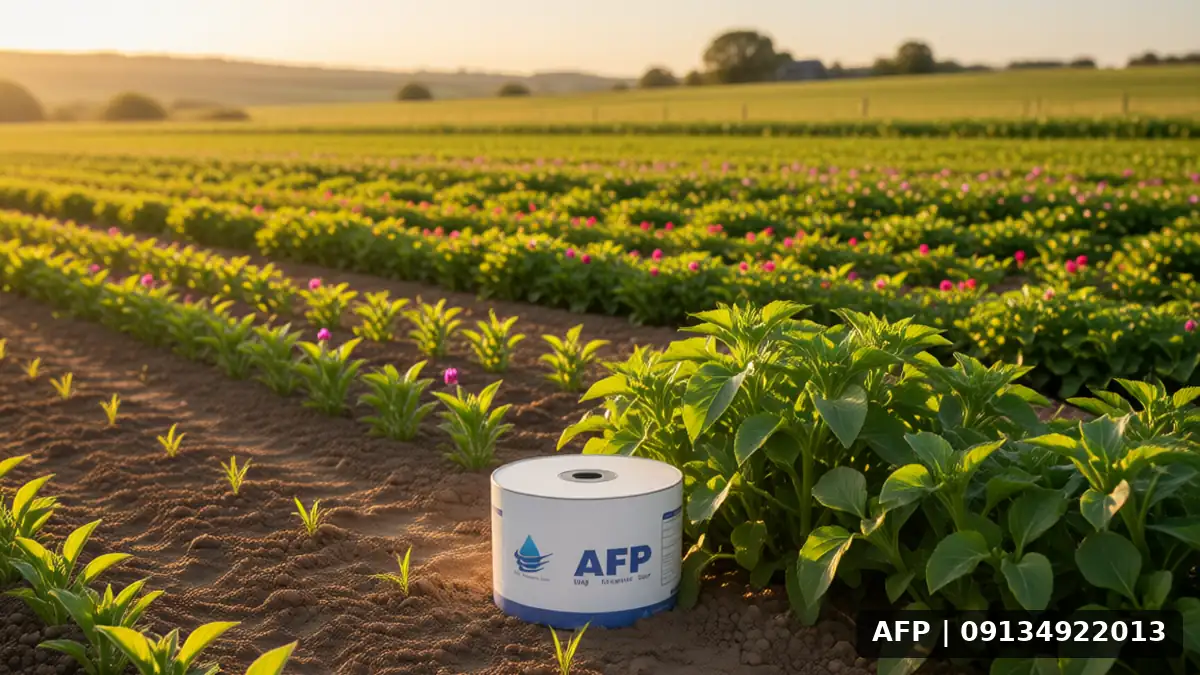
Fennel (Foeniculum vulgare) is a medicinal and aromatic plant of significant economic and hygienic importance, widely cultivated in Iran, particularly in hot and semi-arid regions. Due to the sensitivity of its root system to water and root-zone stress, selecting an appropriate irrigation method plays a vital role in increasing yield and product quality. Drip Irrigation with Tip-Line Owing to low water consumption, uniform water distribution, and precise control capabilities, this method has become one of the most advanced techniques in fennel cultivation. This approach not only reduces water waste but also controls the spread of weeds by concentrating moisture in the root zone. The following section examines the key prerequisites for the successful implementation of this system, addressing various technical and environmental aspects to enable farmers to utilize this technology with confidence.
Technical and Infrastructure Prerequisites for Drip Irrigation with Tip-Line
For correct implementation of drip irrigation with tip-line in fennel cultivationit is essential to adhere to certain technical and infrastructure prerequisites. These requirements ensure optimal system performance and reduce long-term costs for farmers. First, the quality of the water supplied for irrigation must be monitored. Drip and tip-line systems are significantly more sensitive to emitter size than sprinkler irrigation, and the presence of salts, sediment, and suspended solids can clog the small emitters along the tip-line. Therefore, installing appropriate filters at the beginning of the system is a critical prerequisite.
- Water analysis and proper filtration: It is mandatory to use centrifugal filters for removing coarse particles, disc filters for hard sediments, and fabric (fiber or mesh) filters for very fine particles, depending on the water source. Additionally, water pH must be maintained in the range of 6.5 to 7.5 to reduce calcium and magnesium salt precipitation. If the water is extremely acidic or alkaline, pH adjusting agents must be used.
- Nutrient delivery via drip irrigation: One of the significant advantages of drip tape is the capability for direct fertigation. To utilize this benefit, a fertilizer dissolution and dose control system is required at the water inlet. Fertilizers must be in liquid or soluble form, and the solution pH must be appropriately adjusted to prevent clogging of the narrow drip tape tubes. This method can reduce fertilizer consumption by up to 30%.
- Proper spacers and pressure regulation: System design should be based on the root depth of fennel and moisture movement in the soil. The system operating pressure must also be adjusted so that water is distributed effectively along the tape length without damaging the delicate tape material or the plants. Excessive pressure can cause joint failure.
Environmental and soil prerequisites for fennel cultivation
Soil and environmental aspects are also highly influential in the success of drip tape irrigation systems in fennel cultivation. These steps are recommended prior to system installation to prevent capital waste. Accurate soil knowledge helps you prevent potential future concerns:
- Soil analysis and physical properties: Bulk density, particle size fraction, and soil permeability must be determined before planting. This information helps determine the appropriate tubing spacing and irrigation intensity. For example, in clay soils with low permeability, tubing spacing should be wider to allow water to move effectively toward the roots and prevent waterlogging. Conversely, in sandy soils with high permeability, closer spacing is recommended.
- Aspect and slope of the land: Installing tubing along the slope of the land ensures better water distribution. If the slope is steep, adjusting pressure-regulating valves along the lines is essential to prevent pressure fluctuations. Without pressure regulation, the lower end of the line will experience excessive pressure, while the upper end will have low pressure, resulting in asymmetric water distribution.
- Wind direction and shading: Fenugreek requires sunlight, but strong winds can damage flowers and roots. Tube layout should be oriented according to the prevailing wind direction to minimize damage. Additionally, providing shade for young plants in early growth stages can reduce evaporation.
Practical steps for installing and implementing drip tubing irrigation in fenugreek
After completing the preliminary preparations, the execution steps for installing a drip tape system in fennel are as follows. These steps must be performed with precision and adherence to agricultural engineering principles to extend the system’s useful life:
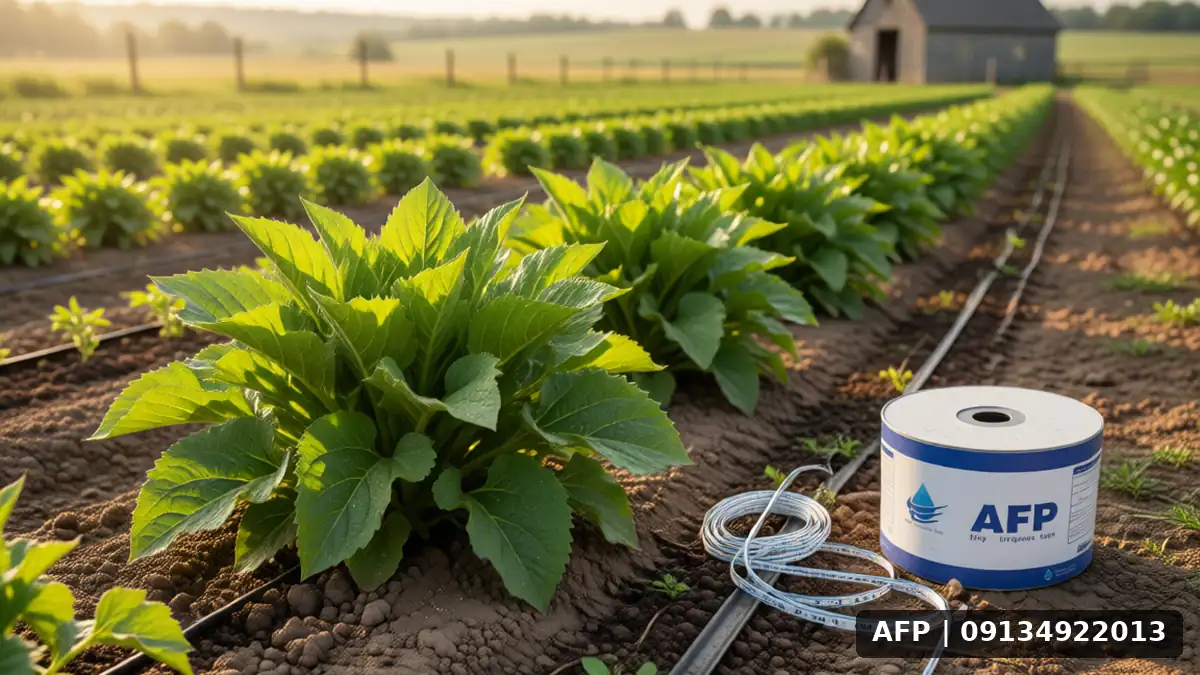
- Tape layout: The spacing between drip tapes is typically 30 to 40 cm. Tapes are placed beside the fennel crop rows to ensure adequate water delivery to the roots. In some cases, two tapes per crop row are used to achieve better moisture coverage. The precise position of the tape should be centered within the main root zone.
- Connecting tapes to the main pipe: Tapes are connected to the main lines (such as PE pipes) using appropriate fittings. Connections must be tight and leak-free. The use of standard metal or plastic T-connectors for attaching the tape to the main line is essential. Even minor leaks can cause insufficient pressure at the end of the line.
- Installing the supply and filtration system: At the system inlet, the main filter, fertilizer injector, and pressure control valves are installed. The order of filter installation is critical; typically, a centrifugal filter is installed first, followed by a rotational disc filter, and finally a media filter, to prevent clogging of the narrow drip tapes. A pressure regulator valve is also used to adjust the output pressure from the water source.
- Pressure and performance test: Before starting actual irrigation, the system must operate under pressure in dry condition to ensure the integrity of connections and uniform water distribution. Additionally, a water distribution monitoring test on dry land is recommended to verify the correct performance of the strips over the row length. Any potential leaks must be repaired before planting.
Practical tips and avoiding common errors
For optimizing system performance Tip drip irrigation in coriander cultivation, the following points are essential. These tips are derived from years of modern farming experience and common mistakes:
- Reducing the water discharge rate from the strips: The discharge rate should be low enough to allow water to infiltrate the soil properly and prevent it from running underneath the strip. This rate is determined based on soil permeability. If the discharge rate is too high, water will accumulate on the surface instead of infiltrating deeper, which causes root rot and fungal growth. Proper adjustment of the discharge rate is the key to success.
- Managing soil moisture through measurement: Using soil moisture sensors and maintaining regular soil moisture control reduces over-irrigation and increases system efficiency. Fenugreek is sensitive to consistent moisture levels; both severe drought and frequent waterlogging can negatively affect leaf and flower quality. Weekly moisture monitoring at various depths is recommended.
- Regular filter cleaning: Sediments and suspended materials can accumulate in filters over time. Periodic filter flushing prevents clogging of emitters. Cloth filters typically require flushing every 2 to 3 weeks, while centrifugal filters need monthly cleaning. Clogged filters significantly reduce system performance.
- Use of UV-resistant drip tape: Drip tape should be made from materials that resist UV damage when exposed to sunlight. This characteristic extends the system’s useful life. Low-cost tape may break after one cropping season, whereas high-quality tape lasts 3 to 5 years. The higher initial cost of quality tape yields better long-term returns.
Frequently Asked Questions (FAQ)
How much water is required for fenugreek in each irrigation?
The water requirement for fenugreek varies by soil type, climatic conditions, and growth stage. Under normal conditions, irrigation of 20 to 30 mm per session is recommended. This amount should be adjusted based on soil moisture and plant needs. Water requirements are lower in early growth stages but increase during flowering and fruiting. In summer, due to high evaporation, irrigation frequency should increase while the duration of each session should decrease to allow water infiltration. Using meteorological data to predict water needs can be highly beneficial.
Can drip tape be used for other crops like pepper or tomato?
Yes, drip tape is a flexible system that can be used for other row crops. For more details, refer to the different types of irrigation tapes and their performance. The design principles are similar, but the pipe dimensions and planting spacing change depending on the crop. Fenugreek is not a deep-rooted plant, so shorter and denser tapes are suitable. For crops with trees or long bushes, longer and thicker tapes are used. Understanding plant characteristics is the key to selecting the most appropriate type of tape.
What is the appropriate spacing for drip tape in fenugreek?
The appropriate tape spacing is usually between 30 and 45 centimeters. This spacing is determined based on soil type and the root depth of fenugreek. Closer spacing is recommended for sandy soils, while wider spacing is recommended for clay soils. The fenugreek planting layout also affects tape spacing; if the distance between planting rows is greater, the tape spacing can also be increased. The main objective is to keep the plant’s root zone uniformly moist without water merging, which causes root rest. Field trials have shown that these spacings yield the best results for fenugreek.
Conclusion: Optimal Irrigation for Optimal Fenugreek Harvest
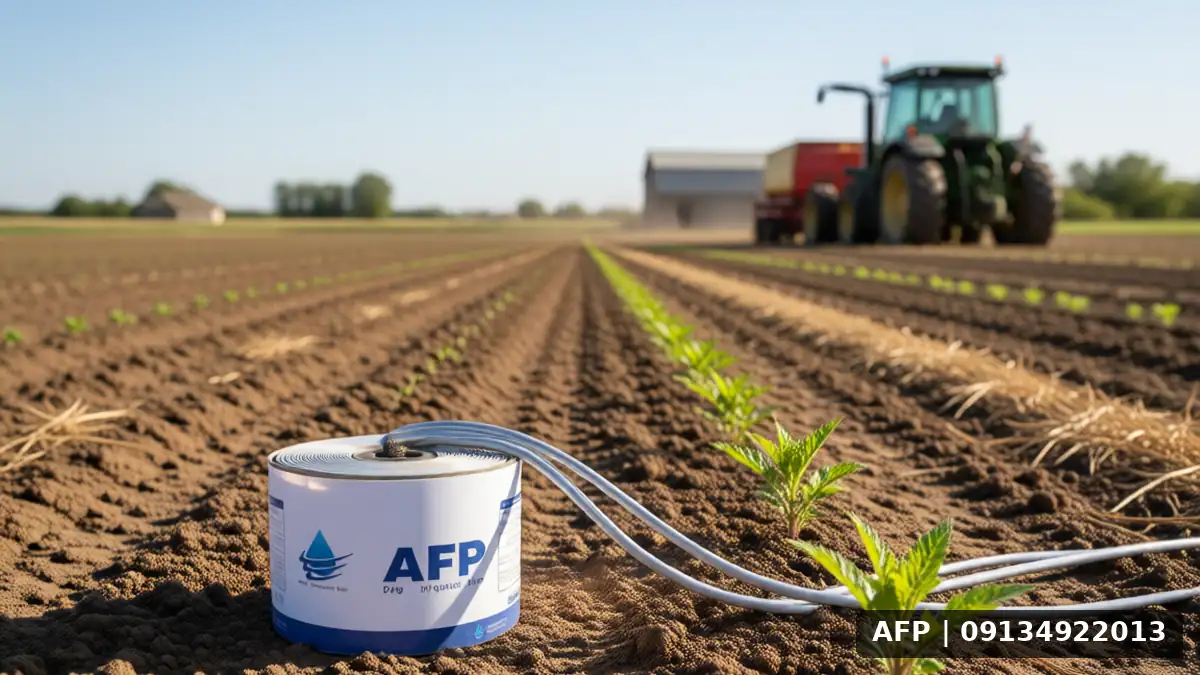
Correct Implementation Drip line irrigation in hyssop cultivation It requires attention to technical, environmental, and operational prerequisites. This method, which reduces water consumption, improves fertilizer efficiency, and enhances crop quality, is a top option in modern agriculture. By following the points mentioned in this article, farmers can benefit from the advantages of this system and achieve significantly higher yields per hectare. Additionally, attention to regular system maintenance and repair is the key to long-term success. For more information on the efficiency and optimization of irrigation systems, you can access specialized guides in this field and contact technical consultants.
Related articles: Chickpea seed rate D8AFD8B1 per hectare, garlic seed rate D8AFD8B1 per hectare, Black radish yield D8AFD8B1 per hectare, Types of drip lines D988 performance of each