Surface Irrigation in Melon Cultivation: Applications, Practical Tips, and Efficiency
Introduction to Irrigation Challenges in Melon Cultivation
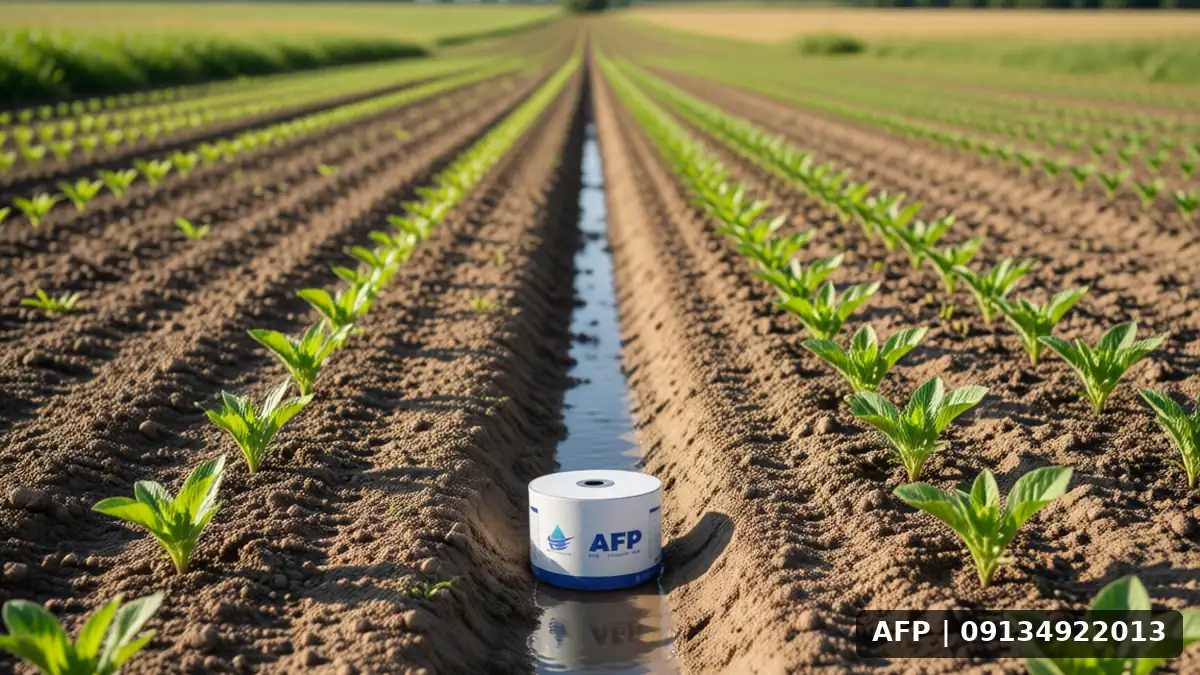
Melon is a crop sensitive to climatic and management conditions, where fruit quality and weight are heavily influenced by moisture supply methods. In many regions, surface irrigation remains common due to traditional practices and access to surface water sources. Surface irrigation However, using this method without a precise understanding of horticultural engineering and irrigation principles can lead to water waste or water stress in the plants. The objective of this section is to examine the correct applications of surface irrigation in melon cultivation and provide strategies to optimize this process.
To better understand irrigation challenges, grasping the importance of land preparation is critical. Soil quality and the proper grading of plots directly affect water infiltration rates and prevent soil erosion. In this regard, studying The importance of land preparation for drip tape and poly pipe can teach us the principles of how the land surface should be prepared to ensure even water distribution, even with surface irrigation. Proper land preparation is a fundamental prerequisite not only for modern systems but also for the most traditional methods. When the land is correctly plowed and compacted, melon plants gain better resistance to sudden rainfall, and roots develop improved nutrient absorption capabilities. Therefore, neglecting this preliminary stage renders all subsequent irrigation efforts ineffective.
Technical principles and applications of surface irrigation in melons
Uniform water distribution and the role of slope
The most important application, and simultaneously the greatest challenge, of surface irrigation is controlling the flow velocity of water on the ground surface. In melon cultivation, if the plot slope is inverted or the longitudinal slope exceeds the permissible limit, water will drain toward lower plots instead of ponding at the root zone. This leads to localized soil saturation, intensifying root pathogens, while upper sections suffer from dryness. To prevent this issue, it is essential to use a laser level or even a traditional water level for precise grading of the plot surface. The slope must be appropriate to ensure water moves uniformly toward the side boundaries without stagnating at specific points.
Irrigation duration and required water volume
Determining the appropriate time to cut off water and the total water volume required for each plot necessitates precise calculations. Melon requires uniform moisture during the vegetative stage to prevent fruit cracking. In this case, irrigation conditions must align with optimal soil and water management principles; that is, irrigation must be conducted when the plant is not under stress and the soil profile is not saturated. Irrigation scheduling must be adjusted based on air temperature and evapotranspiration rates. Additionally, understanding the relationship between soil type and irrigation timing is critical. In light sandy soils, water moves through the surface faster, so irrigation duration should be shorter but more frequent. Conversely, in heavy clay soils, water must be controlled more precisely to prevent root zone waterlogging.
Practical and operational tips for irrigation management
- Use of crop blocks (sequential cropping): Creating furrow ridges between melon rows can help guide water flow and prevent soil surface erosion. These ridges should be compacted with a suitable scraper to control water infiltration.
- Proper timing: Surface irrigation during the hot hours of the day causes rapid evaporation and leaf damage (due to droplet splash). The best times are early morning or late evening, which can save up to 15% in water usage.
- Weed management at plot edges: Mowing edge weeds on plots after each irrigation reduces the evaporation surface and focuses soil moisture in the root zone.
One auxiliary method in melon cultivation is paying attention to soil type. In clay soils, water infiltration is slow and the surface saturates quickly, while in sandy soils, infiltration is high and water passes through rapidly. Therefore, in sandy farms, irrigation frequency should be higher and the volume per application lower to prevent leaching of nutrients. In this regard, understanding soybean seed rate per hectare as a competitor crop or mulch (double-cropping) can help estimate total water consumption and field management, as some farmers plant melons alongside other low-height crops to protect the soil surface from direct sunlight. This intercropping method, in addition to reducing evaporation, also contributes to long-term soil structure improvement.
Comparison with modern systems and alternative solutions
Despite the applications of surface irrigation, many melon farms are currently transitioning to low-flow and modern systems. The tape line system, due to its capability for precise flow control and uniform water distribution, is one of the most popular options. In this system, water is distributed in a band near the main roots. To choose the right path, understanding the crop yield per hectare (referring to grain and product harvest) and its relationship with soil quality is important. If the soil is loose and uneven, the tape line system provides better efficiency due to reduced runoff and high accuracy. On the other hand, practical tips for the correct implementation of this system are also critical. It is recommended that, if possible, Important points when using tape line irrigation you consult the [manual/guide] to prevent common problems such as nozzle clogging and incorrect pressure settings. These points apply to both surface and tape line methods because irrigation network hygiene is always the top priority.
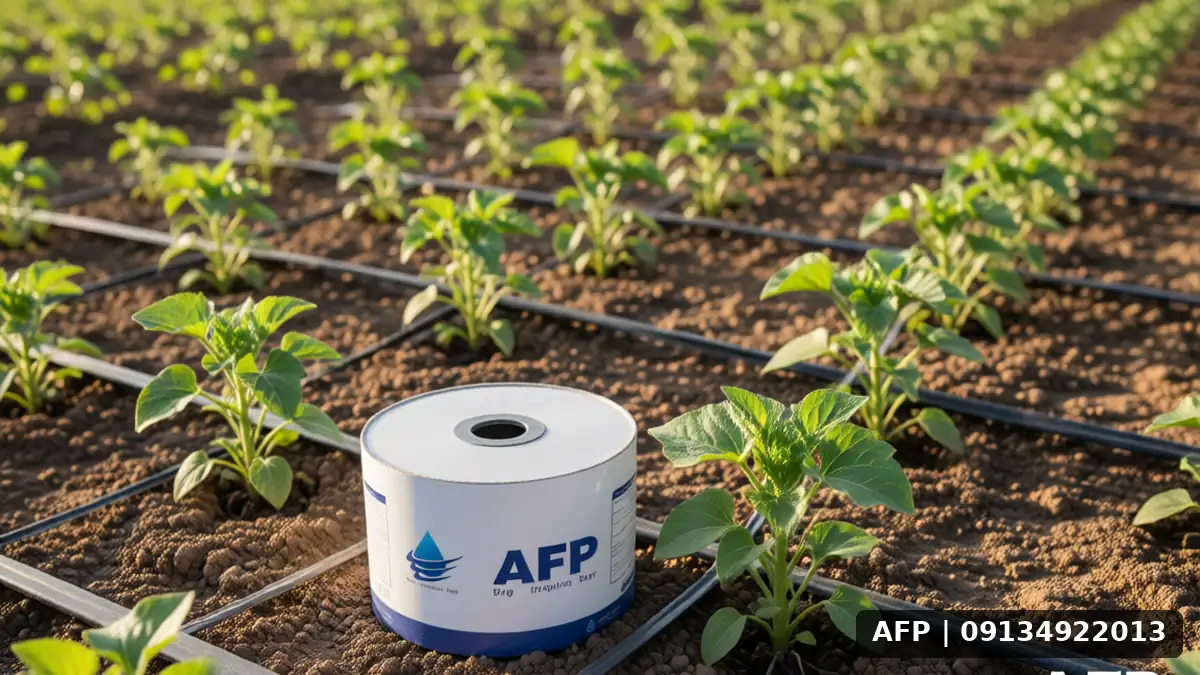
In addition to the tape line, proper design of the lateral lines also plays an important role in the overall efficiency of the system. If the distance between wells or water entry points to the farm is not logical, pressure is high at the beginning of the farm and low at the end. Therefore, the design of water pressure for tape line must be done with engineering precision to maintain system integrity. This design should be calculated based on the length of the main lines and the number of branches. Also, selecting the appropriate nozzle type according to the soil type (heavy or light) can prevent herbaceous weed washing and maintain soil moisture.
Frequently Asked Questions (FAQ)
Does melon respond better to drip irrigation?
Yes, drip irrigation is generally superior in maintaining uniform soil moisture and preventing fungal diseases caused by wetting the leaves. However, if properly adjusted, tape irrigation also has high efficiency as a low-flow system. The choice between the two depends on the desired accuracy in water distribution, which can be more reliable for drip in small farms with variable slopes. Despite the advantages of drip, its initial cost for melon cultivation, due to sensitivity to pressure and high filtration requirements, is sometimes higher than tape irrigation. Therefore, farmers should decide based on budget and soil type.
Is separating plots necessary in surface irrigation?
Yes. Without partition walls, controlling the timing of water entry and exit to each plot is practically impossible, leading to unequal irrigation distribution in different field areas. These walls also prevent soil erosion by water flow. Additionally, in sloped fields, without partition walls, water flows quickly downhill and collects, creating depressions that are harmful to melon roots.
Summary and Final Conclusion
Surface irrigation is an efficient method for melon cultivation, provided that soil preparation, slope adjustment, and irrigation timing management are strictly observed. Given the challenges of water scarcity and the need to increase productivity, familiarity with alternative systems such as strip and drip irrigation is essential. Combining traditional surface irrigation knowledge with modern strip irrigation solutions can reduce production risks and maximize the profitability of melon farms. Investing in improved irrigation infrastructure is the most valuable step for farmers, not only in the short term but also for long-term water resource conservation and product quality. Finally, attention to supplementary points such as The design of cleaning yield per hectare helps farmers adjust their irrigation plans based on the actual potential of the farm and prevent unnecessary depletion of resources.