Surface Irrigation in Fava Bean Cultivation: A Comprehensive Guide to Management and Optimization
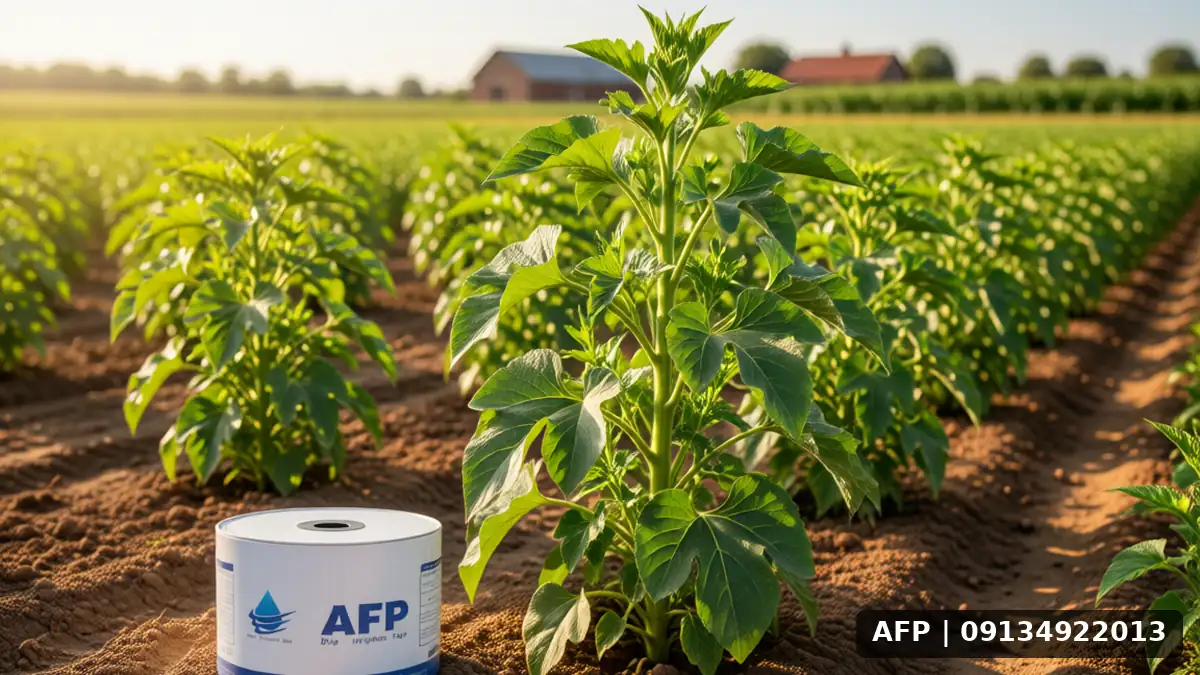
Fava beans have long held a special place in the agricultural economy of Iran as a key component of autumn cropping systems and soil improvement cycles. Although technological advances in irrigation have introduced methods such as drip and trickle systems, surface irrigation remains widely used in fava bean farms due to its low initial costs, suitability for large land areas, and manageability without complex equipment. This method, which relies on the movement of surface water through controlled furrows or borders, presents specific challenges for legume crops like fava beans, which are examined in detail in this article.
Fundamental Principles of Surface Irrigation for Fava Beans
To better understand the physics of surface irrigation in fava bean fields, it is important to note that this method is primarily implemented in two forms: furrow and border irrigation. Unlike some other crops, fava beans have a sensitive root system that is susceptible to rot if subjected to prolonged waterlogging. Therefore, the primary objective of this method is to deliver water to the necessary depth for root nutrition without creating saturated moisture at the soil surface. Water enters through the furrow inlets and creates vertical infiltration in the soil as it moves along the length of the furrow. A critical point is that irrigation scheduling must be adjusted so that adequate water is applied only during sensitive growth phases, including flowering and grain filling.
Key Advantages of the Surface Method for Fava Beans
- Economic efficiency at large scale: It does not require the installation of pressurized piping and expensive equipment, and only requires water conveyance channels.
- Compatibility with heavy soils: In clay soils with low permeability, the slow infiltration rate allows for more uniform moisture distribution at depth and prevents rapid drying of the upper soil layers.
- Ease of implementation and monitoring: Farmers can manage the irrigation process through visual monitoring without requiring advanced mechanical or electronic skills.
However, the efficiency of this method depends heavily on the ground slope. On steep slopes, water flow velocity increases and may cause soil erosion in the furrows, while on very gentle slopes, the time for water to reach the end of the furrow increases and the upstream section may become waterlogged. These delicate balances require special attention in field bean cultivation.
Performance comparison with modern irrigation systems
For informed decision-making, it is essential to compare surface irrigation with pressurized methods such as drip tape. Drip systems and drip tape provide more precise control of soil moisture in the root zone and increase water use efficiency by reducing direct evaporation from the soil surface. However, in field beans, which are often grown on large farms with relatively heavy soils, maintenance costs and initial investment for drip tape can be prohibitive for some farmers. Conversely, surface irrigation with proper management of inflow rates can provide acceptable efficiency at minimal cost. The key to success in surface irrigation is continuous monitoring and flow rate adjustment to prevent water deficit or excess.
Practical solutions for increasing efficiency
- Laser leveling of the land: Correct surface irregularities using laser grading to ensure uniform water flow throughout the furrows.
- Monitoring soil moisture: Use moisture sensors or manual methods, such as observing soil at a depth of 15 to 30 cm, to determine the precise timing for irrigation.
- Managing water intake: Prevent clogging of furrow inlets by sandy sediments by installing appropriate screens in the water conveyance channels.
For farmers concerned with final crop yield, consulting the guide on irrigated fava bean tonnage per hectare can provide a clear perspective on the relationship between water management and final output. Fava beans are inherently drought-tolerant crops; therefore, any additional irrigation only increases the risk of diseases without leading to a significant increase in seed volume.
Implementation tips and avoiding common errors
Correct implementation of furrow irrigation for broad bean requires adherence to several key principles. First, seedbed preparation must ensure that water flow is not obstructed. Second, soil moisture monitoring at regular intervals is recommended. If water does not move uniformly throughout the furrow length, a grading issue likely exists and must be corrected.
Common errors and technical solutions
- Prolonged irrigation: Prolonged contact of broad bean roots with standing water leads to fungal diseases and root rot. Solution: Reduce the duration of each irrigation session and increase frequency as needed.
- Low inflow rate: Low flow velocity causes water to dry out before reaching the end of the furrow. Solution: Increase furrow width or create supplementary inlets in the middle of the furrows.
- Use of inappropriate equipment: To reduce pressure drop in transfer channels to the field, use collapsible agricultural hose with a reinforced wall, which has better stability than regular hoses.
In addition to water management, cropping factors also affect water requirements. Reviewing seed rate per hectare and planting distances can alter the plant canopy growth pattern. Overcrowding of fava beans intensifies root competition for water, while low density leads to increased evaporation from the soil surface. Therefore, an optimal balance must be found.
Frequently Asked Questions (FAQ) for Grain Farmers
Is furrow irrigation suitable for fava beans on sandy soils?
No. In sandy soils, water infiltration is very rapid and controlling the water level is difficult; water is lost before it reaches the end of the furrow. In these soils, pressurized systems with low flow rates, such as drip tape, are more effective. Furrow irrigation is more suitable for clay and clay-loam soils with gentle slopes.
What should be the interval between two fava bean irrigations?
This interval depends on soil type, air temperature, and growth stage. Generally, under moderate conditions, irrigating every 10 to 14 days is sufficient. However, during intense summer heat, this interval may decrease to 7 days. Always check soil moisture at the root depth before starting irrigation to prevent overwatering.
What is the impact of surface irrigation on fava bean seed quality?
Improper water management, especially repeated waterlogging, can lead to root rot and reduced nutrient uptake, ultimately affecting seed quality and oil percentage. Precise and regular irrigation ensures healthy, high-quality seeds.
Conclusion and final recommendations
Surface irrigation in fava bean cultivation remains a credible sustainable and low-cost method. Success with this method depends on combining farmers’ indigenous knowledge with technical water management principles. Since water resources are becoming limited, the intelligent use of available water through slope adjustment, moisture monitoring, and selecting the appropriate method based on soil type is key to achieving high-quality yields. Ultimately, the choice between surface irrigation and modern methods should be based on economic conditions, soil type, and water access. Awareness of the advantages and disadvantages of each method enables farmers to make well-founded decisions for their farms.
Related articles for further reading: Soybean seed rate per hectare + influencing factors, and methods to extend the service life of drip tape. Soybean seed rate per hectare + influencing factors, Price of rain pipe, mobile purchase D985D987 sprinkling