Subsurface Irrigation in Onion Cultivation: Benefits, Practical Tips, and FAQ
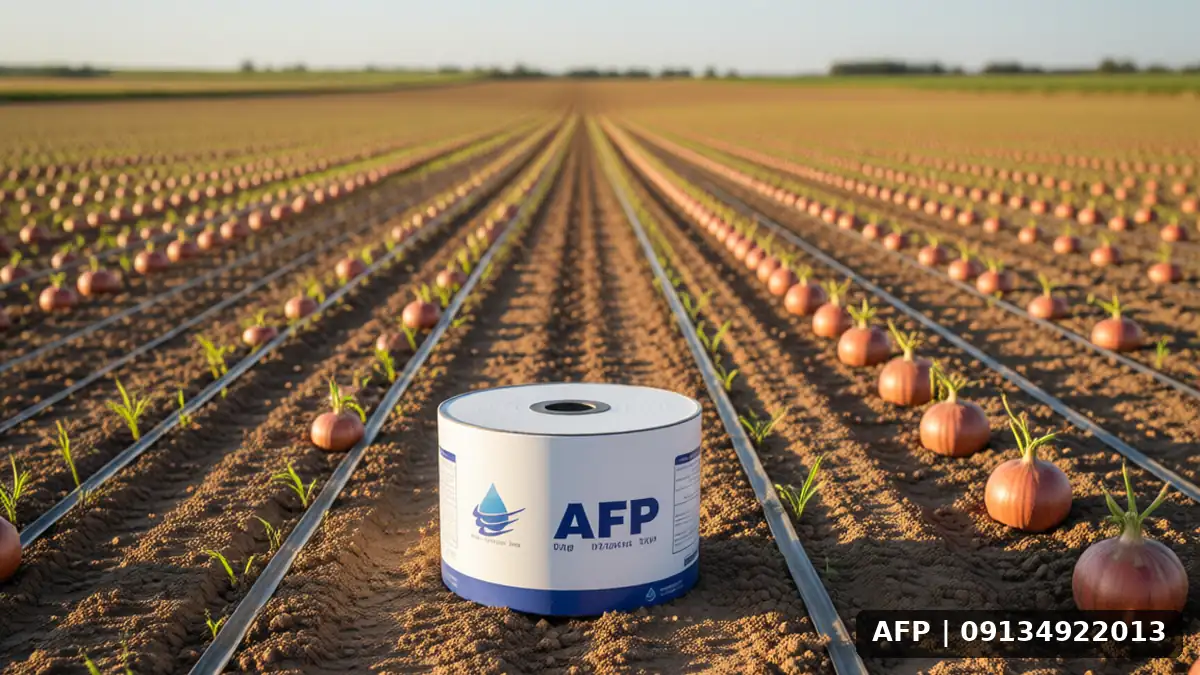
Onion is one of the major horticultural crops that exhibits high sensitivity to proper soil moisture management. In recent years, modern irrigation methods such as drip and tape irrigation have expanded significantly, but subsurface irrigation has attracted special attention as an advanced solution for reducing water loss and improving root uptake. This method can provide significant competitive advantages for farmers, particularly in the arid and semi-arid regions of Iran where water resources are limited. This guide examines the technical and practical concepts of subsurface irrigation, specifically for onion cultivation, and addresses common questions regarding installation, operation, and system optimization.
Introduction to Subsurface Irrigation for Onions
Subsurface irrigation requires delivering water to deeper soil layers for uptake through plant roots. Unlike surface methods, in this system, water does not come into direct contact with the atmosphere; therefore, the evaporation process is significantly reduced. Onion is a crop whose root system is primarily concentrated in the upper soil layers, yet precise moisture management is critical during all growth stages. The use of buried tape lines or buried drip emitters allows for slow and continuous water delivery. This ensures that the rooting zone remains in an optimal state without the soil surface drying out, which is essential for preventing surface salinization.
Difference Between Subsurface and Surface Drip Irrigation
In conventional surface drip irrigation, the tape is laid on the soil surface. Although this method is more efficient than flood irrigation, some water is still lost due to evaporation and uncontrolled deep percolation. In contrast, subsurface irrigation, which involves burying tubes at a depth of 10 to 20 centimeters, provides better control over the wetting zone. This is particularly beneficial for onions, as their roots are delicate and high surface moisture encourages excessive weed growth and fungal diseases, both of which are reduced by subsurface irrigation.
Key benefits of subsurface irrigation for onion crops
Adopting new technologies in agriculture requires a precise understanding of their technical advantages. Subsurface irrigation for onions has unique characteristics that make it an ideal option:
- Significant reduction in evaporation: Because the water source is placed below the surface, solar thermal energy does not directly affect it. This results in water savings of up to 30 to 40 percent in arid regions.
- Soil salinity control: Subsurface irrigation helps move salts accumulated on the surface downward through gentle leaching (or at least prevents further accumulation at the surface). This is critical for onions grown in saline-affected areas.
- Increased nitrogen use efficiency: Combining fertilization with sub-surface irrigation (Fertigation) ensures that nutrients are delivered precisely within the root zone. This reduces fertilizer leaching through vertical percolation and optimizes nitrogen uptake, which directly impacts stem growth and onion bulb size. For a better understanding of the relationship between nutrition and yield, you can also refer to the guide on increasing tonnage and profitability in other crops.
- Reduced weed growth: Because soil surface moisture is not maintained, ideal conditions for weed seed germination are not provided. This advantage reduces herbicide application costs.
Impact on crop quality and shelf life
One of the main challenges in onion cultivation is balancing volumetric growth with quality preservation. Severe moisture fluctuations, which occur in flood irrigation, can cause bulb cracking or growth cessation. Sub-surface irrigation, by providing uniform moisture, promotes uniform onion bulb maturation. Additionally, because the soil surface remains drier, soil-borne fungal diseases that depend on surface moisture are significantly reduced. This directly leads to increased post-harvest shelf life.
Practical tips for system installation and operation
Success in sub-surface irrigation for onions depends not only on system design but also on precise implementation. Adhering to the following principles is essential to prevent emitter clogging and ensure adequate pressure:
- Determining appropriate depth: The burial depth of the drip tapes must align with the onion’s root zone. A depth of 10 to 15 cm is generally suitable for onions. Excessive depth prevents water from reaching the superficial roots.
- Orifice efficiency: Use drip tapes with larger orifices or advanced filters to prevent clogging by fine soil particles and seeds. Additionally, using high-quality drip tapes with high chemical resistance is essential.
- Pump and pressure: The system must be regulated at the appropriate pressure. Excessive pressure leads to incorrect water distribution and tape erosion, while low pressure causes uneven irrigation. The use of high-quality materials is of high importance, and their technical details can be found in Types of drip tape lines for review.
- Initial Harvest: In the first weeks after planting, alternate irrigation application to encourage roots to move toward the absorption system. As the plant grows, increase the doses based on physiological needs.
Additionally, salinity management in saline areas is a major challenge. Under these conditions, the need for salt leaching (Leaching Fraction) should not be ignored. Although subsurface irrigation controls salinity, in highly saline areas, you may need leaching irrigation with higher doses.
Answers to Frequently Asked Questions (FAQ)
Is subsurface irrigation suitable for all onion varieties?
Yes, subsurface irrigation is suitable for almost all onion varieties, from white onion to purple onion. However, early-maturing varieties may respond to slightly different root sensitivities. It is recommended to consult your agricultural specialist to adjust the depth and spacing of the lines based on soil type and the specific variety before implementation. For more information on how to calculate planting density that affects water consumption, you can read the seed rate per hectare; although it applies to a different crop, it explains similar principles in root density management.
Is the cost of subsurface irrigation installation higher than surface irrigation?
The initial cost of subsurface systems is usually slightly higher, as they require specialized equipment for hose burial and retrieval. However, considering the savings in water, pump power, and herbicide costs, the long-term return on investment (typically 2 to 3 seasons) is significant. Additionally, reduced salt stress can lead to increased onion yield and quality, which is a factor for a faster return on investment. For a better understanding of the impact of resource management on profitability, studying the use of sequence correction in furrows may be helpful, although the main focus is on onions, the principles of optimizing irrigation systems are shared.
How to prevent emitter clogging?
Clogging is the main risk in subsurface irrigation. To prevent it, always use treated water (with particle filters and, if necessary, electro-filters). Additionally, regular system flushing at the end of each cycle and the use of hydrochloric or phosphoric acid for chemical flushing can prevent the deposition of minerals and biological growth within the lines. Selecting the appropriate emitter type with a diaphragm can also prevent particle accumulation in the orifices.
Conclusion and final recommendations
Selection Subsurface irrigation of onions This is a smart step toward precise and sustainable agriculture. The advantages of this method, including reduced evaporation, salinity control, and improved nutrient uptake, make it a superior option compared to conventional flood irrigation and even some surface methods. However, the success of this system depends on proper design, selection of high-quality materials, and precise operational management. We recommend consulting a technical agricultural advisor specializing in drip irrigation before final implementation to optimize burial depth, line spacing, and irrigation doses based on your local land conditions. By following these principles, you will not only reduce water consumption but also create the conditions for increased onion yield and quality on your fields.
If you require additional guidance regarding other crops, you can refer to the relevant articles on proper land management. Subsurface irrigation is not just a technique, but an agricultural philosophy that emphasizes water resource sustainability and improved productivity.
Related Articles: masofai lundayi tibi gandum va usulhoi navii obyori, Onion Yield per Hectare: Strategies for Increasing Tonnage and Profitability, Cucumber Seed Rate per Hectare: Comprehensive Guide + Key Tips