Subsurface Irrigation in Melon Cultivation: Key Considerations and Practical Guide
Introduction: Why is Subsurface Irrigation Vital for Cantaloupe?
Cantaloupe has a sensitive root structure and is highly vulnerable to salinity stress, water deficit, and severe soil waterlogging. In arid climates, surface irrigation not only wastes water but also causes moisture to accumulate at the soil surface, promoting fungal diseases. Subsurface irrigation, especially when combined with Drip Line technology, enables direct water delivery to the root zone.
In this method, drip tape lines are buried at a specific depth so that water gently and evenly seeps to the roots. This directly correlates with reduced evaporation and increased water use efficiency. For a better technical understanding of these lines, you can review Drip Line Technical Specifications to select the appropriate model.
Key Points for Subsurface Irrigation of Cantaloupe
Selecting the Appropriate Depth for Drip Line Installation
The subsurface depth of the drip line is the most critical component of this system. Cantaloupe has a relatively shallow root system; therefore, depths greater than 30 cm may prevent roots from accessing water. Standard and recommended depth For melon, it is usually between 15 to 20 cm below the soil surface.
- In coarse-textured soil (loam-sandy): depth of 15 cm.
- In finer-textured soil: depth of 20 cm.
- The chart How to Determine Drip Line Irrigation Points can be helpful to optimize the distance between the pipe, melon rows, and roots.
Determining irrigation volume and duration
In sub-surface irrigation, the water delivery rate (Flow Rate) should not exceed the daily root uptake capacity. High-pressure water delivery causes water to accumulate in deeper layers or even damage plastic pipes at surface temperatures. The irrigation volume must be calculated based on soil hydraulic requirements and the melon growth stage.
- Germination stage: Lower water volume, but frequent and short-duration irrigations.
- Vegetative growth stage: Gradually increase water volume as the melon canopy develops.
- Fruiting stage: Precise water management to prevent fruit cracking.
Salinity and nutrition management
One of the benefits of sub-surface irrigation is controlling salinity around the root zone. Salinity accumulating on the soil surface does not build up in melon roots, which are typically shallow. This system is also Irrigation-Nutrition (Fertigation) is ideal. You can read the Lentil Yield per Hectare Guide: A Comprehensive Guide to Boosting Performance to understand the harmonization of water management with other crops.
Practical Tips for System Implementation
Row Spacing and Drip Line Planting
Planting the drip line in the space between melon rows (Inter-row) is the standard method. Melons are usually planted with row spacing of 80 to 100 centimeters. The drip line must be planted exactly in the middle of the space between two rows to ensure equal water availability for the roots.
To select the appropriate type of drip line for multi-row cultivation, it will be useful to study Drip Line Technical Specifications (Link: Celery drip line as a reference for deep-rooted crops). Also, row spacing must follow the row spacing standards .
Pre-flushing Drip Lines and Clogging Control
Since drip line emitters are located in the soil, mineral deposits and algae can cause clogging. Using sand traps (Siphon traps) in the pipeline and flushing the system with clean water before fertilizer injection prevents clogging. Implementing how to determine drip line spacing with proper filtration guarantees a longer useful life for the system.
Applying Drip Irrigation to Various Crops
If you grow melon alongside other crops such as rye or other sequential plantings in a field, adjusting emitter spacing based on differing irrigation needs is critical. Read the article Complete Guide to Potato Drip Irrigation It can also enhance your understanding of the variety of drip tape applications in vegetable cultivation.
Frequently Asked Questions (FAQ) on Melon Irrigation
Is subsurface irrigation suitable for heavy soils?
Yes, but note that in loamy and heavy soils, water infiltration is slower. Therefore, irrigation duration must be increased to ensure moisture reaches the root zone. Drip tape planting depth in heavy soils can be slightly shallower (approximately 12 to 15 centimeters).
Can drip tape also be used for fertigation?
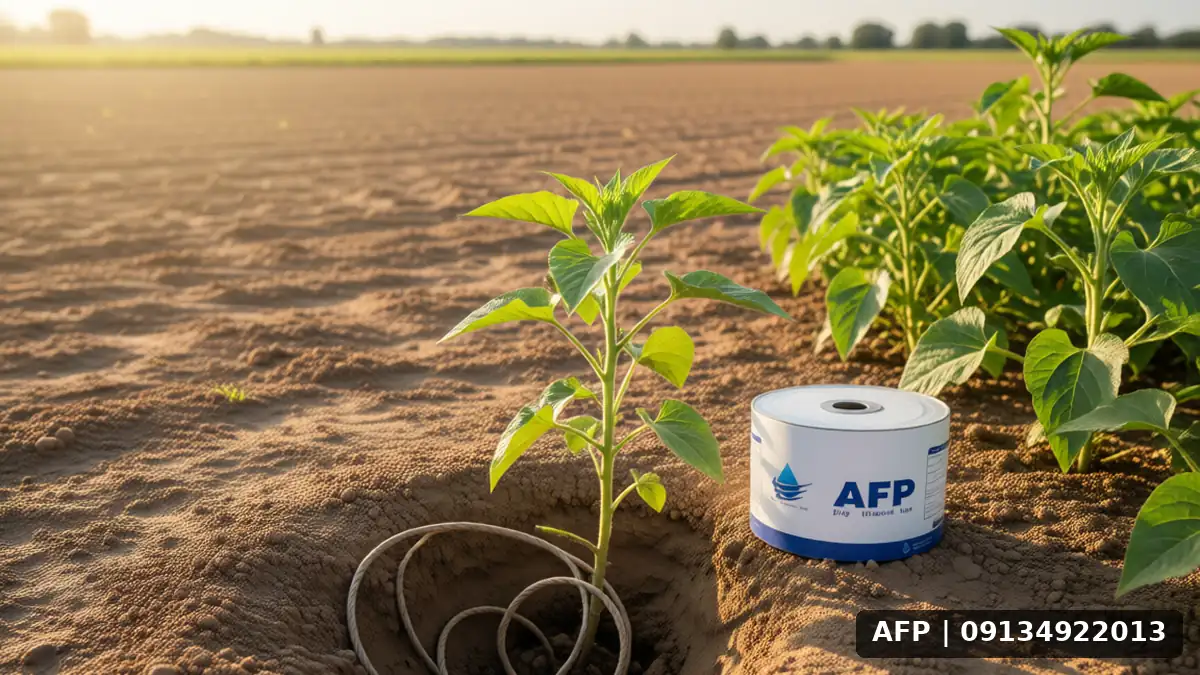
Certainly. Subsurface systems are the ideal medium for chemical fertigation, as nutrients are delivered directly to the roots, resulting in higher uptake efficiency than surface application. From Seed Management Guide for Vegetable Crops You can learn the basic principles of planting management.
How do other crops respond to this system?
To compare crop behavior under drip irrigation, study the Cress Performance Guide or even familiarize yourself with the comprehensive Drip Tape Guide, as the principles of leakage and pressure control in drip tape are similar for all deep-rooted vegetables.
Conclusion: Optimizing Melon Yield through Water Management
Implementing subsurface irrigation in melon cultivation marks a transition from a classical approach to a smart system. By adhering to standard depths, defining precise irrigation volumes, and maintaining the drip tape system, water costs are reduced while melon fruit quality improves significantly. This method drastically reduces the risk of stem rot and fungal diseases caused by wet surface soil. For farmers seeking maximum efficiency, investing in a subsurface drip tape network will yield long-term benefits through increased melon harvest volumes.