Subsurface Irrigation in Lettuce Cultivation: Applications and Practical Guidelines
Introduction to Subsurface Irrigation in Lettuce Cultivation
Lettuce is one of the most important cultivated vegetables that exhibits high sensitivity to water stress and soil temperature fluctuations. In arid and semi-arid climatic conditions, selecting an appropriate irrigation method can determine the production level and crop quality. Among various methods, subsurface irrigation is recognized as one of the most effective methods for maintaining moisture in the root zone. This method not only reduces water requirements but also, by keeping the irrigation system hidden from view, prevents surface weed growth and reduces evaporation. In the following section, we will examine in detail the applications and implementation principles of this method in lettuce fields.
Operating Principles of Subsurface Irrigation in Soil
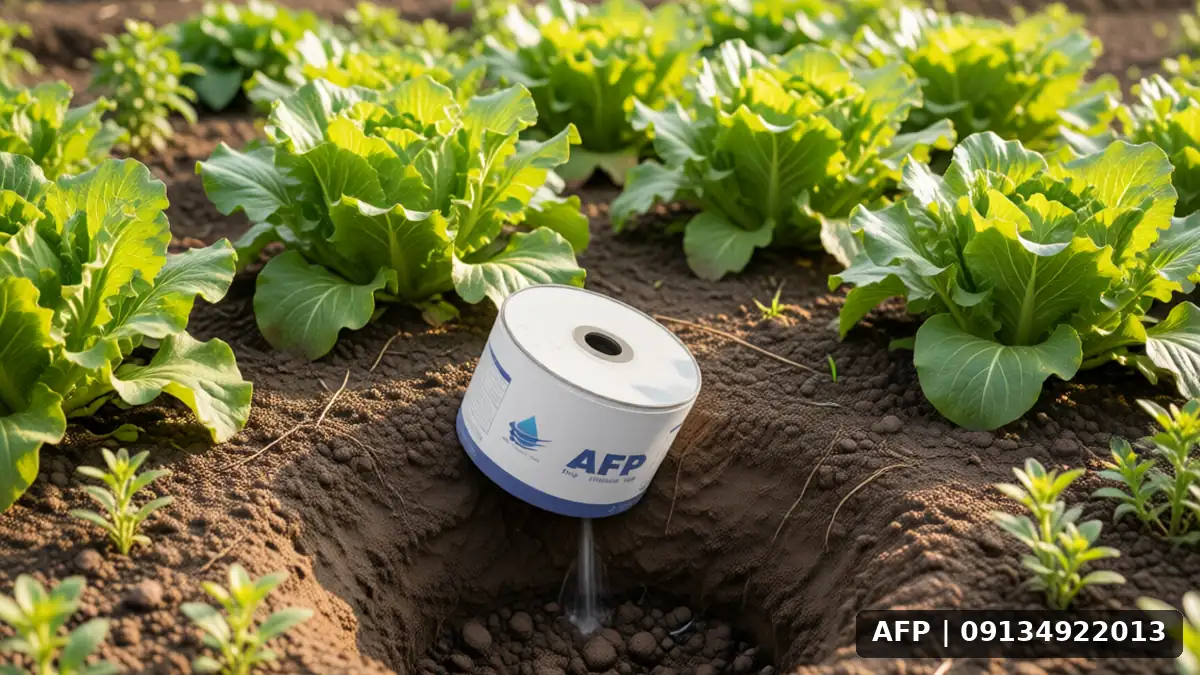
In subsurface irrigation, polyethylene or similar material pipelines are placed at a specific depth in the soil (usually 15 to 25 centimeters). Unlike surface drip irrigation, where water droplets pass over the soil, in this method, water is injected into the surrounding soil as infiltration through perforated walls or tape bands. This process ensures that moisture is directly available in the root zone and remains away from the soil surface. For lettuce, which has surface but diffuse roots, this uniform moisture distribution leads to uniform leaf growth and prevents splitting caused by water stress.
Impact on Soil Structure and Root Health
- Prevention of soil surface compaction: Because water pressure is not applied to the surface, the risk of crusting in the upper layers is reduced.
- Improved oxygen supply: In the surface layers, which are typically more compacted, water infiltration is lower, leaving more oxygen available to the delicate lettuce roots.
- Reduced fungal disease incidence: Many root diseases that are directly linked to surface wetness and high soil moisture are minimized with this method.
Practical applications in lettuce crop management
The use of subsurface irrigation in lettuce cultivation offers multiple benefits for sustainable agriculture. These applications include increased water use efficiency, more precise fertilizer management, and reduced labor costs for irrigation system maintenance.
Increased Water Efficiency and Economic Savings
One of the most important applications of this method is the reduction of sensible and latent evaporation. In hot regions where air temperature fluctuates significantly, surface irrigation can lose up to 30% of water due to evaporation. In subsurface irrigation, this percentage is significantly reduced. Farmers can directly utilize their local water resources by precisely adjusting flow rate and irrigation duration. For example, in areas where freshwater is scarce, this method can help utilize medium-quality water, as filtration in underground pipes works better than in surface conditions. To better understand the comparison of irrigation methods, one can refer to specialized articles on Agrotyp Strip Dynamics which also have similar technical overlaps with infiltration systems.
Smart Fertilizer and Plant Nutrition Management
Another key application is the ability to inject fertilizer through the irrigation system (Fertigation). In subsurface irrigation, dissolved fertilizers are delivered directly to the root zone along with water. This reduces fertilizer loss due to surface runoff or ground evaporation. Lettuce has a direct need for nitrogen, potassium, and micronutrients, which are better absorbed under stable humidity conditions. Farmers can coordinate fertilizer timing with irrigation schedules through precise planning to manage excessive vegetative growth.
Practical Tips for System Installation and Maintenance
Proper execution of a subsurface irrigation system requires adherence to precise technical points to prevent clogging of pipe holes or scour anomalies. Here, we examine the most important execution points for lettuce farms.
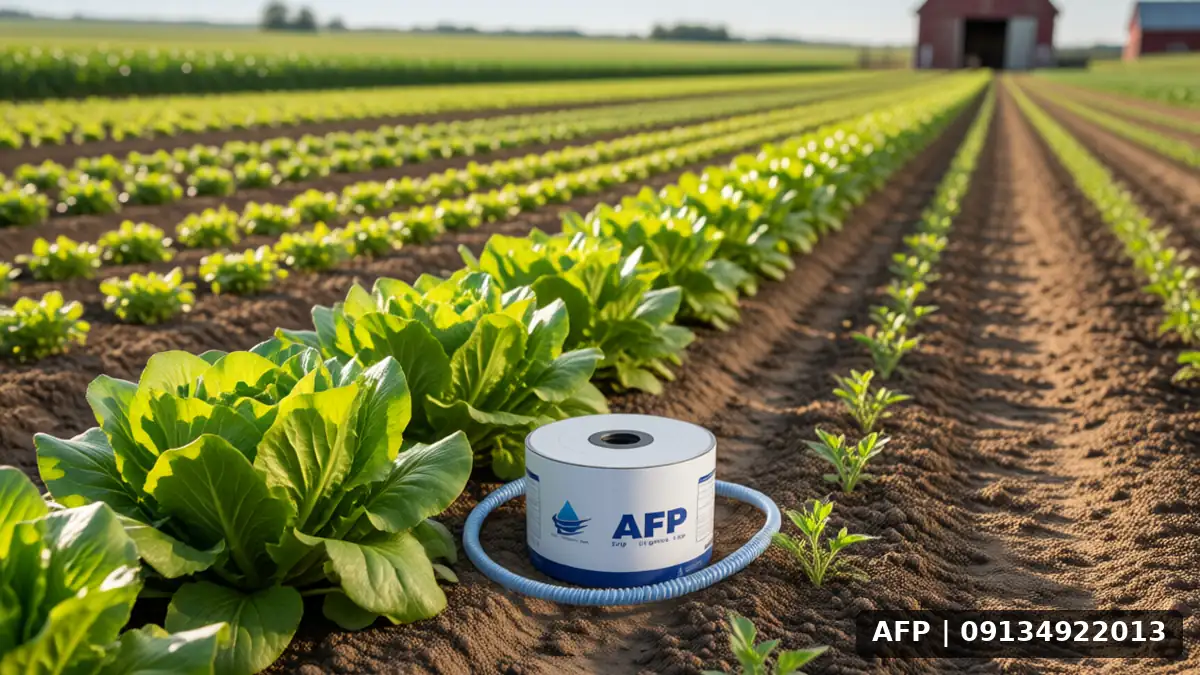
- Selecting appropriate depth: The installation depth of the pipe should correspond to the soil structure and lettuce root depth. Generally, a depth of 15 to 20 cm is ideal. Excessive depth can reduce the accuracy of water delivery to the shallow root zone.
- Pipe hole integrity: The pipes used must feature standard holes to ensure uniform flow. Using low-quality pipes can lead to the rapid clogging of non-uniform particles in stony soils.
- Filtration system: Due to the small size of the holes, the filtration system must utilize turbo or disc filters that largely remove suspended particles. Any sedimentation can block water pathways and reduce system efficiency.
- Pressure control: Water pressure in subsurface systems must be controlled. Excessive pressure can cause premature root rot and create dry zones around the pipe.
In addition to the above, proper soil management before planting is vital. Deep plowing is recommended to eliminate compacted layers at the pipe installation depth. Also, when using clayey soils, care must be taken to ensure that soil particle adhesion to the pipe during high moisture periods does not reduce its relative permeability. In relation to precise irrigation techniques, studying onion drip planting methods can provide a better understanding of the hydraulic settings of similar systems.
Comparison with Other Methods and Unique Advantages
To better understand the position of subsurface irrigation, it can be compared with surface drip and flood irrigation. While flood irrigation leads to significant water waste and root asphyxiation, surface drip irrigation faces issues related to leaf scald in hot weather and weed growth. Subsurface irrigation resolves both of these problems. However, the initial installation cost of this system is higher, which is offset by long-term water savings and increased product quality. From a sustainability perspective, this method maintains long-term soil quality and prevents surface salinization, which is a strong competitive advantage for sensitive vegetables such as lettuce.
Frequently Asked Questions (FAQ)
Is subsurface irrigation suitable for all soil types?
For very heavy clay soils, it is recommended to select pipes with larger holes or tapes with wider emitters to prevent clogging. In sandy soils, standard pipes generally perform better.
What is the spacing for subsurface irrigation lines in lettuce cultivation?
A spacing of 100 to 120 centimeters is generally appropriate, but this distance must be calculated based on soil type and moisture equilibrium. In finer-textured soils, the spacing can be reduced.
Is it possible to integrate this system with greenhouse skylights?
Yes, this system is potentially compatible with greenhouse environmental control systems and can be effective in reducing water and energy consumption for environmental optimization.
Conclusion and Future Outlook
Subsurface irrigation for lettuce cultivation is more than a technical method; it is a management approach for the sustainability of water and soil resources. Given the pressures from water scarcity and climate change, investing in this technology can yield significant economic returns for farmers. For those seeking to optimize crops under harsher conditions, understanding fundamental principles in seed amounts and crop management is crucial; for example, studying the quantity of rainfed chickpea seed per hectare can serve as a model for resource management that is applicable to other precision crops like lettuce. Ultimately, the correct implementation of this system, adhering to engineering and agricultural principles, can lead to improved vegetation quality, reduced water consumption, and increased farm economic efficiency.
For more information on the principles of selecting appropriate equipment, study the guide to 90 millimeter plastic irrigation pipe It can also assist you in selecting the main components of the distribution network. Additionally, understanding the appropriate crop ratio and plant density to maximize yield is always required to align with specific soil and climatic conditions, which are extensively discussed in related articles such as adjusting the ready-to-use dosage per hectare are described in detail.