Subsurface Irrigation in Garlic Cultivation: A Technical Review of Challenges and Practical Solutions
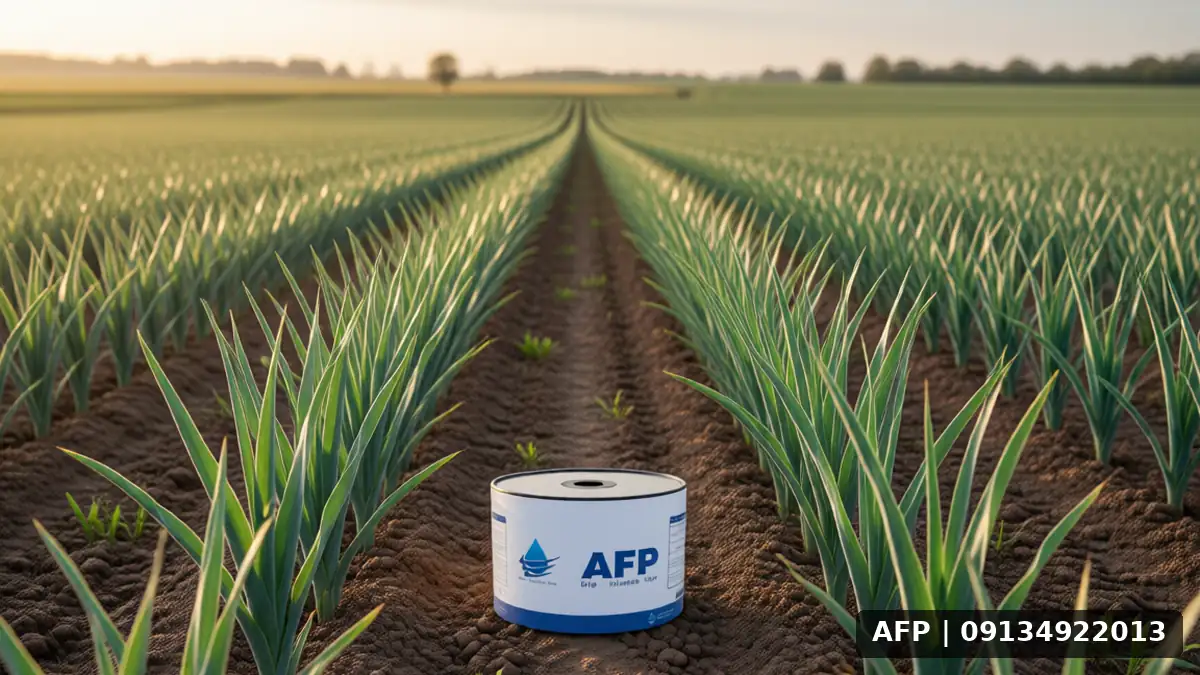
Introduction: The Need to Redefine Water Management in Shallot Cultivation
Shallots, as one of the most widely consumed products in the Middle East markets, are often selected for early-maturing crops due to their high sensitivity to root-zone stress and specific moisture requirements. With the expansion of agricultural lands and water resource constraints, the use of traditional flooding irrigation methods is no longer economically or environmentally justifiable. In this context, subsurface irrigation or sub-surface irrigation has gained significant attention as an intelligent alternative. By delivering water directly to the root zone, this method not only minimizes evaporation but also prevents soil compaction and surface erosion caused by water. However, implementing this system in sensitive crops like shallots, without considering precise technical parameters, can have widespread consequences.
Below, we focus on analyzing the technical, agronomic, and economic challenges of this method. The primary goal is to enable farmers, by understanding these obstacles, to utilize water scarcity through optimized system design while preventing collateral damage to the crop.
Anatomy of Technical Challenges in Subsurface Irrigation
System Installation Depth and Root Zone Oxygen Stress
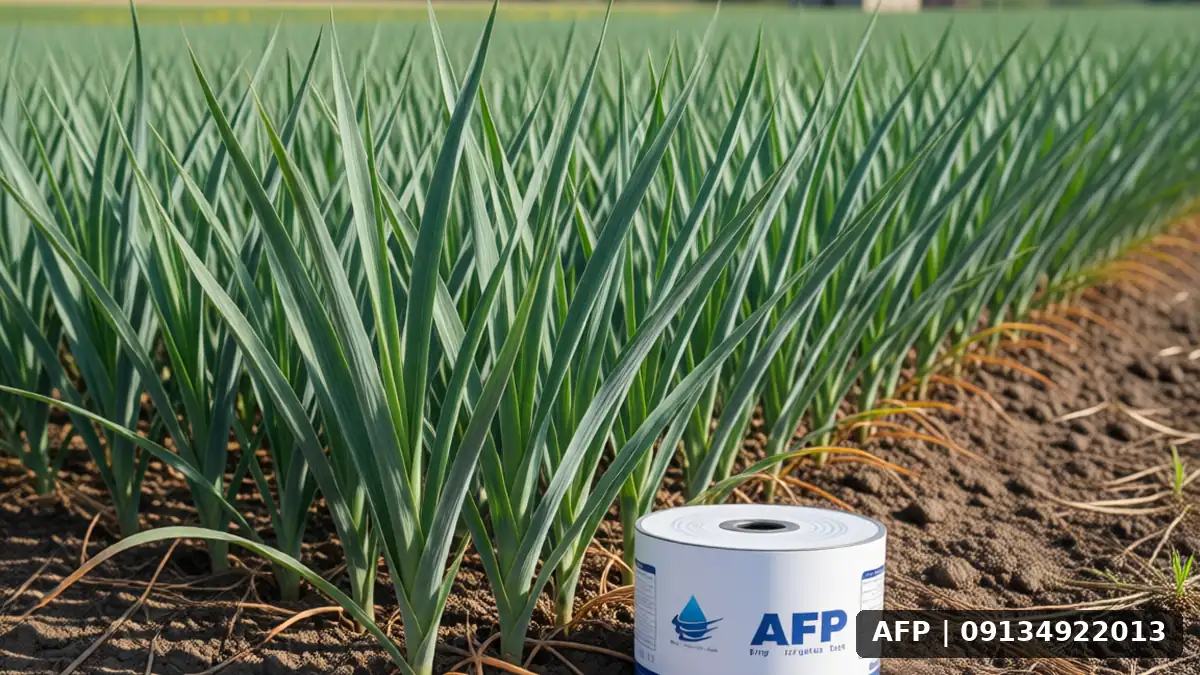
One of the most important technical challenges in Subsurface Irrigation of GarlicDetermining the appropriate depth for installing subsurface pipes is critical. Garlic roots are susceptible to fungal diseases, such as physiological wilt and root rot, in the presence of excess water and low oxygen. If the pipes are installed too deeply, the soil zone may become excessively saturated beyond the root zone requirements, disrupting root oxygen uptake. Conversely, shallow installation brings water closer to the surface, increasing evaporation and surface salinity effects. Therefore, a delicate balance between installation depth and soil hydraulic properties is required for each climate.
Pressure Management and Clogging Risk
Subsurface systems require higher working pressures than surface systems to release water through subterranean tape lines or drippers. The main challenge is maintaining uniform pressure throughout the system. Pressure drop at the end of the lines can lead to uneven irrigation and reduced crop performance on one side of the field. Additionally, the entry of suspended particles into the system can cause emitter clogging and increase maintenance costs. Using appropriate filters and precise pressure gauges is a fundamental prerequisite for overcoming these challenges.
Agronomic and Pedological Challenges
Impact on Soil Structure
Subsurface irrigation can alter soil structure over the long term. In fine-textured (clay) soils, water movement is slow and radial, which can lead to the formation of a stable saturated zone around the pipes. This zone may be unsuitable for roots of crops like shallots, which require good aeration. In fine-textured (sandy) soils, water moves faster, and there is a risk that water will penetrate beyond the root zone before being absorbed. Knowing the soil type and its water retention capacity is key to successful system design. Farmers should consult irrigation advisors to determine pipe depth and spacing based on infiltration and pressure tests. For general design principles, study the Comprehensive Subsurface Irrigation Guide which may be useful.
Salinity Management and Salt Accumulation
One of the benefits of subsurface irrigation is the reduction of surface salt accumulation. However, if not managed properly, salinity can concentrate at the soil surface through evaporation from the pipes or remain in the soil profile. For salt-sensitive crops such as shallots, salinity management must be performed with great precision. Using low-quality water without periodic leaching or adjusting water requirements can lead to a significant reduction in yield. In saline soils, the design of subsurface systems considering groundwater flow is critical.
Economic and Logistical Challenges
Initial Costs and Return on Investment
Installing subsurface systems is generally more expensive than surface systems due to the need for excavation, precise wiring, and safety equipment. The main challenge for farmers is calculating the return on investment. If water savings and yield increases do not offset the additional costs, the method will not be economically viable. For beginner farmers, it is recommended to start on a small scale and equip the entire farm after seeing the results. In this regard, the examination Points to consider before buying a drip line can be helpful in selecting the appropriate system type (drip line or drip), as the installation costs for these two differ.
Logistical and access challenges
Installing pipes underground makes repairs or replacements difficult. Accessing subsurface mainlines to replace defective parts requires excavation equipment and is time-consuming. Therefore, using high-quality, reliable components is a significant economic advantage from a logistical perspective. Additionally, system maintenance planning should be completed before the planting season begins.
Practical tips for successful implementation
- Soil analysis: Before installation, analyze the soil of the fields for permeability and salinity.
- Water Filtration: Use appropriate bag and disc filters to prevent clogging of drip tapes or emitters.
- Optimal Depth: Determine installation depth based on soil type; a shallower depth is recommended for coarse-textured soils, while a moderate depth is usually recommended for fine-textured soils.
- Pressure Testing: After installation, perform hydraulic tests to ensure there is no significant pressure drop.
To optimize the spacing of emitters in drip tape systems, which may be used in conjunction with subsurface systems, refer to: How to determine drip line irrigation points It can provide useful technical information, although subsurface methods are more complex.
Frequently Asked Questions (FAQ)
Is subsurface irrigation suitable for garlic in all soil types?
No. This method performs best in soils with medium to good permeability. In very fine-textured soils with low water-holding capacity, nutrient leaching may increase. In very fine-textured soils, prolonged saturation may occur, potentially damaging the roots.
How much more expensive are subsurface systems compared to surface systems?
Typically, the initial installation cost of subsurface systems is 20 to 50 percent higher than that of surface systems, depending on excavation depth and the type of equipment used. However, the return on investment in subsequent planting cycles will be significant due to reduced water consumption and increased yield.
How can I prevent clogging of subsurface pipes?
Using multi-stage filtration systems and regular maintenance of water reservoirs are the most critical solutions. Additionally, periodic flushing systems that allow reverse flow through the pipes are helpful.
Summary and Future Outlook
Subsurface irrigation in onion cultivation is a major step toward sustainable and water-stress-resistant agriculture. Despite challenges such as initial costs, the need for expertise in installation, and salinity management, this method has high potential to reduce water consumption and improve crop quality. Success with this method requires an engineering-based approach and an understanding of soil profile properties. Farmers who want to utilize modern irrigation technologies should rely on scientific data and consultation with specialists rather than erroneous experiences.
Ultimately, attention to technical details such as installation depth and the type of drip line used determines the difference between an ineffective system and a high-efficiency one. Do not overlook supplementary articles, such as yield per hectare for various crops, to better understand the relationship between water supply and performance. The future of irrigation lies in the hands of farmers who view challenges as opportunities for innovation.
Related Articles: Seed Rate for Field Peas (D8AFD8B1) Per Hectare