Subsurface Irrigation in Full Canopy Crops: Technical Challenges and Execution Notes
Introduction to Subsurface Irrigation in Modern Agricultural Systems
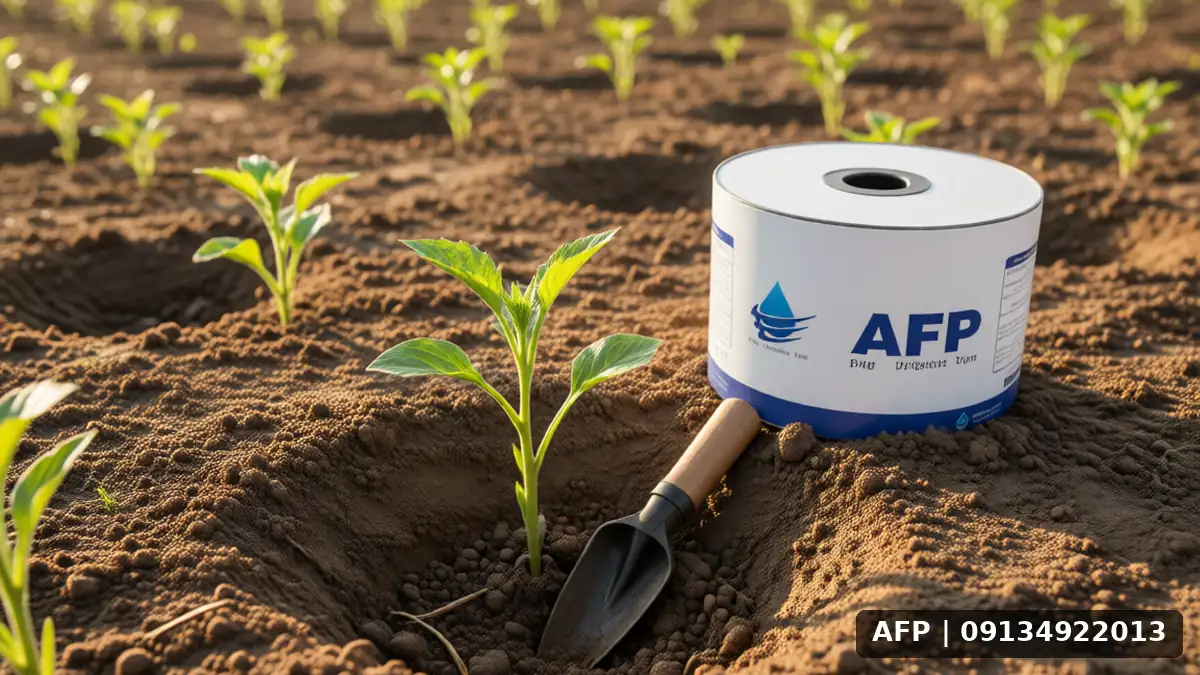
Today, the adoption of precision irrigation systems, particularly subsurface irrigation, has become a critical tool for conserving water resources and enhancing crop productivity. Among economic crops, Clover (Clover), due to its significant role in the nitrogen cycle and soil improvement, is a crop whose irrigation management directly impacts yield quality and quantity. The use of subsurface drip tape, while offering numerous advantages such as reduced evaporation and improved water distribution uniformity, is accompanied by specific technical challenges that farmers must be thoroughly aware of.
Subsurface irrigation consists of two primary methods: the trench method and the use of subsurface drip tape beneath emitters. Both methods require high calibration accuracy and a deep understanding of water flow physics in various soil types. In this section, our focus will be on the practical and technical challenges of this method in Clover cultivation.
Technical Challenges in Drip Tape Calibration and Installation
One of the major challenges in subsurface irrigation is the system calibration process. When drip tape is placed in a subsurface trough, access for periodic inspection becomes very difficult. Consequently, farmers may not notice initial blockages, leading to severe water stress in plants. Therefore, selecting the appropriate anti-clogging emitters and installing suitable filters at the water source outlet is of paramount importance.
Impact of Soil on Subsurface Drip Tape Performance
Soil type is another fundamental challenge. In clayey soils, low permeability can cause water to accumulate around the drip line, creating conditions that inhibit root establishment. Conversely, in sandy soils, high infiltration rates may cause water to move beyond the root zone of the Camelina plant. To overcome this issue, it is necessary to design closer drip emitter spacing and reduce the outlet flow rate in sandy soils. In this regard, evaluating the components of the drip line irrigation system can be helpful in selecting components resistant to soil pressure.
In addition, chemical degradation of the drip line in some highly acidic or alkaline soils presents another challenge that limits the system’s useful life. Although the use of drip lines resistant to UV radiation and soil chemical changes increases initial costs, it provides significant long-term economic savings.
Salinity Management and Root Stress in Camelina
Camelina has a specific sensitivity to salt accumulation in the root zone. In subsurface irrigation, the main risk is that if the irrigation rate is reduced or drainage is inadequate, salts become concentrated around the drip line. This can lead to root cell toxicity and inhibit plant growth.
Practical Solutions for Reducing Drip-line Salinity
To manage this challenge, it is recommended to use flushing systems at the end of each drip lateral. Additionally, increasing the irrigation rate during the hot months of the year can help leach accumulated salts. Farmers can understand the concept of crop concentration and compactness by studying and combining it with the full baseline water requirement of Calamintha to prevent physiological stress. Barley yield and seed amount per hectare, and combine it with the full baseline water requirement of Calamintha to prevent physiological stress.
Optimizing the irrigation regime based on soil tensiometer data is another key strategy. By installing sensors at various depths in the root zone of Calamintha, irrigation timing can be made more precise, preventing excessive relative drying or waterlogging of root areas.
Clog susceptibility and hydraulic problems of systems
Clogging of drippers due to organic deposits, magnesium, calcium, or bacterial growth is a common concern in drip irrigation. In subsurface systems, cleaning the drip lateral after crop harvest is a major challenge. In most cases, due to the complexity of extracting the lateral from the soil, this task is practically impossible unless the system design allows for cleaning.
Preventing clogging through acid injection
Regular injection of phosphoric acid or sulfuric acid into the system can prevent the precipitation of metal ions and bacterial biofilm growth. Additionally, using concealed tanks to store chemicals at the farm edge, rather than frequent transport of equipment, reduces the risk of inlet contamination. Correctly selecting the drip tape type based on the available source water is critical. You can review drip tape varieties to identify self-flushing models or those with anti-clogging technology.
Maintaining constant hydraulic pressure along the line is another challenge, which intensifies in sloped fields. Under subsurface conditions, pressure differential can lead to over-irrigation at the front of the line and under-irrigation at the tail. Using pressure regulating valves or properly zoning the irrigation area based on slope gradient is a preferred solution to achieve balance.
Impact of Subsurface Irrigation on Sunflower Growth and Economic Yield
Studies indicate that although subsurface irrigation can reduce water consumption by up to 30 percent compared to surface irrigation, this saving must be weighed against installation costs and specialized maintenance. Sunflower is a crop that requires uniform moisture for optimal performance. Severe moisture fluctuations, which may occur due to partial clogging or drip tape leakage, can significantly reduce seed yield.
Economic Analysis and Comparison with Conventional Methods
In the economic analysis, the initial costs of installing the subsurface system (including trenching or laying the tape under the soil) and its high maintenance costs must be calculated. Conversely, increased revenue due to improved soil texture, reduced pumping energy consumption, and improved crop quality can offset these costs over a 5 to 7 year period. To better understand the factors affecting crop economics, refer to the study regarding Chlorophyll yield per hectare and farmer experiences It can provide a broad perspective on the potential of this crop under precise irrigation management.
Furthermore, the planting density of Kamaleena must be synchronized with the drip line spacing in a subsurface drip irrigation system. If the planting density is too low, the irrigation cost per kilogram of yield increases; if too high, root competition for water intensifies and system uniformity is destabilized. Balancing seed density with the irrigation system is key to success. Introduction to Chickpea seed rate per hectare and influencing factors As an example of a crop with similar root-zone requirements, it can serve as a model for adjusting the planting density of Kamaleena.
Summary and recommendations for farmers
The conclusion regarding the challenges of subsurface irrigation in Kamaleena cultivation indicates that this method is not a seamless or trouble-free solution, but rather a complex system that requires a deep understanding of hydraulic and soil physics principles. To successfully implement this system, it is essential to follow several golden rules: First, select high-quality drip lines compatible with the water chemistry; second, perform precise initial calibration and record reference data; third, establish a monitoring program based on tensiometer data to continuously track root-zone soil moisture.
Finally, investing in workforce training and utilizing specialized consulting before system installation can prevent many costly operational errors. If properly managed, subsurface irrigation can serve as a gateway to sustainable and water-efficient agriculture for strategic crops such as Kamaliyana.
Frequently Asked Questions (FAQ)
Is subsurface drip tape recyclable?
Yes, in many modern designs, drip tape is made from recyclable polypropylene and can be recycled at designated facilities at the end of the season or its useful life.
What is the optimal depth for placing drip tape for Kamaliyana?
The optimal depth is typically 10 to 15 centimeters below the soil surface, where the majority of Kamaliyana root density is concentrated. Deeper placement moves water away from the roots, while shallower placement risks damage to the tape by mechanized equipment.
Is subsurface irrigation more expensive than conventional irrigation?
Initial installation costs are higher, but reductions in water, energy, and labor costs lead to a faster long-term return on investment.
Resources and Further Reading
For a better understanding of the technical formulations in tip line systems, direct study of the tip line formulation with multi-point variability can help in the precise assessment of pressure in sloped fields. Additionally, examining the articulation of the tip line and its physical differences from traditional lines helps in correctly selecting technology for specific regional climatic conditions. Ultimately, coordinating irrigation systems with other high-yield crops, including hazelnut seed rate per hectare and Arabica factors in rotation plans, can create a comprehensive framework for water management in mixed cropping fields.