Subsurface Irrigation in Corn Cultivation: Applications and Practical Tips for Tuber Tape
Introduction to Moisture Irrigation in Corn Cultivation
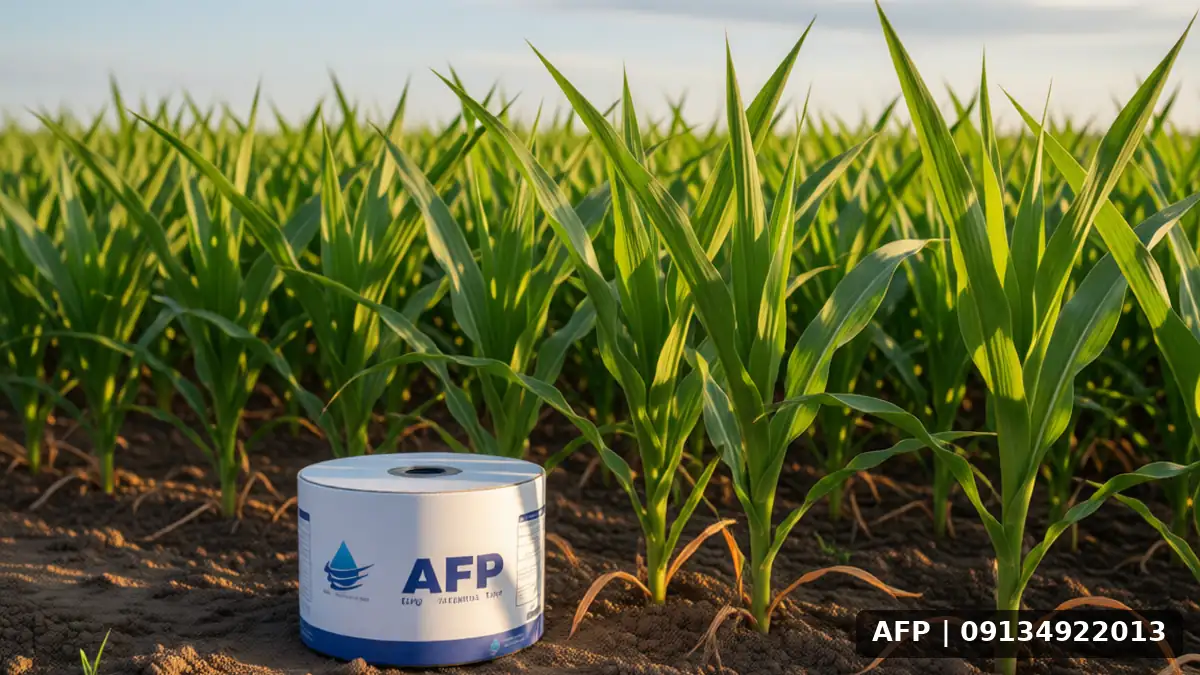
Corn is one of the most important agricultural crops in Iran. Due to its high water consumption, optimal management of water resources for its cultivation is a primary priority for farmers. In recent years, with the scarcity of water resources, the use of modern irrigation systems such as drip irrigation and, specifically, tape systems, has become a necessity. Moisture irrigation in corn refers to the process in which water is injected via fine mist spraying or irrigation strips directly adjacent to the roots to maintain soil moisture in the root zone.
The application of these methods not only leads to water conservation but also improves crop quality and quantity by reducing weed growth and enhancing nutrient uptake. The following section examines the practical applications, benefits, and challenges of moisture irrigation in corn cultivation.
Specialized Applications of Tape Systems in Corn Fields
Tape irrigation is a type of drip irrigation that releases water through small emitters on a polymer tape surface to water the plant near its largest primary roots. In corn fields, the row spacing is typically 60 to 80 centimeters, which allows for the use of tape systems with a width of 15 or 20 centimeters. This system has attracted the attention of many farmers due to its lower cost compared to individual drippers and its rapid installation speed.
Calculating Water Output and Tape Spacing
To utilize this system effectively, understanding the flow rate of the drip tape is critical. Selecting a tape with an appropriate groove (e.g., 165 grooves per meter) ensures uniform water distribution along the row. In Iran’s climate, high evaporation rates may necessitate tapes with more grooves to ensure sufficient moisture reaches the corn root zone. Additionally, verifying manufacturing quality by reviewing the drip tape production line and quality standards can prevent early clogging.
Impact on Vegetative and Productive Growth of Corn
Corn is a crop highly sensitive to water stress during the flowering stage. Moisture irrigation, by maintaining appropriate soil moisture, prevents sudden drying and promotes root volume expansion. Field data indicate that farms using drip tape systems achieve higher 2-inch fabric pipe efficiency in pressure distribution. This pressure stability ensures all tapes release water uniformly along the row, preventing water accumulation in specific areas of the field, which can lead to uniform grain development.
Practical Installation and Maintenance Tips for Corn Farms
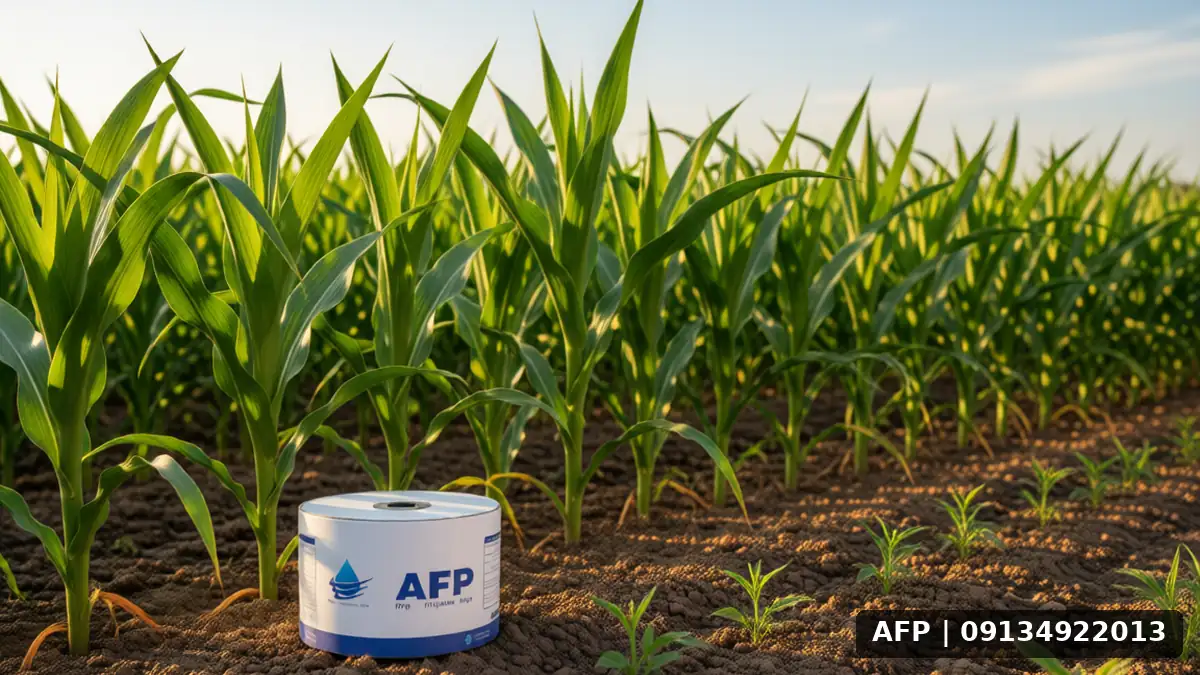
Correct installation of the drip tape system in corn cultivation requires precision and planning. Since corn is typically broadcast-seeded, tapes should be placed adjacent to the main root mass simultaneously with or immediately after sowing. Placing tapes too deep reduces moisture efficiency, while surface placement reduces efficiency due to high evaporation. The optimal depth is approximately 5 to 10 centimeters below the soil surface.
Managing Line Clogging
One of the main challenges in drip and tip-tape irrigation is the clogging of line inlets. To prevent this issue, proper filtration of the inlet water (using disc or mesh filters) is essential. Additionally, the use of suitable chemicals to prevent salt precipitation inside the line is recommended. In related articles such as Maintenance of Herat Tip-Tape Lines Emphasis is placed on the importance of periodic flushing of the system. In corn, due to the long growth period, a 3-day care schedule can be considered for flushing the lines.
Simultaneous Irrigation and Fertilization
A major advantage of moisture irrigation is the ability to fertilize along with water (fertigation). Corn is sensitive to nitrogen and requires high nitrogen levels during the 6 to 12-leaf stage. Using tip-tape allows for the direct injection of liquid fertilizers into the root zone. This method increases fertilizer uptake efficiency by up to 20 percent. Note that fertilizer pH must be compatible with water chemistry to prevent line clogging. Considerations such as melon seed rate per hectare show that principles of high-density planting and spacing management are important not only in melon but also in corn for optimizing row spacing and irrigation lines. In corn, 70 cm row spacing with 20 cm lines provides optimal water distribution.
Frequently Asked Questions (FAQ)
Is drip tape irrigation suitable for rainfed maize?
Yes, under low-rainfall conditions, drip tape can be effective as an intervention system to complete the growth cycle of rainfed maize, provided it is used only during critical water deficit periods to keep costs reasonable.
What is the useful life of drip tape in maize soil?
The life of the tape depends heavily on sun exposure and soil type. In maize cultivation, where the tape may remain in the soil after harvest, a lifespan of 1 to 2 seasons is likely if materials with UV stabilizers are used.
How can I adjust the water inlet pressure to the drip tape?
The appropriate pressure for drip tape is usually between 0.5 and 0.8 bar. For precise adjustment, refer to the drip tape section in beans manual, which explains the common pressure adjustment principles for grain crops.
Does drip irrigation cause weed growth in corn rows?
If the drip line remains wet on the soil surface for extended periods, there is a risk of weed growth near the line. To address this, it is recommended to use subsurface drip lines, cover the lines with soil, or apply pre-plant herbicides.
Conclusion: The Future of Corn Moisture Irrigation
The use of moisture irrigation and drip systems in corn cultivation is an irrevocable step toward precise and sustainable agriculture. By reducing water consumption, controlling fertilization costs, and increasing crop yield, these methods guarantee the economic efficiency of the farm. Although there is an initial investment in irrigation systems, the return on investment in the short to medium term is fully realized due to reduced pumping energy costs and increased kernel weight.
Farmers interested in upgrading corn irrigation methods can do so by studying the comprehensive guide comprehensive guide asparagus (to understand the principles of engineering drainage and moisture in deep-rooted plants) and comparing it with corn conditions, to gain a better understanding of soil moisture management. The key to success lies in accurately knowing the farm’s climatic conditions, selecting the correct drip line material, and adhering to the maintenance schedule. By properly implementing these elements, one can prevent corn water stress and produce a high-quality, healthy crop.