Subsurface Irrigation in Chickpea Cultivation: Key Considerations
Introduction to Subsurface Irrigation in Chickpea Cultivation
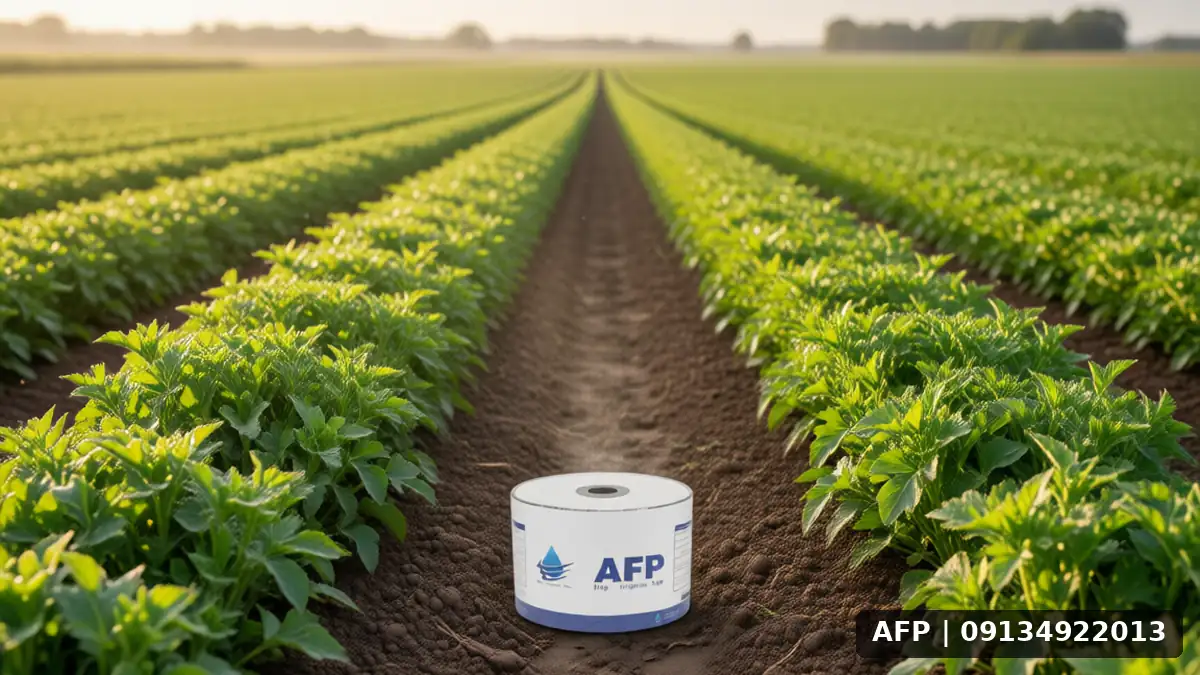
Chickpea is one of the most important agricultural legumes, offering high nutritional value while playing a significant role in crop rotation and increasing soil moisture. However, the plant’s sensitivity to water stress and specific moisture requirements at various growth stages make proper water resource management essential. Subsurface Irrigation In chickpea cultivation, this is a method where water is distributed directly into the root zone without contacting the surface soil. Compared to surface irrigation, this method minimizes evaporation and significantly improves water delivery efficiency. In this article, we examine key points, optimal conditions, and practical recommendations for implementing this system in chickpea farms so that farmers can achieve maximum yield with minimal water consumption.
Why is Subsurface Irrigation Ideal for Chickpea?
Subsurface irrigation systems in chickpea cultivation offer several advantages that make them a preferred option. The most significant benefit is the reduction of evaporation from the soil surface. Since water is supplied directly at root depth, less surface moisture is lost. This is particularly critical in arid and semi-arid regions where chickpea is a main crop. Additionally, this method keeps salts dissolved in irrigation water at soil depth, preventing their accumulation on the surface. Surface salt buildup is a primary cause of yield reduction and long-term loss of agricultural viability. Therefore, subsurface irrigation of chickpea also contributes to soil health preservation. Furthermore, uniform water distribution leads to uniform root growth and, consequently, increased uniformity in plant yield.
Impact on Weed Management
One common concern regarding subsurface irrigation is the potential for increased weed growth. However, research indicates that weeds can be managed at acceptable levels if surface wetting systems (such as rainfall or controlled surface irrigation) are applied lightly during appropriate seasons. In fact, the lack of frequent surface water eliminates ideal growing conditions for many shallow-rooted weeds. The most critical factor here is proper timing adjustment; using cover crops or intercropping can help suppress weeds.
Key Considerations in Design and Implementation
To succeed with subsurface irrigation and water-saving irrigation systems in general, adhering to the following principles is vital:
- Pipe Installation Depth: Subsurface lines must be placed at the maximum rooting depth of chickpeas, which is typically between 10 and 15 centimeters. Deeper placement reduces uptake efficiency, while shallower placement leads to higher evaporation.
- Irrigation Line Spacing: Spacing between lines must be adjusted according to the dimensions of the active root zone and soil type. In continuous cropping, spacing is more uniform, while in row cropping, it is aligned with crop rows.
- Line flow rate and system pressure: The system must be designed to achieve uniform coverage with the minimum pressure differential. Fluctuations in pressure result in uneven irrigation and plant stress.
- Water quality: Since water is delivered deep into the soil, any sediment or contamination can rapidly cause sub-surface emitters to clog. The use of appropriate filters and flushing systems is essential.
Practical irrigation guide for chickpea based on growth stages
Irrigation scheduling must be based on the varying plant needs at each growth stage. Chickpeas are sensitive to regular and controlled irrigation; water stress during critical phases such as flowering and grain filling can severely reduce yield.
- Seedling stage (days 1 to 20): During this stage, roots are extending. Frequent but low-volume irrigation is recommended to keep the root zone moist. The wetting depth should be approximately 20 to 30 centimeters.
- Vegetative stage (Days 20 to 50): As the rate of vegetative growth increases, water demand rises. Longer irrigation intervals and a deeper wetting depth (40 to 50 cm) are desirable.
- Stress-sensitive stage (Flowering and Grain Filling): This is the most critical stage. Any moisture stress can lead to flower abortion or reduced grain weight. Irrigation must be regular and consistent, with a wetting depth of 50 to 60 cm.
- Grain ripening stage: Towards the end of the cycle, water demand decreases. Final irrigations should be performed carefully to prevent grain softening and post-harvest issues.
Frequently Asked Questions (FAQ)
Is sub-surface irrigation suitable for all soil types?
Yes, but optimizing it depends on the soil type. In sandy soils, shorter irrigation intervals and higher water volumes are required to prevent rapid drying of the root zone. In clay soils, lower permeability and the risk of waterlogging exist, so irrigation volume should be reduced and intervals extended. The importance of soil in selecting an irrigation system must not be ignored. A soil permeability test must always be performed before design.
What happens if saline water is used?
A positive aspect of subsurface irrigation is that it keeps salts away from the soil surface. However, if salt concentration is very high, water uptake at depth may decrease. In this case, performing a deep flush at the end of the season or using larger irrigation volumes at appropriate intervals is recommended.
Are weeds controlled?
As mentioned in the previous section, weeds with shallow roots may decline. However, weeds with deep roots may still grow. It is better to use weaker mechanical methods or selective herbicides before planting.
Summary
Implementation Subsurface Irrigation In chickpea cultivation, this is a smart step toward increased water efficiency and resource conservation. By reducing evaporation, better managing salinity, and ensuring even moisture distribution, this method bridges the gap between sustainable production and environmental protection. Success with this method requires attention to installation depth, lateral spacing, water quality, and precise planning based on plant growth stages. Farmers seeking sustainable and cost-effective long-term solutions should consider this method as an investment in their farms. To learn more about other crops and irrigation systems, you can refer to the site’s specialized guides; for example, the comprehensive guide on using drip tape for turnips or articles related to spinach yield per hectare Please review this. The ultimate goal is to achieve green, productive, and sustainable hectares with minimal water consumption.
Related articles: Fava bean seeding rate per hectare + Factors affecting yield, dill seed per hectare factors increase yield