Subsurface Irrigation for Melon Cultivation: Benefits and Practical Considerations
Introduction to the Importance of Proper Irrigation in Muskmelon Cultivation
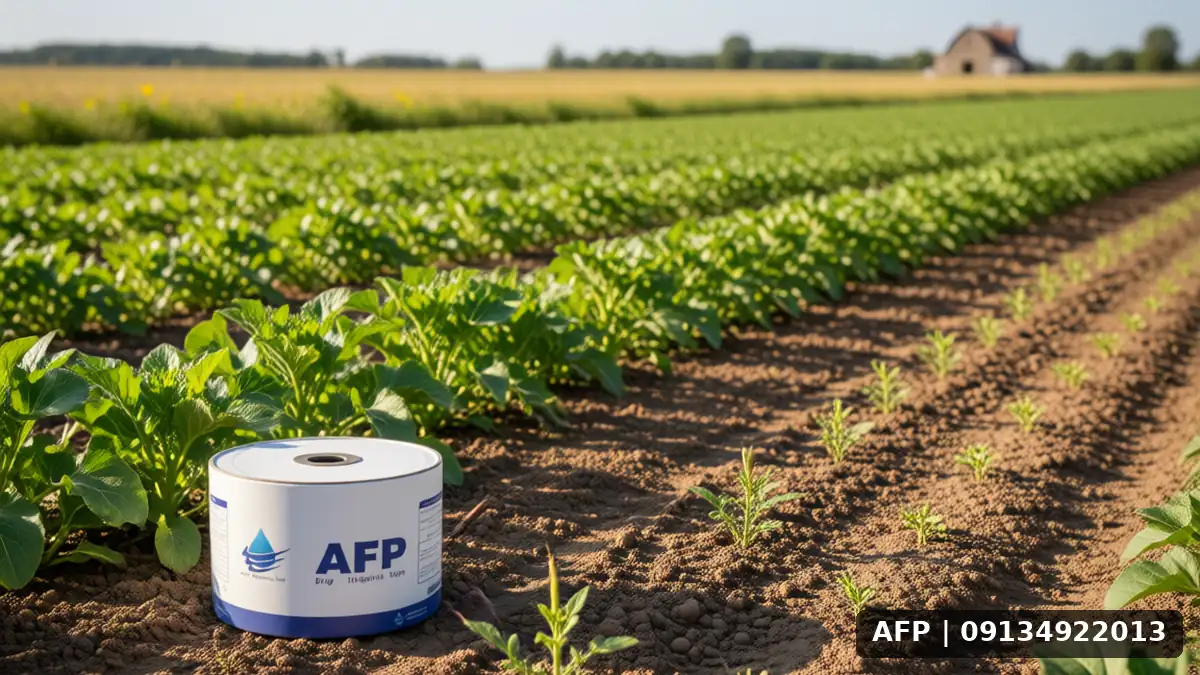
Muskmelon is a crop that requires consistent and adequate moisture to maintain quality from the vegetative growth stage to full maturity. Fluctuations in water supply can lead to fruit cracking, reduced sugar content, and increased physiological stress in the plant. Additionally, evaporation and transpiration in warm and semi-warm climates cause significant water loss. In this context, Subsurface Irrigation of Muskmelon as an alternative method, delivering water directly to the root zone, can significantly reduce the challenges mentioned above.
Compared to conventional methods such as overhead sprinkler or surface drip irrigation, subsurface irrigation involves placing water delivery lines at a specific soil depth. This allows for more precise control of soil moisture in the root zone. This feature provides a major advantage for muskmelon, which is highly sensitive to surface soil moisture.
Difference Between Subsurface Irrigation and Surface Drip Irrigation
In surface drip irrigation, water is discharged onto the soil surface, where a portion is lost through evaporation and surface runoff. In subsurface irrigation, water delivery lines are buried at a depth of 10 to 20 centimeters, delivering water directly to the soil and plant roots. This results in significantly reduced evaporation and improved water use efficiency. For more information on installation and implementation principles, you can read the article How to Install Drip Tape which aligns with the fundamental principles of precision irrigation.
Benefits of Subsurface Irrigation in Melon Cultivation
Reduction of fungal diseases and root rot
One of the key benefits of subsurface irrigation is maintaining the relative dryness of the soil surface. Melons are particularly susceptible to fungal diseases such as root rot and physiological fruit disorder during early growth stages and in humid climates. By reducing surface moisture, the conditions for soil-borne fungi and surface pathogens are altered, and the risk of infection is reduced. This benefit is achieved without the need to increase fungicide consumption and is highly cost-effective.
Improved Water Efficiency and Reduced Waste
In arid and semi-arid climates, water loss through evaporation from the soil surface can be 30 to 40 percent higher than root requirements. Subsurface irrigation significantly reduces this loss by eliminating the stage where water contacts free air. Consequently, the farmer can retain more effective moisture in the root zone with the same amount of water. This feature is important in the discussion of melon yield per hectare is very important, as there is a direct correlation between adequate moisture and final yield.
Stimulation of uniform root growth
Because water is infiltrated into the soil at a constant depth uniformly and continuously, muskmelon roots tend to expand at that depth. This causes root nodules to develop in a coherent layer, optimizing mineral absorption from that layer. In contrast, in periodic surface irrigation, roots sometimes penetrate deeper to reach water, consuming more energy. Uniform root distribution directly affects fruit uniformity and reduces qualitative differences within a field.
Reduction of energy and labor consumption
Subsurface irrigation systems are typically automated and operate automatically using timers and pumps. Compared to manual irrigation or overhead tapes that require the transport of pipes and pumps, fuel and human labor consumption are significantly reduced. This advantage is particularly critical in large muskmelon fields where manual management is difficult.
Additionally, considering that muskmelon is a fruit whose flavor is affected by water stress, moisture stability through the subsurface system leads to increased consistency in sugar content. To better understand factors affecting performance, you can read the article Factors Increasing Muskmelon Yield per Hectare as well.
Practical steps for implementing sub-surface irrigation in melon fields
Optimal depth for installing irrigation lines
- Melon planting depth is typically 15 to 25 centimeters; therefore, irrigation lines should be placed at a depth of 10 to 15 centimeters and positioned next to the rows.
- The distance between the irrigation line and the planting row should be approximately 10 to 15 centimeters to ensure water reaches the root zone effectively.
- Lines must be installed before planting on a smooth, stone-free layer to prevent breakage and unevenness.
Pressure and flow rate management for the system
- The operating pressure for sub-surface irrigation systems is generally between 1 and 2 bars; higher pressure can cause water to escape from the line and create surface pooling.
- The flow rate for each line must be adjusted based on climate and soil conditions. For sandy, well-drained soils, a lower flow rate with increased frequency is recommended.
- The use of pressure regulators is essential to maintain flow rate stability at different points across the farm.
Monitoring line clogging
Water containing suspended solids or high chloride levels can cause deposits in line emitters. To prevent this, the use of treated water and the installation of an appropriate filter at the system inlet are mandatory. Additionally, periodic flushing of the system at a high flow rate at the beginning of each irrigation season helps extend the service life of the lines.
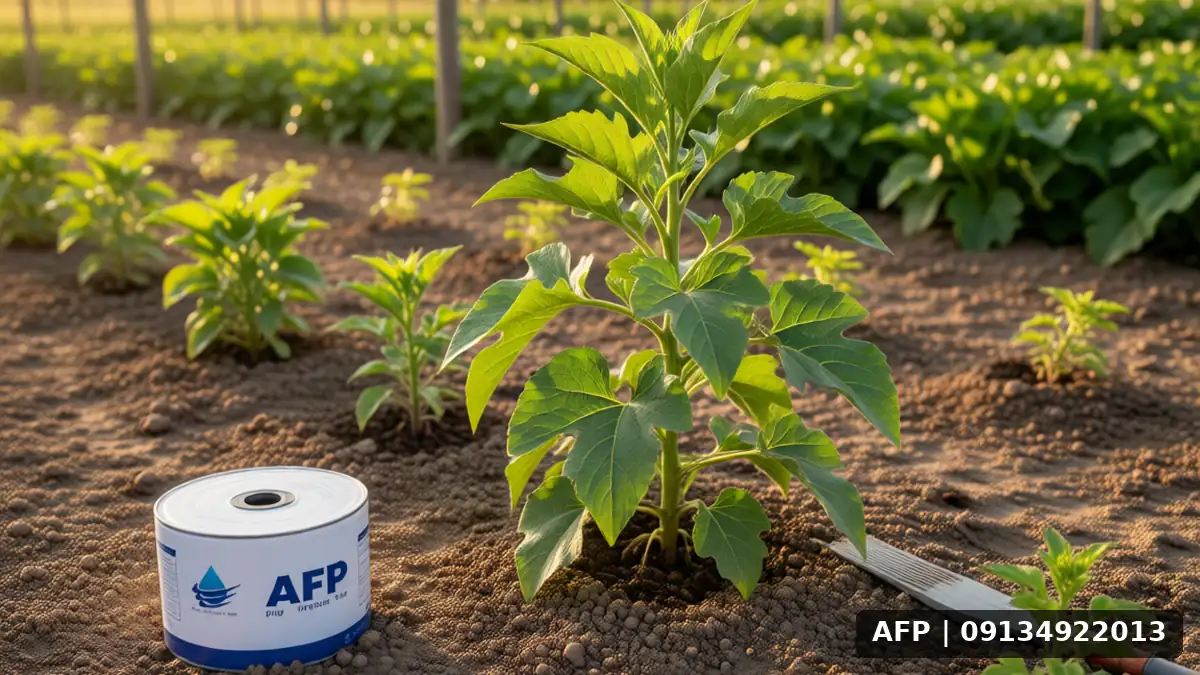
If you are using combined drip and subsurface systems, coordinating the irrigation scheduling is crucial. In this regard, the Comprehensive Subsurface Irrigation Guide can be useful. Additionally, for melon farms with large inaccessible areas, it is recommended to plan maintenance access routes from the initial design stage.
Frequently Asked Questions (FAQ)
Is sub-surface irrigation suitable for all melon varieties?
No, this method is primarily suitable for early- and mid-season melons planted in warm seasons. Late-season melons, which require a longer growth period, may need a combination with surface irrigation in the early season to accelerate stem and leaf growth. However, with proper flow rate regulation, it can be used for most cultivars.
How much more does installing a sub-surface system cost compared to surface drip irrigation?
Initial installation costs are typically 20 to 30 percent higher due to the requirement for deep piping and pressure equipment. However, given water savings and reduced disease damage, return on investment is achieved within 1 to 2 growing seasons. This calculation should be performed based on your local water rates and labor costs.
Is soil fumigation required?
Yes, if soil-borne pests are present, soil fumigation remains necessary; however, application rates may decrease due to reduced surface moisture and better root zone environment control. Using the sub-surface irrigation system for fertigation is also highly effective, as nutrients reach the roots precisely. For information on fertigation principles, refer to the article Factors affecting sweet melon yield can be utilized regarding plant nutrition principles, as there are similarities in the root management of both crops.
How to use surface relative dryness for weed control?
Surface relative dryness in soil, caused by water movement to deeper layers, creates unfavorable conditions for weed growth because many weeds require surface moisture for seed germination. This can reduce herbicide use. However, this benefit is not absolute and must be combined with proper soil compaction and the selection of more competitive cantaloupe varieties. In this regard, Bean row spacing An example of precision planting principles that can inspire sub-surface irrigation system design for cantaloupe, as row spacing determines the placement of tape lines.
Conclusion: A step towards dynamic and sustainable agriculture
Sub-surface irrigation for cantaloupe, by reducing evaporation, improving root quality, controlling fungal diseases, and increasing water efficiency, is one of the most advanced methods for modern farms. This system is the optimal option, especially for large farms with access to high-quality water and appropriate filtration systems. With proper execution, appropriate depth, and pressure management, increased cantaloupe yield and fruit quality can be expected.
For cantaloupe farms still using conventional irrigation, transitioning to sub-surface systems requires initial investment, but in the long term, it reduces operational costs and makes drought risk more manageable. The future of cantaloupe cultivation in water-scarce regions will undoubtedly be shaped by the intelligent use of precise and sub-surface irrigation technologies. It is recommended to consult with an irrigation specialist before system installation to receive the optimal settings based on soil type and regional climate.