Sub-surface Drip Tapes for Beetroot: Applications and Critical Considerations
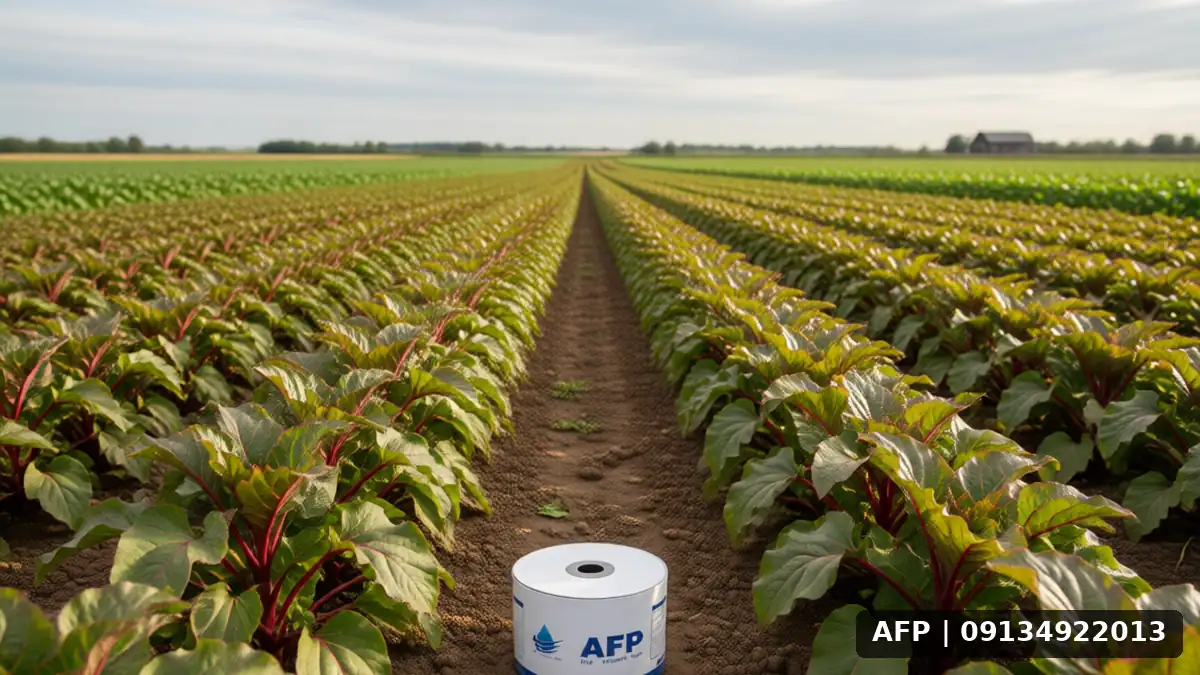
Introduction: The Necessity of Optimizing Water Resources in Beet Cultivation
Sugar beet (also known as soda) is a crop sensitive to water and temperature. In Iran, particularly in hot and dry regions, it requires precise water resource management. Conventional surface irrigation methods often lead to water waste and uneven moisture distribution around the beet roots. In contrast, drip irrigation using trickle tape as a novel technology, enables the direct delivery of water and nutrients to the root zone. This method not only reduces total water consumption but also increases beet formation speed and final crop quality by maintaining stable soil moisture. This article examines the technical and operational details of using trickle tape in beet farms.
h2>Growth Zone and Trickle Tape Placement
To achieve maximum efficiency from a drip irrigation system, understanding the “growth zone” of beets is essential. Beets have a taproot system where lateral root growth begins approximately 10 to 15 centimeters from the growth line. Therefore, the trickle tape must be laid so that water drops land exactly in the active root zone. If the tape is placed too far from the seed row, roots must exert more energy to find water, reducing energy available for beet formation. If it is too close, the taproot faces the risk of asphyxiation. The optimal condition is placing the trickle tape at a depth of approximately 5 to 10 centimeters below the soil surface or incorporating it into the planting furrow.
h2>Flow Rate and Pressure Management in Beet Trickle Tape Systems
One of the most important technical challenges in drip tape application is controlling water pressure and flow rate from each emitter. The appropriate flow rate for beetroot during the early growth stage (1 to 2 months) is lower and should gradually increase as the plant grows. Using drip tapes with the same flow rate throughout the entire season can cause water stress at the beginning of the crop cycle and waterlogging at the end. It is recommended to use drip tapes with flow rates suitable for this crop and, if necessary, use patch tapes or tapes with larger diameters for the late season. Additionally, maintaining constant pressure along the line is important because pressure loss can cause uneven irrigation at the end of the lines. Study on Factors affecting drip tape water flow rate and calculation models can help farmers in selecting the appropriate tape size and calculating pressure drop.
h3>Effect of irrigation on soil moisture and beetroot formation
Soil moisture is a key factor in determining the size and shape of beetroot. Severe fluctuations in moisture can lead to cracking of beetroot roots, which reduces product quality in terms of shelf life and appearance. Drip tape prevents these fluctuations by creating a stable zone of soil moisture. Additionally, this method keeps more moisture at root depth rather than at the surface, which inhibits the growth of surface weeds and reduces evaporation from the field surface.
h2>Simultaneous fertilization (fertigation) with drip tape
One of the strongest advantages of drip irrigation is the ability to apply precise fertilization at the optimal time. Beets are sensitive to calcium, magnesium, and nitrogen; a deficiency in any of these nutrients can lead to ‘hollow heart’ or reduced sweetness in the produce. Using drip tape, nutrient solutions can be injected directly into the root zone. This not only ensures better nutrient uptake but also reduces the cost of transporting fertilizer to the field. It is important to check the pH of nutrient solutions and the compatibility of substances in the tank with the base water to prevent precipitation and clogging of the drip tape.
h2>Prevention of Root and Fungal Diseases
Soil-borne pathogens such as Pythium, Phytophthora, and Rhizoctonia are often spread through water spray droplets on plant surfaces or water movement off the field. The drip tape system prevents direct water contact with leaves and stems. Since moisture is supplied to the root zone and surrounding soil rather than the bed surface, the risk of leaf-borne diseases and spray-induced rot is reduced. Additionally, applying disinfectant solutions through the drip tape system (when the crop is not active) can help reduce Rhizoctonia populations in precision-planted fields. For more information on the principles of subsurface irrigation and its benefits, see Subsurface Irrigation of Crops which explains similar principles.
h2>Practical Tips for Implementation and Maintenance
- Filter Cleaning: Beets are typically grown in conditions where soil may contain fine suspended particles. Using an appropriate filter (disc or screen) and performing monthly cleaning is key to the longevity of drip tape. To learn about proper maintenance methods, see Drip Tape Maintenance Read the section.
- Susceptibility to Punctures: Plastic drip tapes are sensitive to physical damage, including mowing, inter-row tillage, or even animal chewing. It is recommended to use more durable tapes or to bury the tape at the beginning of the season.
- Service Life: Drip tape is generally designed for one growing season. After the beet harvest, these tapes must be removed from the field to prevent soil pollution with plastic. Their proper disposal is part of the farmer’s environmental responsibility.
- Flow Monitoring: Once every two weeks, open the end of one of the lines and check the discharge flow to ensure that the emitters are not clogged.
h2> Economic efficiency comparison with conventional methods
Although the initial cost of drip tape and pumping equipment is higher than conventional systems, long-term efficiency is significant. Reducing water consumption by up to 40%, increasing beet yield by up to 25%, and lowering costs for pest control (due to reduced leaf diseases) and weeding (due to lower surface moisture) reduce the total production cost per kilogram of beets. Farmers can refer to the comprehensive guide for the price of 20 cm drip tape to estimate initial equipment costs, but prices vary by brand and market conditions and must be verified by comparing multiple reliable sources.
h2> Answers to frequently asked questions (FAQ)
Can drip tape be used in flooded beet fields?
No, beets are sensitive to permanent waterlogging. Drip tape is more suitable for fields with well-drained soil and drier conditions. In very wet conditions, the risk of root diseases increases with high moisture, and drip systems should be used with caution.
What is the standard emitter spacing for beet drip tape?
Typically, emitter spacing is 30 to 50 cm. This distance depends on soil type; in clay soils with lower hydraulic conductivity, a shorter distance (30 cm) is recommended to ensure good moisture distribution. In sandy soils, a 50 cm spacing is sufficient.
Does drip tape cause sugar beet splitting?
No. If the water pressure is adequate and a stable wetting bulb is established, drip tape actually prevents splitting and abnormal beet shape, as it delivers water uniformly along the entire root zone.
h2>Conclusion and Final Recommendations
Use of drip tape irrigation in sugar beet cultivation is more than just an irrigation method; it is a farm management system. This technology requires precision in selecting the tape type, planting distance, pump pressure, and fertilization schedule. Given the water scarcity crisis in Iran and rising energy costs, transitioning to precision irrigation systems is not only an economic necessity but also an environmental responsibility. It is recommended to obtain on-site consultation before starting field operations to ensure that the drip tape type and flow rate are compatible with your specific soil and water conditions. Utilizing online resources and learning from other successful farmers can help navigate initial challenges.
Related articles: pepper drip tape irrigation guide tajik farmers