Sprinkler Irrigation in Sugar Beet Cultivation: A Comprehensive and Practical Guide
Introduction to Furrow Irrigation for Sugar Beet
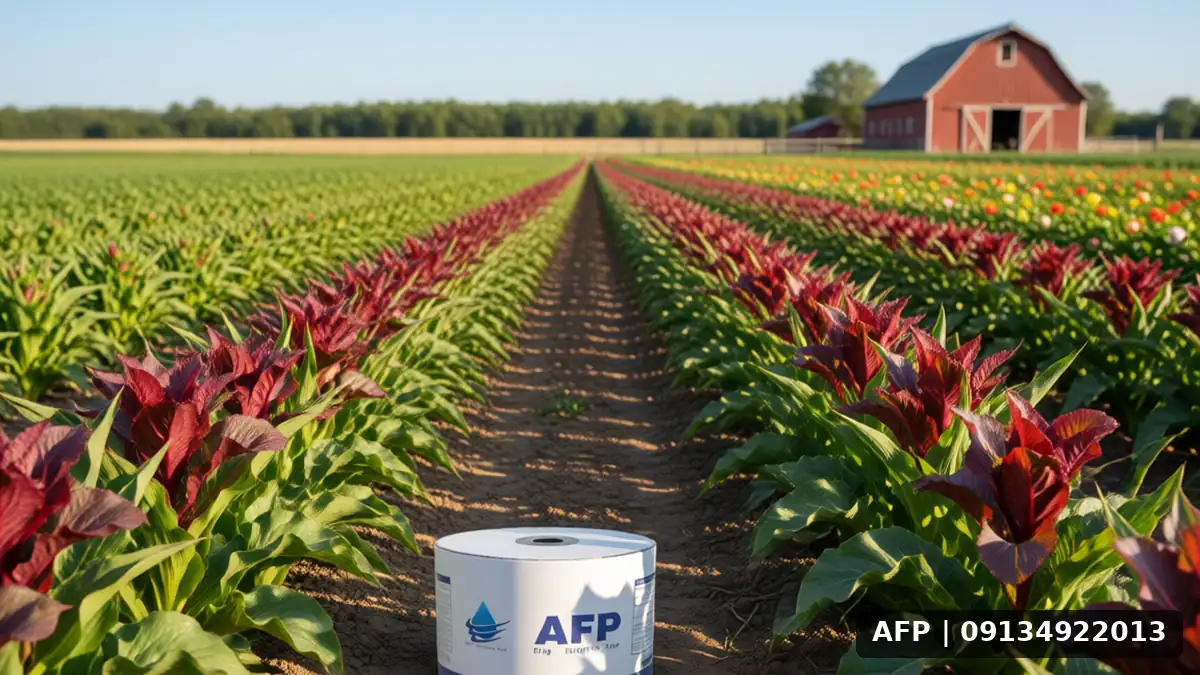
Sugar beet is a key crop in the animal feed industry and is widely cultivated across various regions of Iran. One of the main challenges in growing sugar beet is proper water management. This crop requires adequate water and soil moisture during its vegetative growth stage and root bulking phase. In this context, Furrow irrigation occupies a special place as an efficient and low-cost method. Furrow irrigation allows water to spread evenly across the field surface, ensuring that the root zone receives the necessary moisture.
In this comprehensive guide, we review all technical and practical aspects of furrow irrigation for sugar beet. We explain every detail, from land preparation to flow rate adjustment and lateral spacing. We also address potential conflicts with traveling strip irrigation and present alternative recommendations.
Technical Principles of Furrow Irrigation for Sugar Beet
For successful furrow irrigation of sugar beet, understanding the technical principles is crucial. Furrow irrigation can be applied surface or subsurface, but for sugar beet—given its root depth—subsurface irrigation at low pressure with a constant flow rate is recommended.
- Flow rate: The flow rate must be adjusted so that water reaches the root zone at the necessary speed without causing soil erosion around the roots.
- Land slope angle: For furrow irrigation, the land slope must be gentle. A steep slope causes soil erosion, while a shallow slope causes water to accumulate in low-lying areas.
- Spacing between pipes: The spacing of irrigation pipes should be determined based on soil type and flow rate. Closer spacing is recommended for clay soils, while wider spacing is recommended for sandy soils.
One key aspect of furrow irrigation is using water-soluble fertilizers. This allows sugar beet roots to benefit from water and nutrients in close proximity. Consult with agricultural specialists to select the appropriate fertilizer type.
Comparison of furrow irrigation with drip line
Although furrow irrigation is a cheaper method, drip line may be a better option where high irrigation precision and water conservation are priorities. Below is a comparison of the advantages and disadvantages of both methods:
To gain more information about proper plant watering principles and precise flow rate calculation, it is recommended to study the rules for drip irrigation tape installation. This resource is a useful guide for selecting the appropriate tape type.
Practical tips for implementing border irrigation
For the practical implementation of border irrigation in sugar beet cultivation, it is important to follow the points below. These points help increase efficiency and reduce potential problems.
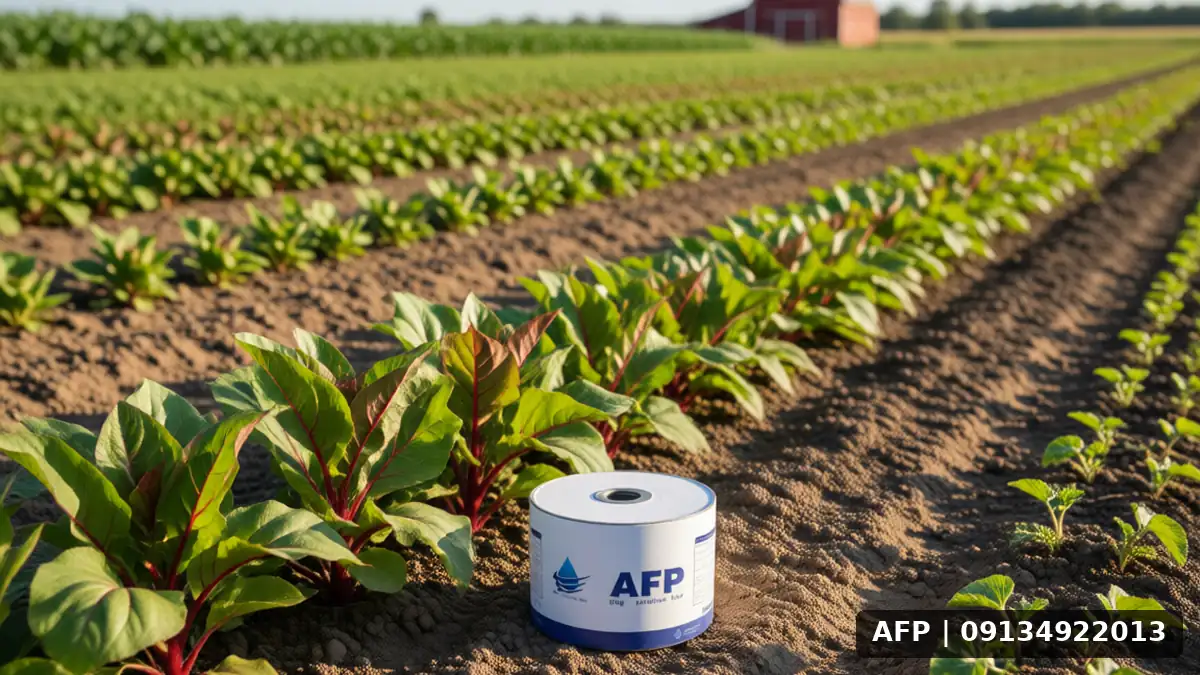
- Field preparation: Before planting, plow and harrow the field. Prepare the surface uniformly so that water flows easily.
- Use of nutrient solutions: Add soluble nutrient solutions to the water. This allows beech or beet roots to access nutrients. Avoid high solution concentrations, as they may damage the roots.
- Flow rate adjustment: Adjust water flow rate based on soil type and rainfall amount. Lower flow rates are recommended for clay soils, while higher flow rates are recommended for sandy soils.
- Monitoring spacing between pipes: Adjust the spacing between irrigation pipes based on plant needs. This spacing should not be too narrow to prevent water accumulation and root rot.
- Tank cleaning: Clean water tanks regularly to prevent sedimentation and clogging.
To gain more information about pre-installation tips for drip lines, read Important pre-installation tips for drip lines in the field may be useful. This guide explains key points to prevent common problems.
Common mistakes and how to avoid them
In beet move irrigation implementation, you may encounter some common mistakes. These mistakes can cause decreased efficiency and increased costs. Below, we examine some of these mistakes and their solutions.
- Use of cold water: Cold water may cause temperature shock to the roots. Use water with an appropriate temperature.
- Ignoring plant needs: Water requirements for the plant vary at different growth stages. Avoid over-irrigation during sensitive phases.
- Inadequate cleaning: Failure to clean tanks and pipes can lead to blockages and microorganism growth. Use a regular maintenance schedule.
To prevent these mistakes, you can use the guide Seed quantity for soil per hectare You can benefit from this guide. It explains key tips for planting and plant care.
Frequently Asked Questions (FAQ)
In this section, we address frequently asked questions about furrow irrigation for sugar beets.
Is furrow irrigation suitable for all soil types?
No. Furrow irrigation does not infiltrate well in clay and heavy soils and may cause surface water ponding. In such cases, drip tape or drip irrigation is preferable.
How many times per week should sugar beets be irrigated?
Depending on soil type, temperature, and rainfall, irrigation frequency ranges from one to three times per week. Water requirements are lower during the early growth stages.
Can wastewater be used for furrow irrigation?
No. Wastewater may contain chemical and microbial contaminants that can damage plants and soil.
What types of nutrient solutions are suitable for sugar beets?
Use solutions containing nitrogen, phosphorus, and potassium in balanced rates. Avoid excessive additions.
Summary and Final Recommendation
Sprinkler irrigation for beetroot can be an efficient and cost-effective method, provided that its technical and practical principles are followed. With proper field preparation, appropriate flow rate adjustment, use of nutrient solutions, and regular maintenance, you can achieve satisfactory results. However, if your land has heavy soil or you require high precision in irrigation, drip or tape irrigation may be a better option.
To read more about how to calculate and measure irrigation accuracy, you can refer to the guide on the seed rate of quinoa per hectare. This source is a comprehensive guide for calculating accuracy.
We at [site name] hope this guide helps you achieve the best results with sprinkler irrigation for beetroot. If you have any questions or need consultation, feel free to contact us.
Related Articles: Seed Rate for Quinoa D8AFD8B1 per Hectare, Parsley yield per hectare