Soil Moisture Irrigation in Fenugreek Cultivation: A Comparison of Subsurface Drip and Surface Drip Systems
Introduction to the importance of moisture management in fenugreek cultivation
As one of the popular vegetables, fenugreek cultivation requires precise management of water and soil moisture resources. This crop is sensitive to water stress, and its aromatic quality is directly linked to proper irrigation moisture management. This section discusses the importance of adopting modern irrigation methods, such as drip and tape-line systems, to maintain consistent soil moisture in the root zone and prevent water loss.
The use of pressurized irrigation systems is considered essential in Iran due to water resource constraints. Due to its rapid production cycle and high water consumption, fenugreek requires regular and precise irrigation. The following section provides a detailed technical and practical comparison between the two main methods: drip and tape-line irrigation.
Technical Comparison of Drip and Tape-Line Irrigation Systems in Fenugreek
The choice between a drip system and a tape-line system depends on soil type, regional climate, and initial investment. Drip Irrigation System It releases water drop by drop directly into the root zone. This method is the best option for clay soils with low permeability. In contrast, Tape-Line Irrigation It injects water into the soil surface in a narrow, continuous strip, which is better suited for sandy and permeable soils.
To fully leverage these systems, a solid understanding of basic principles is essential. In this regard, studying irrigation methods can help farmers better understand the challenges they face. Additionally, paying attention to training on drip tape usage can effectively reduce human error and increase system efficiency.
Practical tips for optimizing fenugreek cultivation with moisture-based irrigation
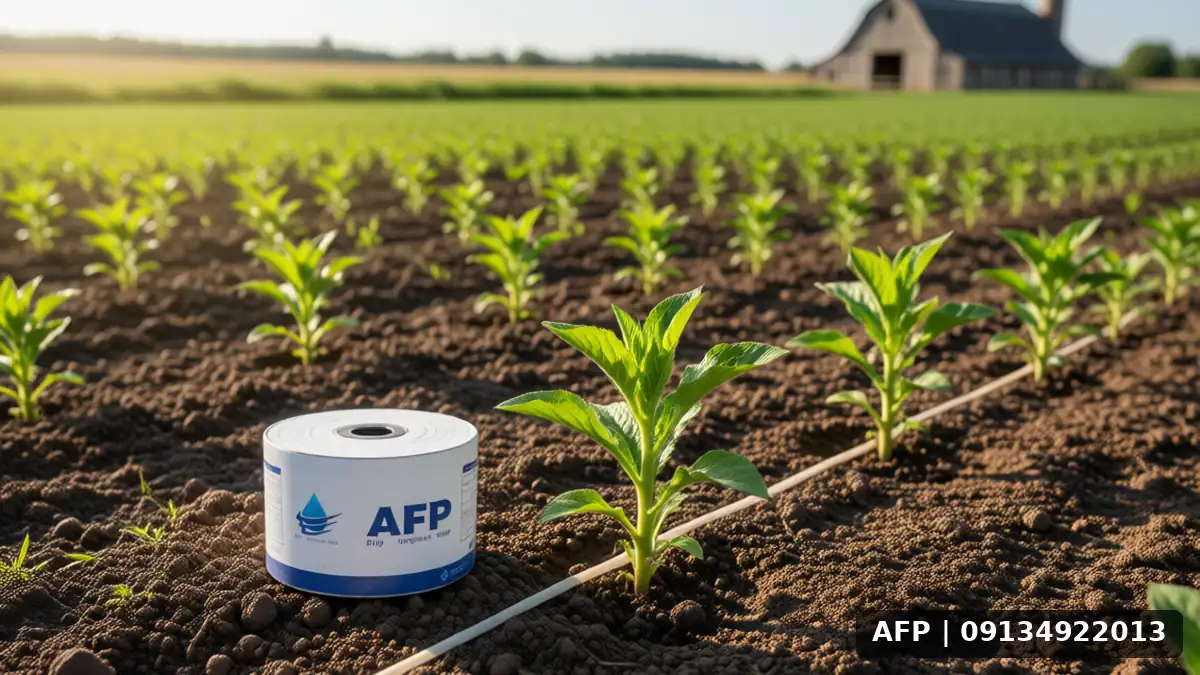
Correct implementation of fenugreek moisture-based irrigation requires adherence to several key points. The first and most important factor is Planting density Plant density has a direct impact on water requirements per square meter. For fennel, soybean seed rate per hectare is often used as a comparative variable in vegetable cropping studies, although fennel is a fine-seeded crop and its seeds are sown at a different rate; however, the principle of density management is similar. Secondly, Irrigation line depth and spacing must be aligned with fennel rooting patterns. Fennel has a shallow root system, so tape or drip lines must be installed at a depth of 5 to 10 centimeters.
Network pressure management is also critical. In tape lines, excessive pressure causes erosive and non-uniform water distribution, while low pressure results in a dry strip. A 3-inch hose pipe can be used as a main or sub-main line in small-scale fennel networks, but its dimensions must be adjusted to the required water volume. Finally, while subsurface irrigation is less common for fennel, it can be a stronger option in very sandy soils where tape lines absorb water too quickly. However, its high cost is generally not justifiable for seasonal vegetable crops like fennel.
Yield estimation and the effect of irrigation on fennel quality
The ultimate goal of applying moisture irrigation in fennel cultivation is to improve yield and crop quality. Due to its rapid growth rate, fennel produces thinner stems and smaller leaves under water deficit, and its essential oil content decreases. Conversely, over-irrigation causes root rot and increases fungal diseases. Therefore, achieving a moisture balance is essential. To better understand yield performance under different conditions, one can refer to Fennel yield per hectar He noted that it is naturally a forage crop, but the principles of moisture management for achieving maximum yield are similar.
In the tape system, concentrating water in a narrow line keeps the root zone constantly moist while the surrounding soil remains relatively dry. This reduces the risk of mold growth and fungal diseases in the canopy. The drip system offers a more uniform distribution but requires closer monitoring of emitter clogging. Fennel has a weak, shallow root system, so any irregularity in water distribution quickly shows up in the plant’s appearance. In this context, familiarizing oneself with alfalfa seed rate per hectare guide can provide a general overview of seed management in forages, although fennel is classified as a vegetable.
Frequently Asked Questions (FAQ) about fennel irrigation
Which system is optimal for fennel?
Generally, the tape system is superior for sandy soils because it delivers water to the root zone more quickly. For clay soils, drip irrigation is safer as it prevents over-wetting the seedbed.
How often per week should fennel be irrigated?
It depends on the ambient temperature. During summer, it may be necessary to irrigate 2 to 3 times a day at a low dose (2 to 4 liters per meter). In spring and autumn, once every one to two days is sufficient.
Is the use of artificial rainfall (Rainwater) recommended?
No, it is not recommended for fenugreek because it causes seed scattering and soil splash. Pressurized systems such as rainwater pipes types applications which are designed for arid regions should be used cautiously for sensitive vegetables; this means to consider only fine irrigation lines only.
Summary and final recommendations for commercial crops
Choosing between drip and tape-line irrigation for fenugreek planting is a technical decision that must be made based on the local farm conditions. Tape-line offers high adjustability and provides better cost-effectiveness than high-density drip emitters in well-drained soils. On the other hand, drip is a more sustainable option in conditions of severe water restriction and heavy soils. Regardless of the type of system, the key to success is in Regular monitoring Soil moisture, Proper pressure regulation and line cleanliness .
Farmers are advised to use appropriate protective filters to prevent clogging before installing the system. Also, to ensure proper tape performance, always use specialized guides such as melon yield per hectare guide Do not use this guide, as bananas have deeper root systems and different water requirements; instead, focus on resources dedicated to micro-vegetables. Finally, precise moisture irrigation not only increases cilantro yield but also leads to cleaner crops and a reduced need for fungicide spraying. The initial investment in an optimized pressurized system provides long-term returns for repeated cilantro crops in that field.