Smart Irrigation in Lettuce Cultivation: Cost Optimization
Introduction to water economics in lettuce cultivation
Lettuce is one of the most widely consumed and sensitive vegetables that requires precise management of water resources. Under current conditions where water scarcity and rising energy costs significantly impact a farmer’s balance sheet, transitioning from traditional irrigation systems to smart lettuce irrigation is not just a choice, but an economic necessity. Smart lettuce irrigation not just a choice, but an economic necessity. The goal of using advanced technologies in irrigation is to reduce water waste, improve crop quality, and ultimately increase financial yield. In this section, we examine why cost optimization in lettuce cultivation is essential. Proper water management means a deeper understanding of the relationship between root water supply, stem growth, and the quality of the final crop. The more accurately this relationship is modeled, the lower the risk of economic failure.
Today, many farmers face multiple challenges such as fluctuating input prices and climate change. Using soil moisture sensors and automation systems allows water to reach lettuce roots at exactly the right time and in the exact amount the plant needs. This approach reduces pumping costs and energy consumption. It also prevents leaching of nutrients from the soil, indirectly reducing fertilization costs. Therefore, the initial investment in smart equipment is strongly justified in the long term. This justification can be analyzed by comparing water use efficiency in lettuce cultivation with other crops; to better understand the economic dynamics related to efficiency levels, studying resources such as sorghum yield statistics in Iraq can provide a better comparative perspective. Sorghum yield statistics in Iraq
Appropriate irrigation techniques for lettuce: Drip vs. micro-sprinkler
Achieving optimal costs in lettuce cultivation requires understanding the differences and applications of the two main irrigation methods: drip and tape irrigation. Each method has specific advantages and disadvantages that should be selected based on farm conditions.
Tape Irrigation System: Speed and Moderate Initial Cost
Tape irrigation systems are commonly used in row crops with linear plant spacing, such as lettuce. The advantages of this system include quick installation, lower initial costs compared to drip in some cases, and uniform water distribution along the row. If you are looking for a quick solution for medium-scale farms, tape irrigation is an attractive option. You can learn more about the technical details and types of these tapes in the fixed tape irrigation article. However, it is important to note that in some designs, the components forming the tape must be examined carefully to prevent clogging.
Drip Irrigation: High Precision and Long-Term Stability
Drip irrigation is suitable for higher-value farms requiring precise chemical control due to its high precision in water distribution and reduction of weeds in the inter-row space. Over time, this system may require maintenance due to sediment deposition in the emitters, but its long-term stability is evident in improving lettuce quality. To better understand the structure of emitters, read the article Components of Tape and Drip Irrigation Systems which will be useful.
Practical Strategies for Cost Optimization
Optimal costs are achieved not simply by purchasing high-priced equipment, but through proper management and operational details. In this section, we review key points for reducing operational costs.
- Water Pressure Management: One of the biggest hidden cost factors is leaks and inappropriate system pressure. Using an appropriate pressure regulator prevents hose ruptures and reduces pump consumption. To understand the most suitable pipes used in these systems, study the Layflat Pipe Price Guide can be helpful, although our recommendation is based on quality and useful life, not just the current spot price.
- Precise Irrigation Scheduling: Using smart timers and irrigating during the cooler hours of the night minimizes evaporation rates. This directly impacts water costs.
- Monitoring Filtration: Water contaminants can rapidly clog drip tape. The cost of replacing filters is significantly lower than the cost of repairing the system or losing crop yield. Detailed tips are available in the article. Key points to consider before installing drip tape in the field which must be carefully reviewed before implementation.
- Using Temperature and Humidity Sensors: These sensors connect to control panels to prevent expensive irrigation during rainy days or cold nights.
The Impact of Irrigation on Lettuce Yield and Quality
Lettuce is highly sensitive to stable moisture levels. Underwatering leads to leaf wilting and increased susceptibility to stress, while overwatering causes fungal diseases and rot. In fact, precise moisture balance is the core of your operational costs. If you want to calculate your final crop yield more accurately, you can utilize water efficiency calculation algorithms. To better understand the relationship between water deficit and surplus, studying the article on ‘Seed Quantity per Hectare’ can show similar algorithms for other vegetables.
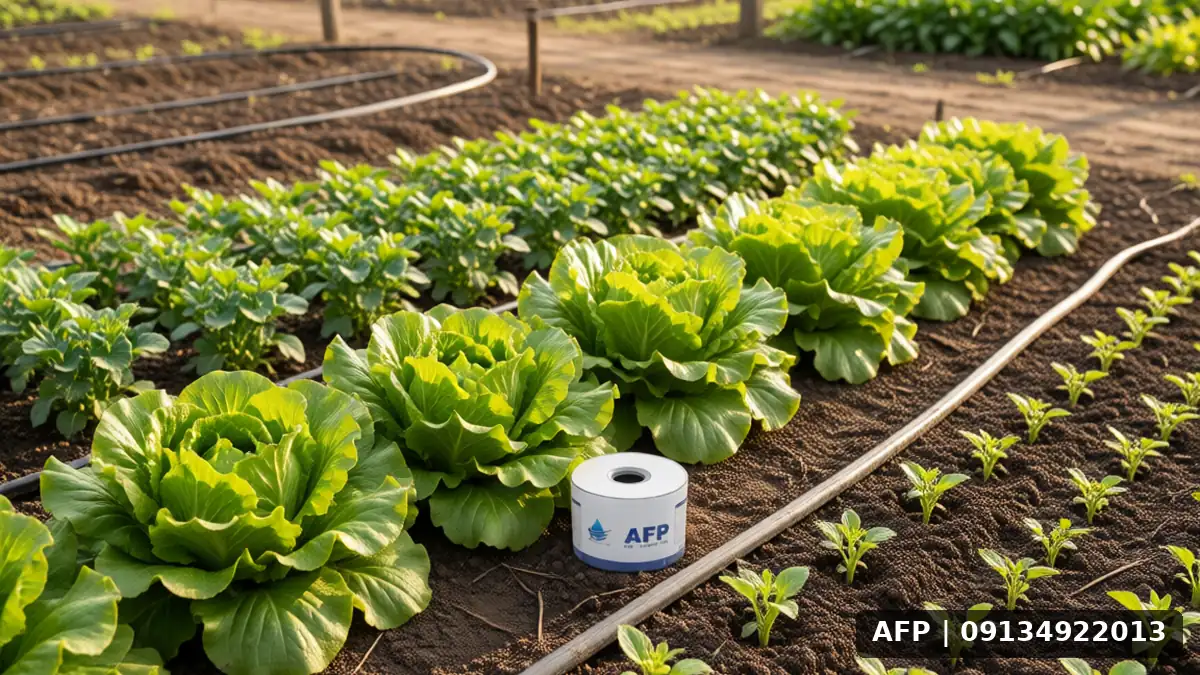
Additionally, the selection of the appropriate lettuce seed variety affects water requirements. Densely textured lettuce varieties generally require less and less frequent irrigation compared to loose-leaf types. Ignoring these factors will result in resource waste and increased unnecessary costs. Understanding the relationship between planting density and available irrigation space is the key to financial sustainability.
Frequently Asked Questions (FAQ)
Is smart lettuce irrigation justifiable for small farms?
Yes, even for small farms, high efficiency can be achieved using cheaper drip tape and manual timer controls. The cost of installing complete drip systems may be less justifiable for very small farms, but the benefits of water quality control and shortage reduction are worth it.
What types of irrigation water are more suitable for smart systems?
Water with high sediment content requires stronger filtration and periodic flushing of drip emitters. Using wells with appropriate water quality significantly reduces system maintenance costs.
Can the drip line system be combined with the trickle system?
In some complex farm designs, it is possible to combine these two systems in different areas of the farm to adjust irrigation precision according to the soil conditions of each section.
Conclusion
Choosing smart irrigation for lettuce cultivation is a multi-step process that includes selecting the appropriate technique (drip line or trickle), properly managing maintenance costs, and utilizing control technologies. By following the points outlined in this article, we can optimize production costs while benefiting from better and more sustainable crop quality. Please note that each farm has unique conditions, and it is best to consult with irrigation engineers before implementation to select the best design suitable for the climate and local conditions. Ultimately, paying attention to productivity and efficiency at all stages will be the key to your success in modern agriculture.
Related Articles: