Smart Irrigation in Cucumber Cultivation: Key Considerations
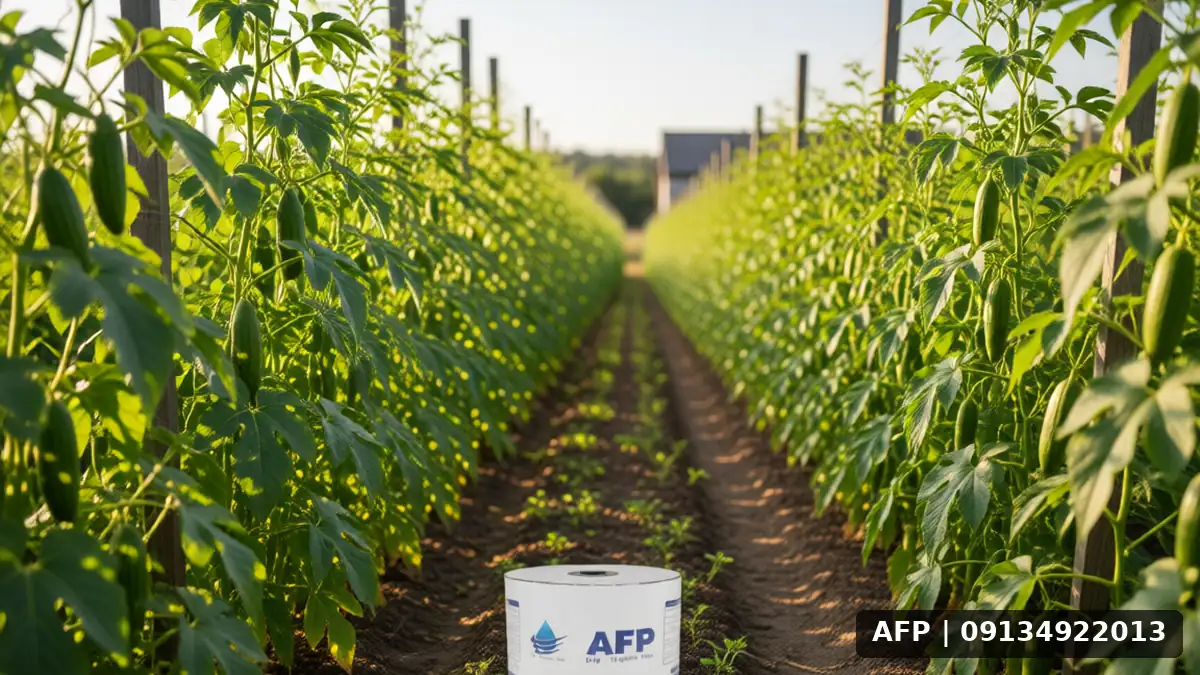
Cucumber is one of the most cultivated greenhouse and open-field crops in Iran, characterized by rapid growth and a high requirement for uniform soil moisture. Proper water management in this crop not only prevents flower drop but also directly affects fruit size, freshness, and shelf life. In recent years, traditional soil irrigation approaches have been replacing with smart irrigation . These methods use soil moisture sensors and smart controllers to adjust water volume and timing based on actual plant needs. This article aims to provide a comprehensive and practical guide for farmers and engineers to increase efficiency by gaining a deeper understanding of drip and micro-sprinkler (tape) irrigation mechanisms.
Introduction to Cucumber Irrigation Systems
Due to its shallow and extensive root system, cucumber relies on uniform moisture distribution in the upper soil layers. Frequent and sudden dryness can lead to poor taste, bitterness, and fruit deformation. Conversely, over-irrigation causes root diseases and rot. Therefore, selecting the correct irrigation system is critical. The two main methods used in modern cucumber farms are drip and tape irrigation. Each method has its own advantages and limitations, which will be examined in detail in the following sections. Understanding the differences between these two methods is the first step in designing a successful irrigation project.
Types of Irrigation Systems Used in Cucumbers
In modern irrigation systems, water flow is delivered to the plant roots in a controlled manner. Below is a comparison of the two main methods:
- Drip irrigation: In this method, water droplets are applied slowly and continuously at set intervals (typically 20 cm to 1 m, depending on the emitter type) onto the soil. This method is highly suitable for greenhouse cucumbers with dense planting and a need for precise moisture control.
- Tape Irrigation: A tape is a thin plastic tube with very small holes on one side that distributes water as a continuous band. This system is ideal for open-field cucumbers and large farms that require full coverage of the soil surface layer.
The choice between these two methods depends on the climate, soil type, and crop layout. For example, in light (sandy) soil, drip irrigation with closer spacing is recommended, whereas in clay soils, tape irrigation can provide better coverage. In this context, a study on traditional furrow irrigation can provide complementary information about conventional methods, but cucumbers, as a sensitive crop, directly require pressurized systems.
Key Points in Designing a Smart Cucumber Irrigation System
Making cucumber irrigation smart does not mean removing humans from the decision-making loop; rather, it means enabling the system to respond to real-time data. A smart cucumber system consists of six main components, each playing a foundational role:
- Soil moisture sensors: Installation at root depth (typically 15 to 30 cm) for real-time monitoring.
- Smart central controller: Data processing and sending commands to solenoid valves.
- Variable speed pumps (VFD): For precise regulation of main line pressure.
- Solenoid valves: For dividing planting blocks and separate irrigation.
- Local weather station: Receiving local evaporation and evapotranspiration (ET) data.
- Management software: A dashboard for monitoring the status of all blocks and receiving alerts.
Setting tape line spacing for cucumber
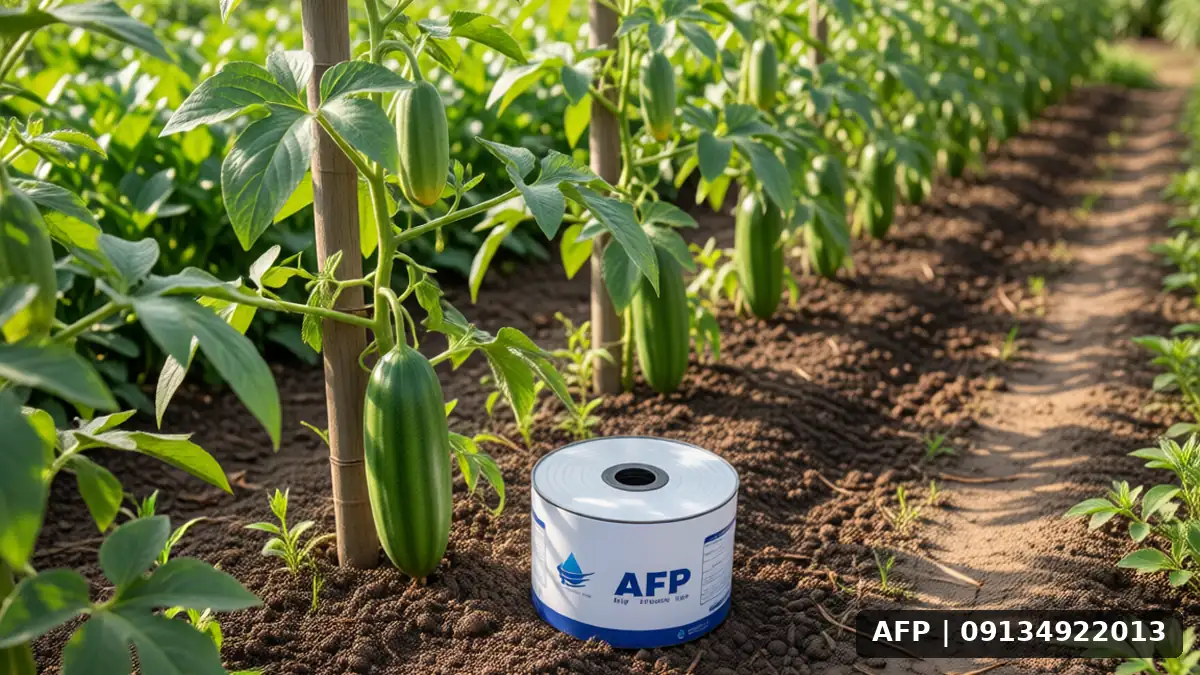
One of the common questions in tape-line irrigated cucumber cultivation is determining the appropriate distance of the tape from the plant. Generally, the tape line should be placed approximately 15 to 20 centimeters from the plant’s main root zone to ensure moisture reaches the root development area directly. In two-plant configurations, the tape line is usually placed in the middle of the row or beside it. If a tape line trench is used, adjusting the proper spacing can eliminate unnecessary overlaps. This aligns with general water coverage principles also discussed in the Sulaimanieh irrigation method guide, although cucumber requires greater precision. Using tape lines with plastic mulching can also help reduce evaporation from the soil surface, an example of which can be seen in The tape line is sewn on the side and with plastic can be examined.
Practical tips for successful smart irrigation implementation
After installing the physical system, daily operations begin. Many farmers use a fixed schedule after installation without considering variable seasonal conditions, which leads to water waste or soil dryness.
Managing irrigation schedules based on season
Cucumber water requirements are highest during the two phases of growth and peak yield. In hot months, evaporation rates increase, and the smart system must respond by increasing irrigation doses. A practical method is using the crop coefficient (Kc) for cucumber, which varies between 1.1 and 1.3 in different seasons. Calculating local ET and multiplying it by Kc determines the required daily water dose. The smart system should perform these calculations automatically. Additionally, it is important to automatically cancel irrigation on cloudy or rainy days to prevent waterlogging of the roots.
Monitoring water quality and filtration
Drip and tape systems have very small openings that are sensitive to suspended pollutants. The use of disc and screen filters with appropriate grading (typically 100 mesh for drip and 80 mesh for tape) is mandatory. Regular filter review and cleaning of sediment clogs increase the useful life of emitters. Neglecting this point is the most common cause of failure in cucumber irrigation systems.
Detecting leaks and pressure issues
In a smart system, abnormal pressure drop can indicate a clog or leak in the laterals. Installing electronic pressure gauges at various points in the network allows the system to identify and alert anomalies. The farmer should inspect the floor of the block during every visit to ensure uniform water delivery efficiency.
Frequently Asked Questions (FAQ)
Is drip tape irrigation suitable for greenhouse cucumbers?
Yes, but with caution. In greenhouses, due to limited space and the need for precise microclimate control, drip systems with lower throw distance are preferred to prevent excessive soil moisture from splashing onto leaves. Drip tape may cause increased surface moisture and raise the risk of fungal diseases. However, if the greenhouse soil is light, drip tape with appropriate spacing can be efficient.
What is the initial cost of smart irrigation, and is it worth it?
Initial costs include sensors, controllers, and solenoid valves. However, in the long term, water savings (up to 30%) and reduced labor (via automation) lead to a return on investment. Cucumber is a crop whose market price depends directly on freshness. Precise irrigation keeps cucumbers from wilting faster, enabling farmers to achieve higher prices.
Which sensor is best for monitoring cucumber soil moisture?
Capacitive or bulk sensors are more common for cucumbers. Bulk (TDR) sensors have higher accuracy and are more sensitive to temperature. For cucumbers, which have a specific root depth, bulk sensors with adjustable depth settings are a better option. Installing sensors at 4 points per block and averaging the data increases confidence in data accuracy.
Can the cucumber irrigation system be combined with automated fertilization?
Yes, this is one of the greatest advantages of smart irrigation. By installing a fertigation (irrigation and fertilization) system on the main line, nutrient mixtures can be injected based on the cucumber growth stage. This reduces weak root feeding and improves nutrient uptake.
Conclusion and Final Recommendations
Adopting a smart approach to cucumber irrigation is an investment that directly impacts profitability and crop sustainability. Combining drip or tape line systems with smart controllers and precise sensors can turn variable climate challenges into an advantage. Farmers should utilize technical knowledge and consult reliable sources. For further reading on optimizing other crops and general cultivation principles, you may look into the article on seed quantity per hectare, although cucumber irrigation topics require extra precision due to specific sensitivities. Ultimately, the key to success is integrating meteorological data, soil moisture, and human management into a single system. With proper implementation of these points, one can expect higher yields and more rational water resource usage.
Related articles: Advantages D988 disadvantages of circular irrigation of agricultural land, Drip irrigation strip Sulaymaniyah, Strawberry Yield per Hectare: Factors and Methods for Increase