Smart Irrigation in Beet Cultivation: Challenges and Practical Solutions
Introduction: The Need for Irrigation Optimization in Beet Cultivation
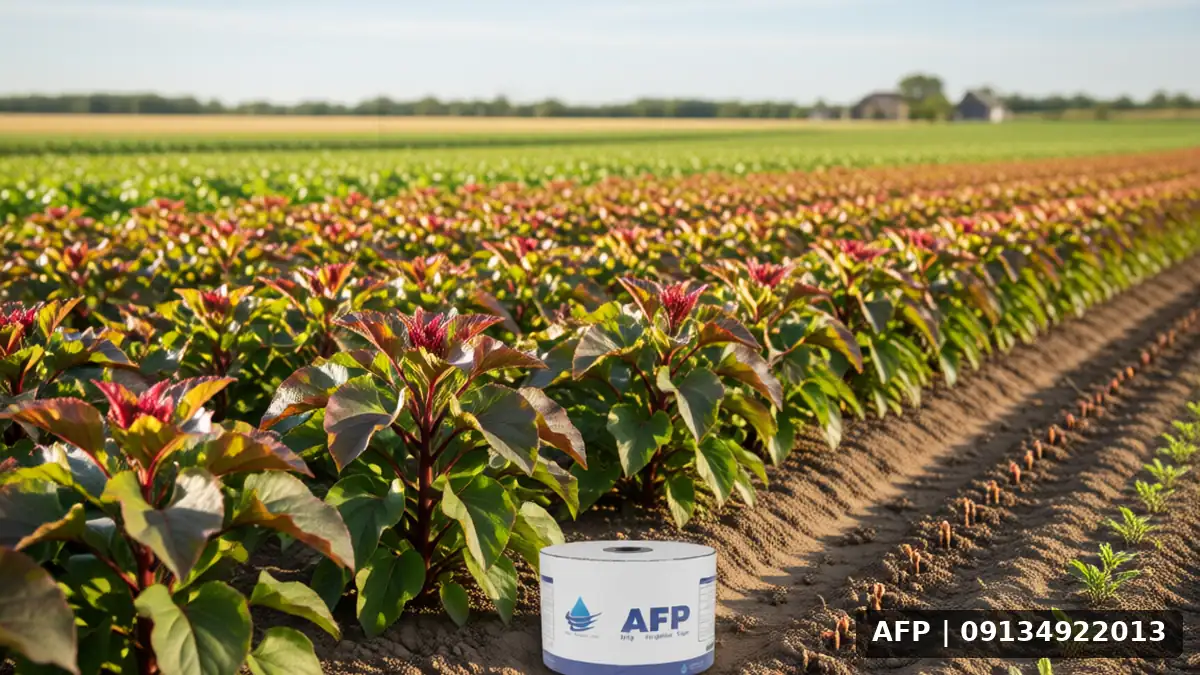
Sugar beet is a valuable industrial and food product whose sustained growth requires precise management of water resources. Under current conditions of water scarcity and rising production costs, utilizing systems smart beet irrigation is no longer a luxury but an economic necessity. These systems use sensors, meteorological data, and advanced algorithms to deliver water to the soil in the exact amount needed by the roots and at the optimal time. However, implementing this technology in beet farms, despite its benefits, comes with specific challenges that, if ignored, can lead to reduced efficiency or equipment failure. This article focuses on drip and line tape methods to provide an in-depth analysis of these challenges.
Technical Challenges in Implementing Smart Irrigation Systems
Sensitivity to water salinity and clogging of emitters
One of the major technical challenges in beet irrigation is water quality. Many water sources in agricultural regions have relatively high salinity levels (EC). In drip and line tape systems, suspended solids and salts in the water can cause sedimentation in emitters and tapes. This phenomenon not only reduces the uniformity of irrigation but also stresses the soil structure around the roots. In smart systems, if pressure or flow rate sensors malfunction due to partial clogging, the controller algorithm may calculate an incorrect amount of water. Therefore, multi-stage filtration (disc and screen) and continuous monitoring of emitter flow rates are key operational challenges.
In addition to salinity, organic matter and algae can also clog drip tape emitters. Wastewater management and the use of chemical cleaners in smart irrigation cycles require precise planning. A common error in automated systems is setting flush intervals identical to regular irrigation intervals; this can cause sediment to accumulate in the system before reaching critical levels. To learn more about drip tape installation and maintenance principles, you can refer to the Drip Tape Emitters Placement Guide which provides detailed technical specifications.
Mismatch between control algorithms and sugar beet physiology
Smart systems usually operate based on crop evapotranspiration (ET) equations. However, sugar beet is a fast-growing crop with high water consumption during its peak growth stage. If the algorithmic model cannot accurately predict early root growth rates and sugar accumulation, the crop may experience water deficit in the early stages and waterlogging in the late stages. The challenge here is the correct calibration of crop coefficients. Sugar beet plants are sensitive to sudden changes in soil moisture; therefore, smart systems should not apply sharp changes in flow rate but should instead manage a stepped irrigation profile. Additionally, non-uniform seedling density across the field can prevent a centralized algorithm from meeting local water requirements.
Management and economic challenges
Infrastructure and maintenance costs
Implementing smart irrigation requires an initial investment in hardware (variable-speed pumps, valves, sensors, and servers). For small to medium-sized beet farms, these costs can be a major barrier. In addition to the initial cost, maintenance and spare parts expenses must also be considered. Many farmers, after installation, turn off the system and revert to manual methods due to a lack of familiarity with software traps or minor sensor failures. This fluctuation in irrigation management effectively nullifies all the benefits of optimization.
Lack of technical knowledge and specialized personnel
One hidden challenge in beet cultivation using smart systems is the knowledge gap between the farmer and the technology. Interpreting dashboard data and making decisions based on system alerts requires numerical and analytical skills. If the farmer cannot distinguish between a sensor error alert and an actual water deficit, they may take incorrect actions. Continuous training and strong technical support, which are part of project management challenges, are often overlooked. To better understand the economic challenges in other crops, you can review how The amount of spinach seed per hectare affects yield, as similar principles exist in managing spring costs for various crops.
Practical tips for overcoming challenges
Combining drip systems and optimal drip lines
Instead of relying entirely on a single system, combined or tiered usage can reduce technical challenges. For example, use drip lines with closer spacing during the seeding stage, and switch to drip systems with higher flow rates during the active growth stage. This switching must be managed by the smart system. Using drip lines with appropriate internal diameters, such as 2 inches, can help achieve more uniform water distribution. To select the appropriate size, knowing the Guide for 2-inch Drip Tape Irrigation It is beneficial. This point is particularly important in beet fields with high planting density.
Software Settings for Beets
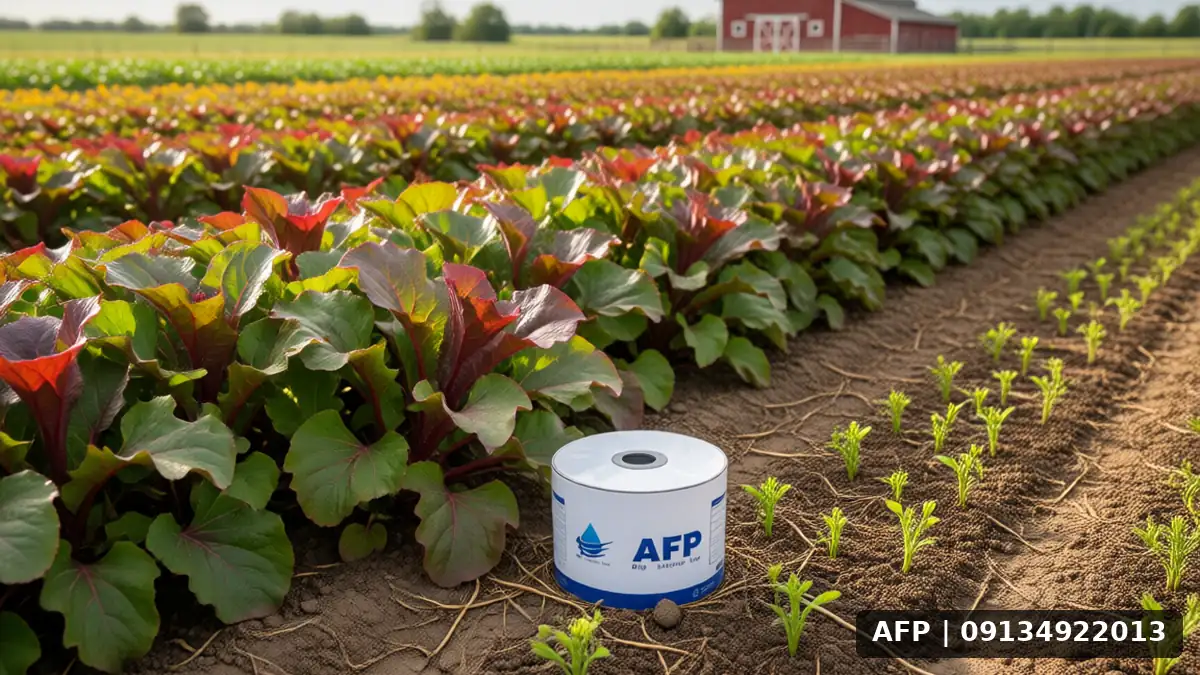
Deploying default settings for smart systems without review is incorrect. The crop coefficient for beets (Kc) must be defined in the system based on the growth stage. Additionally, the software should restrict the maximum operating pressure of pumps to prevent damage to drip tapes. Using scheduled irrigation profiles instead of continuous irrigation reduces energy consumption and prevents frozen deposits in the emitters. A key point is to include decision-making logic based on soil moisture from subsurface sensors, rather than relying solely on meteorological data, because clay soils for beets behave differently from sandy soils.
If your farm includes other crops as well, data integration can lead to better resource management. Read the article Benefits of Drip Tape Due to Two Lines It can broaden your perspective on the flexibility of drip tape systems. This flexibility is also key in managing the challenges of climate change.
Answers to Frequently Asked Questions (FAQ)
Is smart irrigation cost-effective for small sugar beet farms?
In some cases, yes. If the farm is less than 5 hectares, using complete IoT systems with a central server may be expensive. However, utilizing lightweight cloud systems with simpler controllers and soil moisture sensors can provide a good return on investment. Additionally, if low-salinity drinking water is available, the primary concern regarding filtration is reduced.
What is the best time to irrigate sugar beets with a smart system?
Smart systems make decisions based on plant needs and soil conditions, but from a practical standpoint, irrigation in early morning or evening hours is recommended to reduce evaporation and minimize stress on the pump system. However, the algorithm should allow for irrigation during the day if soil moisture drops, to prevent root drying.
How can I prevent drip line breakage in a smart system?
By using online pressure monitoring systems that track pressure fluctuations along the line, you can identify blockages where pressure drops. Additionally, scheduling stronger acidic flushes and regular reverse flushing is key. For a better understanding of drip line management in other crops, article Tuber seed rate per hectare It is also agronomically comparable; although the crop differs, the principles of crop load management remain similar.
Conclusion
Implementation Smart Beetroot Irrigation It is not a linear path but a dynamic process accompanied by technical, economic, and managerial challenges. Accurate understanding of these challenges—such as sensitivity to water salinity, algorithm mismatches, and lack of technical knowledge—enables the design of more practical solutions. The correct combination of drip and furrow systems, precise software settings, and preventive maintenance are the keys to success. Investment in this technology not only reduces water costs but also guarantees long-term beetroot yield and quality.