Rotational Irrigation in Dill Cultivation: Comprehensive Guide to Cost Reduction and Water Management
Introduction to the Importance of Rotational Irrigation in Chive Farms
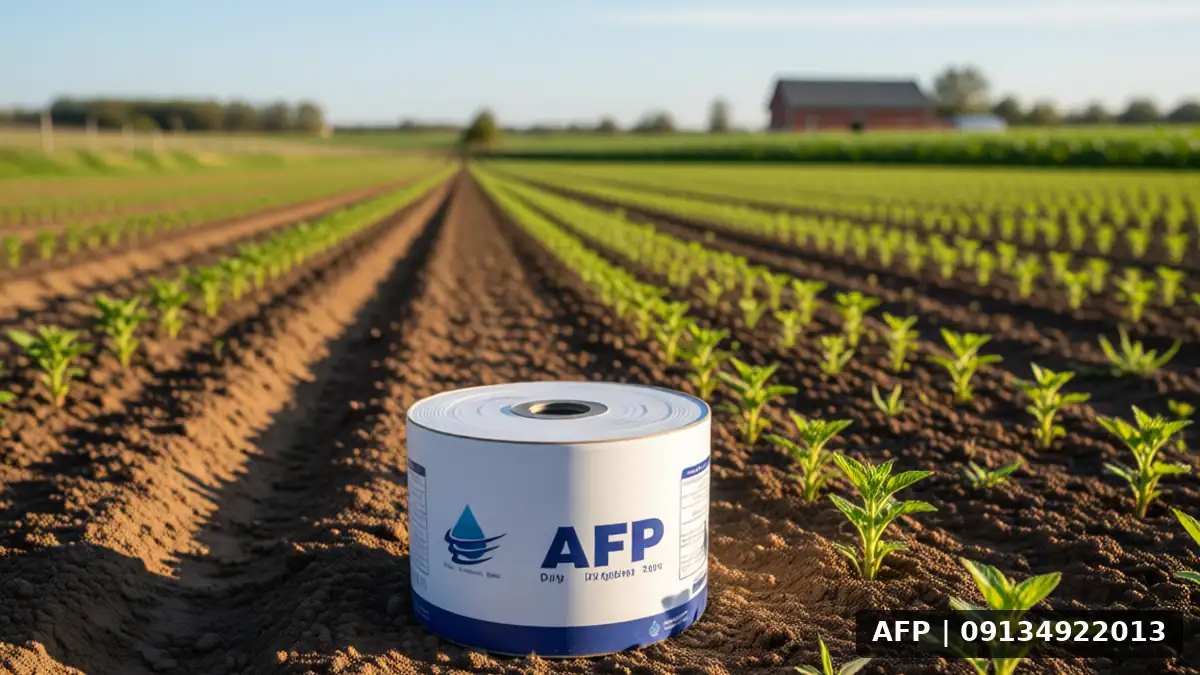
Chive cultivation, as a high-value crop with high moisture sensitivity, requires precise water resource management. Under current conditions, where water scarcity and rising energy costs are major agricultural challenges, implementing rotational irrigation is recognized as one of the most efficient engineering irrigation methods. Instead of irrigating the entire farm area simultaneously, this method divides the farm into independent sections (zoning) and irrigates only one section per cycle. This innovative approach not only significantly reduces peak water and electricity consumption but also extends equipment lifespan by providing pump systems with rest periods. This section examines the technical details of designing and executing such systems, focusing on drip and micro-sprinkler technologies, enabling farmers to achieve maximum efficiency at the lowest cost.
Technical and Engineering Principles in Designing Rotational Systems
For the successful implementation of a rotating irrigation system, understanding hydraulic and pressure principles is critical. The primary goal is to equalize pressure across all field zones, accounting for site topography. Because rotating systems deliver water to only one section at a time within a specific cycle, smaller-diameter pipes and lower-capacity pumps can be utilized, leading to significant long-term capital savings. Continuous pressure monitoring is essential to prevent damage to sensitive root systems; improper pressure causes uneven water distribution, ultimately reducing crop uniformity. Therefore, precise calibration of pressure regulators and pumps based on local field elevation is the first step in successful design. For accurate execution, farmers should use specialized resources such as pressure measurement guidelines for drip tapes to ensure measurement accuracy. Regular monitoring of pressure in different field zones ensures that water flow is evenly distributed along the root zone and prevents energy waste. Using precise, calibrated pressure gauges, particularly at the ends of mainlines, helps farmers identify low-pressure points and achieve system balance by adjusting control valves. This technical precision is especially critical in intensive farms, where fine root systems mean that even minor pressure fluctuations can cause temporary water stress and reduce crop quality. Consequently, training farm operators to correctly read pressure indicators and apply necessary adjustments is an integral part of operating these systems.
The decisive role of drip tape in optimizing water consumption
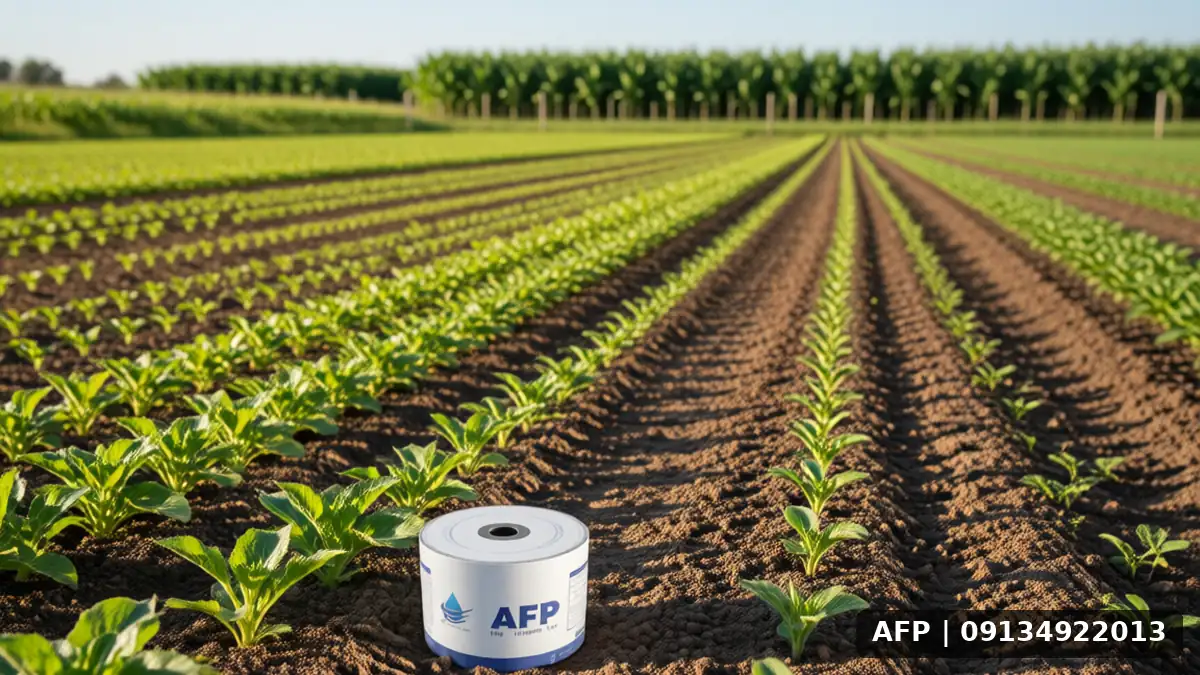
The use of drip tape in chard fields is considered an ideal option due to its ability to distribute water uniformly and concentratedly in the root zone. In a rotational layout, drip tapes are installed and configured so that only the active section is affected in each cycle. This ensures that the energy required for pumping is limited to a specific section rather than the entire field. In addition to reducing initial costs, maintaining drip tape systems is simpler when basic filtration principles are followed. Dual filtration, meaning one stage before water enters the system and another before it enters the tapes, must be flushed periodically to remove sediments and suspended particles. Clogging of emitter holes is one of the most common problems, leading to reduced irrigation uniformity and the formation of dry zones in fields. To ensure maximum efficiency and extend the lifespan of this equipment, it is recommended to review technical articles on how to enhance drip tape performance and efficiency. Adhering to regular washing and cleaning principles for the tapes prevents emitter clogging and guarantees uniform system operation. Furthermore, selecting the appropriate tape wall thickness based on working pressure and expected lifespan is a sensitive process that must be adjusted according to local field conditions. Tapes with thinner walls may be quickly damaged under high pressure, whereas thicker tapes have higher costs but offer greater durability against environmental factors such as ultraviolet radiation and chemical corrosion.
Management of scheduling, water requirements, and infiltration rate
One of the most critical topics in rotational irrigation is determining optimal irrigation timing based on the physiological water requirements of the crop and soil conditions. As a crop with a relatively shallow root system, canola is sensitive to moisture fluctuations. By dividing fields into plots and rotating irrigation, farmers can improve scheduling precision. For example, in fine-textured soils, the irrigation duration for each section must be longer to ensure water reaches an adequate depth, whereas in light soils, the duration is shorter. Accurate calculation of soil hydraulic conductivity and basal infiltration rate prior to the start of the growing season is a fundamental prerequisite. These parameters determine the time required for roots to access water and the additional time needed to prevent deep percolation losses or low efficiency. Similar patterns can also be found in water requirement tables for other crops. As an example, the reference study Canola seed rate per hectare: Comprehensive guide + influencing factors can provide insight into how environmental variables affect water requirements and the management of agricultural crops. Canola, like the preceding crop, requires logical moisture levels during sensitive growth stages and exhibits similar patterns in resource management. The overlap of certain biological variables in these crops suggests shared strategies for resource management. Therefore, a deep understanding of plant biology and its interaction with the surrounding environment is the key to success in rotational irrigation.
Economic analysis and operational costs
A review of cost trends shows that while the initial installation cost of tape and drip lines may be higher than conventional methods, the long-term return on investment is unparalleled. Reducing the use of high-power pumps and utilizing smaller, high-efficiency pumps significantly lowers electricity costs. Additionally, water resource conservation reduces the cost of purchasing water in areas reliant on surface water sources. Furthermore, reduced water usage translates to lower treatment and pumping costs in closed-loop systems. For a more accurate estimation of replacement costs in case of failure, pricing guides for similar products can be used. For example, familiarity with 20cm tip tape iran price guide helps farmers better predict future maintenance and repair costs. This economic transparency facilitates decisions to upgrade older systems to rotating models. The calculation of the return on investment (ROI) rate must include hidden costs such as equipment depreciation and opportunity costs incurred due to system failures. By considering all economic variables, it becomes evident that rotating irrigation via tape lines, despite higher initial costs, becomes significantly more profitable than conventional methods within a 3 to 5-year timeframe due to reduced energy consumption and increased yield.
Execution tips for refurbishing old systems
Repairing and optimizing existing systems to convert them into cyclic operations requires reviewing the piping network and installing shut-off valves. These valves must allow for the complete isolation of water in each section to enable immediate rotation. Additionally, cleaning filters before each cycle is essential to prevent clogging of tape lines. In some farms, using mulch systems or coarse particles to promote root growth can have beneficial effects on yield alongside precision irrigation. These particles can improve soil structure and increase permeability. Furthermore, installing soil moisture sensors at various depths enables real-time monitoring of root zone water status, allowing farmers to adjust irrigation timing more accurately. Automating the irrigation process using timers and smart controllers reduces human error and ensures each section is irrigated at the scheduled time. This level of automation, particularly in large farms, increases labor efficiency and guarantees system sustainability.
Frequently Asked Questions about cyclic irrigation
Is this method applicable to all soil types?
Yes, but settings must be adjusted according to the soil type. In heavy soils, longer timing for each zone is recommended to ensure roots are fully saturated. In light soils, shorter durations and more frequent irrigation cycles are recommended to prevent extreme moisture fluctuations.
What is the difference between tape and drip irrigation?
Tape lines have a linear distribution and are highly suitable for high-density rows. Drip lines operate with precise control at specific points and are suited for more complex configurations. The choice between these two depends on row spacing and planting density.
How can we optimize energy costs?
By reducing peak pressure and flow volume, lower-consumption pumps can be utilized. Calculations must be performed for each zone. Additionally, using high-efficiency pumps and precisely adjusting operating pressure can significantly reduce electricity consumption.
Summary and Final Recommendations
Implementing rotational irrigation in farms is an advanced strategy for achieving sustainability in resource management. This method, by establishing order in scheduling and reducing stress on mechanical infrastructure, leads to a significant decrease in operational costs. Farmers are advised to consult irrigation engineering specialists during the initial design phase and to leverage accurate local data, such as climatic and soil science data. By integrating various agricultural and field knowledge, such as reviewing seed guides for other crops like alfalfa seed rate per hectare guide and other texts, better resource management models can be formulated, ultimately ensuring long-term economic and environmental efficiency. Implementing this model requires effort and continuous monitoring, but the reward is higher-quality produce at lower costs. Farmers are recommended to establish a technical file for their irrigation system, including network maps, pump specifications, shutoff valves, filter cleaning schedules, and soil moisture monitoring results. This file will serve as documentation that allows future generations to further optimize the system. As a preliminary study for operational planning, referring to canola yield per hectare guide iraqi farmers can provide a general perspective on the operational potential of similar plants under comparable geographical conditions, paving the way for operational comparisons.
Related topics: canola yield per hectare guide iraqi farmers