Rotational Irrigation in Cotton Cultivation: Advantages and Key Considerations
Introduction: The Necessity of Smart Water Management in Cotton Cultivation
As a strategic and commercial crop, cotton has high water consumption, which places significant stress on water resources in arid and semi-arid regions. In this context, modern irrigation methods such as drip and tip line have become suitable alternatives to traditional spray irrigation. However, even with these technologies, the precise management of timing and water volume remains the primary challenge. One of the most effective solutions that has attracted the attention of farmers and agricultural engineers in recent years is rotational irrigation . This method performs irrigation in specific, rotating time intervals instead of applying repeated full-volume irrigation to all slopes, thereby more accurately meeting the plant’s root zone water demand and preventing water waste.
What is rotational irrigation and how does it work?
Rotational Irrigation is a method in which the field is divided into small sections or slopes, and the irrigation system activates these sections sequentially. In cotton cultivation, which is typically planted in rows, this method can be implemented in two main ways: rotating irrigation across different rows in each cycle, or rotating across geographical zones of the farm. The primary objective is to ensure uniform moisture distribution in the root zone. When using a drip system, valves for specific rows or zones are opened to initiate irrigation. In the next cycle, another row or zone is irrigated. This rotation ensures that plants have uniform water access throughout the entire growth period, reducing water stress.
Difference between rotational irrigation and repetitive irrigation
In repetitive irrigation, one planting row may remain constantly under the influence of the irrigation system while others are irrigated less frequently, or conversely, all rows may be irrigated simultaneously, which can lead to soil saturation. Rotational irrigation creates temporal diversity, preventing salt accumulation in deep soil layers at specific points and promoting uniform salt leaching, a critical factor for salt-sensitive cotton.
Key benefits of rotational irrigation in cotton farming
Using this method alongside drip and tape systems offers significant benefits for the farmer:
- Increased water use efficiency: By reducing losses from evaporation and excessive deep percolation, water savings of up to 30% have been reported.
- More uniform root-zone moisture: Cotton is sensitive to uniform moisture; severe fluctuations can cause boll shattering and reduce fiber quality.
- Better weed control: In certain rotation models, controlled temperature and moisture reduce weed growth in un-irrigated paths.
- Reduced physiological stress on plants: Cotton under water stress reduces fiber production. Precise and regular irrigation maintains optimal photosynthetic efficiency.
- Potential for optimized fertilizer use: Rotational irrigation enables uniform leaching of fine food particles in solution.
To better understand how environmental factors affect cotton water consumption, study the article Sugar beet performance per hectare and influencing factors Can facilitate mutual understanding of water consumption in cereal crops.
Impact on cotton fiber quality
One of the most significant advantages of rotational irrigation in cotton directly impacts fiber quality. Cotton fibers grow under the influence of moisture, temperature, and plant nutrition. Water deficits during critical periods can lead to shorter fibers and reduced strength. Precise and rotational irrigation maintains more stable moisture in the root zone, resulting in the production of longer and more uniform fibers. This characteristic increases the commercial value of cotton and reduces processing costs.
Practical considerations for implementing rotational cotton irrigation
To benefit from the theoretical advantages of this method, correct implementation is of vital importance. Keep the following points in mind:
- Adjusting rotations based on soil type: For clay soils with low permeability, irrigation cycles should be shorter with lower flow rates to prevent surface saturation. For sandy soils, longer cycles can be used.
- Precise irrigation timing: The optimal time for rotational irrigation in cotton is when the plant is under moisture stress. Using soil sensors or miniature soil water potential scales can improve the accuracy of your decisions.
- Using smart or pulse valves: For automated implementation, use pulse valves or controllable timers to ensure rotations occur exactly at the scheduled times.
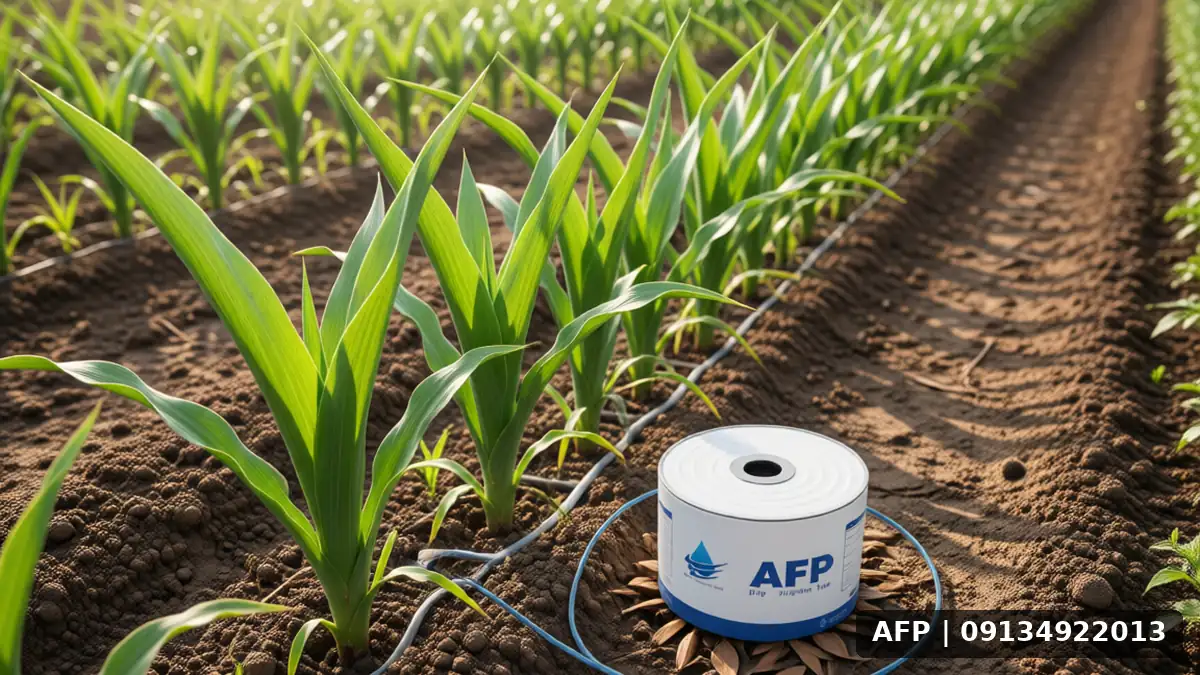
- Monitoring drip lines for clogs: Drip tape is more sensitive to clogging than conventional drip lines. Proper source water filtration (typically sand and disc filters) is essential for these systems.
- Water pressure management on slopes: If your field is sloped, water pressure will be higher at the end of the row line than at the beginning. Use pressure regulators or fittings with higher pressure drop in long lines to maintain irrigation uniformity.
For further guidance on the correct installation of pressurized systems and their components, you can refer to the guide for How to install drip tape irrigation pipes . Familiarity with basic installation principles prevents potential breakdowns.
Pre-irrigation checklist
- Are the filters clean and is the pressure adequate?
- Are the slopes and furrows graded and irrigated uniformly?
- Is the rotation timing synchronized with the crop growth stage?
- Is the water consumption data reserved for calculating subsequent quantities available?
Frequently Asked Questions About Cotton Irrigation
Is rotational irrigation only suitable for drip systems?
No, but it is most effective in drip and tape systems, as these operate locally and allow for precise control of timing and volume. In sprinkler irrigation, achieving uniform distribution within a single time unit is more difficult, making the concept of rotation less relevant.
How many rotational cycles per week are appropriate?
This depends on tank capacity, valve flow rates, and crop water requirements. As a baseline rule, a minimum of two rotational cycles per week is recommended during the vegetative stage. During more sensitive stages (bolling and maturation), more frequent cycles with shorter durations may be required.
What is the impact of rotational irrigation on weed growth?
Uniform moisture coverage creates favorable conditions for weed establishment. However, if the weed management system (dynamic cover or use of herbicides) is optimized, rotational irrigation can help control weed growth to some extent by reducing surface saturation. This depends on overall farm management.
Conclusion: Investing in quality and quantity
Rotational irrigation in cotton cultivation is a management-focused approach that combines modern irrigation technologies with agronomic knowledge. Its benefits extend beyond water savings to include improved fiber quality, reduced energy costs, and increased final farm yield. For success, attention to operational details such as soil type, farm slope, plant growth stage, and filtration system is critical. It is recommended to consult additional information on Amount of lupin per hectare or Key considerations before installing type irrigation pipe Also consult the following. This combined approach equips the farmer for a more sustainable and profitable future.