Tip Line Spacing in Rosemary Planting: Recommended Standards and Operational Principles
Introduction: The Importance of Optimizing Layout in Rosemary Cultivation
Rosemary is one of the medicinal plants with high demand in domestic and international markets, where its final quality depends on the depth and width of rooting. Determining Drip Tape Spacing in Rosemary Cultivation is one of the most important technical topics in drip irrigation management. Selecting an appropriate spacing not only helps stabilize the roots better but also prevents root rot under high-moisture field conditions. In this section, familiarizing yourself with how to select the appropriate drip irrigation tape can provide the farmer with a broader perspective on the various types of tapes and their technical characteristics.
Standard Row Spacing and Tape Placement
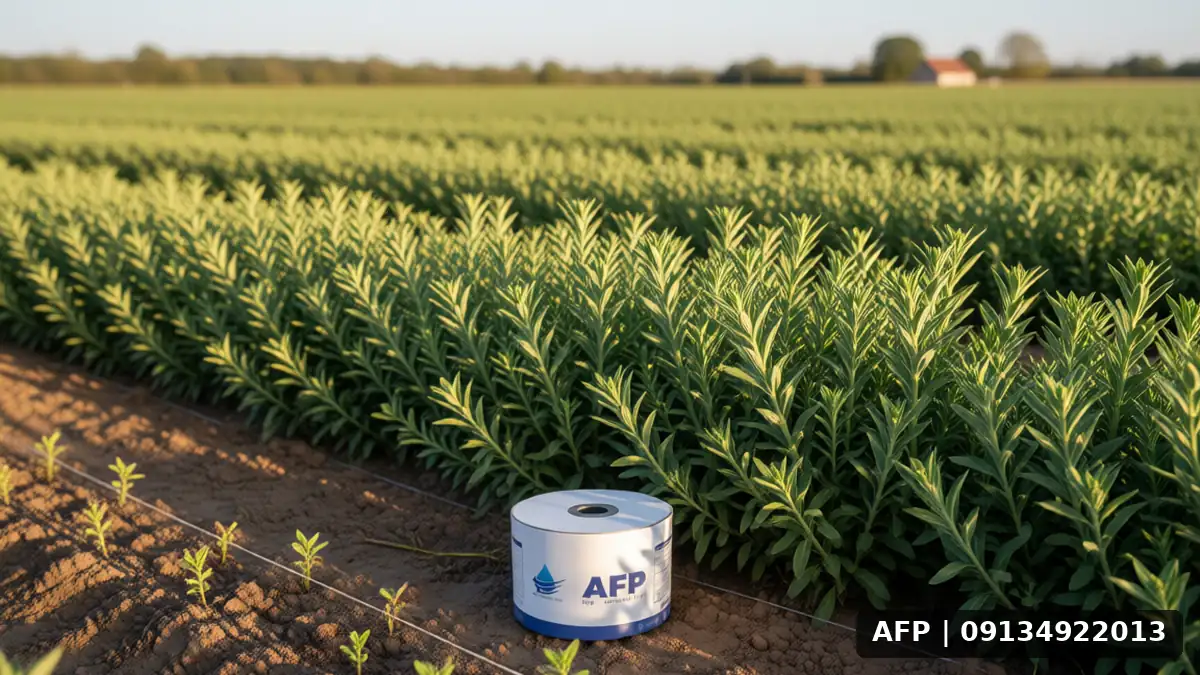
For rosemary cultivation, row layout spacing is typically 100 to 120 centimeters. The drip tape spacing from the center of the row must be such that the wetted zone provides complete root coverage. Since rosemary is sensitive to surface roots up to half a meter in depth, it is recommended that the tape be placed approximately 15 to 20 centimeters from the plant stem (crown). This distance prevents direct wetting of the plant’s base while providing the necessary moisture to the roots. In cases where larger crowns are used for planting, this distance can be increased to 25 centimeters to prevent compressive stress on new roots. Furthermore, placing the drip tape in accordance with the principles of selecting appropriate drip irrigation tape is doubly important, as the type of tape directly affects water pressure distribution and flow.
Impact of Climate on Drip Tape Spacing
In hot and dry regions with high evaporation rates, the tape may need to be placed slightly closer to the plant to establish the wetted zone faster and prevent root drying. Conversely, in cold and humid regions where there is a risk of fungal root diseases, a spacing of 20 to 25 centimeters helps prevent direct water discharge from the tape and prolonged root wetness. Familiarity with the principles of Furrow or Trench Irrigation can also be beneficial under specific soil conditions; however, for rosemary, the drip tape system is the primary option due to its high controllability. Combining classical furrow irrigation knowledge with modern drip tape systems can help farmers better understand their field soil behavior and hydraulics, enabling better decisions regarding system pressure and flow rate adjustments.
Selecting the Type of Drip Tape Based on Rosemary Root Depth
For rosemary, drip tapes with a lower emitter discharge rate (e.g., 1 or 1.5 liters per hour) are used. This ensures that moisture spreads slowly at an appropriate depth and that the soil surface around the plant remains moist. Correct tape selection begins with an understanding of Drip Tape System Components If you use smaller diameter drip tapes (e.g., 1/6 inch), spacing must be more precise to prevent pressure drop along the hose from causing unevenness in the wetted zone. It is recommended to perform pressure and flow tests on a sample row before planting operations to ensure the integrity of the wetted zone. Understanding the structure of system components, from the pump to the filter and output emitters, is the key to designing an efficient and sustainable irrigation network.
Key Points in Row Layout
- Spacing between rows: 100 to 120 centimeters.
- Tape spacing from plant crown: 15 to 20 centimeters under normal conditions.
- In double-sided drip tape cultivation: 25 cm spacing on each side of the plant crown.
- Note: In fields with steep slopes, position the mainline on the lower downhill side to reduce hydraulic pressure.
In addition, review Fava bean yield per hectare + influencing factors and methods for increase This can serve as a model for the importance of precise root management in medicinal plants and legumes. Although rosemary has different products from fava beans, management principles such as identifying root weaknesses and optimizing resources have similar applications in both cases. These analytical methods help farmers reduce production risks and increase farm efficiency.
Practical tips and moisture zone management
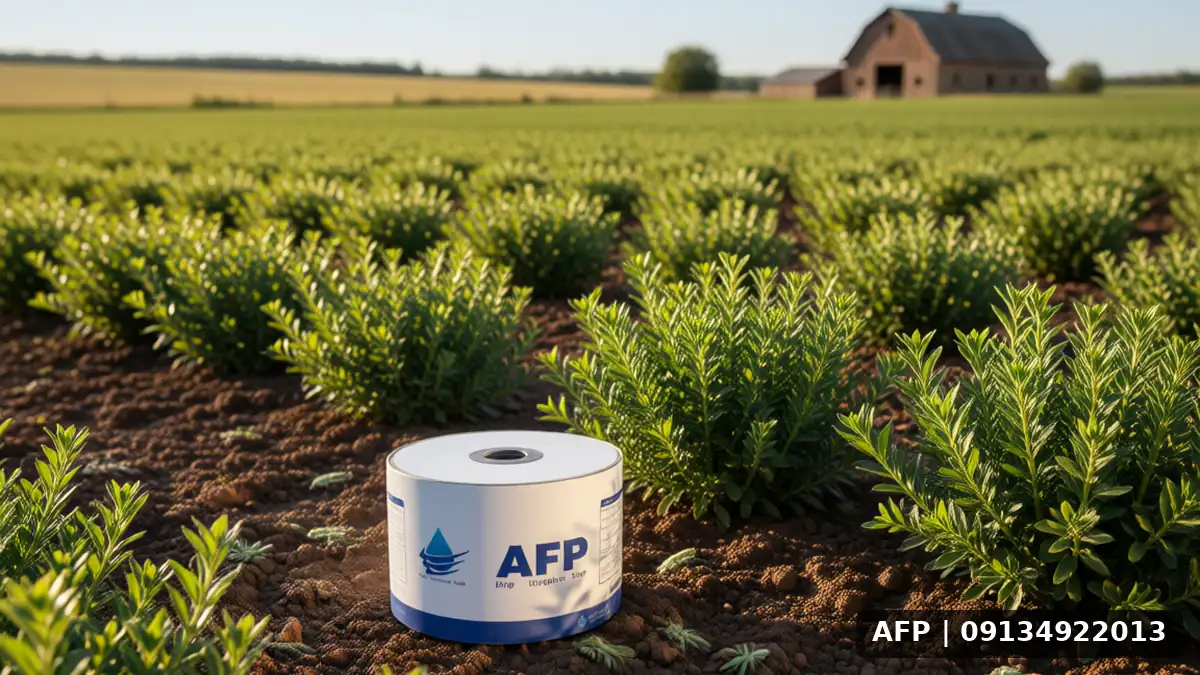
The most important factor in successful rosemary cultivation is the uniformity of the moisture zone. If the drip tape spacing is inappropriate, two main problems will occur: root dryness near the crown or waterlogging of the roots. To monitor this condition, methods such as kubah or pulsing can be used. Additionally, understanding rooting patterns in other medicinal plants, including studies like onion yield increase per hectare, can provide a deeper understanding of crop sensitivity to irrigation. For rosemary, it is recommended to plant in an east-west direction so that the sun passes through the moisture zone and liquid vapor evaporates uniformly. This layout reduces water stress during hot hours.
Water and cost optimization
Using correct spacing directly helps reduce water and pump energy costs. Comparison with other crops shows that moisture zone management in water-sensitive crops makes a significant difference in the final outcome. Rosemary requires less water compared to container-grown products but needs precise control. Given the rising prices of raw materials, farms can, by using resources Calculating water consumption per hectare For similar plants, have a more accurate estimate of your farm’s needs. Also, knowing that the amount of drip tape required for one hectare helps greatly with budget planning and equipment purchases.

Frequently Asked Questions (FAQ)
- Can two drip tapes be used in one row of rosemary?
Yes, if the plants are strong and mature, using two tapes spaced 25 cm from the crown can increase growth. This method is recommended in areas with severe water shortages. - What is the optimal time for installing drip tape lines in rosemary cultivation?
The best time is before sowing or transplanting operations. If rosemary is planted using seedlings, place the drip tape in a furrow at a distance of 15 to 20 centimeters from the seedling planting spot. - Does the spacing of the drip tape line in rosemary depend on the bed?
When using wide beds (e.g., 80 centimeters), the drip tape should be placed closer to the center of the bed to ensure moisture is distributed across the entire bed width. - Does the drip tape spacing for rosemary differ from that of celery cultivation?
Yes, celery requires deeper root zones and higher moisture levels. Reviewing drip tape setups for celery shows that different spacings and flow rates are used. Therefore, each crop has a specific pattern.
Summary
Discovering Drip tape spacing in rosemary cultivation is appropriate, combining knowledge of root depth, soil type, and climatic conditions. The golden standard is a spacing of 15 to 20 centimeters from the plant crown in rows spaced 100 to 120 centimeters apart. Adhering to these distances improves plant quality and prevents unnecessary water and energy costs. Given the rising prices of raw materials, farms can obtain a more accurate estimate of their farm needs by using water consumption calculation resources per hectare. Ultimately, regular monitoring and maintenance of filtration systems and pumps guarantee the continued operation of the drip tape and the preservation of healthy rosemary roots. Following these principles is a direct investment in economic yield and final product quality.