Rainwater Irrigation in Full Canopy Crops: Essential Prerequisites for Success
Introduction: Why Are Prerequisites Critical for Irrigating Kiwifruit?
Kiwifruit, or grape fruit, is one of the most popular orchard crops in temperate and semi-hot climates whose root system depends heavily on soil moisture conditions. Unlike some other vegetables, kiwifruit does not tolerate severe water fluctuations; water deficit causes leaf wilting, fruit cracking, and a significant drop in market quality, while excess water leads to root rot, root grip, and the spread of deadly fungal diseases. Rainfed irrigation, specifically the use of Drip Tape, is one of the most efficient methods for providing continuous and uniform moisture to this sensitive plant. However, its long-term economic success strictly requires adherence to scientific technical, agronomic, and hydraulic prerequisites. Many farmers install the system at the start of the field without considering these prerequisites and unfortunately face issues such as irrigation non-uniformity, rapid clogging of emitters, and yield reduction. In this comprehensive article, based on principles of hydraulics, climatology, and modern agriculture, we detail the key actions that must be carefully performed before final planting and establishing the irrigation system to prevent waste of water resources, increased energy costs, and reduced crop yield. Our goal is to provide you with a complete roadmap for how to have a sustainable and optimized system from day one.
<>
Water Requirement Analysis and Soil Management: The First Step to Success
Before undertaking any technical measures, precise soil knowledge and laboratory testing are the first and most important prerequisites. Many farms operate intuitively, but for cape gooseberry (camelina) which has a shallow root system, this approach is risky. Cape gooseberry in clay soils with low porosity has lower permeability and requires frequent but smaller irrigation volumes to prevent root saturation. Conversely, in sandy soils with high permeability, water moves deeper quickly; therefore, distributed irrigation with shorter intervals and higher water volumes is necessary. Conducting soil tests to determine texture, acidity (pH), and initial EC (Electrical Conductivity) will help you adjust drip tape spacing. For example, in sandy soils, closer spacing of drippers on the tape can help improve root zone coverage. Use of Chili pepper irrigation guide with drip tape can be a good model, as chili pepper and cape gooseberry have relatively similar water requirements and root sensitivities. Additionally, you must ensure that before planting, soil biotic contaminants (such as nematodes, root-knot nematodes, and root rots) are controlled with the application of soil amendments and antimicrobial agents, because weak and diseased roots do not respond well to surface irrigation and result in crop loss.
Selection and preparation of drip tape
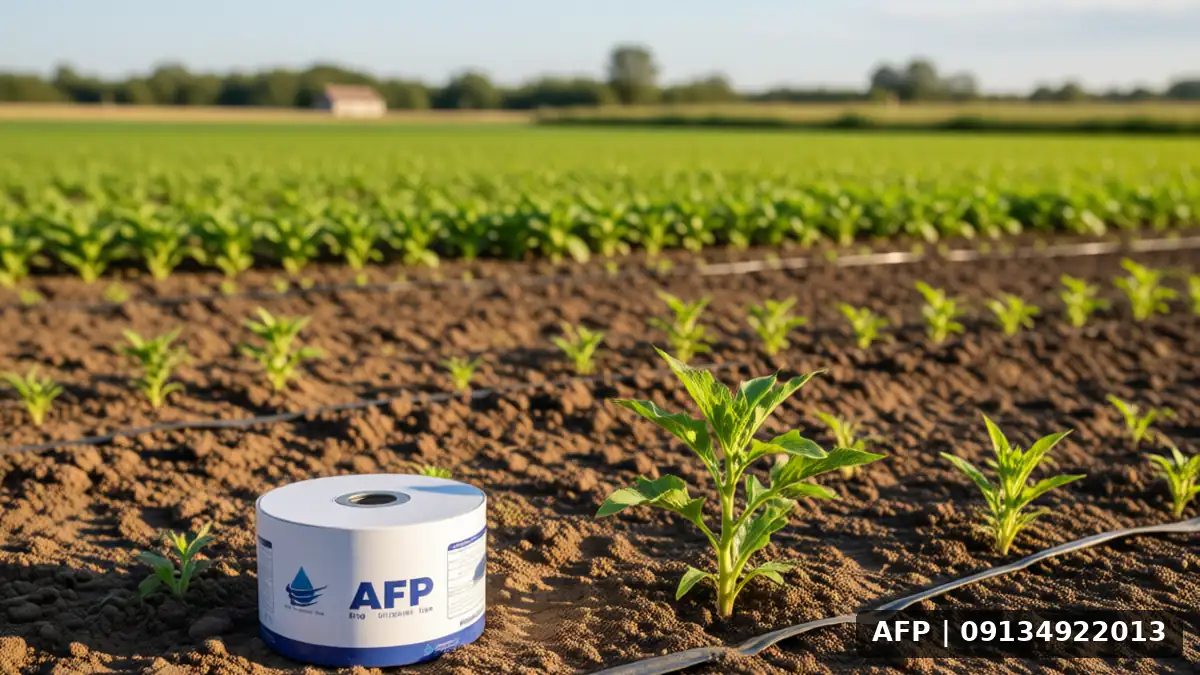
One of the most critical technical prerequisites is selecting the correct drip tape type, which directly impacts final costs and system durability. Tubes differ significantly in wall thickness, emitter diameter, and connection type (stitch-seam or plate). For full-plot cucumbers, typically grown at medium to high density, it is recommended to use tapes with an emitter diameter of 1 to 1.2 millimeters and a spacing of 10 to 15 centimeters to ensure uniform moisture distribution across the root zone. To better understand these technical differences and select the optimal option, we recommend reading the article Differences between poly, stitched, and plate drip tapes carefully. Stitched tape is generally more suitable for stable conditions and reducing long-term replacement costs, whereas poly tape offers greater flexibility for crop and rotation changes under high pressure. Before laying the tapes in the field, water outlets must be cleaned through a primary filter to prevent initial clogging, which is common in the first few weeks. Additionally, ensure that the tapes are not exposed to direct sunlight to prevent degradation of the polymer conversion factor.
<>
Practical tips for planting and tape layout
- Planting depth and furrow: Drip tapes must be placed in the planting furrow or at a depth of 3 to 5 centimeters below the soil surface to ensure water reaches the seed or seedling root zone directly while minimizing surface evaporation. This depth also encourages roots to grow downward to access water, resulting in a stronger root system.
- Spacing between tubes: Adjust pipe spacing based on soil type and infiltration depth. In clay soils with higher lateral water spread, wider spacing (60-80 cm) is acceptable, but in sandy soils, closer spacing (40-50 cm) is recommended to prevent interline dryness.
- Fittings and hoses: Use high-quality, UV-resistant metal or plastic fittings. Leakage at connections is one of the most common issues during the first months of cropping, leading to uneven soil moisture and dry zones in the field. Ensuring connection tightness with standard clamps is critical.
- Water source filtration: A primary and critical requirement of an irrigation system is having an appropriate filter. For Cucurbitaceae crops, suitable mesh or disc filters are essential to prevent suspended solids from clogging the drip tape lines. As mentioned in Key points when using drip pipes for irrigation filter cleaning and inspection must be performed weekly. This mandatory prerequisite, if ignored, will result in a complete cessation of irrigation in parts of the field.
Pressure and pump management: matching crop requirements
The water pressure in a Capilina drip irrigation system must be precisely calibrated to the pipe type and line length. High pressure causes pipe bursts, uneven water distribution, and rapid emitter wear, while low pressure results in insufficient water delivery and plant stress at the end of lines. The typical operating pressure for Capilina tape is 1 to 2 bar. Before the start of the irrigation season, test the system to check for pressure drop along the line and adjust the pump and valves if necessary. Irrigation scheduling is also a critical management prerequisite; irrigating during the hot hours of the day causes excessive evaporation and heat stress for the plant. The optimal time is before sunrise or after sunset to allow moisture time to absorb. For comparison with other similar crops using drip tape, the article Seed quantity and planting and irrigation guide for peppers can also serve as a useful guide for coordinating operations and understanding the root behavior of plants in the Solanaceae family.
<>
Frequently Asked Questions (FAQ)
Is drip tape suitable for all soil types?
Yes, but the spacing and length of the tapes, as well as the tape type, must be adjusted based on soil texture. In very sandy soils, shorter tapes with closer emitter spacing are required to prevent drying between lines.
What is the best time to install a Capilina drip irrigation system?
Pipes must be laid in the field at the same time as final planting or grafting to ensure roots have access to regular water from the start. Delaying system installation prolongs the initial plant stress period.
How do I prevent drip tape clogging?
Using standard filters, preventing organic material from entering the water source, and periodic system flushing are the most important prerequisites for maintaining pipe health. Additionally, prevent direct sunlight from entering the water channels.
Can high-salinity well water be used for basil irrigation?
No. If water EC is high, soil leaching is required. The prerequisite for using brackish water is checking key EC values and conducting periodic flushing to prevent salt accumulation in the root zone, as basil is sensitive to salinity.
Conclusion and final recommendation
Successful basil cultivation with drip irrigation is not just a matter of technical equipment but results from the precise implementation of agricultural and engineering prerequisites. From soil analysis and appropriate tape selection to pressure regulation and filter maintenance, each factor is a link in the root nutrition chain. By adhering to these points, you can expect optimal yield and international standards from one hectare of cultivation. For a better understanding of overall farm efficiency and cost estimation, read the article One Hectare Yield: A Farmer’s Guide This can expand your understanding of irrigation economics. Finally, we remind you that continuous monitoring of soil moisture using the finger method or a profile meter is your best tool for daily irrigation management. By focusing on these prerequisites, you will experience stronger roots, larger fruits, and reduced pumping energy costs, resulting in an export-quality crop.