Rain Irrigation in Melon Cultivation: Comparison with Tip Line Systems
Introduction to Melon Irrigation
Melons, as vegetable crops with shallow root systems, require specific soil moisture conditions. Choosing the appropriate irrigation method can directly affect fruit quality, yield increase, and the reduction of root diseases. In recent years, farmers have primarily used two methods: Sprinkler irrigation and tape drip irrigation . Sprinkler irrigation mimics natural rainfall, watering plant roots evenly, whereas tape drip focuses on the planting line. The goal of this article is to provide a precise comparison of these two methods to help farmers make informed decisions based on their specific farm conditions. This choice impacts not only economic efficiency but also water resource sustainability and the environmental health of the surrounding area. Given the expansion of modern agriculture, a deep understanding of water and soil physics is essential.
Familiarization with Sprinkler Irrigation and Its Operating Principles
Sprinkler irrigation is performed using small nozzles with low flow rates. This method allows water to enter the soil surface as fine, concentrated droplets. In melon cultivation, where planting distances vary, this system can provide uniform coverage. A key feature of sprinkler irrigation is its effect on droplet temperature, which can lower soil temperature during peak summer in hot climates. This relative cooling can reduce plant heat stress. However, this method is susceptible to surface evaporation and requires precise scheduling to minimize water loss. Unfortunately, soil splashing from water droplets can contribute to fungal diseases on the lower leaves of melons. The transmission of soil-borne pathogens to upper plant parts is also a significant drawback of this system. Additionally, considering the comprehensive guide to pumpkin seed planting and cucumber, which shares many physiological similarities with melons, you can better understand the plant’s basic needs. These similarities in water and nutrient uptake patterns make the findings from that guide applicable to the irrigation management of other cucurbits.
Conceptualization of drip tape irrigation for melons
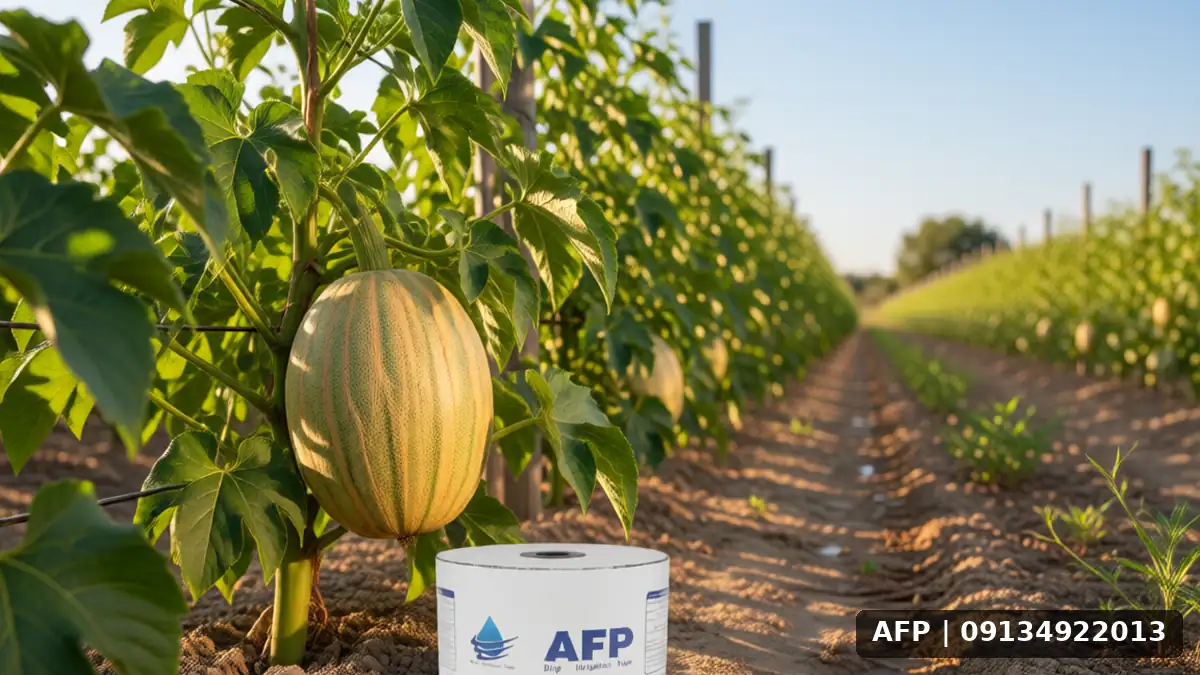
Drip tape is a surface drip irrigation method that places narrow strips of polyethylene film with micro-holes (drippers) adjacent to crop rows. This system offers highly efficient water use due to the precise delivery of water to the root zone. In melon cultivation, which is typically grown in furrows or narrow rows, drip tape allows for uniform moisture maintenance at depths less than 50 cm. This promotes faster plant growth and reduces leaf moisture-related diseases. The system also supports Fertigation, enabling the application of nutrients through the irrigation process, which improves the absorption of nitrates and amino acids. To better understand the importance of site assessment before installing any system, including drip tape, it is useful to study The Importance of Site Inspection for Drip Tape Polyethylene Pipes. Proper soil surface preparation, such as removing small stones and ensuring appropriate slope, extends the useful life of the drip tapes. Additionally, the Guide to Increasing Yield per Hectare through Production Methods can assist in evaluating the efficiency of this system. The implementation of yield-enhancement principles can maintain the long-term performance of drip tape systems.
Technical Comparison of Spray Irrigation and Drip Tape
The above analysis indicates that the selection between these two methods should be based on the climate conditions and soil type of the farm. In regions with low rainfall and heavy soils, drip irrigation generally offers advantages. Additionally, seed type and salt-sensitive cultivars also play a role in the final choice. Each of these factors must be analyzed in combination to ensure a more economically sound decision.
Practical implementation tips for melon fields
- Spacing adjustment: In sprinkler irrigation, sprinklers must be positioned to overlap, but this increases equipment costs. In tape drip, the distance of the tape from the planting line is critical. This distance is typically 30 to 40 centimeters.
- Soil-based nutrient management (Fertigation): The tape drip system, due to flow control, facilitates precise fertigation. In sprinkler irrigation, this process is more difficult due to diffuse distribution and can sometimes cause salt precipitation.
- Impact on fruit quality: Sprinkler irrigation can cause sudden changes in moisture, resulting in surface splitting in cantaloupe. Tape drip ensures uniform fruit growth with steady flow and prevents cracking caused by temporary water deficits.
- Maintenance and cleaning: Sprinkler systems require adequate filtration to prevent emitter clogging. Tape drip is also sensitive to water quality, but cleaning is simpler as it operates linearly. The use of sand filters is recommended.
To optimize planting density, which directly affects irrigation system selection, refer to Bitter melon seed rate per hectare + planting density table, which follows similar principles regarding spacing and water requirements. Adjusting density can reduce moisture stress between plants.
Frequently Asked Questions (FAQ)
Does sprinkler irrigation of melon increase the incidence of disease?
Yes, high leaf humidity resulting from overhead spray and water splashing creates an ideal environment for spore germination and the development of fungal leaf spots. In contrast, drip irrigation significantly reduces this risk and decreases the need for preventive fungicide applications.
Which method offers greater energy efficiency for pumping?
Due to its low operating pressure and continuous flow, drip irrigation generally requires less pumping energy. Overhead sprinkler systems often require medium to high pressure, which increases electricity costs.
Is it possible to use both methods simultaneously?
Generally, no, as they require different infrastructure. However, some farms use sprinkler methods at the beginning of the season for soil leaching and switch to drip irrigation during growth stages. This combined approach can be effective for salinity management.
Summary and Conclusion
Choosing between rain and drip irrigation for melon cultivation is a strategic decision. If the goal is precise cost control, reduced leaf diseases, and optimized water use, drip irrigation is the more modern and efficient option. Rain irrigation is recommended only if specific field conditions prevent the installation of drip lines. Referring to the Guide to Measuring Crop Yield and Influencing Factors, you can use similar statistics to evaluate the economic profitability of both methods under your specific field conditions. Ultimately, combining technical knowledge with attention to local data is key to successful and profitable melon cultivation. Adhering to the principles outlined in this article can ensure sustainable performance in the coming years.
Related articles: comprehensive guide pumpkin seed planting iq, comprehensive guide tomato tying tape, miqdori tuhmii soya dar hektar omilhoi tasirrason, musir yield per hectare increase production methods