Rain Irrigation in Lettuce Cultivation: Challenges and Alternative Strategies
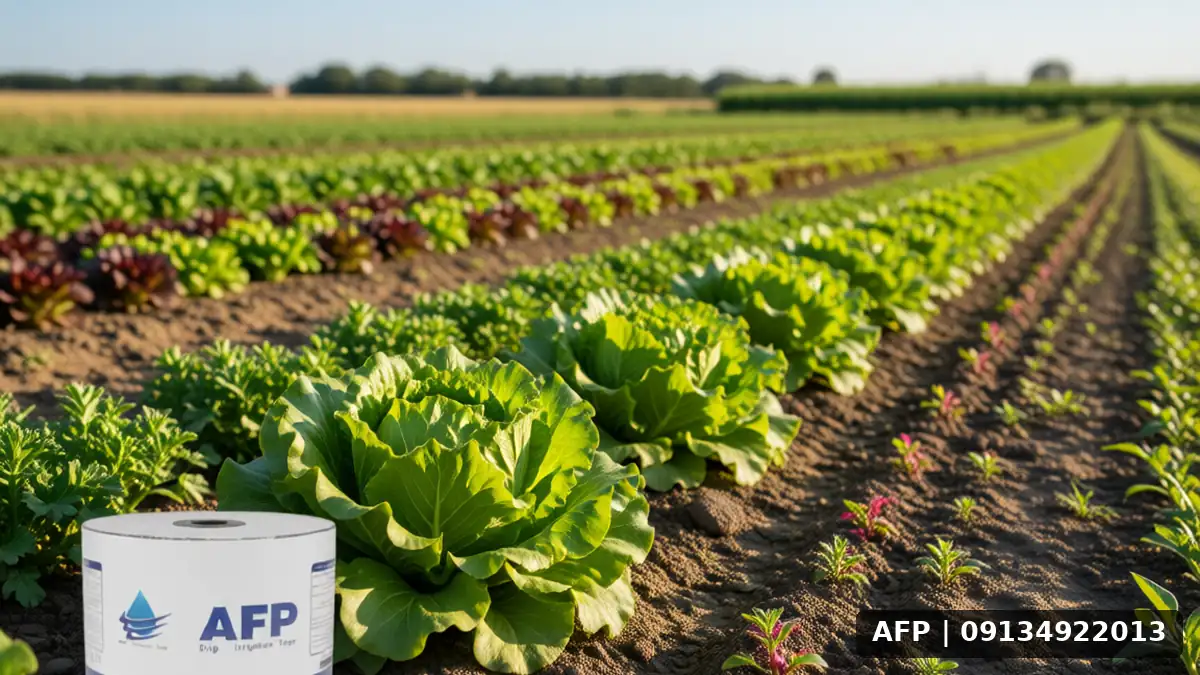
Lettuce is one of the most widely used vegetables, holding a special position in both domestic and export markets. Maintaining leaf health requires precise irrigation conditions. Many farmers, particularly those working on small plots or with limited budgets, still rely on spray irrigation; however, experience has shown that this method creates significant technical and economic challenges in dense leafy crops like lettuce.
Introduction to Spray Irrigation and Lettuce
Spray or rainfall irrigation is a method where water is distributed to plants as fine droplets or artificial rain through sprayers (nozzles) at appropriate pressure. Due to its similarity to natural rainfall, this method appears ideal at first glance; it does not directly soak the roots but only covers the plant canopy. However, for lettuce, a crop sensitive to leaf diseases, this advantage becomes a serious disadvantage.
Main Challenges of Spray Irrigation in Lettuce Cultivation
Increased Relative Humidity and Fungal Disease Outbreaks
The most significant challenge of spray irrigation in lettuce is the sharp increase in relative humidity on the leaf surface. Lettuce is inherently susceptible to soft rot, Alternaria, and Anthracnose. When lettuce leaves remain wet, conditions for fungal growth and reproduction are created. With spray irrigation, the drying time for leaves is prolonged, which reduces the efficacy of fungicides.
Reduction in Commercial Product Quality
Lettuce is a leafy crop where freshness, smoothness, and bright green coloration are of high importance. Spray irrigation causes leaf spotting from water deposits, cracking of delicate leaves, and even improper head formation. These visible defects directly affect the selling price and product grading.
Increased energy costs and soil erosion
Simulating rain requires medium- to high-pressure pumps and significant electrical energy. The water efficiency of this method is lower than drip irrigation due to high evaporation from leaf surfaces and wind. Additionally, water droplet impact causes surface erosion and seals soil pores, preventing water from reaching the root zone.
To optimize final lettuce yield, understanding the relationship between the irrigation system and the genetic potential of the cultivar is essential. For a more comprehensive view, you can Lettuce yield increase guide per hectare read this.
Comparison with drip and tape irrigation
As alternatives to the challenges of sprinkler irrigation, drip and tape irrigation systems are presented as modern solutions. The primary difference is that these systems wet only the soil and do not increase leaf humidity.
Why is tape drip irrigation suitable for lettuce?
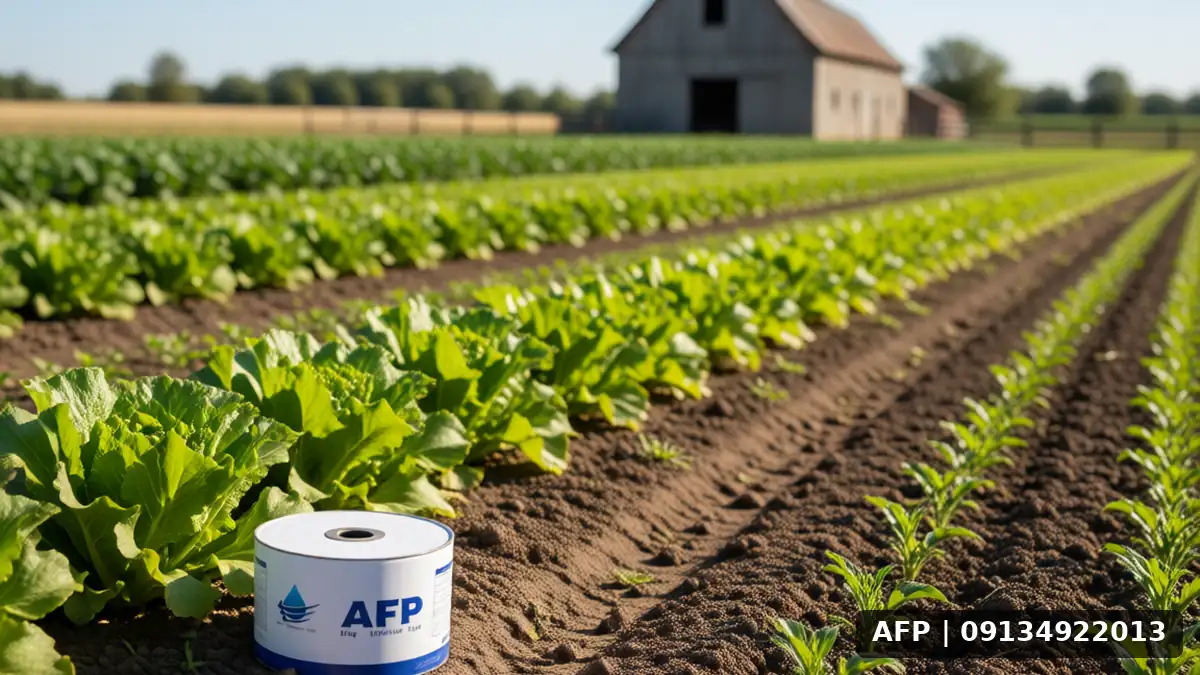
Tape Irrigation is a type of drip irrigation that distributes water droplets at short intervals (e.g., every 15 or 20 cm) along a plastic tape. This tape is placed between the rows of lettuce. The main advantage of tape drip irrigation for lettuce is the uniform distribution of moisture in the root zone without wetting the leaves. This promotes better head development and product uniformity.
Important technical note: If you use tape irrigation, the discharge rate of the tape must match the soil’s absorption capacity. For more information about how to increase the efficiency and productivity of tape irrigation you can use specialized resources.
Practical points for transitioning from rain irrigation to a modern system
- Soil analysis: Before installing the new system, sample the soil to determine its particle size. Lettuce is sensitive to high moisture; clay soils require more emitters at shorter spacings.
- Selecting emitter spacing: For lettuce, drip line spacing is usually recommended between 15 and 20 cm so that moisture is distributed in the 25 cm root zone.
- Monitoring water pH and EC: In drip systems, hard water causes clogging of drip lines. Adding citric acid to the injection system is essential.
- Stress management: Unlike daily overhead sprinkler irrigation, drip systems allow the use of mild deficit irrigation to produce lettuce of higher quality.
The impact of the tape strip on reducing pesticide use
One of the most significant benefits of keeping lettuce leaves dry is the reduced need for spraying to control leaf rots. Lower surface humidity makes fungal disease monitoring easier and significantly reduces chemical costs. This is particularly critical for organic farms seeking to minimize pesticide use. To better understand the relationship between irrigation management and pest reduction, farmers can the Green Irrigation Tape Strip User Guide which outlines the technical installation details.
Frequently Asked Questions (FAQ)
Is overhead sprinkler irrigation suitable for greenhouse lettuce?
No, in a greenhouse, relative humidity is controlled, and using sprays creates an excessively humid environment that is lethal to lettuce. Tape strip or individual drippers must always be used in greenhouses.
Is the cost of drip tape higher than overhead irrigation?
The initial cost of drip tape is usually slightly higher. However, when accounting for pump energy costs, fungicide costs, and labor for washing, this system pays for itself within a 6-month period. Drip tape is reusable for the next season, whereas fixed drip lines are more expensive.
What is the impact of drip tape on other vegetable yields?
Drip tape is applicable to many vegetables. Although we focus on lettuce here, similar principles apply to other vegetables. To better understand the yield of other crops, for example, the asparagus yield per hectare also varies depending on the type of irrigation.
Can I use drip tape for home lettuce gardens?
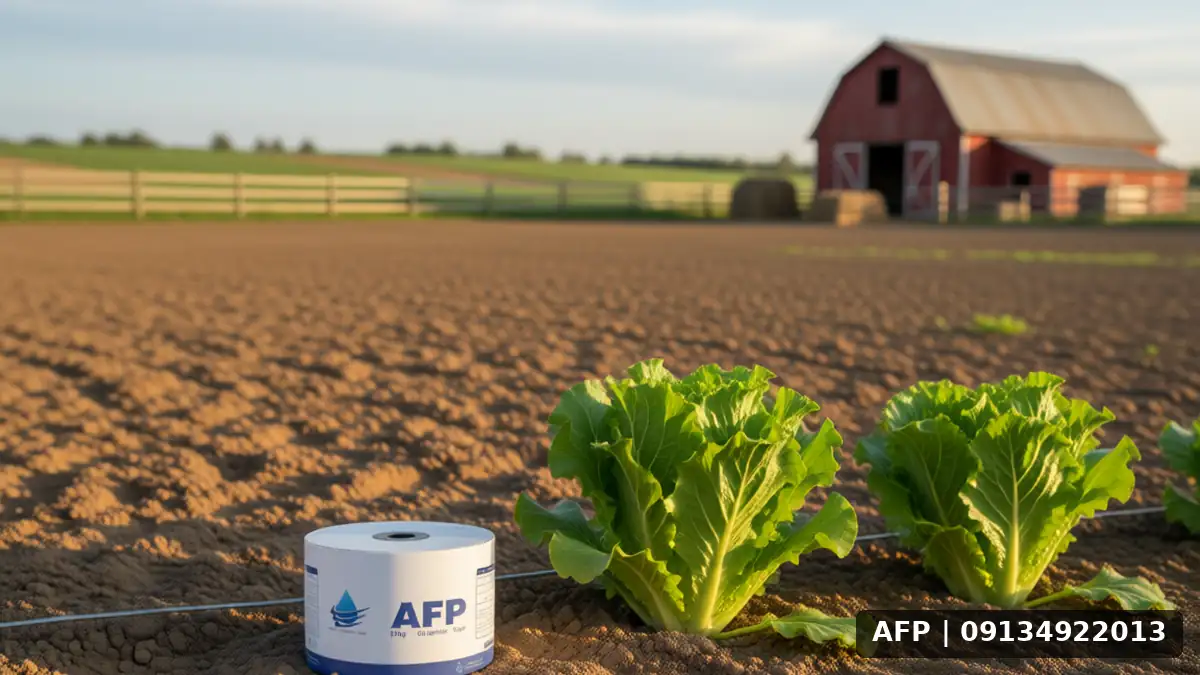
Yes, small drip lines (with a width of 10 or 15 mm) are also available for home gardens. You only need a small home pump and a water tank. This method is the best alternative to manual hand-spraying water in the garden.
Summary and Conclusion
Sprinkler irrigation in lettuce cultivation is considered a declining and inefficient method due to increased disease risk, reduced quality, and energy consumption. The environmental and economic challenges of this method drive farmers toward more precise systems such as drip and drip-line irrigation. Drip-line irrigation, with its uniform water distribution and direct nutrient delivery, not only keeps lettuce roots in ideal conditions but also protects the growing environment from fungi.
For farmers considering an update to their irrigation system, choosing between fixed drip emitters and drip-line systems is strategic. If your goal is multiple crops and quick rotation, the retrievable and replaceable drip-line system is a better option. Additionally, considering the combination of the irrigation system with appropriate fertigation methods is the key to achieving maximum efficiency. To familiarize yourself with the general principles of drip systems and filtration, it is recommended to study drip irrigation conditions.
Transitioning from traditional methods to modern technologies not only improves lettuce quality but also ensures the long-term economic sustainability of the farm.