Rain Irrigation with Erosion in Melon Cultivation: A Comprehensive Guide
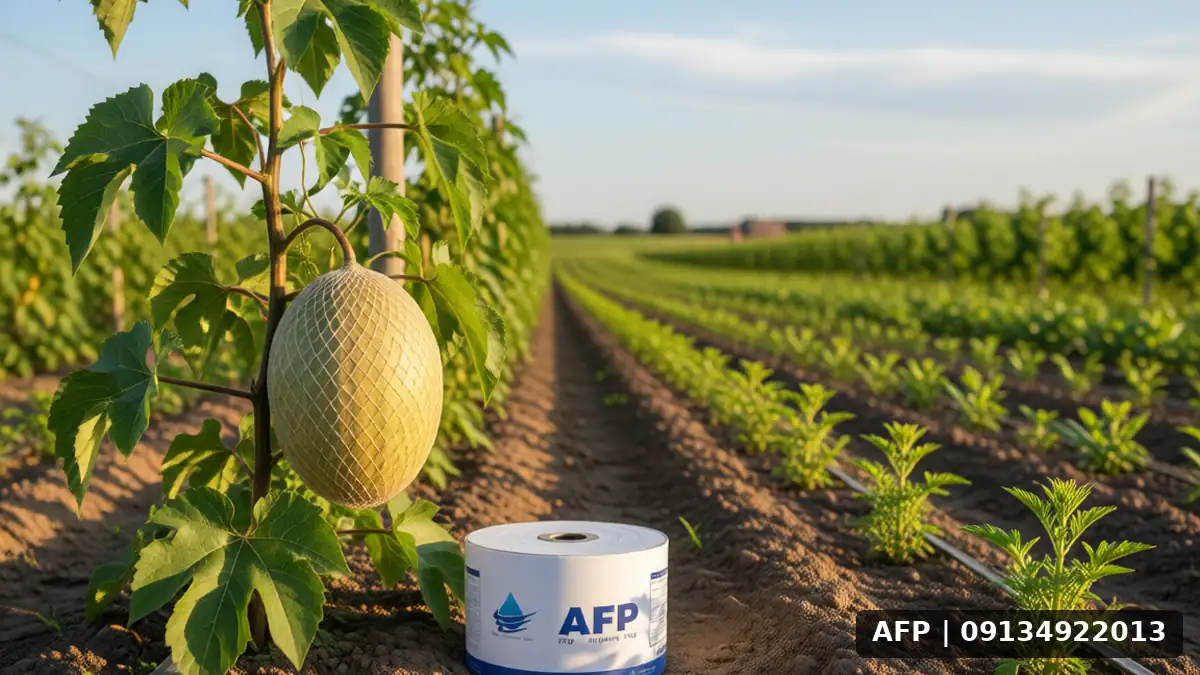
Introduction to Displacement Irrigation in Cantaloupe
The cantaloupe industry in Iran’s semi-temperate and arid regions requires precise and optimized irrigation systems due to high dependence on uniform moisture and extreme sensitivity to water stress. Displacement Irrigation Displacement Irrigation is an advanced and less common technique that uses controlled water pressure and velocity to gradually displace young roots and create deeper cultivable bands. This method has found extensive application in row crops like cantaloupe, which require deep and regular furrows for root system development. Unlike drip irrigation, which delivers moisture locally and radially to the root zone, displacement irrigation focuses on the controlled distribution of water in the soil profile to promote uniform root growth at depth. This comprehensive guide examines technical implementation details, necessary hydraulic calculations, soil management, and practical safety notes so that farmers can use this method confidently and effectively while minimizing erosion effects.
Why Cantaloupe Requires Displacement Irrigation
Cantaloupe plants have shallow to semi-deep root systems that are susceptible to physiological damage and severe fruit quality reduction during drought or insufficient irrigation. Displacement irrigation is ideal for this crop because it creates a uniform moisture layer at a depth of 20 to 40 cm. This ensures that required plant moisture is directly accessible to active roots without exposing the soil surface to extreme dryness or direct impact from heavy raindrops. Maintaining moisture balance in this layer is key to achieving desired fruit volume and sweetness at harvest.
Technical and Calculation Parameters for Displacement Irrigation
For correct and efficient implementation Sprinkler irrigation with displacementUnderstanding hydrological parameters and soil characteristics is critical. Incorrect calculations can lead to severe soil erosion, root drought stress, or even waterlogging.
Calculating displacement diameter
Displacement diameter refers to the radius of the area where water flow is sufficient to move soil particles without causing mass displacement or rill destruction. In melon cultivation, this diameter must be precisely aligned with row spacing to ensure the moisture band covers the base of the plants. When using drip lines alongside the displacement method, consider the following: Key points when using drip lines for irrigation Determining the appropriate input pressure and pipe diameter is essential. The displacement diameter depends directly on the flow velocity in the irrigation line; high velocities (greater than 1.5 meters per second) result in excessive displacement, bed instability, and erosive wear.
The role of input discharge and bed slope
The ability to generate effective surge is a direct function of the total input flow to the farm and the longitudinal bed slope. In slopes of less than 1/1000, centrifugal effects decrease, and it may be necessary to increase pump pressure or adjust the spray angle. To ensure optimal coordination with other parts of the network, if lateral systems are used, you can also Types of furrow irrigation methods for wheat take a look, which indicates similar principles in adjusting row spacing and operational flow rates.
Comparison of surge irrigation with drip and furrow methods
Farmers often hesitate when choosing between precision systems (drip) and surface application systems (surge). The correct choice depends on soil type, climate, budget, and the final cropping objective.
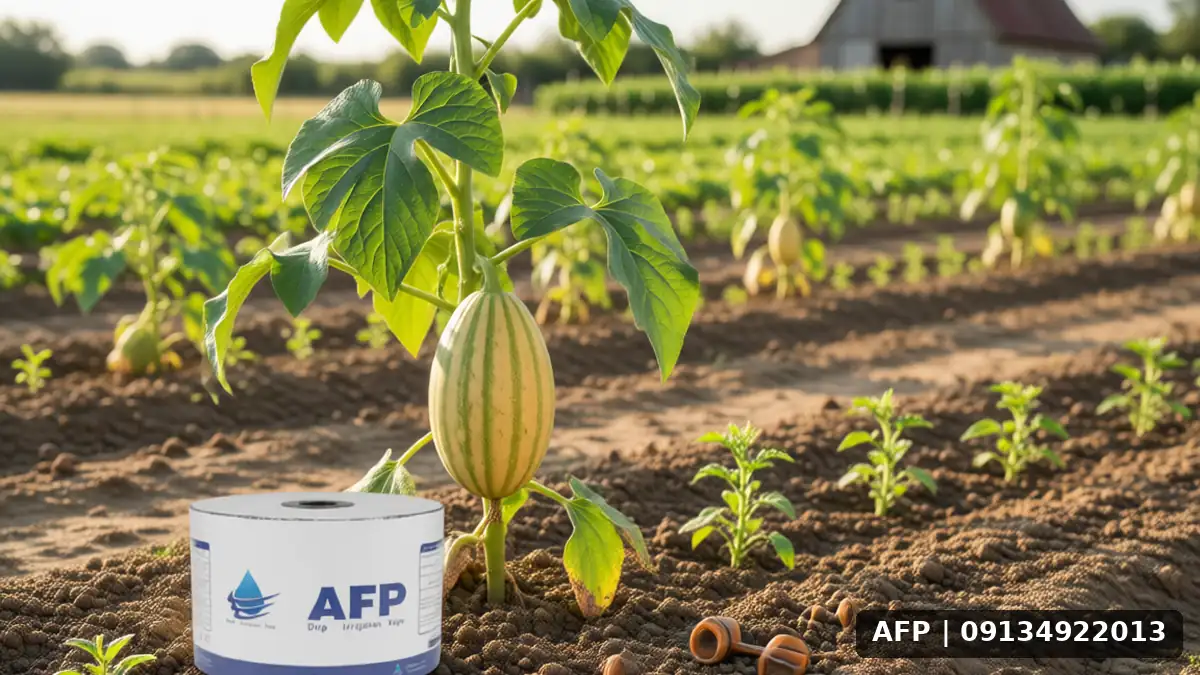
Advantages of using a combination of surge and drip irrigation
In large alfalfa farms, combining these two methods can maximize irrigation efficiency. Using furrows for irrigating the central row areas and surge irrigation for the side areas ensures that the entire rooted soil volume receives sufficient moisture. To better understand the behavior of furrows under varying pressure conditions, study Porous tape drip irrigation Recommended. These systems are a popular option for row crops due to uniform water distribution and high resistance to clogging.
Additionally, if your fields use stiffer pipes in main lines, reviewing a comprehensive guide to optical pipes and their applications can help select equipment more resistant to mechanical stress. These pipes are often used in the main sections of irrigation networks and have high flow rates.
Practical execution points for melon fields
Correct execution of furrow irrigation requires attention to three main stages: initial preparation, monitoring during irrigation, and post-evaluation after the cycle is completed.
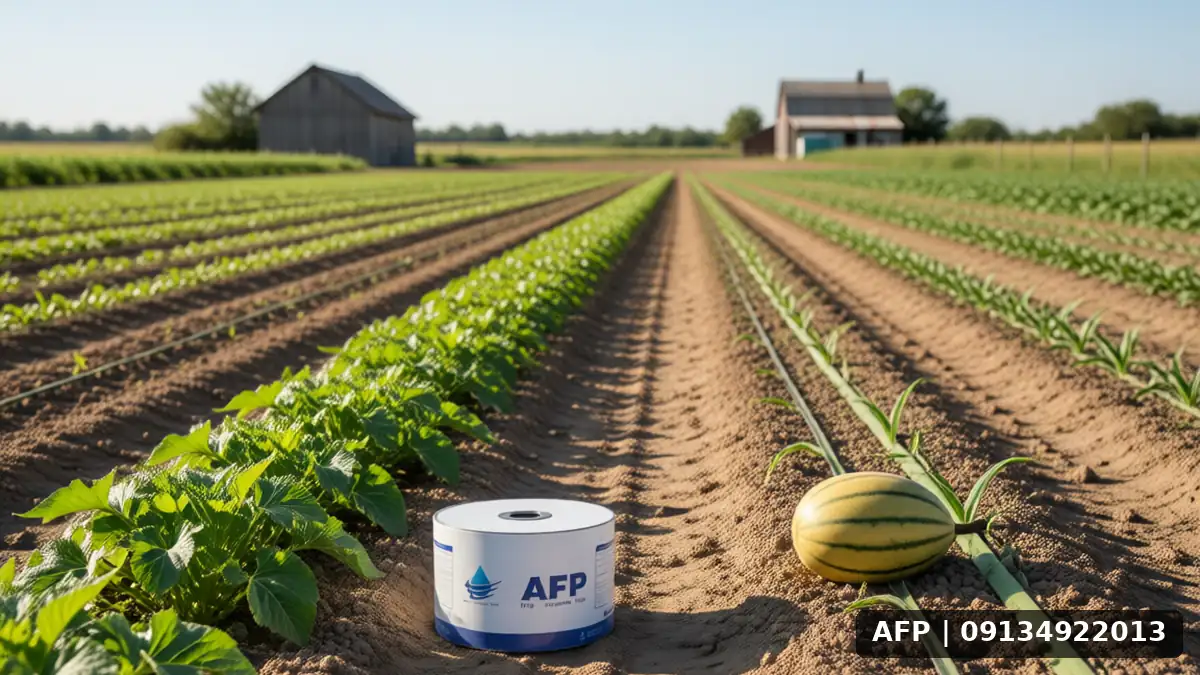
- Preparing furrow strips: Use adjustable wooden or plastic structures to guide water so that the furrow flows in the desired direction (usually perpendicular to the melon rows) and lateral erosion is prevented.
- Adjusting local slope: The ground surface should be as uniform as possible. Any depressions or rises cause water pooling and suffocation of muskmelon roots. In sloped areas, drainage structures should be installed so that water velocity remains constant along the entire length of the strip.
- Soil moisture management: Before starting irrigation, check soil moisture at a 30 cm depth using a soil moisture meter. If moisture is high, avoid initiating drainage to prevent waterlogging and root rot.
One common challenge with this method is salt accumulation on dry surfaces after evaporation. To prevent this, short cycles and the use of fresh water for salt flushing are recommended. In high-density planting farms, attention to planting distance and seed quantity is essential; for example, in other crops such as corn, you can to Corn seed quantity per hectare For a comparative understanding of surface management and density, look at this. Although muskmelon is not a drilled-seed crop, the principles of density management and spacing are similar in both.
Frequently Asked Questions (FAQ)
Is drain irrigation suitable for clay soils?
No, in clay soils with low permeability, infiltration velocity is very slow, which may lead to surface waterlogging and root diseases. It is recommended to use low-pressure drip lines for irrigation in these soils.
What is the difference between surface (or furrow) irrigation and simple sprinkler irrigation?
In simple sprinkler irrigation, sprinklers disperse water in the air, which is highly stressful and energy-intensive for melons. In contrast, surface irrigation moves water across the soil surface to irrigate deeper soil layers, which is more efficient for the deeper root systems of melons.
Is this method compatible with existing drip systems?
Yes, many farms utilize a smart combination of both. For optimal setup, refer to the comprehensive guide. Seed quantity of rainfed wheat per hectare can enhance your understanding of canopy coefficient management and water usage in field crops, which shares similar principles with melons.
Conclusion
Rain-splash irrigation coupled with mulch strips in melon cultivation is a strategic solution for farmers seeking to optimize water use and increase active root volume. By adhering to technical principles, selecting appropriate strips, and continuously monitoring soil moisture, soil erosion can be prevented and yields increased. Combining this method with modern systems and qualitative studies such as Cilantro yield per hectare and strategies for increasing it confirms that smart water management and attention to product quality are the keys to success in modern agricultural production.