Drip Irrigation with Emitters in Parsley Cultivation: Technical and Operational Prerequisites
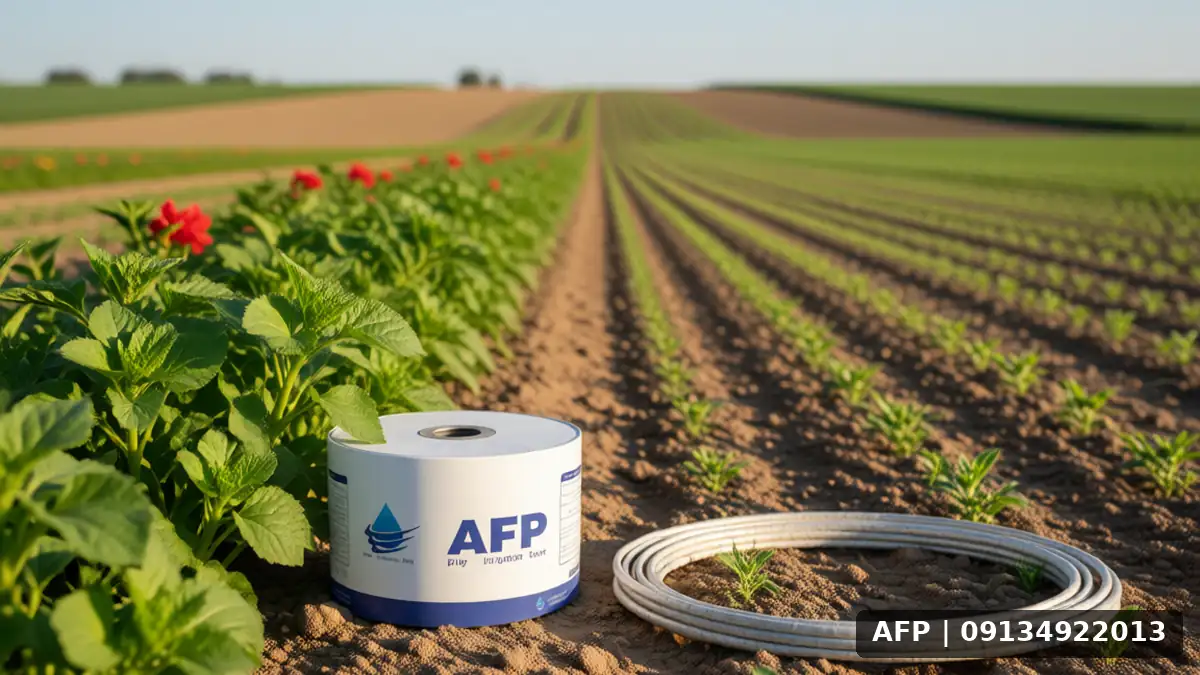
Parsley is one of the most important leafy vegetables that has high sensitivity to waterlogging and root drought. Using conventional irrigation methods such as flooding or basin irrigation causes soil structure degradation, fungal diseases, and reduced crop quality. In this regard, Parsley drip irrigation with standard emitters, is a reliable and sustainable solution for professional producers. However, before installing any piping, a precise understanding of technical prerequisites, water resources, and soil characteristics is essential. This article focuses on operational prerequisites to help you design and implement an efficient system.
Importance of technical prerequisites in drip irrigation
Starting an irrigation system without analyzing base data carries the risk of costly emitter failures. Inline emitters in drip lines have specific sensitivity to suspended particles in the water. Any clogging at the emitter outlet reduces flow rate and disrupts irrigation uniformity. Therefore, the first step is precise preparation of the water source and assessment of the target fields. Additionally, selecting the emitter type based on the required flow rate for parsley (typically in the range of 1 to 2.5 cubic meters per hour) requires precise hydraulic calculations.
Water quality analysis and filtration equipment
Parsley requires low-mineral water, but the main issue is suspended particles and sedimentary matter. If the source water contains sediment, emitters will clog within less than one season without the installation of a proper filter. Ellar Al Satahi Sand filters must be selected based on the particle size distribution of suspended solids in the water. A primary requirement is to always use a main filter and a secondary filter (such as a disc filter). The operating pressure of the filters must also be coordinated with the total system pressure to prevent excessive pressure drop. Laboratory water testing to identify hardness and pH is also recommended.
Parsley soil and root characteristics
Parsley grows best in light, well-drained soils. If your soil is heavy and clayey, drip lines cause prolonged waterlogging and root rot. In such conditions, using drippers with wider spacing or adjusting the irrigation frequency is mandatory. Parsley root depth is generally limited to 25 to 30 cm; therefore, the drip line design must ensure that moisture is stabilized precisely at the rooting depth, not at the soil surface or in deep layers. [Image caption/Indicator]: Demonstrates ideal moisture distribution within the parsley root zone using a drip system.
Drip line design for parsley cultivation
The drip line is the backbone of drip irrigation for vegetables. For parsley, the spacing between drippers on the drip line is generally set at 20 cm. This spacing allows for mutual wetting to create a uniform moisture profile along the row. The distance between drip lines (row spacing) varies depending on planting density but is usually between 30 and 40 cm. A key design requirement is the overlap of the wetted zone with the dry zone to prevent root suffocation stress.
Selecting dripper diameter and flow rate
For coriander, 2 L/h and 2.5 L/h drip emitters are common options. Selecting the appropriate flow rate requires knowledge of planting density and plant dimensions. If planting density is high, a lower flow rate with shorter emitter spacing may be more efficient. The total flow rate of the section, meaning the sum of the flow rates of emitters in a typical lateral line, must be coordinated with the mainline diameter and wall thickness (e.g., LLDPE with 100 or 125 micron thickness). The chart shows the dependence of system pressure on lateral line length and recommended diameters.
Lateral Line Porosity and Physical Installation
Lateral lines typically have porosity on both sides for emitter discharge. During installation, alignment with slotted boards or direct placement on the soil (if the soil is clean) is important. The tubing must be completely smooth and free of kinks. Kinks in the tube cause flow deviation and reduced flow rate at the terminal emitters. Additionally, end plugs for sealing the line must exactly match the tubing diameter to prevent leaks.
Piping and Pumping Prerequisites
The drip system will not operate correctly without a pump. Coriander requires stable pressure. If the pressure drop along the main line exceeds 50% of the nominal emitter flow rate, it causes dryness at the end of the lateral and waterlogging at the start. Therefore, the primary prerequisite is using a pump capable of providing the required pressure under the worst-case conditions (the end of a long lateral).
Calculation of Total System Pressure
Total pressure includes static pressure (well depth), head from the pump, pressure loss in the main line, pressure loss in the lateral line, and the desired pressure for proper emitter operation. Typically, the total pressure for coriander systems is considered between 1 and 2.5 bar. If using Optimal Quantity per Hectare Use the required water volume calculation to adjust the number of irrigation cycles simultaneously with the pump pressure. Excessive pressure reduces drip emitter lifespan and increases the risk of tape line rupture.
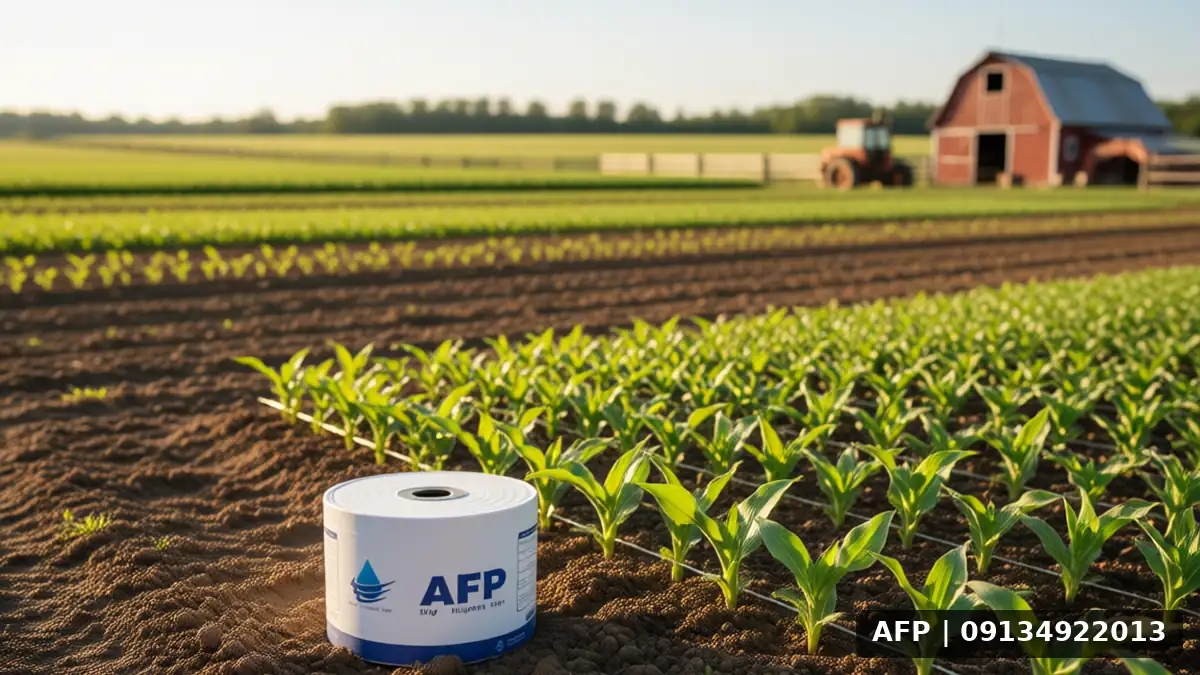
Uniform distribution of tape lines
In rectangular fields, it is recommended to design two circuits (or two mains) to divide the pressure and reduce pressure drop. For large-dimension fields, using balancing valves or gradually reducing the diameter of the main pipes (e.g., 110, 63, 50) is essential. The schematic shows a two-main system with pressure regulation for parsnip fields.
Practical tips for higher performance
- Planting in uniform rows: For drip irrigation, uniform row spacing of parsnip is critical. Row misalignment may result in some plants being located outside the tape line coverage.
- Pre-irrigation: Before planting, apply light irrigation to stabilize the soil and facilitate drip line installation, but do not oversaturate the soil.
- Filter inspection: Wash sand filters every 10 days. Carrot is sensitive to system cleanliness.
- Mechanization: Using seeders or drip line spreaders instead of manual planting ensures uniform installation. To understand similar densities, optimal Loberfeld rate per hectare can serve as a model for multi-row planting densities.
Frequently Asked Questions (FAQ)
What should the drip emitter spacing be for the parsley drip tape?
The standard spacing is 20 centimeters. This spacing provides a good balance between moisture coverage and pipe cost. In very sandy soils, a 15-centimeter spacing may be more efficient.
Can drip tape be used for multiple years?
Jumbo or heavy-gauge drip tapes offer better resistance to UV and animal damage. However, for parsley, standard drip tapes with a useful life of one to two seasons are generally recommended, unless you have a protective system.
When is the best time to apply drip irrigation to parsley?
In early growth stages, irrigation in the early morning or evening when evaporation is low is recommended. In high-growth stages, twice-daily irrigation (morning and evening) helps prevent root water stress.
What should I do if the drip tape gets kinked?
Cutting of the drip line is caused by pipe expansion or excessive pressure. Ensure you are using the correct filter and that the pressure is limited to the maximum recommended by the drip line manufacturer. To resolve knots, disconnect the pipe from the valve and gently feed the line through the knot. If it recurs, Difference between two-eye buller tape and plastic tape to check and select the appropriate type for your region.
What is the impact of drip irrigation on the quality of parsley?
Reduction of fungal diseases caused by leaf moisture, uniform growth, and an increase in the percentage of dissolved solids (EC) in root water. The result is a cleaner product with higher shelf life in cold storage. To compare with other products, Increasing willow yield per hectare due to environmental factors indicating the general role of precision irrigation in vegetables.
Summary
Success in Parsley Drip Irrigation with drip irrigation, relies not only on purchasing equipment but on accurately understanding its prerequisites. From analyzing water and soil quality to precise calculation of pressure and flow rate, each of these factors is part of an inseparable chain. By using appropriate filtration, a drip line with standard permeability, and controlled pumping, you can increase water efficiency by up to 50% compared to conventional methods. It is recommended to install a 20-meter trial section and monitor flow measurements throughout the growing season before full implementation. This step-by-step approach reduces unwanted costs and ensures the sustainability of your parsley yield in a competitive market. Precision farming means irrigating to the extent of need, no less and no more.