Irrigation in Orchards Within Cotton Crop Systems: Comparing Challenges and Tape Line Solutions
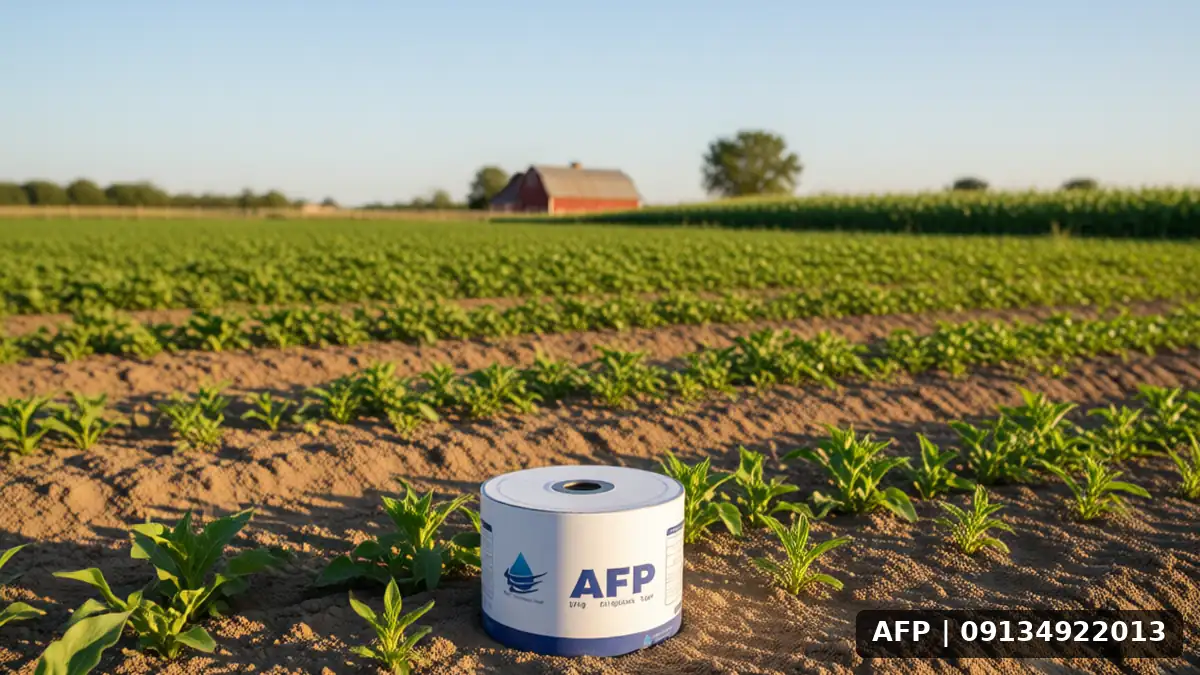
Why is comparing irrigation for orchards and cotton important?
Modern agriculture requires precise water resource management more than ever. While orchards represent long-term investments with high initial costs, cotton, as an industrial crop, presents farmers with faster production cycles and different needs. In both cases, selecting the appropriate irrigation system, particularly the use of drip tape or drip systems, plays a key role in determining economic yield. In this section of the article, we first address the fundamental differences between these two sectors to gain a proper understanding of the irrigation challenges of each.
Analysis of Irrigation Needs in Orchards
Orchards, due to their deeper root systems and the need to maintain uniform moisture over long periods of the year, have a high sensitivity to water stress. In these systems, hanging or ground-mounted drip emitters are commonly used to cover larger spacing intervals. However, if you wish to use newer systems such as drip tape, you must ensure that the spacing between trees is coordinated with the standard production spacing of the tapes. One of the main challenges in orchards is the accumulation of salt around water discharge points, which can damage sensitive tree roots if managed incorrectly. Therefore, the irrigation network must be designed to allow for regular saline flush at the end of the tree canopy.
Key Points in Orchard System Design
- Planting spacing: The wider the tree spacing, the higher the cost of main pipelines and grading. For dense orchards, using thick-walled drip tape may be a more economical option.
- Seasonal variations: Orchards at the flowering and fruit sizing stages are at peak water demand. The irrigation schedule should be adjusted based on the Crop Coefficient, not just the calendar.
Irrigation challenges of cotton compared to orchards
Unlike orchards, cotton is an annual crop requiring speed in planting and harvesting. The main difference lies in root depth and sensitivity to root hypoxia. Cotton is sensitive to the rapid drying of surface soil layers while simultaneously requiring deep soil moisture. Tape drip is very common for cotton because it has a lower cost than standard drip emitters and is easier to install and relocate on rotational fields. However, an important point is that cotton is sensitive to high system pressure; if the pressure is too high, the tape can rupture or cause water to spray onto leaves, leading to the spread of fungal diseases.
Cost and yield comparison
- Initial cost: Cotton has a lower initial investment cost and a faster return on investment. Orchards require tolerating a 3 to 5 year productive period.
- Energy consumption: Cotton pumps, due to shorter piping and more suitable pressure, generally consume less energy compared to elevated orchards with steep slopes.
- Substrate Management: In orchards, substrate management and the grass cover around tree trunks complicate irrigation needs. For cotton, the focus is solely on crop rows, which simplifies drip tape management.
Selecting Tape Wall Thickness and Type Based on Crop
A key engineering factor in selecting an irrigation system, particularly drip tape, is the tape wall thickness. The correct selection of this parameter directly affects the system’s useful life and water distribution quality. For orchards requiring high durability, using tapes with the ideal wall thickness is recommended to provide resistance against physical damage and UV radiation. However, for cotton, thinner tapes with a shorter useful life can be used, provided they are collected and recycled at the end of the harvest season. This cost-effective approach creates a significant difference in the business model for these two crops.
The Effect of Soil Type on Drip Tape Performance
It must be noted that cotton soil is typically found in arid regions with a uniform granule size, whereas orchard soils may have heavier textures such as loam-sand or loam-clay. Soil permeability is the primary determinant of the wetting front’s advance speed. In soils with low permeability, the emission rate must be lowered to allow water sufficient time for deep infiltration. Otherwise, irrigation efficiency decreases, and water evaporates from the surface. To ensure the correct selection of soil type and tape thickness, examining the optimal wall dimension according to local conditions is essential.
Practical Tips and Common Mistakes
It is often assumed that simply applying water is sufficient, but in reality, the quality of the water and the timing of irrigation are of equal, if not greater, importance. In orchards, irrigation at the end of the night is recommended to reduce evaporation. However, for cotton, irrigation in the early morning hours can help prevent leaf wetness and improve plant resistance to pests. A common mistake is neglecting the inlet pressure of the system. A pressure drop of even 10% can cause uneven water distribution along the drip line, which is disastrous for sensitive crops like cotton that require rapid growth.
Pre-season operational checklist
- Teflon check: Ensure that connections are leak-free; leaks in cotton crops can lead to wet spots and root rot.
- Flow test: Before planting or the start of the growing season, measure the water flow at the beginning and the end of the line to ensure uniform distribution.
- Filtration: Sand particles in the water are the enemy of drip lines. Using appropriate filters ensures the useful life of the system in both orchards and cotton.
Frequently Asked Questions (FAQ)
Is tape irrigation suitable for fruit orchards due to accumulated tree shadows?
Tape irrigation can be effectively used in orchards, provided that accumulated tree shadows and physical obstacles do not block the tape’s path. In dense orchards, using subsurface drip lines may be safer, as trees create fewer shadows and physical interferences with the tapes. However, if there is sufficient space between the rows, tape irrigation remains a cost-effective and efficient option.
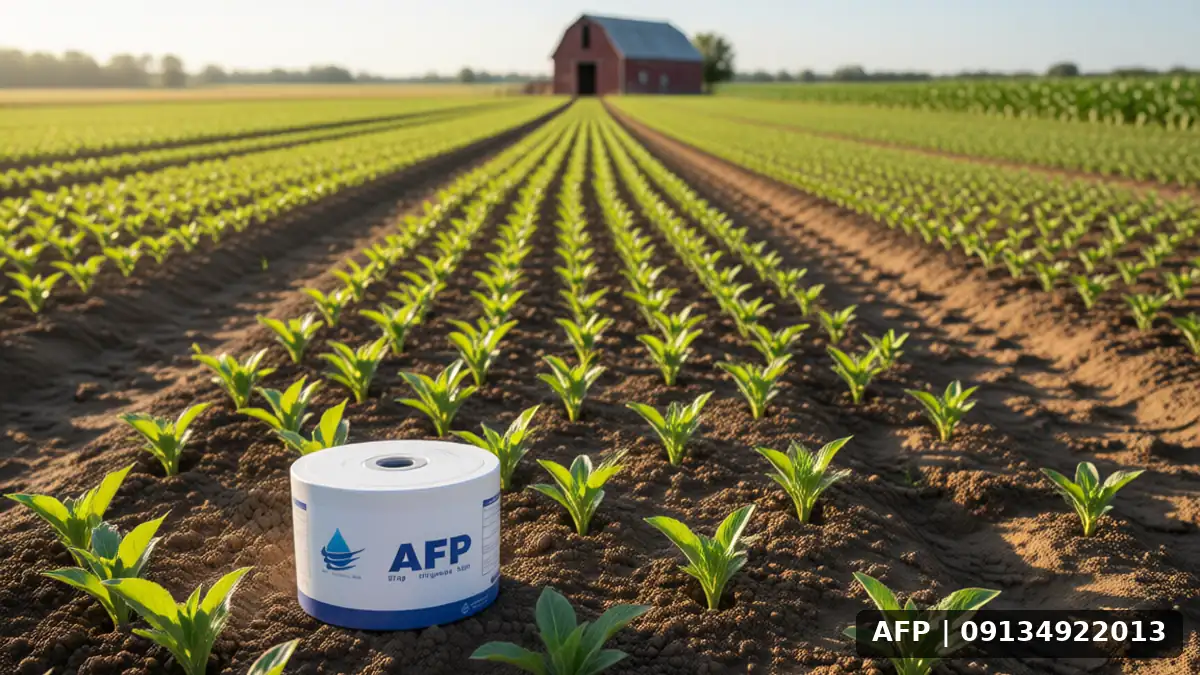
What is the main difference in water consumption between cotton and fruit orchards?
Cotton generally requires less water during the early growth stages, but reaches peak water consumption during flowering. Fruit orchards have more uniform water usage throughout the year. Additionally, the irrigation efficiency of tape irrigation in cotton can reach 95%, as the water contact surface is directly connected to the roots spread across the surface layer.
When should we use drip lines and when should we use tape irrigation?
Drip lines are recommended when you need long-term multi-year durability (such as in orchards), when planting distances are wide, or when the soil has very low permeability and requires the precise pressure of a dripper. Tape irrigation is more suitable for annual crops (such as cotton), when there is a need for quick installation and retrieval, when planting distances are standard, or when you have a more limited budget.
Final Summary
Comparing fruit orchard and cotton irrigation shows that both sectors, while botanically different, share common principles in resource management: precision in design, water quality control, and monitoring for uniform distribution. Selecting a local and efficient drip line can reduce losses and improve economic efficiency in both sectors. It is important for the farmer to consider environmental conditions, soil type, and farm dimensions, rather than blindly adapting, and to adjust the wall thickness, hole spacing, and discharge rate accordingly. By relying on up-to-date knowledge and reputable resources, irrigation can be transformed from a cost into an asset.
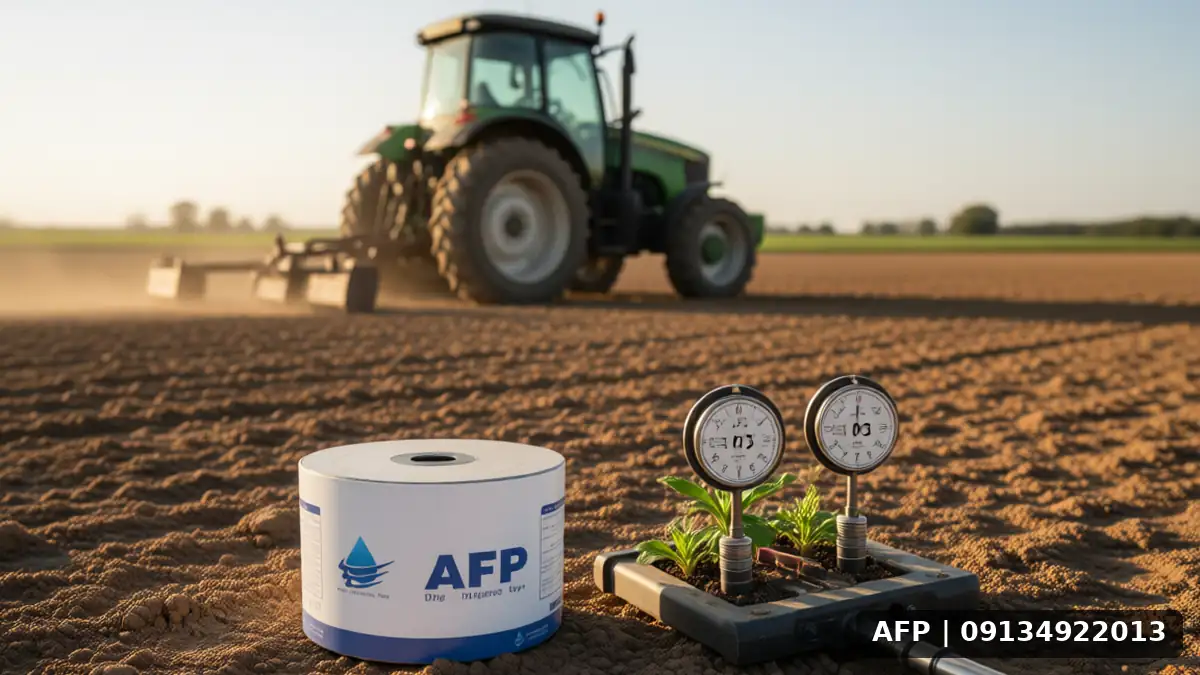
For a better understanding of how irrigation systems can be optimized in other fields, studying lentil yield and strategies to improve its performance can provide a clear perspective on the water-yield cycle in annual crops. Ultimately, success in irrigation is the result of patience, precision, and continuous learning from local losses.
Related articles: Comprehensive Guide to Planting Pumpkin, Eggplant Seed Rate per Hectare + Planting and Irrigation Tips, Rye Yield per Hectare: Influencing Factors and Improvement Strategies, nuqtahoi muhim pesh az nasbi leantai tip dar maydon