Node Irrigation Costs in Melon Cultivation: Comprehensive Economic and Technical Farm Guide
Introduction to Node Irrigation Economics in Melon Fields
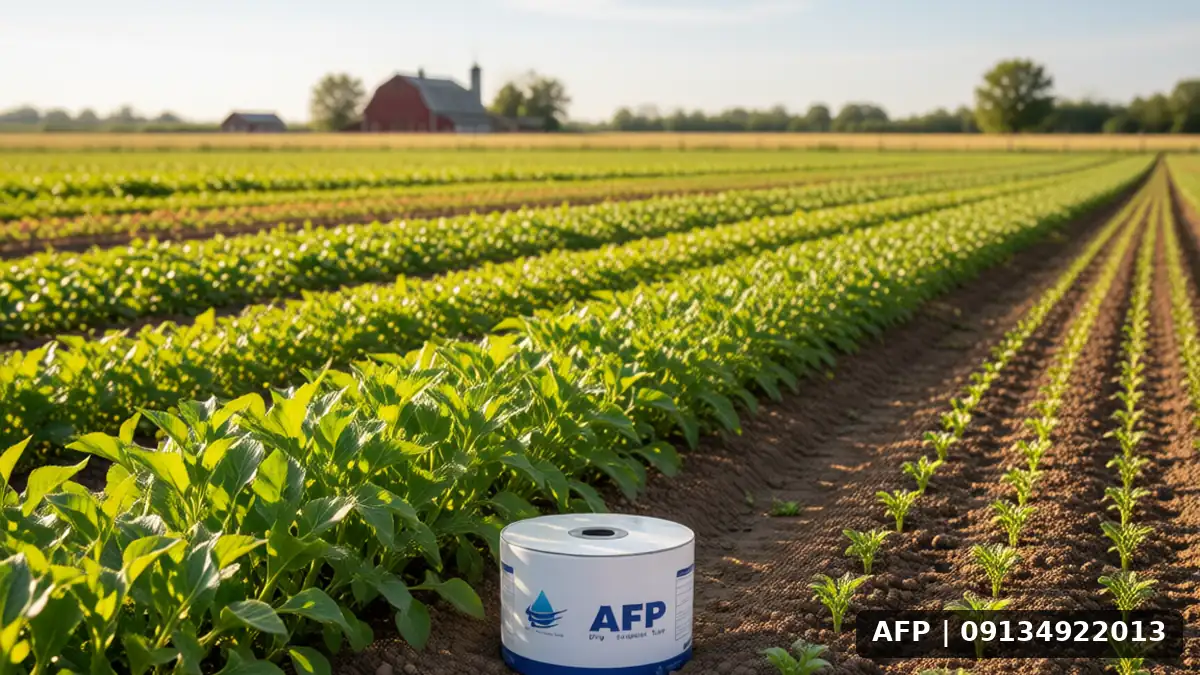
Melon cultivation, particularly in tunnel and open-field varieties, presents unique challenges regarding root management. Melon roots have a shallow and sensitive structure and are susceptible to fungal diseases and rot when subjected to heavy, consecutive irrigation. Conversely, severe soil dryness causes physiological stress and a significant reduction in fruit quality. In this context, Node Irrigation, as an advanced subset of drip systems, creates an optimal balance between moisture and air in the root zone by generating controlled water flow and scattered droplets. However, the primary concern for most farmers is accurately estimating the ‘cost of node irrigation in the field.’ This cost extends beyond simply purchasing pipes and includes technical, engineering, and management dimensions such as precise filtration costs, hose systems, high-efficiency pumping, and optimal daily management. In the following section, we examine these cost variables with a practical and realistic perspective to help you prepare a precise and risk-aware budget for the melon growing season. Our ultimate goal is to demonstrate how this initial investment can be converted into long-term sustainable profitability. For a deeper understanding of the dynamic differences between this system and conventional methods, we recommend studying the article on ‘Advantages and Disadvantages of Direct Ground Irrigation’ to comprehend the fundamental distinctions.
Precise Anatomy of Node System Construction Costs
Initial Costs: Fixed and Movable Equipment
The major share of startup costs for grommet irrigation in melons is spent on physical equipment, which must be selected based on durability and resistance. First, main and sub-pipes should be made of polyethylene with anti-UV additives to withstand sunlight. Choosing the wall thickness of the pipes is a critical parameter that directly affects future replacement and repair costs. Familiarity with principles Ideal wall thickness in drip tape Can help you prevent premature breakage and frequent breakdowns, saving on replacement costs.
- Grommet pipes: The cost of this section is based on the linear meter usage per hectare. Due to the planting layout of melons, using grommet pipes with appropriate spacing is the most economical option.
- Grommet emitters: These components must be selected based on the planting distance between melon plants (usually 15 to 20 centimeters) and a suitable output rate to ensure irrigation uniformity.
- Filtration system: The filter is the thinnest ring in the cost chain. Without an appropriate filter, microscopic sediments accumulate inside the emitters, causing repair costs and downtime to increase dramatically.
Ongoing costs: maintenance, energy, and labor
Beyond the initial investment, ongoing costs include energy consumption for water pumping, leak maintenance, and system monitoring. Low-pressure drip irrigation requires less pressure than sprinkler systems but demands precise and reliable pumps with high efficiency. Proper management of this section can reduce electricity costs by up to 30 percent. Additionally, the useful life of the drip system depends heavily on water quality and the type of filter used. Read about extending the operational life of drip tape can teach you the technical maintenance principles that also govern drip systems.
Direct impact of drip irrigation on melon economic yield
Reduced water stress and increased yield and quality
Melon is a crop whose photosynthetic cycle and fruit development are highly dependent on stable soil moisture. With knuckle irrigation, the root zone remains consistently moist and primed for growth. This stability leads to faster fruit enlargement and uniform sugar deposition. As fruit quality and consistency improve, market prices increase, enhancing farm profit margins. For a deeper understanding of how irrigation conditions impact sensitive roots, you can explore the article Factors That Boost Vegetable Yields to examine similar principles.
Saving on Water and Fertilizer Costs
In modern farming, the cost of energy and plant nutrients is significant. Knuckle irrigation minimizes evaporation by delivering water directly to the roots. Furthermore, the ability to inject liquid fertilizer into the irrigation line (fertigation) reduces waste and optimizes nutrient uptake by the plants. These savings significantly offset operational costs and improve the farm’s break-even point.
Practical Tips for Reducing Costs on Melon Farms
- Engineering Design Before Implementation: Accurate field mapping before purchasing equipment is key to cost reduction. Aligning planting spacing with knuckle dimensions prevents the purchase of excess piping.
- Use of multi-layer filters: Long-term repair costs for clogged nodes exceed the cost of purchasing a quality filter. A good filter eliminates hidden costs and time waste.
- Monitoring system pressure: Installing simple pressure gauges at various farm points prevents pump failure and costly leaks, enabling better management.
- Comparison with combined options: Sometimes, a combination of drip tape and node-based systems is more economical. To see the difference in final cost, read the article on drip tape cost per hectare to make a balanced decision.
Frequently Asked Questions (FAQ) About Node-Based Irrigation Costs
Is node-based irrigation suitable for tunnel melons?
Yes, it is entirely suitable. In plastic tunnels, controlling air and soil moisture is doubly important. Drip irrigation allows you to maintain soil moisture at the desired level without excess moisture causing rot. The structural cost of the tunnel is offset by increased crop quality and reduced waste.
What is the cost of replacing drippers over the system’s lifespan?
The cost of drippers is usually a minor component of the total system cost, unless filtration is poor. If technical principles are followed, the useful life of drippers can reach 5-7 years, resulting in a negligible cost per melon season.
Can the drippers be flushed?
Yes, reverse flushing of the system can remove deposits. This process requires correct initial design of the valves. Neglecting this step will increase long-term maintenance costs.
Summary and Final Recommendations
Investing in dripline irrigation for melon cultivation is a strategic economic decision that guarantees high returns if designed correctly. While initial costs may appear higher than simpler systems, considering reduced water consumption, improved quality, and decreased root waste, this system pays for itself within two to three cropping seasons. The key to success lies in attention to technical details such as pipe wall thickness and filtration quality.
We recommend consulting a local specialist before purchasing to assess your farm’s dimensions. Additionally, reviewing supplementary articles such as Pepper Yield Per Hectare can provide useful insights into managing crops with sensitive root systems, as melons also belong to this group. With precise and smart implementation, dripline irrigation is not an extra cost but a tool for generating wealth on your farm.