Node Irrigation in Chickpea Cultivation: A Comprehensive Guide
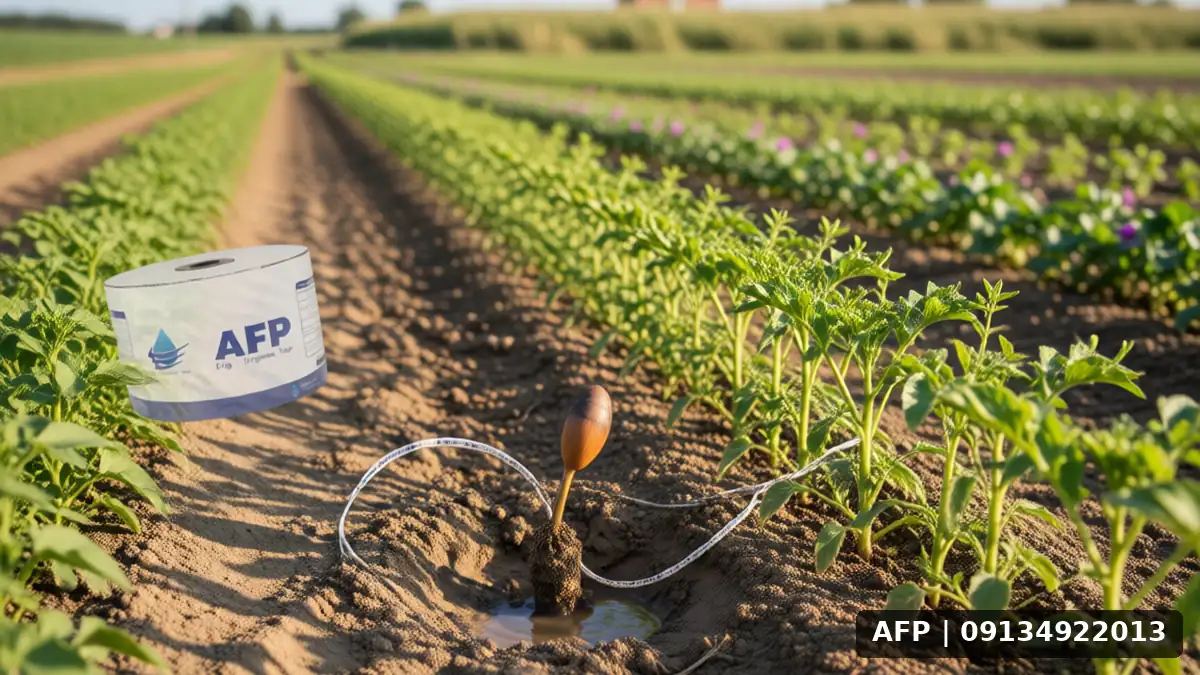
Chickpea cultivation, as one of the most important protein sources and cereals, requires precise water resource management. In conditions of water scarcity and increasing water costs, modern irrigation methods play a key role in enhancing efficiency. Therefore, Subsurface drip irrigation also known as the drip line system, has gained attention as an efficient method for row-cropped plants. This method delivers water to the soil in a controlled and dynamic manner by placing pipes near the root zone, preventing the leaching of nutrients. In this comprehensive guide, we explore the principles, advantages, and challenges of subsurface drip irrigation in chickpea fields. Our main objective is to provide practical solutions that allow farmers to achieve maximum productivity with minimal water consumption.
Technical principles of subsurface drip irrigation in chickpea fields
Subsurface drip irrigation is based on creating a moist band in the soil that aligns precisely with the plant’s root development area. This forces the roots to expend more energy in water uptake, resulting in a stronger and more extensive root system. For successful chickpea cultivation using this method, it is essential to understand the relationship between root depth and the penetration depth of the water band. During the first two months of chickpea growth, roots are active at depths of 20 to 30 cm, so the water band should be placed at this level. As the season progresses to the podding stage, the water penetration depth can increase to 50 cm. This continuous process requires ongoing monitoring of soil moisture conditions. To learn more about the general principles of this technique, refer to the section on subsurface drip or trench irrigation for further technical details.
Key implementation points
- Line spacing: Usually set between 50 to 60 cm to align with the row width of chickpea planting. This spacing should not be too wide to ensure complete moisture coverage.
- Irrigation scheduling: Flow rate should be set low at the start of the season and high during peak water demand. Adjustments in flow rate must be made carefully to avoid inducing stress on the plant.
- Burying depth: The tubing should be placed at the same level as or slightly below the initial root zone. Depth adjustments during the season are recommended to match the expanding root depth.
Benefits of water and fertilizer efficiency in chickpea cultivation
One of the most significant advantages of bubble drip irrigation is a substantial reduction in water consumption compared to flood irrigation. This reduction can range from 30 to 50 percent, significantly altering the economic viability of cultivation in water-scarce conditions. Under mild water stress, chickpea plants exhibit adaptive responses, focusing energy on seed production rather than unnecessary vegetative branching. In addition to water savings, this system enables the delivery of fertilizer through the irrigation lines (fertigation). Considering the sensitivity of chickpeas to soil salinity and pH, injecting nitrogen or phosphorus-based fertilizer solutions into the wetted zone can increase nutrient uptake by up to 30 percent. Furthermore, by reducing direct evaporation from the soil surface, salinity around the plant crown is minimized. Consequently, accurately calculating the chickpea seeding rate per hectare prevents overlap of drip lines with excessive weed or crop density. Appropriate planting density ensures each plant has better access to water and nutrients.
Impact on seed quality
Controlled water stress results in a thicker and more transport-resistant pea seed coat. This characteristic extends the shelf life of the stored product and reduces post-harvest losses. Protein quality also improves as environmental stress decreases during critical flowering stages. High-quality seeds command higher market prices, and this economic benefit helps offset part of the system installation costs. Additionally, uniformity of seeds in size and color, achieved through precise irrigation, is highly important for production lines of products such as chickpea flour or ready-to-eat snacks.
Practical tips for system management and maintenance
To ensure optimal performance of the drip irrigation system in pea farms, it is essential to follow the practical tips below. The system must be pressure-tested at 15 to 20 pounds per square inch (psi) before the rainy season begins. Any leaks at cable connections must be repaired immediately to prevent water loss outside the target zone. Weed management in the dark strip between two pipeline lines is also of special importance, as weeds can reduce the moisture available to the main crop. To reduce costs and extend the system’s useful life, avoid using corrosive chemicals near plastic pipes. Proper selection of irrigation pipes is a vital component of the system. You can consult the 3-inch flexible pipe purchase guide for use in main water transmission lines. Using appropriate transmission lines helps reduce pressure drop and ensures uniform flow distribution throughout the farm. In large farms, correct pipeline network design plays a central role in reducing pump energy consumption. Optimization of these networks should be completed before the planting season begins to minimize errors.
- Before planting, run the system for 1 hour to pur… air out of the lines. Improper purging causes hydraulic debris formation and chamber blockages.
- Place the drip tape directly under the plant canopy at a depth of 15 to 20 cm. In subsequent stages, adjust the depth to accommodate root growth.
- Inspect the wetted zone of the tape every two weeks to detect salt accumulation. If salinity is observed, perform one light deep irrigation flush.
Frequently Asked Questions
Is node irrigation suitable for all chickpea varieties?
Yes, but late-maturing varieties benefit more from this method due to their longer growth cycle. These varieties require precise water management to mitigate drought stress. Early-maturing varieties may need tighter timing adjustments for water application. Therefore, selecting a variety suited to local water conditions is key to success with this method.
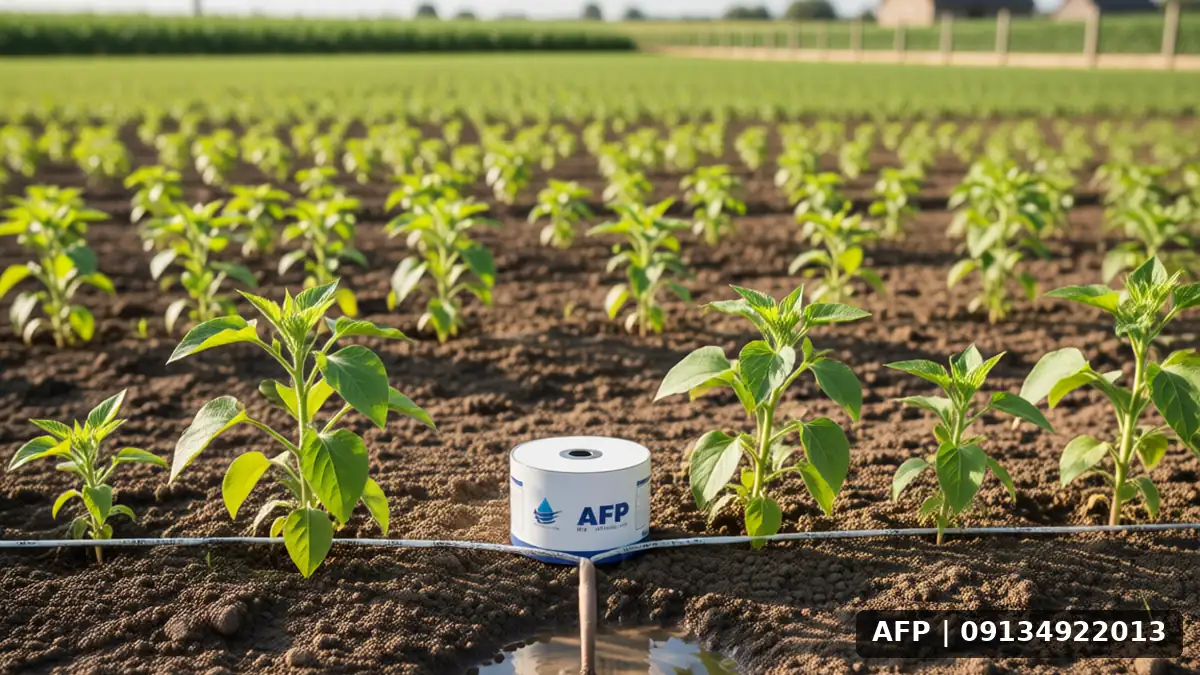
What is the best time to adjust the depth of the line during the season?
Two wetting-depth changes are generally recommended: one during the initial growth stage (shallow depth) and the other during the grain-filling stage (deeper depth). This is done to follow the vertical growth of the root system. As roots deepen, the wetted band must also move deeper to keep moisture available to the roots and reduce surface evaporation.
What is the difference between tubing drip and point drip?
Tubing drip (point irrigation) places water on the surface in a continuous line, whereas drip irrigation delivers water drop by drop in a more localized manner to the roots. Tubing drip is generally more suitable for row crops such as chickpeas, maize, and vegetables. The initial cost of tubing drip is usually lower than that of a drip system, and it is easier to install. For a more detailed comparison, you can Key points when using tubing drip water check.
Summary and final recommendation
Point irrigation in chickpea cropping is a smart approach to improve water use efficiency and enhance crop quality. Although this method requires careful implementation and maintenance, it is economically justified in the long term due to reduced water waste and increased fertilizer efficiency. By combining system design principles with local knowledge and climatic conditions, satisfactory yields can be achieved. Precise execution and continuous monitoring are the keys to success in point irrigation. Additionally, if you also cultivate rain-fed cultivars in your fields alongside chickpeas, familiarize yourself with Shannon’s recommendations for irrigating quince It can give you a broader perspective on water resource management.
Related content: Seeding rate of green broad bean per hectare, Furrow or trench irrigation