Execution Prerequisites for Node Irrigation in Carrot Fields: Technical and Practical Analysis
Implementation Prerequisites for Node Irrigation in Carrot Farms: Technical and Practical Analysis
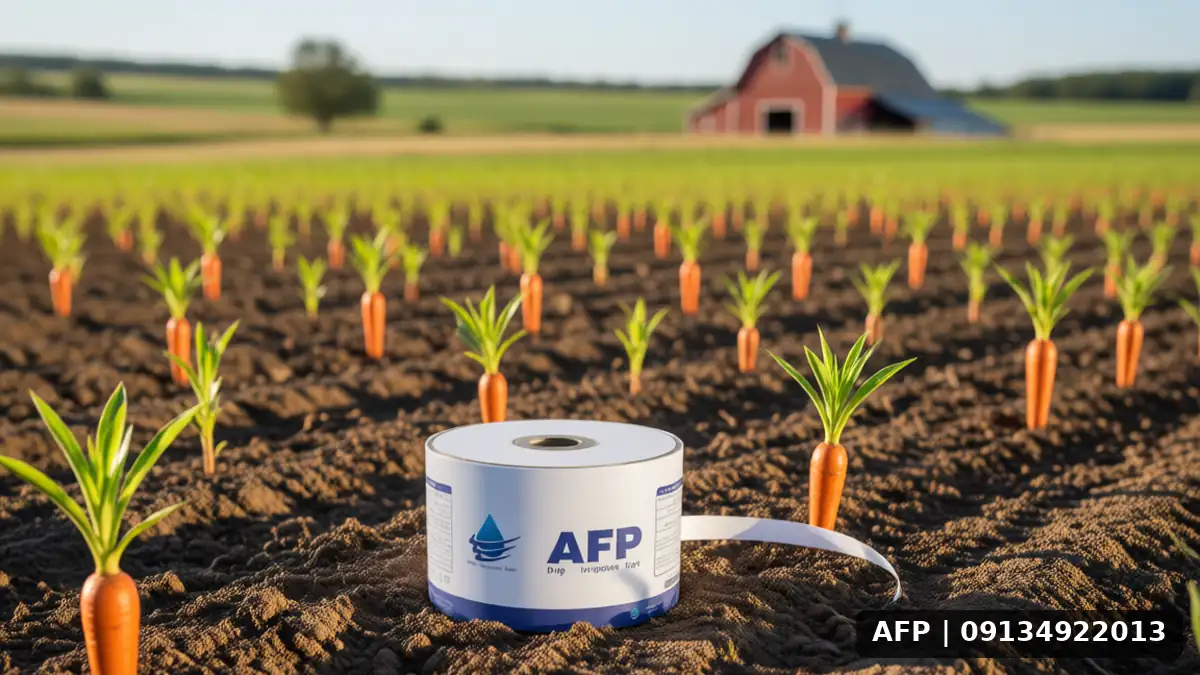
Carrot cultivation, as a high-demand vegetable in domestic and export markets, presents complex challenges in soil and water management. Carrot roots require consistent moisture; water pressure fluctuations can lead to root splitting, deformity, and a significant reduction in income per hectare. In this context, carrot node irrigation emerges as a principled alternative to conventional drip systems. Although the difference between the two methods may seem subtle at first glance, the engineering of nodes for uniform flow distribution under varying pressures creates a deep competitive advantage for producers. The goal of this analysis is to examine the implementation prerequisites of this system up to final installation and operation, enabling farmers to achieve optimal results from their investment in this technology.
Technical Concept of Node Irrigation vs. Standard Drip Irrigation
To gain a deeper understanding of the necessity of prerequisites, we must first compare the technical nature of the node system with standard drip irrigation. In standard drip emitters, water flow relies on constant pressure; a pressure drop at the end of laterals results in reduced emitter flow. This phenomenon causes moisture stress in some areas and over-saturation in others in sloped or long-line carrot fields. Conversely, irrigation nodes feature complex internal channels that compensate for pressure variations (pressure compensation). This characteristic ensures that even with differences in ground elevation, the node output flow remains approximately constant. To better understand the position of this technology among other methods, studying the comprehensive guide to types of irrigation systems can broaden the perspective on selecting the appropriate system based on carrot farm conditions.
Key Prerequisites for Stage One: Water Source Assessment
No precise irrigation system, including manifold systems, will function correctly without a water source of acceptable quality. Although manifolds are more resistant to sedimentation than simple emitters, they are highly sensitive to clogging and sediment deposition. Carrots are typically grown in plain fields, and water sources often include deep wells or surface water. The first prerequisite is precise filtration. Using disc filters with particle pass sizes of 80 to 120 microns for wells, and mesh or minifilter systems for surface water, is mandatory. If you are using water sources contaminated with hard sediments such as calcium and magnesium, installing acid injection systems or flushing wells at the network inlet is a critical prerequisite to prevent clogging of the manifold’s internal channels. For complementary water management concepts, it is useful to study articles related to subsurface irrigation can be helpful, although our main focus is on surface distribution in the carrot root zone.
Prerequisites for Stage Two: Soil Conditions and Bed Preparation
Carrots are a vertical root crop that prefer light soil with high porosity, free from gravel and clods. In the Netafim system, tubes are buried precisely at the depth of root planting (typically 3 to 5 centimeters). Therefore, the soil bed must be thoroughly tilled and leveled before installation. The presence of hard soil clods at a depth of 5 centimeters prevents uniform water infiltration from the emitters, causing the carrot root to bend in pursuit of the appropriate moisture path. In addition to soil texture, field slope plays a significant role in installation prerequisites. Emitters are designed to maintain a constant flow rate on vertical slopes of up to 30 percent, but on horizontal slopes greater than 5 percent, pressure calculations due to elevation and the selection of tubes with higher working pressure are essential. Understanding the differences between local irrigation and traditional methods is highlighted by the need to study sources such as ‘Direct Irrigation of Farmland: Advantages and Disadvantages,’ enabling us to understand why more precise methods are more necessary for root crops.
Network design prerequisites and hydraulic calculations
Selecting the appropriate emitter based on lateral spacing is critical. For carrots, emitters with a spacing of 30 to 40 centimeters and low flow rates (e.g., 1 to 1.5 liters per hour) are typically selected to prevent excessive surface moisture. Calculating the diameter of the main and submain pipes based on total flow rate, hydraulic slope, and friction is a primary engineering prerequisite for the system. If pipe diameters are too small, friction pressure loss along the line will cause the pressure at the terminal emitters to fall below the acceptable limit, reducing their flow even with pressure-compensating emitters. Additionally, installing pressure-limiting collection tanks is a mandatory safety prerequisite to prevent hydraulic hammer and emitter bursting during sudden pump start-up or shut-down. A precise understanding of plastic pipe installation principles requires familiarity with techniques explained in articles such as ’90-degree threaded pipe,’ as polyethylene threads of different weights have distinct purchase prerequisites depending on pressure.
Practical points for installing and connecting emitters to lines
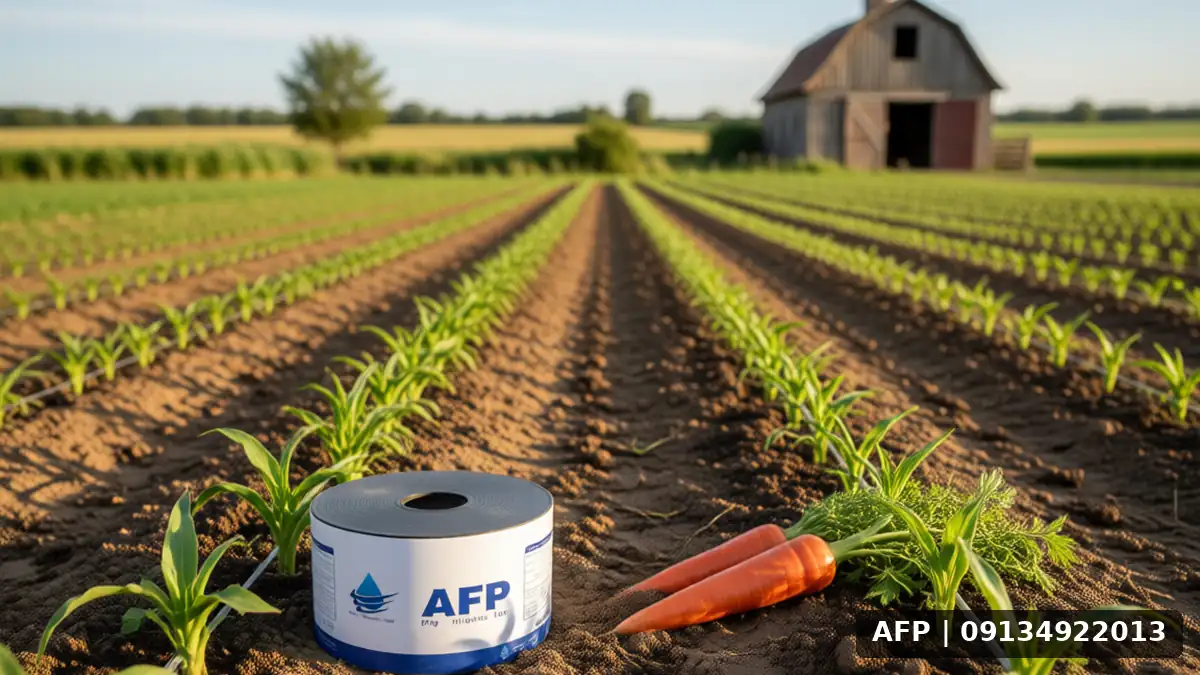
Proper installation requires the correct connection of emitters to drip tapes or main lines. Emitters are typically attached to perforated tubing via caps or connector housings. These holes must be made with standard tools at uniform intervals to prevent leaks around the emitters. In carrot cultivation, where tubing is laid at shallow depths, precise connection prevents emitters from clogging with fine soil. In addition to connection technique, the spacing between drip lines is a critical variable. For carrots, the distance between two lines (row spacing) is generally set at 40 to 50 centimeters. Although drip line spacing varies for other crops, understanding the principles of drip line spacing in beans can provide a model for optimizing the balance between water emission points and seed spacing. The goal is to maintain moisture stability throughout the entire depth of the root zone.
Common Challenges and Practical Solutions
- Reduced Economic Efficiency: The initial cost of emitters is higher. To offset this expense, focus should be placed on increasing yield per hectare. Consulting resources such as Increasing Fennel Yield per Hectare demonstrates that root vegetables, with precise water management, have the potential for significant harvest increases.
- Emitter Clogging: If pre-filtration requirements are not met, emitters may fail within the first two to three seasons. The solution is to perform periodic flushing with chlorine and citric acid before each planting.
Summary and Final Recommendation
Implementation Carrot Drip Irrigation It is a multi-stage process that begins with water and soil assessment and concludes with precise hydraulic design. Adhering to filtration prerequisites, soil texture considerations, and appropriate pressure selection forms the golden trio for the success of this system.
Do you have experience with modern irrigation systems in vegetable farming? We invite you to share your experiences with colleagues in the comments section. To better understand the general principles of water distribution in farms, you can refer to the ’90 Drip Line’ resource, which covers the specialized topic of selecting appropriate pipes for different pressures.
Related Articles: 90 Drip Line 90 mm HDPE pipe