Moisture Irrigation in Pepper Cultivation: Challenges and Expert Solutions
Why is soil moisture management critical for bell peppers?
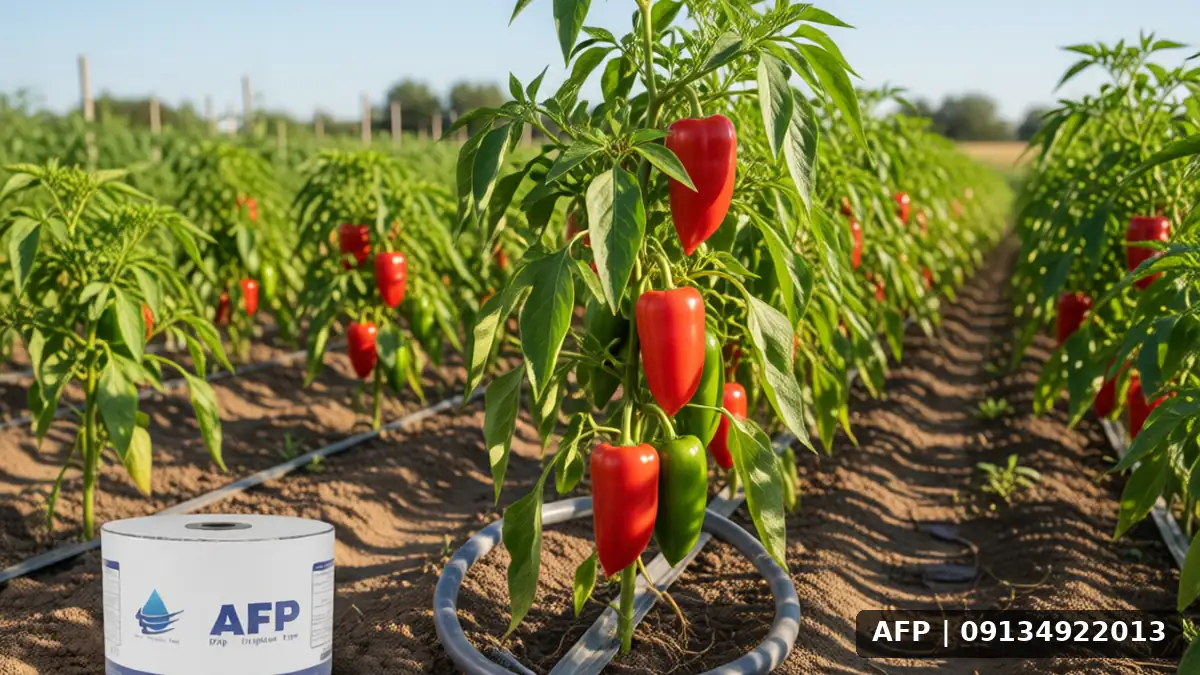
Bell peppers are highly sensitive to changes in soil moisture. Significant fluctuations in irrigation can directly affect fruit size, color, and marketability. In modern cultivation, the use of soil moisture-based irrigation via drip or tape systems is unavoidable. However, without adequate knowledge, these systems can create serious challenges. The objective of this section is to examine these challenges in detail so that farmers can avoid common errors before implementation. This approach not only reduces costs but also improves product quality, which is our ultimate goal in seed and drainage volumes optimization.
Technical Challenges in Drip and Tape Systems
1. Non-Uniform Water Distribution (Non-Uniformity)
One of the biggest challenges in implementing drip irrigation for peppers is the uneven distribution of water along the drip lines. In drip line systems, as you move away from the line head, pressure drop causes the emitter flow rate to decrease. This results in plants at the end of the lines suffering from water stress while plants at the beginning of the line face root suffocation. To solve this problem, precise hydraulic calculations are required. You must design the system so that the difference in flow rate between the emitters at the start and end of the line is less than 5%. This requires the use of appropriate diaphragms and adjustment of the input pressure. Also in the area of irrigation consultation with experts, these calculations are critical.
2. Drip Line and Emitter Clogging
Peppers are typically grown in greenhouses or in light soils with a fine texture. These soils are prone to allowing fine particles to enter the drip lines. Physical and biological clogging (bacteria and algae) can render the system inoperative from the very first day. The use of suitable filters (such as turbine or screen filters) is mandatory, not optional. In addition to physical filtration, regular chemical flushing with chelant and chlorine is essential to prevent organism growth. Neglecting this aspect is the most costly mistake in drip irrigation .
Soil and Root Challenges in Bell Pepper Cultivation
Heavy or dense clay soils are the most difficult growing media for bell peppers. In these soils, water infiltration is slow, and the roots of bell peppers, which have a high oxygen demand, suffer from suffocation. Moisture-based irrigation of bell peppers under these conditions requires specific adjustments. Instead of long, deep irrigation sessions, shorter and more frequent applications should be used to maintain surface moisture and prevent water from penetrating to deeper layers due to hydrostatic pressure. This technique ensures the root zone undergoes wet-dry cycles, reducing root rot. Additionally, understanding yield potential based on soil quality enables better optimization. If the soil is heavy, expecting high yields without soil amendment and precise irrigation is unrealistic.
Fertigation Challenges and Interaction with Irrigation
Moisture-based irrigation is not limited to water; it is the foundation of fertigation. Bell peppers are high-accumulator crops and are sensitive to severe fluctuations in soil EC (soil solution electrical conductivity). The main challenge is that if the irrigation system is not uniform, fertilizer distribution will also be uneven. Plants near the filter receive more fertilizer, while plants at the end of the line receive less. This heterogeneity leads to variations in fruit quality. To manage this challenge, the use of parallel lines (looping) and dual-sided pumps is recommended. Furthermore, understanding the function of Soluble Fertilizers are the key to success in drip systems.
Weather Challenges and Stress Management
During warm and dry seasons, water demand for bell peppers increases significantly. If the irrigation system lacks sufficient capacity, the plants suffer from heat stress. This stress can lead to fruit drop, leaf tip burn, and reduced product size. The challenge is that moisture-based irrigation for bell peppers must be combined with Soil Moisture Sensors to ensure irrigation is based on the plant’s actual needs, not just the farmer’s intuition. Without sensors, you overwater on windy days (leading to waterlogging) and under-water on cloudy days. These fluctuations are the main enemies of bell pepper quality. To learn about actual yields, study Drainage rates is also helpful to determine how much of your resources are being lost.
Practical solutions to overcome these challenges
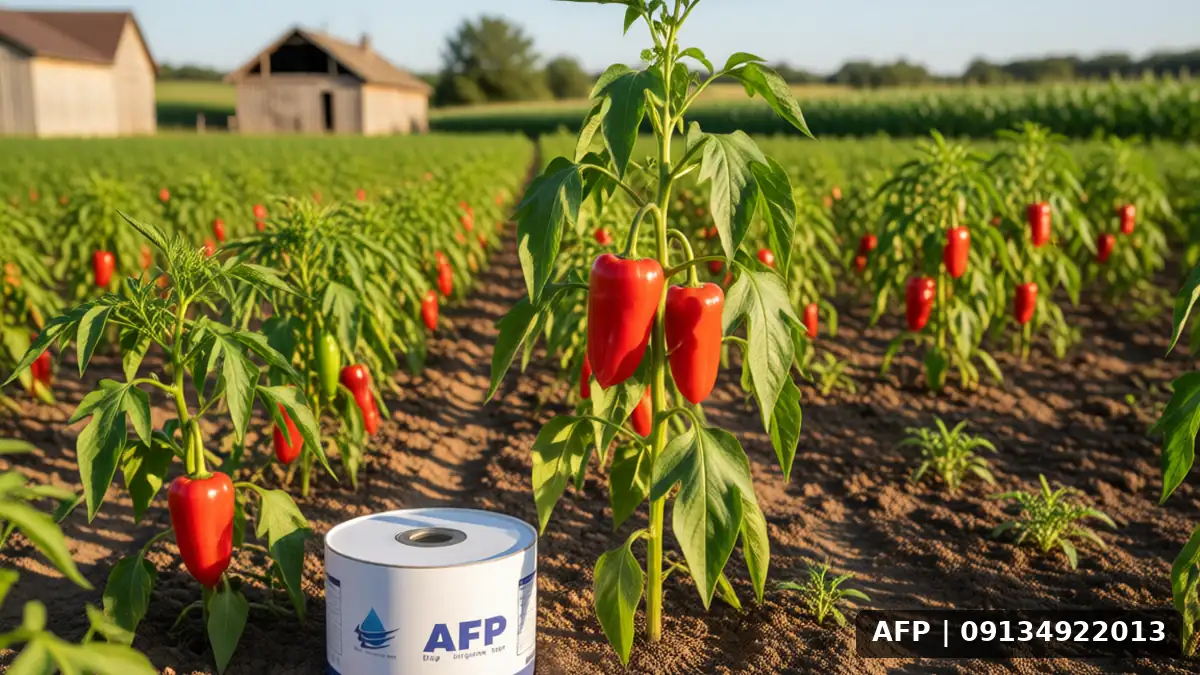
- Use of moisture sensors: Installing at least 3 sensors at different depths (15, 30, and 45 cm) allows you to make precise irrigation decisions. This is not the most expensive part of the system, but it doubles its efficiency.
- Regular flushing of the drainage system: Have a weekly drainage washing routine using 1-2 ppm chlorine and 200 ppm chelate. This increases the lifespan of the drainage system by up to 5 years.
- Water pH adjustment: If your water pH is above 7.5, you must lower it to 6.5 to prevent calcium sediment buildup in the drainage system and ensure fertilizers remain in solution.
- Crop rotation: Where possible, combine paprika cultivation with crops having different root systems to reduce soil-borne diseases. However, this differs from root vegetable irrigation such as potatoes, which have deeper root systems.
Frequently Asked Questions (FAQ)
Is drip tape suitable for greenhouse peppers?
Yes, but with caution. Drip tape is usually used for shorter growing cycles (3 to 6 months). Peppers typically last 12 months or more. Therefore, the drip tape should have thicker, more durable diaphragms (3.4 to 4 mm). Thin tapes usually break after the first season. We recommend using tapes with high UV resistance.
How do I know when peppers are thirsty?
Early signs of water stress in peppers include pale, stiff new stems and curled upper leaves. If this condition persists into the evening, fruit yield will decline and fruit Brix will increase (for certain varieties). Chronic water stress leads to fruit drop and reduced fruit size. Always rely on soil moisture sensors, not on plant appearance.
What is the best time to water peppers?
Morning irrigation (between 7:00 and 10:00 AM) is optimal. During this period, vapor pressure deficit is low, and water is rapidly absorbed by the roots. Afternoon irrigation can also be beneficial, but if the soil is cold, it may chill the root zone. Nighttime irrigation is generally not recommended because high humidity promotes fungal growth.
Conclusion and final thoughts
Sub-irrigation in pepper cultivation is the art of striking a delicate balance: between water and light, fertilizer and root health, and cost and yield. The challenges outlined in this article, such as drain clogging and distribution uniformity, can be resolved through precise planning and the use of simple technologies. A deeper understanding of your system combined with continuous soil moisture monitoring will transform you from a reactive farmer into a proactive manager of water and resources. This approach not only gives your pepper quality an edge over competitors but also ensures the long-term economic viability of your crop. Always consult credible sources to update your knowledge, ensuring resilience against climatic and market shifts.