Melon Seed Rate per Hectare: A Comprehensive Guide
Introduction to the importance of precision in melon cultivation
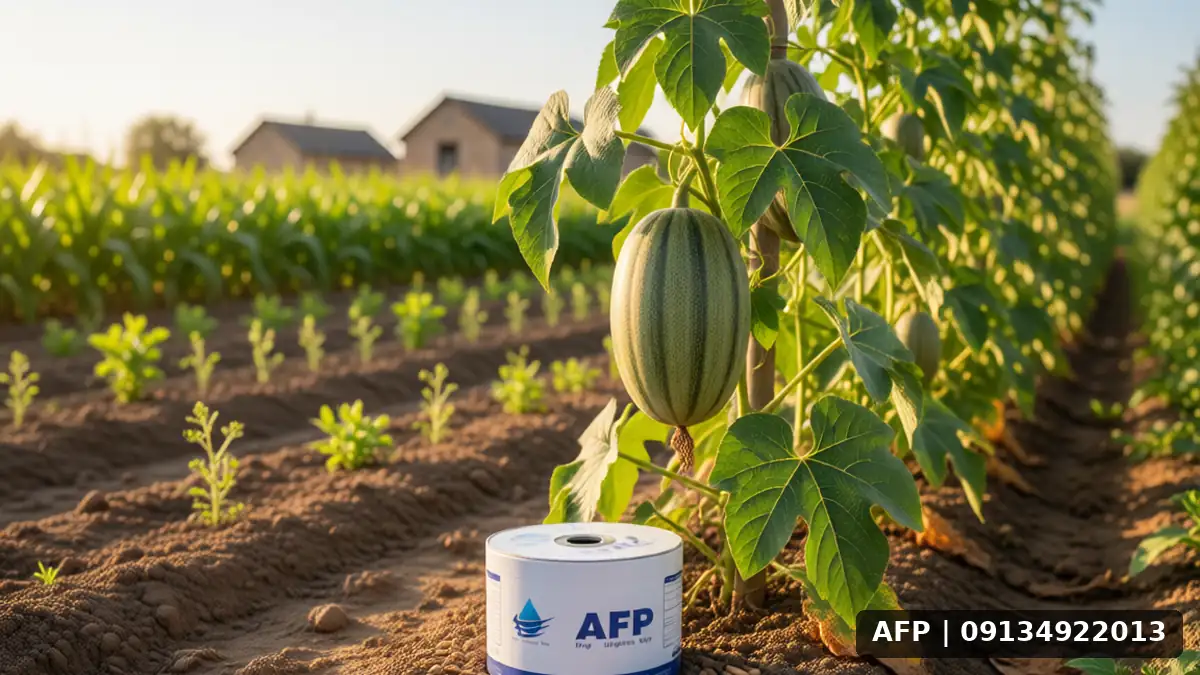
Precise determination Melon seed quantity per hectare is one of the most critical steps for successful cultivation of this crop. Selecting high-quality seeds, following proper spacing principles, and coordinating with the irrigation system directly impact final yield and fruit quality. Many farmers face issues such as excessive plant density or waste of water resources due to a lack of familiarity with appropriate dosages. In this guide, we examine the technical details of melon cultivation using drip and band-tip systems so that you can proceed with greater confidence.
In recent years, with the expansion of industrial cultivation and the use of new technologies, the approach to melon cultivation has changed. It is no longer sufficient to simply scatter seeds in the field and wait for harvest. Precise management of the production cycle, from seed selection to final harvest, plays a significant role in reducing costs and increasing efficiency. In this regard, the seed variable, as the starting point of the cycle, has gained twice its importance. If you make a mistake in determining the seed quantity, the entire production chain will be disrupted, and ancillary costs such as fertilizer, pesticide, and labor consumption will also increase. Therefore, a deep understanding of the relationship between plant density and available resources is considered an essential skill for any modern farmer.
Calculating planting and spacing standards
Appropriate inter-row and intra-row spacing
To obtain the best Melon seed rate per hectareFirst, the row dimensions must be determined. For semi-long melons, a row-to-row spacing of 150 to 180 centimeters and an in-row spacing of 60 to 80 centimeters are generally recommended. If the in-row spacing is less than 50 centimeters, competition between plants increases, and shading reduces light exposure to the fruits. This leads to poor fruit set, increased humidity, and consequently, fungal diseases.
- Row-to-row spacing: 150 to 180 centimeters
- In-row spacing: 60 to 80 centimeters
- Number of plants per hectare: approximately 1,200 to 1,400 plants
Assuming a plant density of 1,300 plants per hectare and knowing the germination percentage of the seeds (which for melons is typically between 75 and 85 percent), the required seed amount can be calculated. For example, if the seed count is 50 seeds per 100 grams, calculations show that approximately 250 to 300 grams of clean seed are needed per hectare. These figures vary depending on whether the variety is hybrid or open-pollinated, and it is always recommended to use the information provided on the seed package.
A critical factor to consider is the type of variety being grown. Bush varieties generally require lower density and wider spacing, whereas fruiting varieties may allow for higher density. Additionally, soil type affects planting depth and subsequent soil amendments. In sandy soils, due to rapid drainage, a slightly deeper planting depth may be necessary to retain moisture around the seeds. These minor adjustments directly impact the final number of healthy plants after germination and must be accounted for in the final seed rate calculation.
The Role of Drip and Riptape Irrigation Systems in Seed Management
Cropping and Irrigation Synergy
The use of modern irrigation systems, such as riptape, enables double or uniform planting. In riptape irrigation, water is released only in the plant root zone. This allows you to maintain appropriate planting density without concern for water stress or salinity. If you use conventional open irrigation, you may be forced to increase spacing to compensate for water inefficiency, which results in reduced yield per unit area.
To maximize the efficiency of these systems, understanding the technical principles of riptape is essential. Different types of drip riptape systems have specific applications; for example, single-line tapes with 6 or 10 cm spacing are more suitable for crops with roots sensitive to moisture. Additionally, Riptape for pepper and similar products have a structure similar to melon, and understanding this can be helpful. In drip systems, uniform water flow promotes root growth at an appropriate depth and prevents surface root rot. This feature is critical, especially in areas where plants have low tolerance to environmental stresses.
Irrigation Planning Based on Growth Stage
The melon watering pattern differs at various growth stages. During germination, high moisture without waterlogging is required. During the flowering and fruiting stage, mild water stress can help improve fruit sweetness. To precisely adjust irrigation, study Key points in drip line irrigation It is recommended to avoid water waste and poor uniformity. In arid regions, using high-efficiency drip irrigation configurations can reduce energy and investment costs.
Managing water pressure and emitter performance is also important at this stage. Clogged emitters can cause localized dryness or waterlogging, which is dangerous for sensitive melon roots. Using appropriate filters and periodic flushing of lines are fundamental principles for maintaining irrigation system health. Additionally, coordinating irrigation timing with solar exposure can increase water use efficiency. Irrigating during cooler hours of the day reduces direct evaporation from the soil bed and allows more water to reach the root zone. When these nuances are combined with precise seed quantity calculations, they create a synchronized system where every drop of water and every gram of seed achieves optimal efficiency.
Practical tips for maximum yield per unit area
Density management and pruning
One common mistake is over-seeding. When the plant count exceeds the optimal level (e.g., 1,400 plants per hectare), leaf respiration decreases and sufficient light does not reach the inner fruits. Under these conditions, you need severe pruning, which increases labor costs. Therefore, from the beginning, Melon seed quantity per hectare adjust it based on the actual seed germination rate.
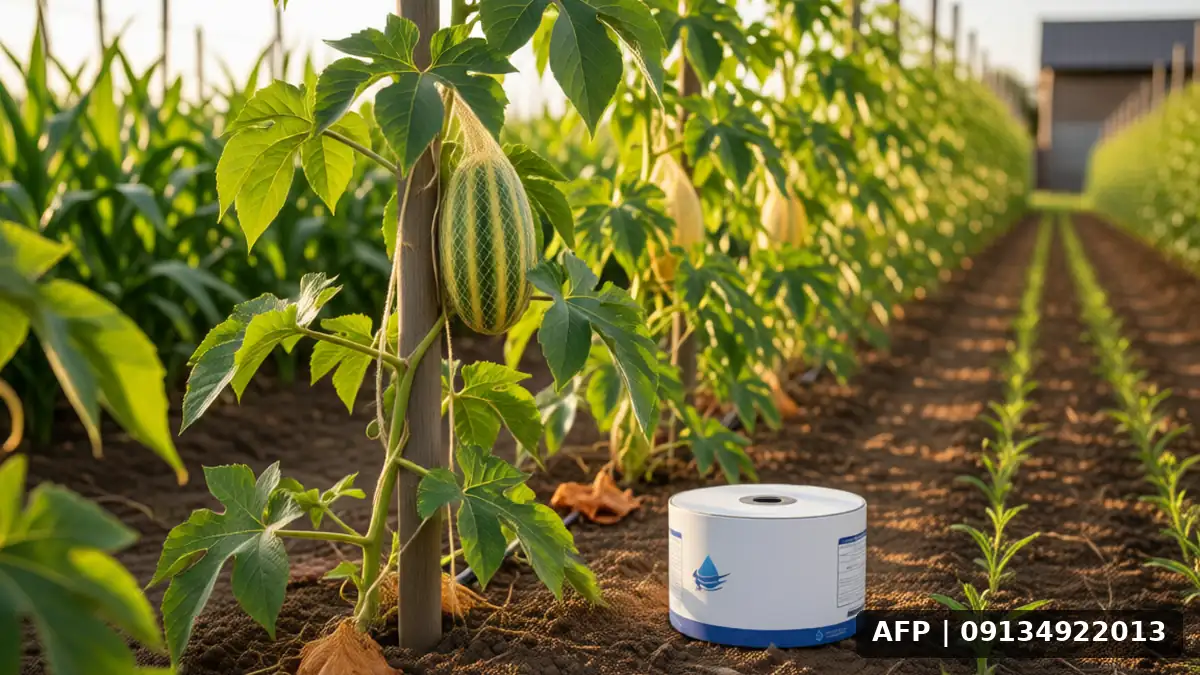
Final thinning after germination is a critical stage. Removing weaker plants and retaining superior ones strengthens the main plant and increases fruit size. This must be performed at the appropriate time with precision to avoid damaging the remaining roots. If density is excessive, thinning alone cannot fully correct the spacing gaps, and competition for nutrients and light continues. This is particularly evident in crowded plantings where initial spacing is less than ideal. Therefore, anticipating and avoiding initial planting errors is far less costly than correcting them after plant establishment.
Plant Nutrition Alongside Irrigation
Drip and micro-irrigation systems facilitate fertigation. It is best to align your nutrition program with the growth stage. Nitrogen is vital during vegetative growth, while potassium and calcium are crucial during fruiting. For instance, in rainfed or semi-irrigated crops, utilizing local resources and technical amendments becomes even more significant. Reviewing similar articles on performance in surface units such as Spark yield per hectare or Anise yield per hectare can provide a broader perspective on density management in leafy crops and small fruits.
Fertilizer injection through the irrigation system must be performed at the appropriate concentration and during specific times of day to prevent clogging and emitter blockage. Additionally, the pH of the fertilizer solution must be adjusted to maximize root uptake. In this process, collaboration between plant nutrition specialists and irrigation engineers is essential. This partnership ensures not only optimal plant growth but also that the irrigation system operates throughout the season without damage. Recognizing that root feeding directly affects fruit quality encourages farmers to place greater emphasis on precision in this area.
Frequently Asked Questions (FAQ)
1. When is the best time to plant melon seeds?
Depending on the climate, usually from mid-April to mid-May. In hotter regions, planting can be done earlier.
2. Is double planting allowed in drip line?
Yes, but with a 50 cm spacing and precise pruning management to prevent excessive density.
3. How can I prevent root diseases in drip irrigation?
It is crucial to use crop rotation, pre-plant soil disinfection, and maintenance of irrigation system filters.
Summary
Attention to Melon seed rate per hectare is only half of the work; the other half is smart management of water and nutrition. By using drip and tape irrigation systems, you not only achieve more uniform crops but also reduce production costs. Always use local or hybrid varieties with high disease resistance and adapt your field conditions with advice from local experts.
Ultimately, success in melon cultivation depends on a comprehensive approach. Combining knowledge of seeds, spacing, irrigation, and nutrition is the key to achieving maximum profit. Farmers must continuously learn and stay updated with new techniques to maintain their competitive advantage in the market. This article is just a starting point, and it is recommended to refer to more specialized resources and consult with local experts for further details.