Comprehensive Guide to Lettuce Cultivation with Drip Irrigation: From Seed to Harvest
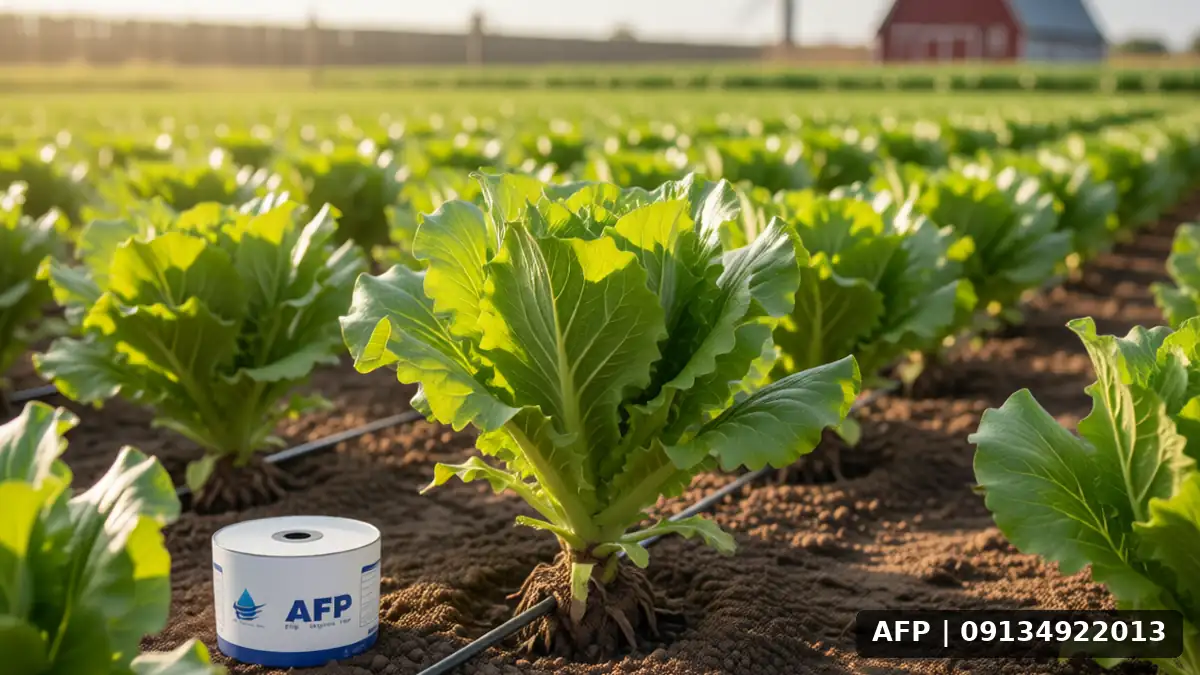
Lettuce is one of the most widely cultivated annual vegetables, commanding high demand in both domestic and export markets. The use of technology Drip irrigation for lettuce and tape lines not only optimizes water consumption but also prevents root rot and fungal diseases through uniform moisture distribution, thereby enhancing leaf quality. In this article, we examine the technical details of lettuce planting, management, and harvesting across various growing media. Precise water resource management and the selection of the appropriate system are considered the two main pillars of success in cultivating this sensitive crop.
Introduction to lettuce planting and the importance of water management
Lettuce is a fast-growing plant that requires light soil media and adequate drainage. In conventional planting methods, inconsistent moisture becomes a primary issue, leading to physiological stress in the plants. However, by utilizing drip tape, moisture can be delivered directly to the root zone. This allows the plant to direct its energy toward stem and leaf growth rather than searching for moisture. The selection of heat- and rot-resistant varieties, in conjunction with proper irrigation, is key to success. To better understand seed and medium combinations, you can review the article Green bean seed rate per hectare which discusses similar principles in planting density, although density varies for lettuce. Additionally, selecting high-quality seeds resistant to local diseases is always one of the most essential initial steps.
Seed selection and scheduling
Lettuce seeds are very fine and require gentle irrigation for emergence. Using germinated or coated seeds can facilitate germination. Planting time depends on the region, but there are generally two main seasons: spring and autumn. For Roman varieties that have a higher-density crop, you can refer to the guide on Increasing the density of Roman lettuce per hectare to learn about methods for increasing density. Paying attention to soil temperature at the time of planting is crucial to prevent growth cessation during periods of thermal stress.
Installing strip tape and drip systems for lettuce
Strip Tape systems are a popular option for greenhouses and open-field farms due to their lower cost and easy installation. The drip emitter spacing must be appropriate for the planting spacing. Typically, for lettuce, an in-row spacing of 25 to 30 centimeters is considered, and emitters are placed at 20 or 25 centimeter intervals so that two emitters feed each plant. Selecting open-emitter drippers in open fields prone to scaling from sediment is not recommended. Using an appropriate filter and acidifying the water (if hardness is high) protects the lifespan of the tape. To learn about the components of this system, read the article on Components of drip tapes and emitters to familiarize yourself with their hydraulic operation.
Comparison of drip and tape irrigation
Drip irrigation is typically used for row or plastic bed cultivation in greenhouses, while tape irrigation is used for vegetable cropping in larger field operations. In both cases, an operating pressure of 1 to 2 bar is sufficient. Although tape is less expensive, drip is more precise. For lettuce varieties requiring stable moisture, drip with manual control operates more accurately. Additionally, tape wall thickness is a key factor determining the system’s durability against pressure and abrasion.
Scheduling drip irrigation based on growth stage
Lettuce irrigation should not be based on a fixed calendar, but adjusted according to crop water needs and weather conditions. During early stages, young roots require high moisture but have increased sensitivity to root hypoxia. In later stages, with head formation (Heading) or capsule development, water consumption decreases slightly to prevent leaf slip.
- Planting stage to 10 days: Short, frequent irrigations (every 1 to 2 days) to ensure seed germination.
- Vegetative growth (Days 10 to 20): Increase water volume; every 2 to 3 days with appropriate flow rate.
- Head formation (Day 20 to 40): Control humidity to prevent leaf opening; use gentler irrigation.
In hot regions, irrigation should be conducted during cool hours (early morning or late afternoon) to reduce evaporation. Monitoring soil temperature with a pulse meter is the best reference for decision-making. Fine-tuning this process can save up to 20% in total water consumption.
Practical tips for increasing efficiency
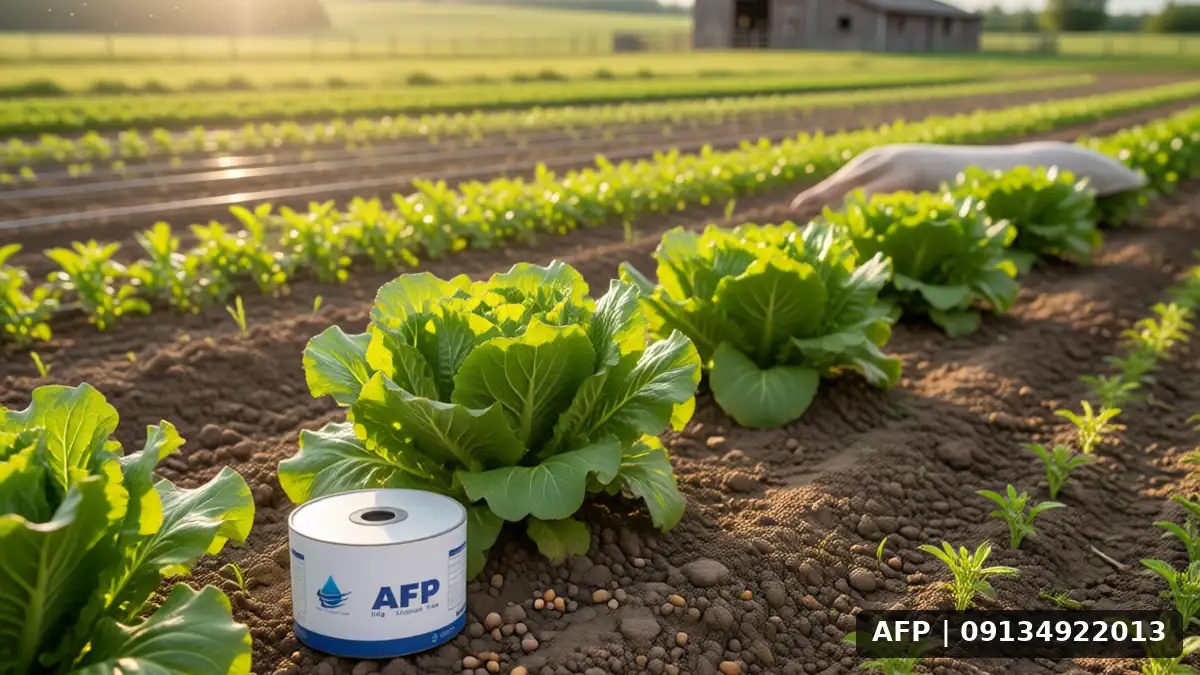
Manuring and nutrient management through irrigation (Fertigation) is one of the main advantages of drip systems. Water-soluble fertilizers (nitrogen, phosphorus, potassium) can be delivered directly to the root zone via the drip line. This increases uptake efficiency by up to 30%. Ensure the drip tape has UV resistance; black UV-resistant tapes have a longer lifespan. Additionally, weed control under the drip line is somewhat difficult due to the lack of sunlight; therefore, using mulch (soil cover) or chemical methods before planting is recommended.
To compare with other vegetable crops, you can refer to the article Green Bean Planting Guide per Hectare Take a closer look. Although beans and lettuce differ, the principles of furrow planting and spacing are similar. These principles also apply to other solanaceous crops such as broccoli, which require precise water management.
Resolving Common Issues
- Crown Rot: Reduce the distance of the drip line from central plants and improve air circulation in the border.
- Fungal Diseases: Use a laterally distributed tape at higher operating pressure to reduce leaf wetness.
- Tape Resistance to Clogging: Perform periodic flushing with citric acid and adhere to water quality standards.
Frequently Asked Questions (FAQ)
1. What is the appropriate distance between the drip tape and the lettuce furrow?
Typically, the tape is placed directly on the planting furrow or 2 to 3 centimeters above it. If the vertical tape is installed, avoid planting on top of the tape to prevent damage. Observing this practice increases the system’s longevity.
2. Can UV (ultraviolet) tape be used for lettuce cultivation?
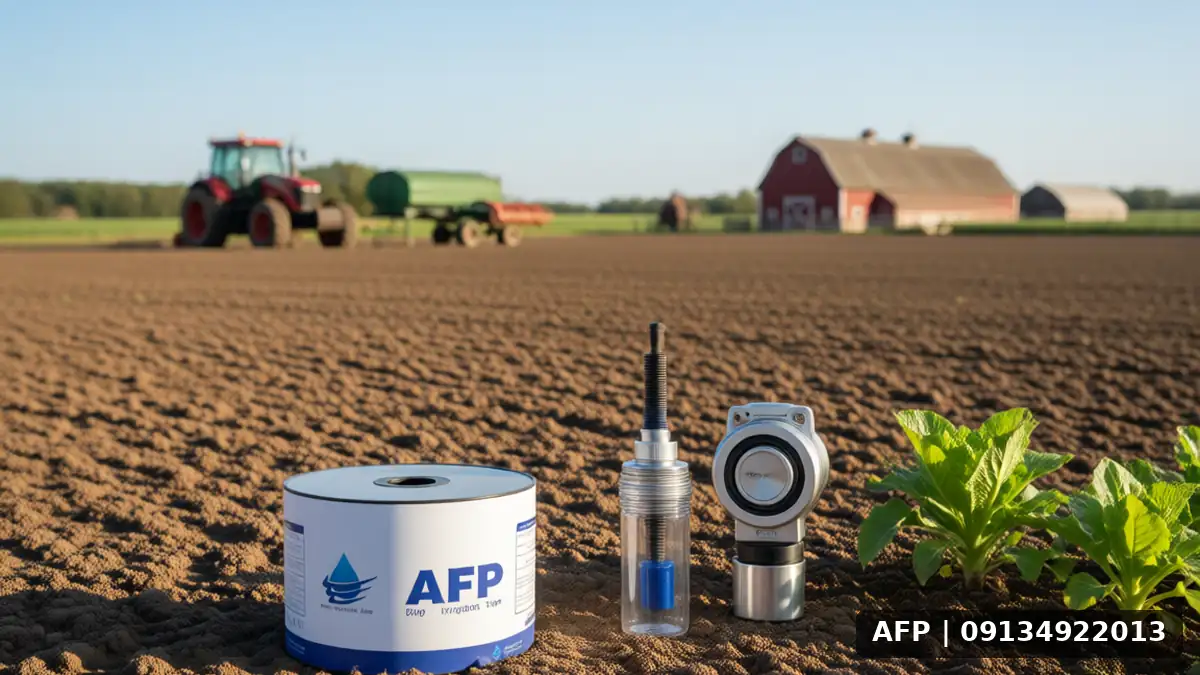
Yes, UV tapes have better resistance to chemical degradation and oxidation, but they have a higher cost. They are recommended for open-field farms with sun exposure. The choice of tape type should be based on the growing period and local climatic conditions.
3. What is the suitable flow rate for drip irrigation for lettuce?
Typically, 1 to 1.5 liters per hour per plant is sufficient. If planting in colder seasons, reduce the flow rate. Also, monitor the line pressure to ensure uniform water distribution from the drippers.
Summary and Final Recommendations
Lettuce Harvest Success with Drip Irrigation for Lettuce and tape lines, this approach creates a clear path for modern farmers. From selecting the right seeds to installing the drip tape with engineering precision, every step plays a critical role. Continuous monitoring of temperature and humidity, along with adjusting irrigation to match growth stages, transforms you from a conventional farmer into a data-driven farm manager. Utilizing online educational resources, such as a guide to pre-purchase considerations for drip irrigation tape, can help you avoid unnecessary costs and poor choices. Ultimately, combining plant science knowledge with precision water delivery tools ensures a sustainable and high-quality harvest. Additionally, checking the wall thickness of the tape to verify manufacturing quality is a fundamental step in purchasing equipment.